
Step Into the Ring With These Essential Boxing Moves
Basic boxing moves form the foundation of every boxer's journey — from complete beginners to world champions. This guide covers the essential orthodox and southpaw stance, the six fundamental punches (jab, cross, hook, uppercut) with the numbered system coaches use, footwork and power generation mechanics, beginner combinations, defensive moves like slipping and ducking, bag work technique, and the four classic boxing styles.
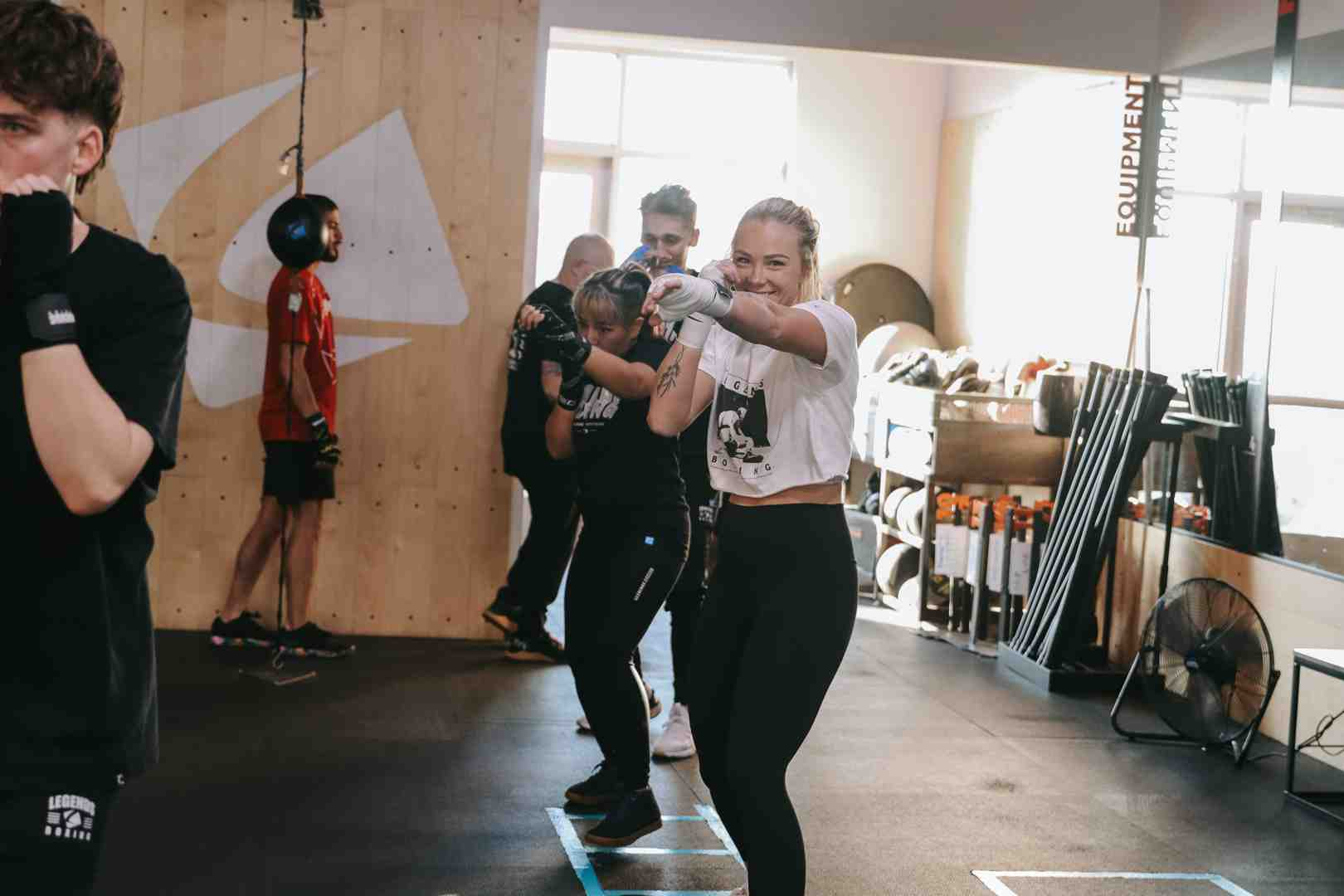
Step Into the Boxing Fundamentals
Basic boxing moves form the foundation of every boxer's journey, from beginners to world champions. Here's a quick overview of the essential moves you need to know:
- Stance — feet shoulder-width apart, lead foot forward, knees slightly bent
- Jab (1) — quick straight punch with lead hand
- Cross (2) — power punch with rear hand
- Hook (3/4) — circular punch from the side with either hand
- Uppercut (5/6) — upward punch targeting the chin
- Slip — defensive move to avoid punches by moving your head
- Duck — bending knees to avoid head shots
Boxing may look intimidating at first glance, but it's one of the most rewarding skills you can learn. Not only does it provide an incredible full-body workout that can burn 400–800 calories per hour, but it also builds confidence, improves coordination, and offers a practical way to relieve stress.
The beauty of boxing lies in its simplicity. While mastering these moves takes practice, learning the basics is accessible to anyone regardless of fitness level or athletic background. The key is starting with proper form before adding speed and power.
I'm Robby Welch, National Head Coach at Legends Boxing with over two years of experience teaching basic boxing moves to beginners and advanced fighters alike. Throughout my coaching career, I've helped countless people transform not just their fitness levels but also their confidence and mental toughness.
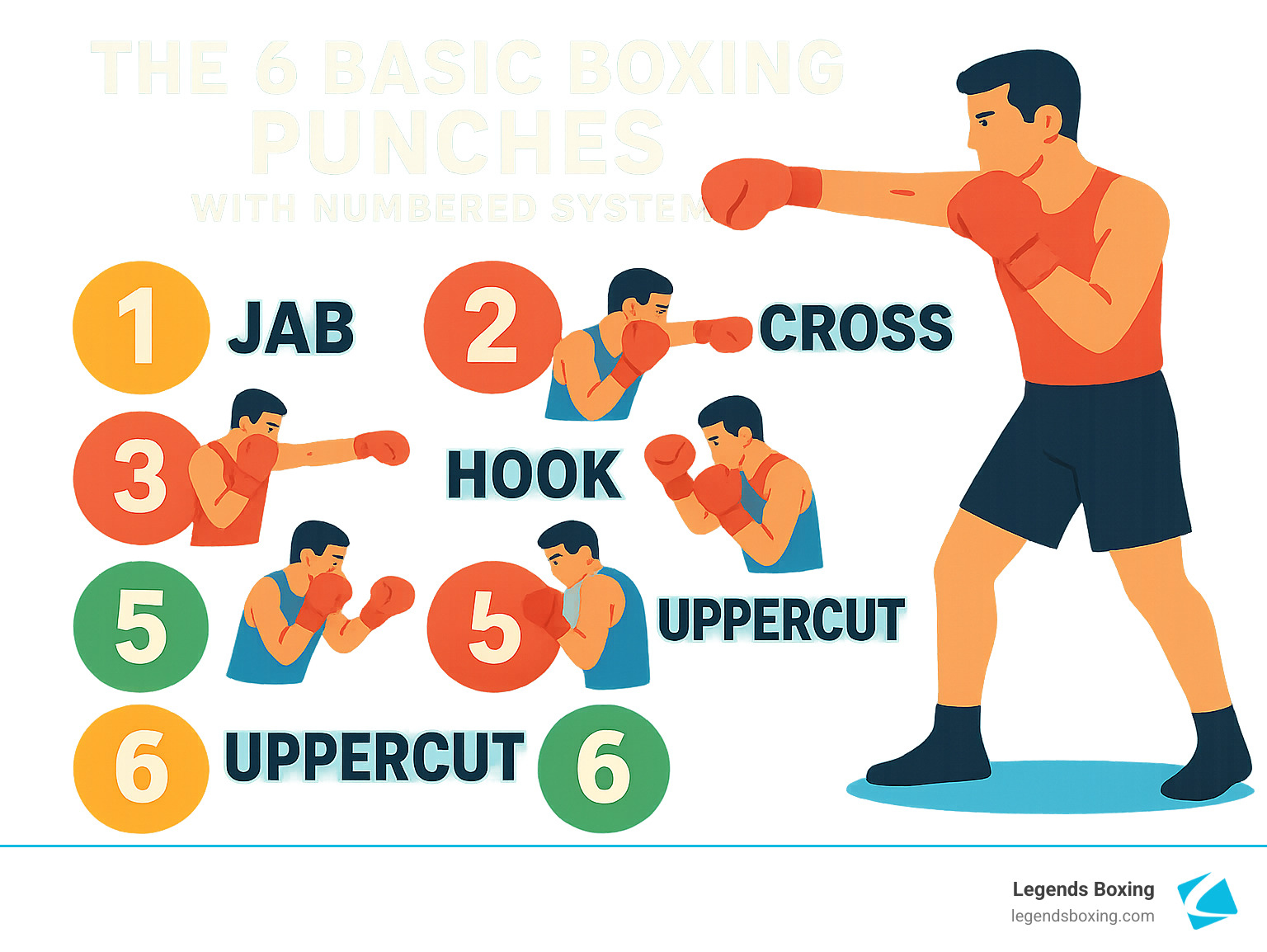
Build Your Foundation: Stance, Footwork & Body Mechanics
Ever tried to build a house without a foundation? Neither should you start boxing without mastering your stance and footwork. At Legends Boxing, we have a saying: "If you've got a fist, you've got a fight" — but proper stance and footwork will transform that fight from amateur hour to something worth watching.
Adopting a Solid Fighting Stance
Think of your boxing stance as home base — it's where you'll return after every punch, slip, or movement. A proper stance isn't just about looking cool (though it does); it provides balance, power, and protection when you need it most.
For an orthodox stance (right-handed boxers), start by positioning your feet shoulder-width apart with your left foot forward. Imagine an invisible line running between your feet — your front toe should align with your rear heel on this centerline. Keep your weight distributed with about 60% on your back foot, knees slightly bent for that ready-to-move feeling.
Your chin should be tucked toward your shoulder (protect that glass jaw!), hands up at cheek level, and elbows close to your ribs. One small detail many beginners miss: lift that rear heel slightly to stay on the ball of your foot, ready to push off.
If you're left-handed, you'll adopt a southpaw stance — simply mirror everything above, with your right foot forward and your power-packed left hand in the rear.
| Orthodox Stance | Southpaw Stance | |
|---|---|---|
| Lead foot | Left foot forward | Right foot forward |
| Power hand | Right (rear) | Left (rear) |
| Jab with | Left hand | Right hand |
| Cross with | Right hand | Left hand |
| Advantage | More common, easier to find partners | Strategic edge vs. orthodox fighters |
"Your stance is like your home address in the ring," I tell my students at Legends Boxing. "No matter where you go, you always come back to it."
Footwork Drills That Prevent Rookie Falls
The difference between someone who looks like they're dancing in the ring and someone who looks like they're wading through mud? Footwork. Good footwork lets you control distance, create angles, and stay balanced while throwing heat.
The step-drag technique is your bread and butter. When moving forward, step with your lead foot first, then drag your rear foot to maintain your stance width. Backing up? Reverse it — step back with your rear foot, then drag that lead foot. Whatever you do, never cross your feet (unless you enjoy the view from the canvas).
For lateral movement, the same rule applies — lead with the foot in the direction you're moving. Going left as an orthodox fighter? Step with your left foot first, then follow with your right. Keep those feet close to the ground rather than hopping around — it saves energy and keeps you ready to punch or defend.
The pivot is where the magic happens. An offensive pivot rotates on the ball of your lead foot about 45 degrees, creating new angles for your attack. A defensive pivot spins on your rear foot, helping you escape when someone's got you backed against the ropes.
"Stay on the balls of your feet," we constantly remind our Legends Boxing classes. "Never lean forward past your knees, and never leave your head on a platter by standing flat-footed."
Generating Power From the Ground Up
One of the biggest "aha!" moments for new boxers is realizing that knockout power doesn't come from bicep curls — it starts from the ground and flows through your entire body like a wave.
The power generation sequence: push from the ball of your foot → rotate your hips and core → transfer that energy through your shoulders → extend your arm with a fist rotation on impact. It's like cracking a whip, with your fist being the tip.
Your breathing technique matters more than you'd think. Inhale during preparation, then exhale sharply through your mouth (keeping that jaw closed!) as you punch. This naturally engages your core and, as a bonus, protects your jaw from getting rocked if you take a counter.
Keep your core muscles engaged throughout all movements. Your abs aren't just for Instagram — they're the bridge connecting your lower and upper body, transferring power and protecting your spine during rotation.
Proper footwork and stance can reduce injury risk by up to 60% for beginner boxers. This is exactly why at Legends Boxing, we drill these fundamentals before even thinking about the flashier stuff.
Master the Six Basic Boxing Moves & Number System
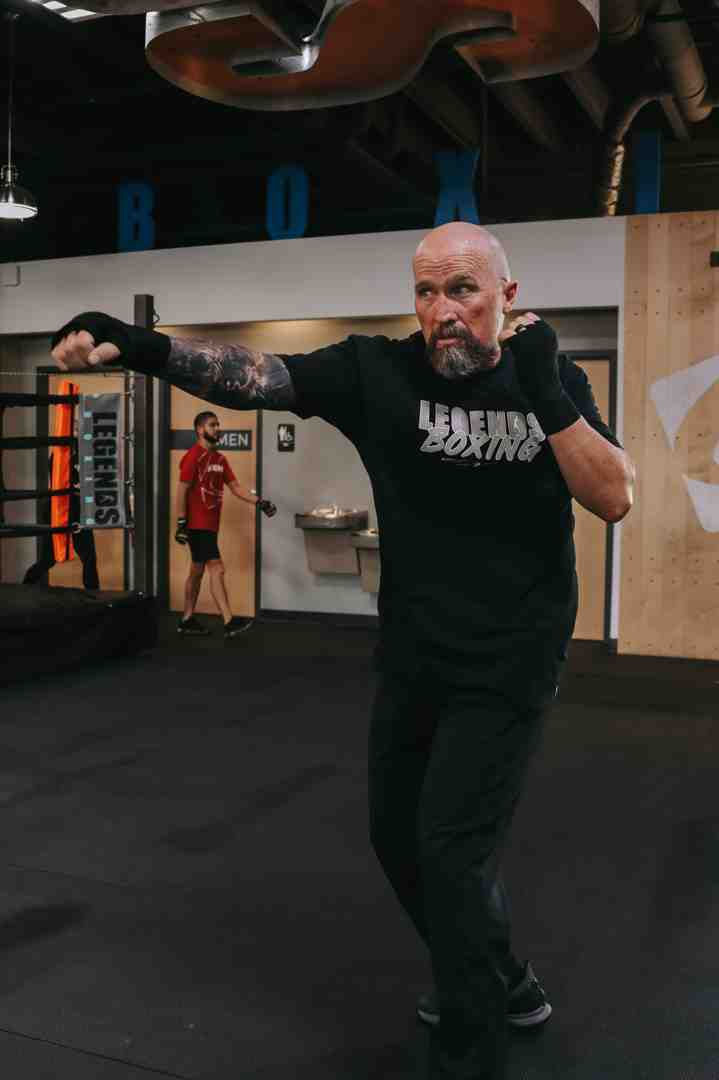
The six basic boxing moves form the foundation of all boxing combinations. At Legends Boxing, we teach these using a simple numbering system that makes learning combinations much easier:
- Odd numbers (1, 3, 5) — lead hand punches
- Even numbers (2, 4, 6) — rear hand punches
This system works regardless of whether you're orthodox or southpaw — it simply refers to your lead and rear hands.
How to Perform Each Basic Boxing Move Step-by-Step
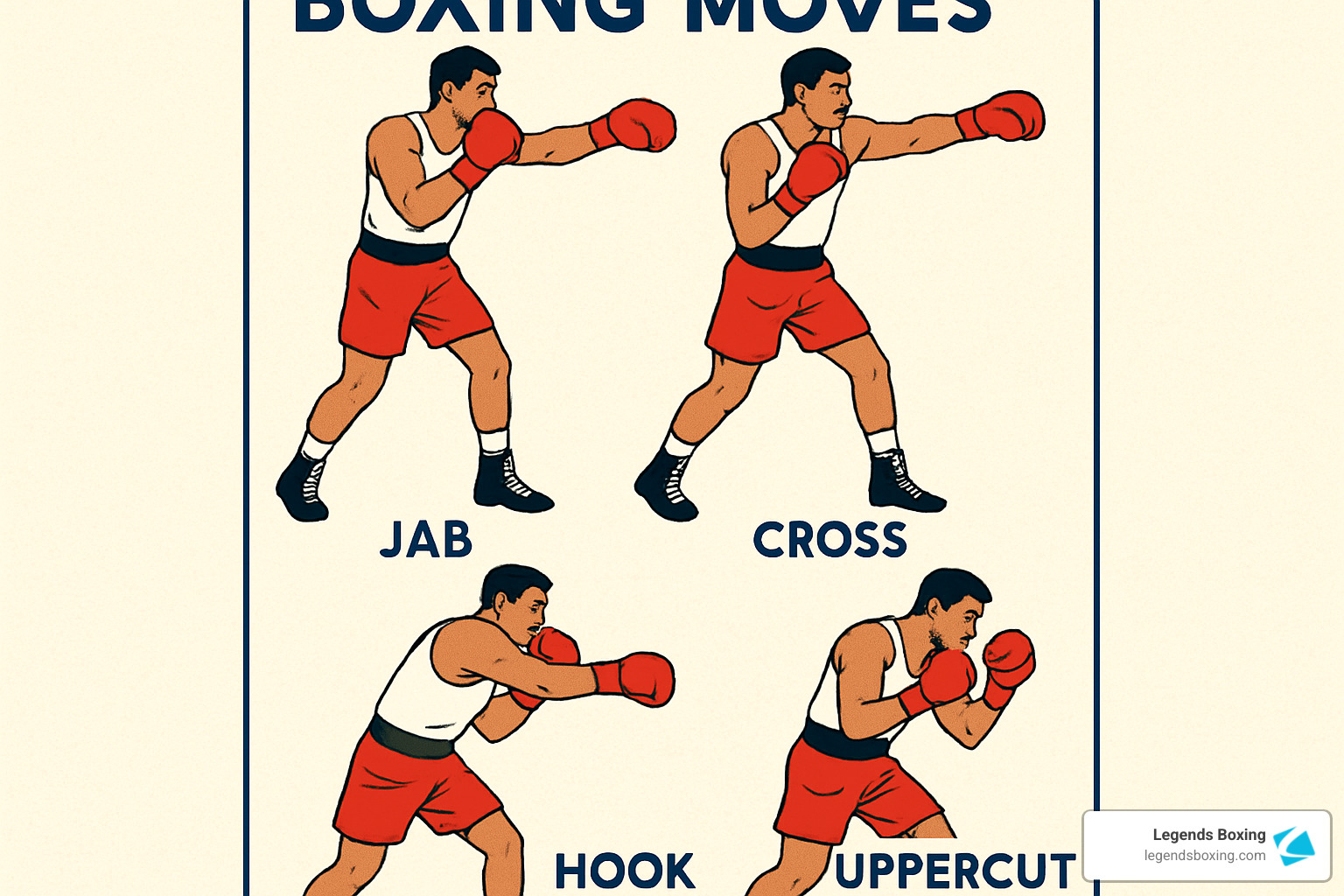
1. Jab (1) The jab is your workhorse punch — it's quick, direct, and sets up everything else. It accounts for 30–40% of all punches thrown in a typical boxing match. Start in your boxing stance with hands protecting your face. Extend your lead arm straight out at eye level, rotating your palm downward (like you're pouring out water). Keep that rear hand glued to your face for protection, and snap your jab hand back to guard position immediately.
Keep your shoulder high to shield your chin, and avoid the rookie mistake of dropping your hand before punching. The jab isn't about power — it's your rangefinder and door-opener.
2. Cross (2) Now we're talking power. Your cross comes from your rear hand. Push off your back foot (imagine squishing a bug), rotate those hips and shoulders, and extend your rear arm straight toward the target. As you make contact, rotate your palm down and return quickly to your guard.
The key to a devastating cross is keeping your chin tucked behind your shoulder and fully rotating your hips. Exhale sharply as you punch — this engages your core and adds snap.
3. Lead Hook (3) The lead hook might feel awkward at first, but once you get it, you'll love it. Shift your weight to your lead leg, bend your arm at a 90-degree angle (like you're holding a pizza box), and rotate your hips while pivoting on your lead foot. Turn your knuckles toward the target and return to guard.
Keep that elbow at shoulder height and the punch tight — no wild swings! The power comes from your hip rotation, not your arm. When executed properly, a lead hook can be surprisingly powerful despite coming from your "weaker" side.
4. Rear Hook (4) Similar to its lead counterpart but with your power hand. Shift weight slightly forward, bend your rear arm at 90 degrees, and pivot on your rear foot while rotating those hips. Turn knuckles toward the target and snap back to guard position.
Keep your lead hand up protecting your face while throwing the rear hook — this punch leaves you momentarily vulnerable. Don't overextend or you'll lose balance and power. It's all in the hips.
5. Lead Uppercut (5) Ready to attack from below? The uppercut is your answer. Bend your knees slightly, drop your lead shoulder and hand, then push up from your legs. Drive your fist upward with palm facing you, then return to guard position.
Keep your elbow close to your body and use your legs to drive the punch upward. Many beginners telegraph this by dropping their hand too much — keep it subtle.
6. Rear Uppercut (6) This is often the knockout punch you see in highlight reels. Bend your knees into a slight squat, drop your rear hand with palm facing you, pivot on your rear foot while pushing up, and drive your fist upward before returning to guard.
Keep your lead hand up for protection. Generate power from your legs and hips, not just your arm. And whatever you do, don't lean forward when throwing the uppercut — it's a common mistake that leaves your chin exposed.
Common Mistakes When Learning Basic Boxing Moves
At Legends Boxing, we see the same mistakes time and again with people learning basic boxing moves. Don't worry — everyone makes them:
Arm punching — power comes from the ground up, not just the arms. When you only use your arms, you lack power and tire out faster than a smartphone with too many apps running.
Dropping your hands — it feels natural to let your guard down when throwing a punch, but in boxing, that's an invitation for trouble. Always keep your non-punching hand protecting your face.
Telegraphing your punches — those little movements before you punch (dropping a shoulder, winding up) give away your intentions. Keep your movements efficient and your poker face on.
Overreaching — instead of lunging forward and compromising your balance, use your footwork to close the distance properly. Boxing is as much about positioning as it is about punching.
Poor weight distribution — many beginners stand flat-footed or lean too far forward, making them easy targets. Stay on the balls of your feet with your weight slightly back, ready to move in any direction.
With consistent practice, these issues disappear. Focusing on these six basic punches can increase a beginner's punching speed by up to 20% within just three months of training — this is why at Legends Boxing we emphasize quality repetition over quantity.
From Moves to Combos: Defense, Bag Work
Creating Effective Combos From Basic Boxing Moves
Once you're comfortable with individual basic boxing moves, it's time for the fun part — stringing them together into flowing combinations. Boxers who master the basic six punches can execute over 80% of standard combinations used in both amateur and professional fights.
The 1-2 (Jab-Cross) is boxing's bread and butter — simple yet devastatingly effective. Use your jab to measure distance and distract your opponent, then immediately follow with your power cross. The key is snapping back to your guard position right after.
The Double Jab-Cross (1-1-2): your first jab establishes distance, the second jab blinds or distracts, and then your cross delivers power through the newly created opening. This little adjustment makes a world of difference.
For a classic three-punch combo, nothing beats the 1-2-3 (Jab-Cross-Lead Hook). Your jab creates the initial opening, your cross forces your opponent to cover up, and then your lead hook comes swooping around their guard. When you nail this sequence with proper timing, it feels like magic.
"Start slow and focus on technique," we always remind our students at Legends. "Speed comes naturally once your body learns the movements." Gradually increase your pace as the combinations become second nature, and remember to vary your timing and rhythm.
Defensive Layers That Keep You Hit-Free
Boxing isn't just about throwing punches — it's equally about not getting hit. Boxers who regularly practice defensive moves like slipping and ducking can improve their punch avoidance rate by 25–35%.
Blocking — use your gloves and arms to absorb punches. Keep those elbows tight to protect your body and hands high to shield your head. Think of your guard as your home base.
Slipping — by rotating at the waist, you move your head off the centerline just enough for a punch to miss. Slip left to avoid straight right hands and slip right to avoid jabs. Keep your eyes on your opponent and your hands up for protection.
Ducking — when hooks come flying your way, bend those knees and lower your head under the incoming punch. Keep your eyes up and hands protecting your face — and rise back up immediately after the punch passes. Nobody wants to duck into an uppercut.
Parrying — gently redirect an incoming punch with minimal movement. Use your rear hand to parry jabs and your lead hand for crosses. Don't slap at punches — redirect them.
"The best fighters are thinking defensively even while attacking," we teach at Legends Boxing. Always be aware of your vulnerabilities and maintain proper guard — because the punch you don't see coming is usually the one that lands.
Safely Punching the Bag for Technique & Power
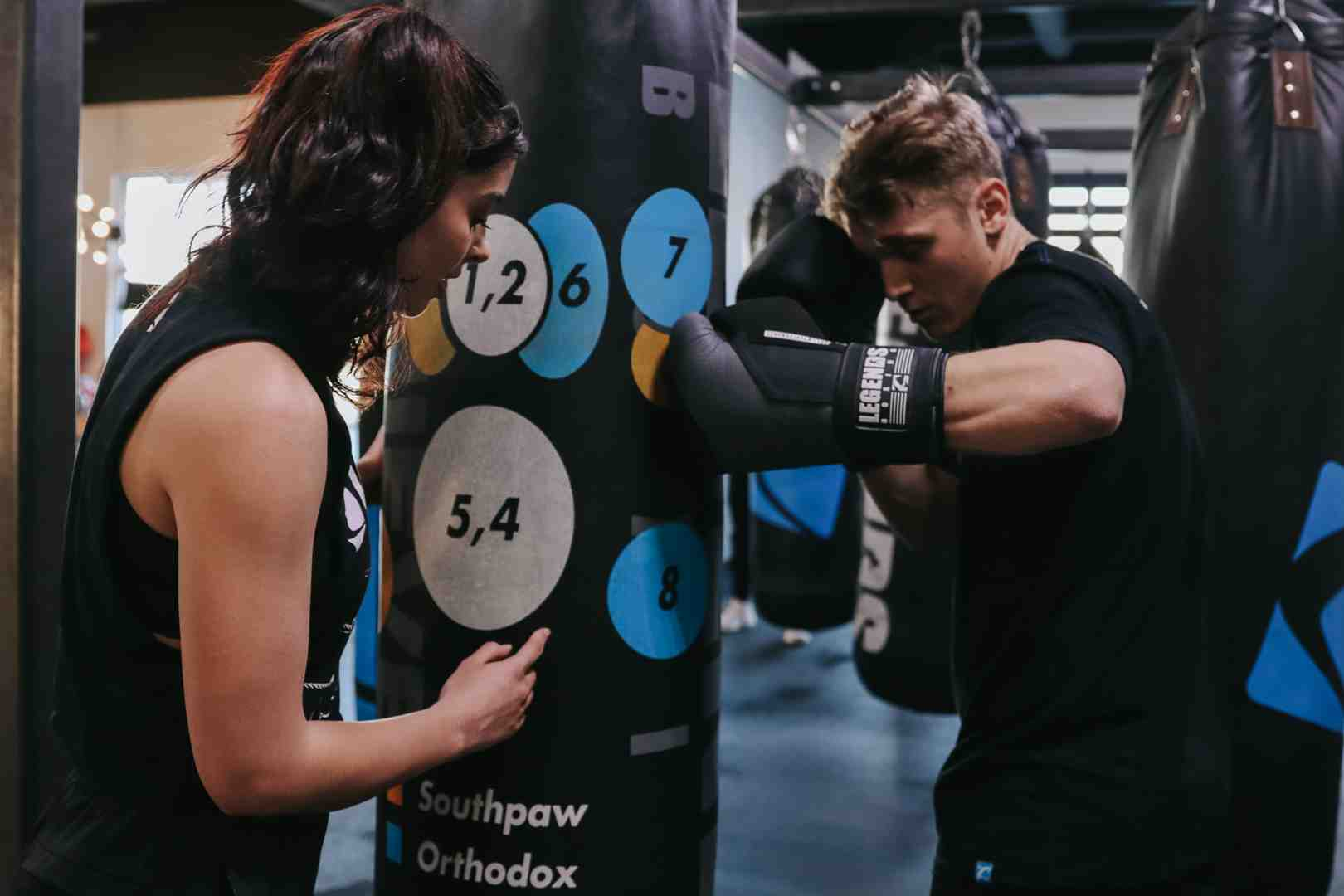
The heavy bag is your faithful training partner — it never gets tired, never complains, and always gives you honest feedback. But approach bag work with respect and proper technique.
Always wrap your hands properly before putting on gloves — wraps support your wrists and knuckles, preventing injuries that could sideline you for weeks. Use 12–16oz gloves for bag work. Position yourself about one arm's length from the bag — too close and you'll smother your punches, too far and you'll overextend.
Start with light, technical punches to warm up before gradually adding power. Remember to use your entire body, not just your arms. Don't just stand flat-footed in front of the bag — circle it using proper footwork, attack from different angles, and move in to punch then out to reset.
"Treat the bag as if it's hitting back," we tell our students. Even though it's not actually attacking you, maintain your defensive habits. Move, defend, and keep your guard up between combinations. These habits will serve you well when you're facing someone who actually throws punches back.
Training Essentials, Benefits, Styles & FAQs
What You Need to Get Started
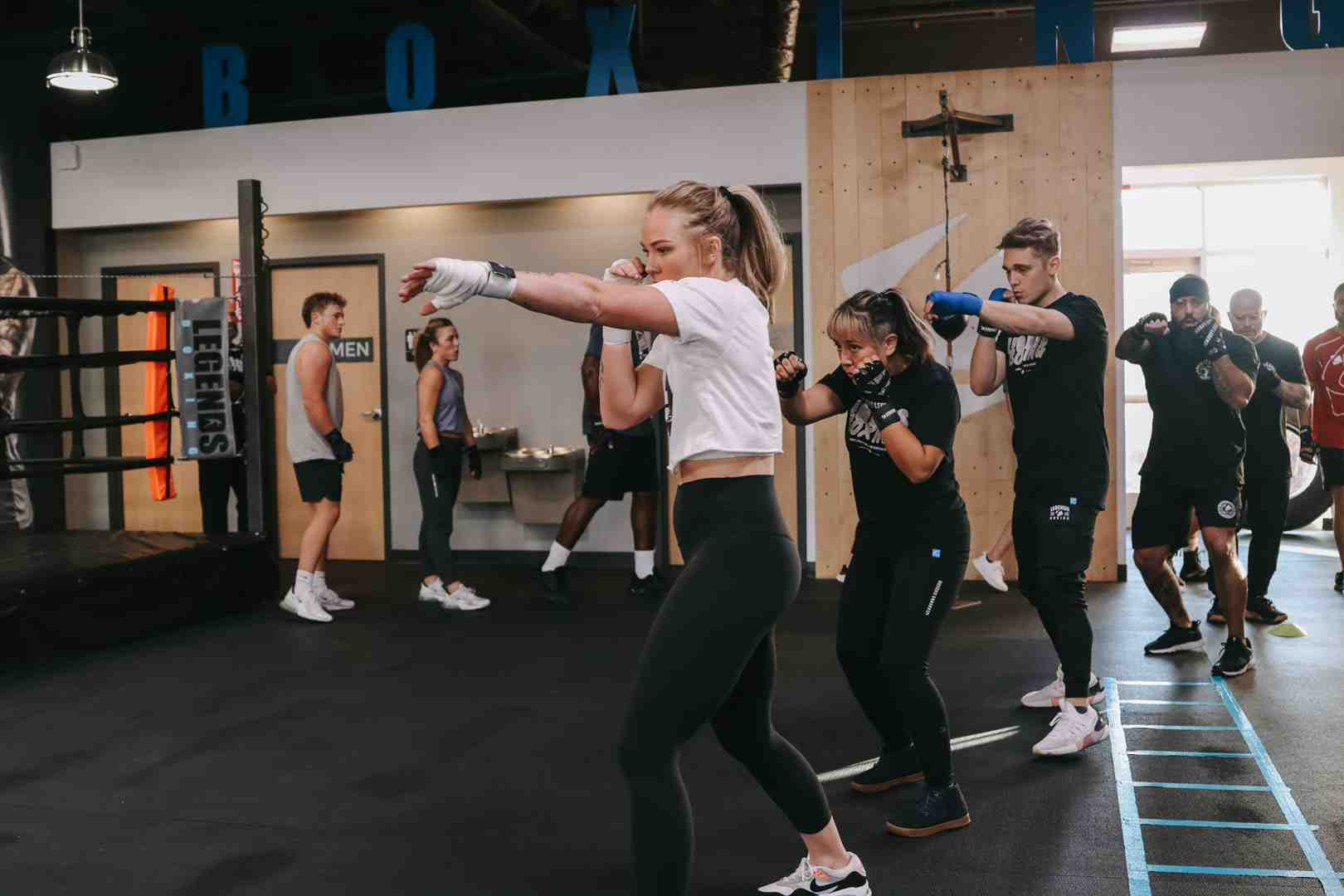
Before throwing those basic boxing moves with confidence, you'll need a few essentials. At Legends Boxing, we recommend starting with:
- Hand wraps (180" length works best) — protect the small bones in your hands and wrists
- Boxing gloves (12–16oz for training) — provide cushioning and protection
- Comfortable athletic clothes — you'll be moving freely in every direction
- Mouthguard — add this when you begin sparring
- Jump rope — excellent conditioning and footwork tool
- Flat-soled shoes — better stability than running shoes
Don't worry if you're just curious — at Legends Boxing, we provide gloves for new members so you can try before investing. For home practice, shadowboxing requires nothing but space and motivation.
Physical & Mental Benefits That Keep You Coming Back
There's a reason boxing has endured for centuries — it transforms both body and mind in ways few other workouts can.
When you practice those basic boxing moves, you're not just learning to fight — you're engaging in a full-body workout that burns anywhere from 400–800 calories per hour. Your heart pounds, your lungs expand, and your muscles fire from head to toe. Within weeks, you'll notice improved cardiovascular endurance, stronger shoulders and legs, and a core that feels solid as steel.
But the real magic happens upstairs. There's something almost meditative about focusing entirely on your technique, forgetting deadlines and stresses as you lose yourself in the rhythm of the bag. Many of our members at Legends Boxing tell us they've never found a better stress reliever. The confidence that comes from mastering these skills spills over into everyday life — standing taller in meetings, feeling more assertive in conversations, and approaching challenges with newfound resilience.
"I came for the workout, but stayed for how it made me feel mentally. There's nothing like the feeling after landing a perfect combination you've been practicing for weeks."
Adapting Basic Boxing Moves to Your Natural Stance
Whether you're right-handed (orthodox) or left-handed (southpaw), the basic boxing moves remain the same — they're just mirrored. Orthodox fighters benefit from having their stronger hand in the power position for crosses and rear hooks, while southpaws enjoy a strategic advantage against orthodox opponents who may not be used to facing them.
At Legends Boxing, we encourage members to experiment with both stances. Understanding how to fight from the opposite stance makes you more versatile and helps you better anticipate an opponent's movements.
The Four Classic Boxing Styles
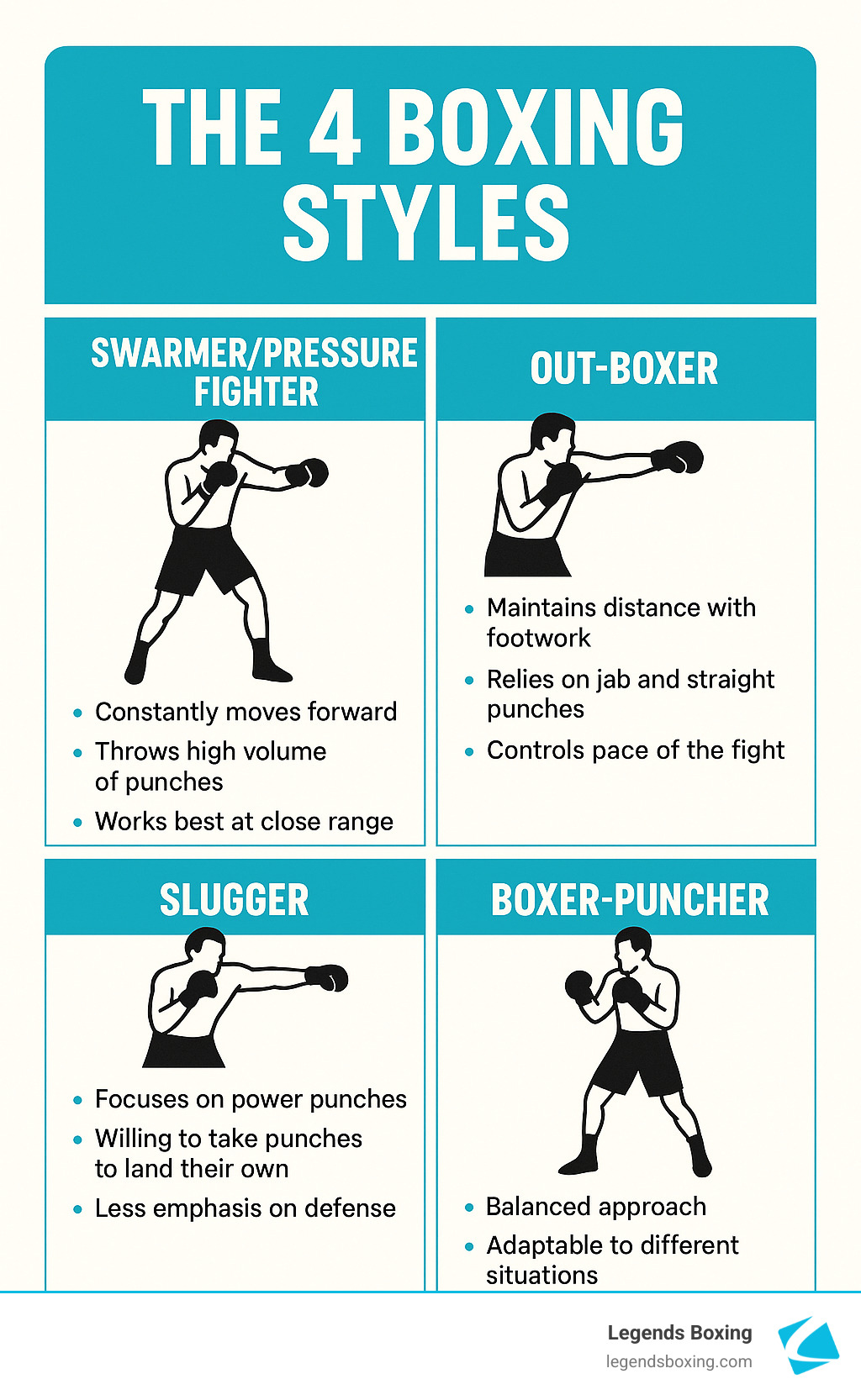
Your physical attributes and personality might naturally guide you toward one of the four classic boxing styles:
Swarmers (like Mike Tyson) move forward relentlessly, throwing punches in bunches and working best at close range. If you're naturally aggressive with good stamina, this might be your style.
Out-boxers (like Muhammad Ali) control the fight from distance with precise jabs and footwork. Taller fighters with good reach often excel here.
Sluggers (like George Foreman) focus on power punches and are willing to take one to give one. If you have natural power and a sturdy chin, this approach might suit you.
Boxer-punchers (like Canelo Alvarez) blend technical skill with power, adapting to whatever the situation demands. This balanced approach works well for most beginners.
Frequently Asked Questions about Basic Boxing Moves
What equipment do I need to start learning basic boxing moves?
The bare minimum is hand wraps and gloves — your hands will thank you. Hand wraps protect the small bones in your hands and wrists, while gloves provide the cushioning. At Legends Boxing, we provide gloves for new members so you can try before investing. For home practice, shadowboxing requires nothing but space and motivation.
How often should beginners practice basic boxing moves?
Quality trumps quantity every time. We recommend 2–3 sessions per week with rest days in between to let your body recover. A focused 30-minute session with proper form teaches your muscles more than an hour of sloppy work. As your technique and conditioning improve, you can gradually increase your training frequency.
How long before I can spar safely?
Patience is key. Most beginners should spend at least 3–6 months developing solid basic boxing moves before stepping into even light sparring. At Legends Boxing, we ensure you've mastered proper technique, defensive skills, and conditioning first. Sparring is a learning tool, not a fight — the goal is improvement, not domination.
Can I practice basic boxing moves at home?
Absolutely. Shadowboxing is perfect for home practice. Set up a mirror if possible to check your form, and use household items as markers for footwork drills. Even 10 minutes daily builds muscle memory. Just check in with a coach periodically (or film yourself) to make sure you're not developing bad habits.
Will learning boxing make me aggressive?
It's actually quite the opposite. The discipline, structure, and physical exertion typically reduce aggression by providing healthy outlets for stress and emotion. Our members often report feeling calmer and more centered in their daily lives after beginning boxing training. At Legends Boxing, respect and control are fundamental values we emphasize in every class.
Do I need to be in good shape before starting boxing?
Not at all. Boxing meets you exactly where you are. At Legends Boxing, we have members of all ages, sizes, and fitness levels. The workouts naturally scale to your ability, and you'll build endurance and strength as you practice. The important thing is to start where you are and focus on proper technique rather than intensity at first.
Step Into the Ring and Start Moving
Mastering basic boxing moves is a journey that rewards consistency and patience. Like learning any new skill, boxing builds layer by layer — from your stance to punches to combinations — creating a comprehensive skill set that transforms both your body and mind.
Keep these essentials in mind as you progress:
- Start with your foundation — a solid stance and proper footwork might not seem as exciting as throwing punches, but they're what everything else builds upon
- Master each of the six basic punches individually before rushing to combinations — patience here pays dividends later
- Your defense matters just as much as your offense — always maintain your guard, even when hitting the bag
- True power comes from the ground up — your legs, hips, and core generate the force that your arms simply deliver
- Be patient with yourself — progress in boxing isn't always linear; what matters is showing up consistently and focusing on improvement, not perfection
"The best boxers aren't the ones who can take a punch — they're the ones who don't have to."
Whether your goal is fitness, self-defense, competition, or simply learning a new skill, the foundation you build with these basic boxing moves creates a platform for success. Boxing truly welcomes everyone — regardless of age, gender, athletic background, or fitness level.
Find your nearest Legends Boxing location across Utah, Florida, and Texas — or book your first free class today. No experience required, just a willingness to learn and work.