
From Rookie to Rocky — Basic Boxing Moves for Beginners
Basic boxing moves for beginners unlock one of the most effective full-body workouts available — burning 500–800 calories per hour while building real strength and confidence. This guide covers the six fundamental punches and the numbered combo system, proper stance and footwork, essential beginner combinations, basic defense, a 30-day progression plan, and the most common mistakes to avoid.
Why Boxing is the Perfect Workout for Busy Professionals
Basic boxing moves for beginners offer one of the most effective ways to break free from boring gym routines while building real strength, confidence, and stress relief. Whether you're stuck in a workout plateau or simply need an engaging way to stay active, boxing delivers a full-body experience that burns 500–800 calories per hour and boosts your mood through endorphin release.
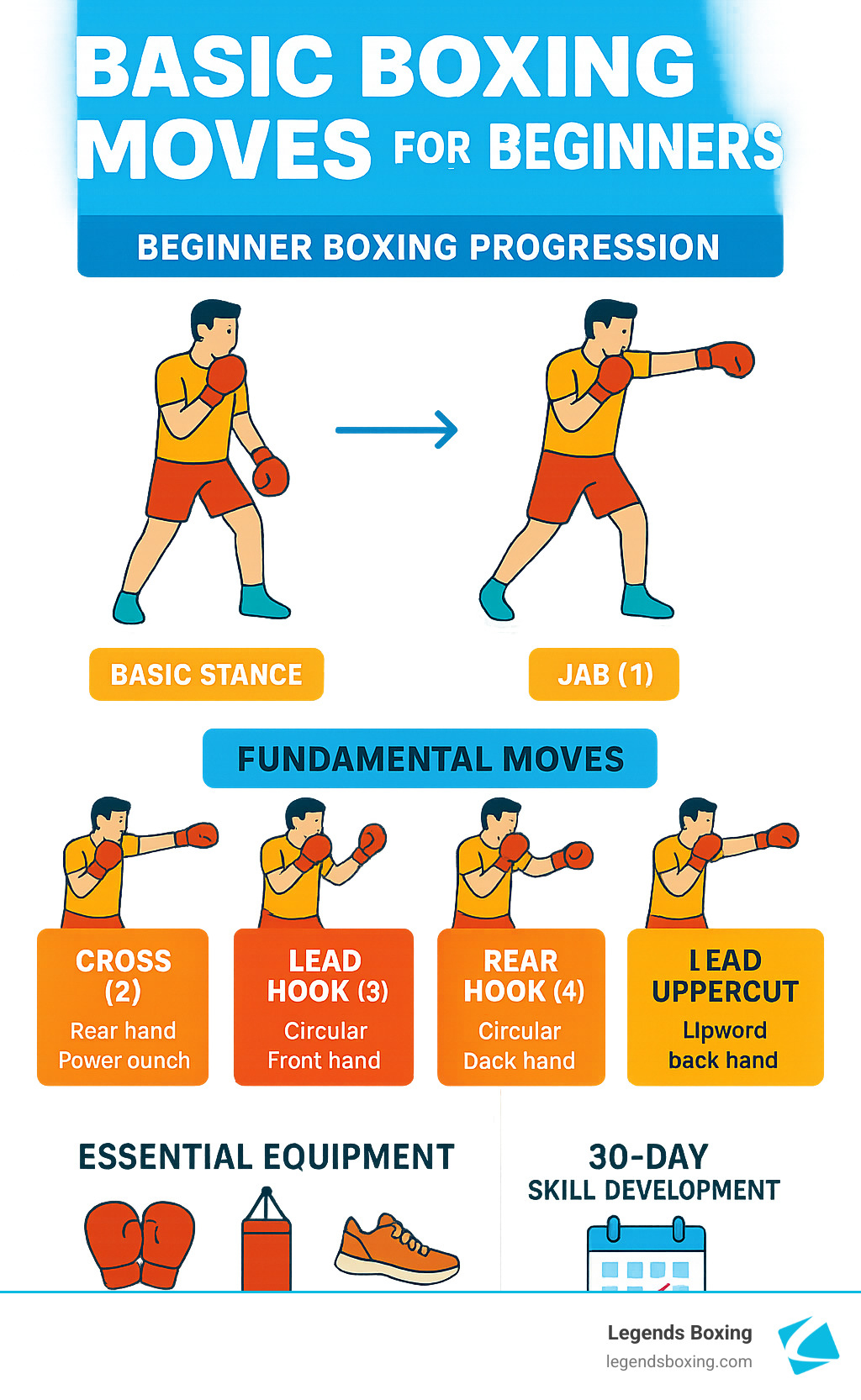
The six fundamental boxing moves every beginner should master:
| # | Punch | Description |
|---|---|---|
| 1 | Jab | Quick, straight punch with lead hand |
| 2 | Cross | Power punch with rear hand |
| 3 | Lead Hook | Circular punch with front hand |
| 4 | Rear Hook | Circular punch with back hand |
| 5 | Lead Uppercut | Upward punch with front hand |
| 6 | Rear Uppercut | Upward punch with back hand |
Boxing may look intimidating, but it's actually built on simple, learnable movements. The numbered punch system makes it easy to follow combinations, while proper stance and breathing techniques ensure you're training safely from day one. Studies show that boxing training can improve cardiovascular health by 13% and increase coordination by 20% in just your first three months.
Robby Welch, National Head Coach at Legends Boxing with over two years of experience helping beginners master these fundamentals through nationwide coaching programs, has personally guided hundreds of rookies through their first punches.
Why Boxing Rocks: Benefits, Gear & Safety
Boxing transforms your body and mind in ways that'll surprise you. When you're throwing basic boxing moves for beginners, you're not just learning to punch — you're torching calories at an incredible rate of 500 to 800 per hour.
Your heart gets stronger too. Studies show that just 8 weeks of consistent boxing training boosts your VO2 max by 13%. That means better endurance, whether you're climbing stairs or chasing after your kids.
The mental game-changer is just as real. Boxing crushes your stress hormones while flooding your system with endorphins, serotonin, and dopamine. Scientific research consistently shows that exercise like boxing delivers powerful mental health benefits alongside the physical changes you'll see and feel. Countless members walk into Legends Boxing locations looking defeated by their day — thirty minutes later they're practically glowing with renewed confidence.
Essential Gear for Beginners
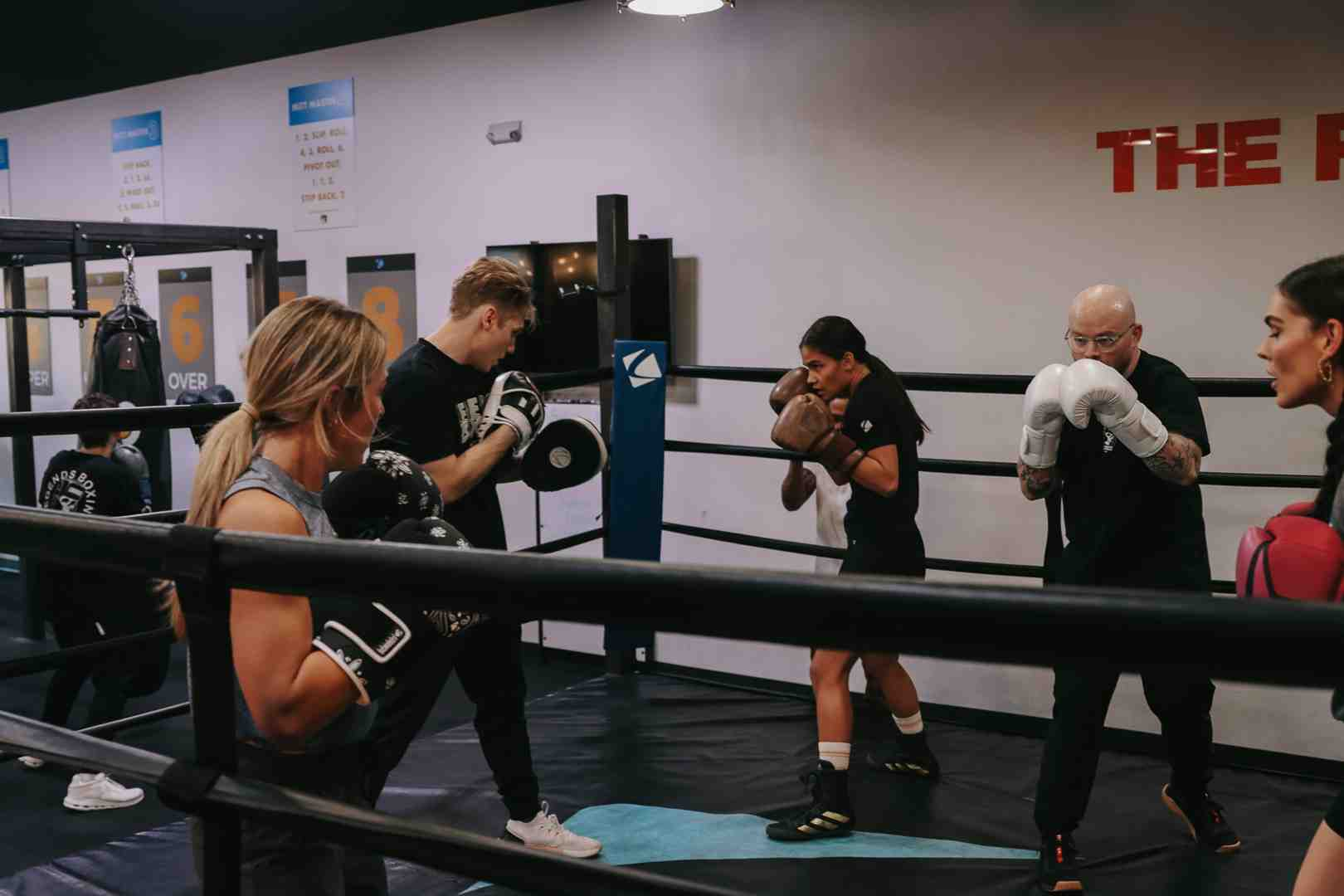
Starting your boxing journey shouldn't drain your bank account. You can begin practicing basic boxing moves for beginners with surprisingly little:
- Hand wraps — your absolute first purchase; insurance for your wrists and knuckles
- 16 oz boxing gloves — the extra weight provides proper cushioning and builds strength gradually
- Mouthguard — protects your teeth during any partner work
- Athletic shoes — regular ones work perfectly fine when you're starting out
- Jump rope (optional upgrade) — transforms your footwork and cardiovascular conditioning
Many boxing gyms, including Legends Boxing locations, provide equipment for new members. You can even practice shadowboxing with zero equipment — just you, a mirror, and the determination to learn.
Budget tip: Start with basic hand wraps and gloves for under $50. You'll be throwing proper punches in no time.
Safety First: Injury Prevention
Start every session with 5–10 minutes of light cardio — jumping jacks or jogging in place work perfectly. Follow up with arm circles and shoulder rolls to wake up your joints. Cool down with shoulder, arm, and core stretches after every session.
The golden rule: boxing is 90% mental. Listen to your body religiously. Start slowly and build intensity gradually over weeks, not days. Muscle soreness is normal; sharp pain means stop immediately. Learning proper technique from the start actually prevents injuries — you're building safe habits that'll serve you for years.
Build Your Foundation: Stance, Footwork & Breathing
Think of your boxing stance as the foundation of everything you'll do. Without a solid base, even the most powerful basic boxing moves for beginners fall apart.
The Boxing Stance
| Orthodox | Southpaw | |
|---|---|---|
| Lead foot | Left foot forward | Right foot forward |
| Power hand | Right hand | Left hand |
| Who uses it | ~85% of boxers | ~15% of boxers |
| Jab hand | Left | Right |
For orthodox stance (right-handed), place your left foot forward and right foot back, shoulder-width apart at about a 45-degree angle. Weight on the balls of your feet with knees slightly bent — this keeps you mobile and ready to move in any direction.
Here's where many beginners go wrong: they keep their back heel flat on the ground. Keep that back heel slightly raised. This transforms you from a sitting duck into a mobile fighter who can move and punch with real power.
Upper body: turn your left shoulder toward your target to make yourself a smaller target. Chin tucked down, eyes up. Hands at cheek level with elbows close to your ribs — not flared out like chicken wings.
Essential Footwork Patterns
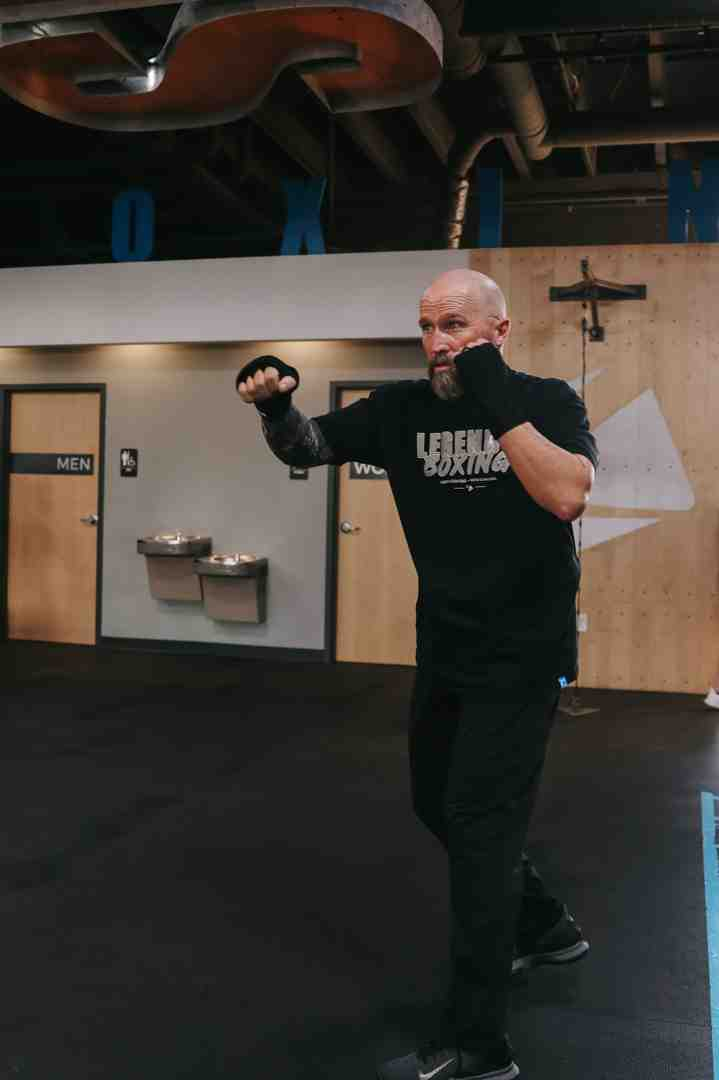
Good footwork separates real boxers from people just throwing punches.
The step-drag is your bread and butter. To move forward, step with your lead foot first, then drag your rear foot to maintain stance width. Never cross your feet — that leaves you completely off-balance.
The pivot is the most underrated move in boxing. Rotate on your lead foot to change angles, creating new attack opportunities or escaping trouble. Practice pivoting left and right until you can do it without thinking.
The shuffle keeps you light and mobile. Think controlled bouncing on the balls of your feet — small, quick steps that maintain your stance while keeping you ready to move. Great boxers look like they're dancing because they've mastered this rhythm.
Breathing: The Missing Piece
Most beginners completely ignore breathing. Here's the pattern that changes everything: inhale through your nose during setup, then exhale sharply through your mouth on each punch — make a sharp "hiss" sound. It engages your core and adds power to every single punch.
This breathing rhythm does three crucial things: it times your punches perfectly, engages your core muscles for maximum power, and keeps your jaw closed for protection. Practice this during shadowboxing until it becomes automatic.
The Six Punches & The Numbering System
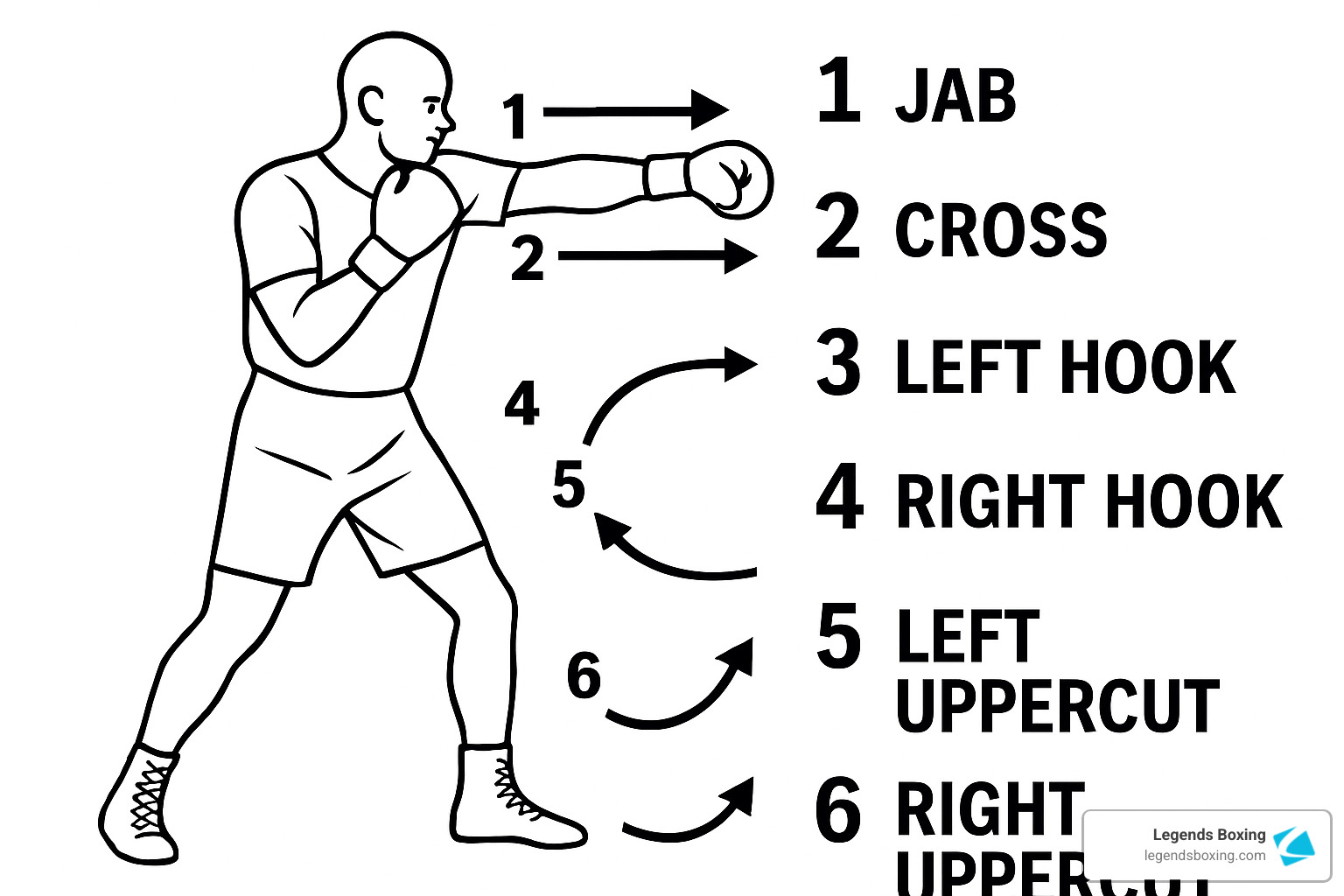
Here's something beautiful about boxing: walk into any gym in Tokyo, New York, or your hometown, and everyone speaks the same language. The 1-2-3-4-5-6 numbering system is boxing's universal code. Instead of your coach shouting "throw a jab, then a cross, then a lead hook," they simply call out "1-2-3!" In orthodox stance, odd numbers belong to your left hand and even numbers to your right.
This system builds automatic responses through repetitive number patterns — your body starts moving before your brain even thinks about it.
The Jab (1) is boxing's workhorse. It's your range-finder, your setup tool, and your get-out-of-trouble card all rolled into one. From your boxing stance, snap your lead arm straight out while keeping that rear hand glued to your chin for protection. Think of flicking water off your fingers — not pushing a heavy door. Your fist rotates so your palm faces down at impact, then snaps right back to guard. Don't admire your work; get that hand home fast.
The Cross (2) brings the power. This rear-hand punch generates force through hip rotation and weight transfer from your back foot. As you throw it, pivot on that rear foot like you're squashing a bug underneath — that's where your power comes from. Drive your rear hand straight across your body while your shoulder comes up to protect your chin. Done correctly, your shoulder actually touches your chin at the end of the punch. It's your whole body working together, not just your arm.
The Lead Hook (3) is where boxing gets artistic. This circular punch travels in a horizontal arc with your elbow locked at 90 degrees. Pivot on your lead foot and let your hips do the work — don't swing wild like you're chopping wood. Think of your arm as attached to your core, rotating as one unit. Keep that rear hand up for protection. When thrown correctly, the lead hook is one of boxing's most devastating punches.
The Rear Hook (4) combines your power hand with circular motion. Pivot on your rear foot and rotate your body like a spring unwinding in the opposite direction. Your elbow stays at 90 degrees and your fist travels in the same horizontal arc. Time it right and you'll generate incredible power from that rotational force.
The Lead Uppercut (5) is your close-quarters weapon. Drop your lead shoulder slightly and bend your knees, then drive upward like you're lifting something heavy. Keep your elbow tight to your body — no chicken wings. The power comes from your legs driving up, not just your arm. It's particularly effective when your opponent drops their guard or leans forward.
The Rear Uppercut (6) brings your power hand into the upward game. Drop into a slight squat, then rotate your hips as you drive upward with your rear hand. This punch combines the rear hand's natural power with upward momentum. Like all uppercuts, keep it tight and controlled.
Memorizing the System
Start with single punches — throw ten perfect jabs, then ten crosses. Focus on quality over quantity every time. Progress to simple combo drills: 1-2, then 1-1-2, then 1-2-3. Each combination should feel smooth and natural before you add speed or complexity. Even professional boxers still practice these basic combinations daily.
From Moves to Mastery: Combos, Defense & Drills
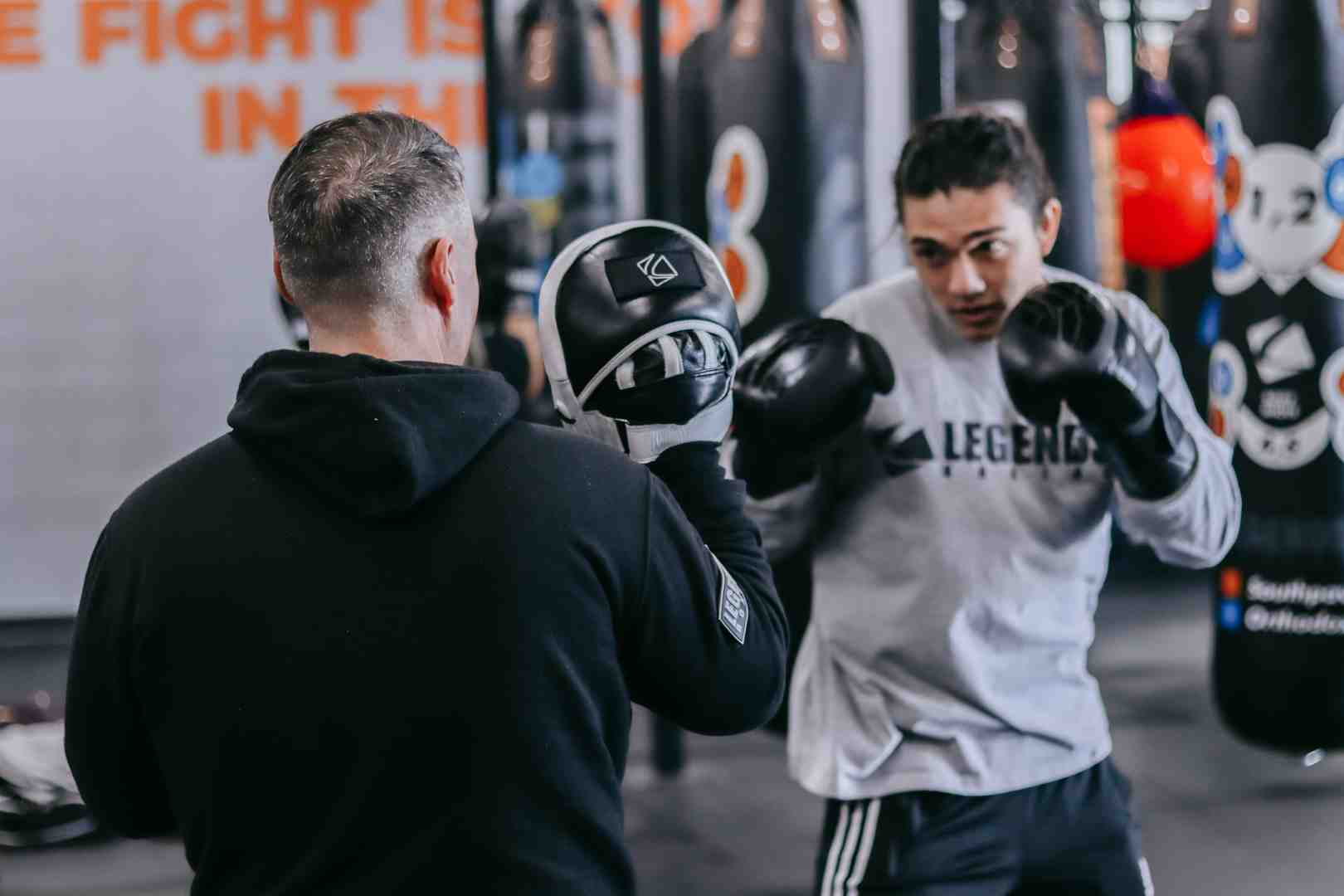
Essential Beginner Combinations
The 1-2 (jab-cross) is boxing's bread and butter. Champions like Floyd Mayweather built entire careers perfecting this simple combo. The jab creates the opening; the cross delivers the power.
The 1-1-2 (double jab-cross) adds an extra jab to keep your opponent guessing and prevent you from getting lazy with your lead hand.
The 1-2-3 (jab-cross-lead hook) introduces your first three-punch sequence. This combo is beautiful because it changes angles — you go from straight punches to a circular attack.
The 5-2-3 (lead uppercut-cross-hook) is devastating in close range. The uppercut lifts their guard, the cross shoots through the opening, and the hook comes from the side.
Pro tip: vary your punch speed within combinations. Start slow to disrupt their timing, then explode with your finishing punch.
Basic Defense: Your Shield
Blocking uses your gloves and forearms like a shield, keeping your elbows close to protect against body shots.
Slipping rotates your waist to move your head away from straight punches. Once you master it, you'll feel like you're dancing around punches.
Ducking bends at your knees and hips to go under hooks and overhand punches — hands up while ducking.
Parrying uses slight deflection instead of rigid blocking to redirect incoming punches rather than absorbing full force.
Essential Training Drills
- Shadowboxing: 10 minutes daily can increase punch accuracy and coordination by 20%. Visualize a real opponent — keep it technical.
- Jump rope: start with 30-second intervals and work up to full 3-minute rounds for footwork and cardio.
- Heavy bag work: form first, power second. Practice combinations slowly, then gradually increase speed while maintaining technique.
- Double-end bag: improves hand-eye coordination and teaches you to adjust timing and accuracy in real-time.
Home Workout Essentials
- Warm-up (5 min): arm circles and light shadowboxing
- Main workout (20 min): three rounds of shadowboxing + three rounds of combination practice (1-2 and 1-2-3) + two rounds of footwork drills
- Cool-down (5 min): full-body stretching
Progression Plan
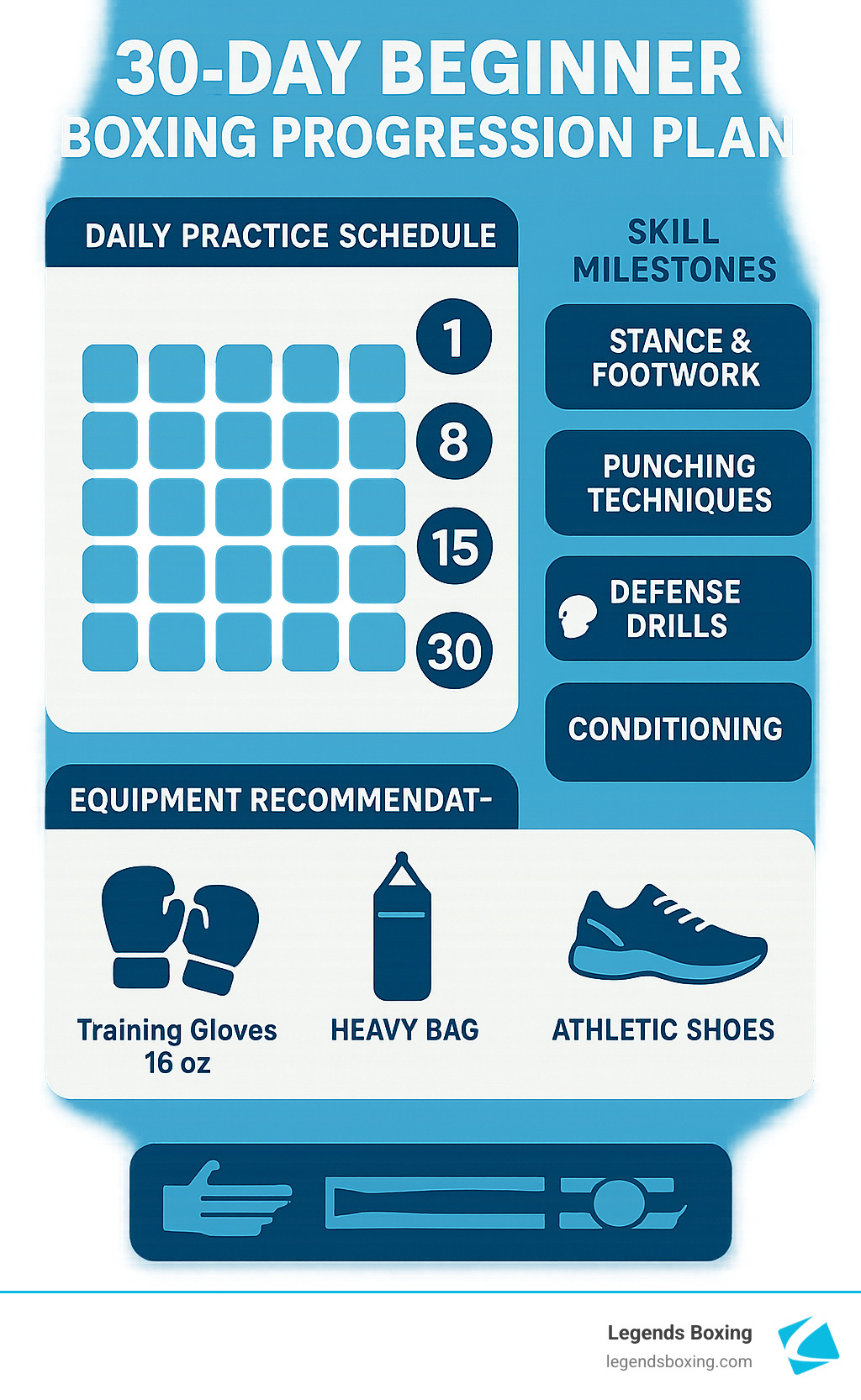
- Weeks 1–2: master your stance and single punches
- Weeks 3–4: introduce basic combinations (1-2 and 1-1-2)
- Weeks 5–8: add defensive movements and more complex combinations
- Months 2–3: incorporate advanced footwork drills and serious bag work
Studies show that practicing basic boxing footwork drills can improve your balance and agility by up to 30% in just three months.
Common Mistakes to Avoid
Dropping your hands is the most common beginner mistake. Your gloves should snap back to your cheeks after every punch. Flaring your elbows doesn't add power — it just telegraphs your punches. Keep them tight to your ribs.
Overcommitting to punches throws off your balance and leaves you vulnerable. Don't lean into your punches — maintain your stance and stay ready for whatever comes next.
Forgetting to breathe. Seriously. The sharp exhale on every punch is non-negotiable.
Finding Your Boxing Community

Boxing is always better with others. Whether you join a gym or connect with an online community, having support makes all the difference. Look for beginner-friendly environments with qualified instructors who emphasize technique over power.
At Legends Boxing, the entire program is built around welcoming beginners. Our coaches understand that everyone starts somewhere, and we're committed to helping you progress safely and confidently. Beginners who start with proper instruction progress faster and stay injury-free compared to those who self-teach for months before joining a class.
Frequently Asked Questions
How often should a beginner practice basic moves?
Consistency beats intensity every single time. Start with 2–3 sessions per week, giving yourself rest days between workouts. Each session should last 30–45 minutes initially — long enough to practice properly but short enough to maintain good form throughout.
Focus on quality over quantity: 50 perfect punches beat 500 sloppy ones. Your muscle memory is like wet cement right now — whatever you practice repeatedly becomes permanent. As your conditioning improves and the movements become more natural, increase to 4–5 sessions per week. But don't rush this progression.
Do I need a partner or coach to start?
You can absolutely begin on your own — shadowboxing, footwork drills, and basic combinations can all be practiced solo. However, professional instruction as soon as possible is strongly recommended.
Bad habits are incredibly hard to break once ingrained. A qualified coach catches and corrects mistakes before they become permanent, ensures you're training safely, provides personalized feedback that online tutorials can't match, and keeps you motivated when the learning curve gets steep.
What glove weight is right for training vs. sparring?
For training and bag work: stick with 16 oz gloves regardless of experience level. The extra weight builds shoulder endurance while the additional padding protects your hands during long sessions. Under 120 pounds, 14 oz gloves are acceptable.
Sparring always requires 16 oz gloves — no exceptions. The extra cushioning protects both you and your partner.
Competition gloves (8–10 oz) are only for actual fights — never use these for training, even if you see experienced boxers doing so.
Your Rocky Moment Starts Now
You've just learned the complete foundation of basic boxing moves for beginners — and that's something to be proud of. These six punches and fundamental techniques have launched countless boxing careers and transformed millions of fitness routines worldwide.
Every boxing legend started exactly where you are right now. Muhammad Ali threw his first awkward jab as a beginner. Floyd Mayweather had to learn the difference between a hook and an uppercut. The only difference between them and recreational boxers is daily practice and never giving up.
Your next steps are simple: start shadowboxing for just 10 minutes daily, focus on perfect form over speed, and find a supportive community that encourages your progress. Consistency beats perfection every time.
Find your nearest Legends Boxing location and put these moves into action with coaching that turns "Rookie" into "Rocky" — or book your first free class today. No experience required. Just bring the determination to learn.