
Mastering the Ring: Your Ultimate Guide to Every Boxer Move
Boxer moves are the fundamental punches, defensive maneuvers, and footwork that form the foundation of boxing — and the secret to an elite full-body workout. This guide breaks down all six basic punches, essential defensive techniques, footwork, combinations, and the four main boxing styles.
Why Understanding Boxer Moves Transforms Your Fitness Journey
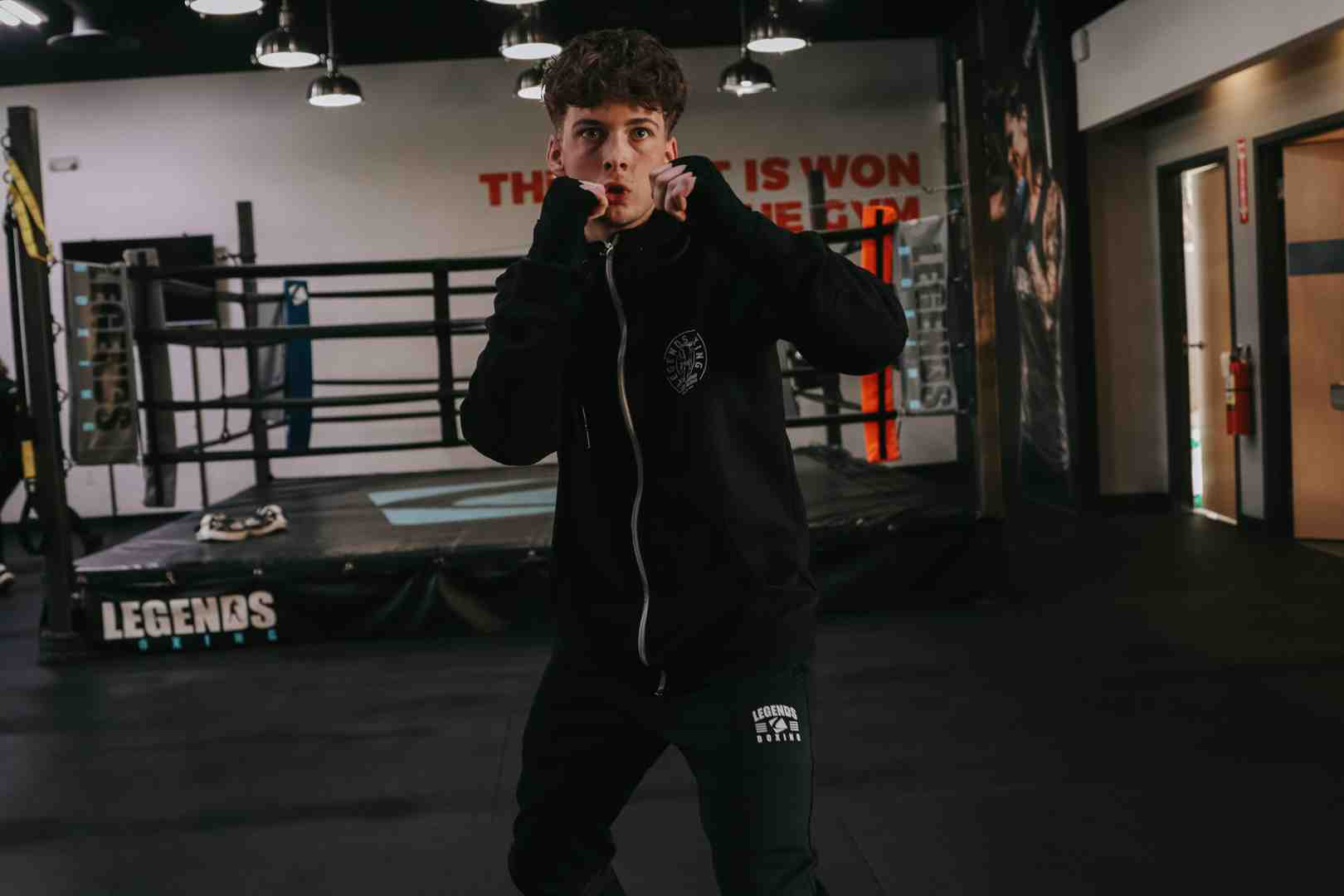
Boxer moves are the fundamental punches, defensive maneuvers, and footwork that form the foundation of boxing. They are also the secret to an effective, engaging full-body workout. Whether you're new to boxing or want to understand its power as a fitness tool, mastering these core movements will change how you view exercise.
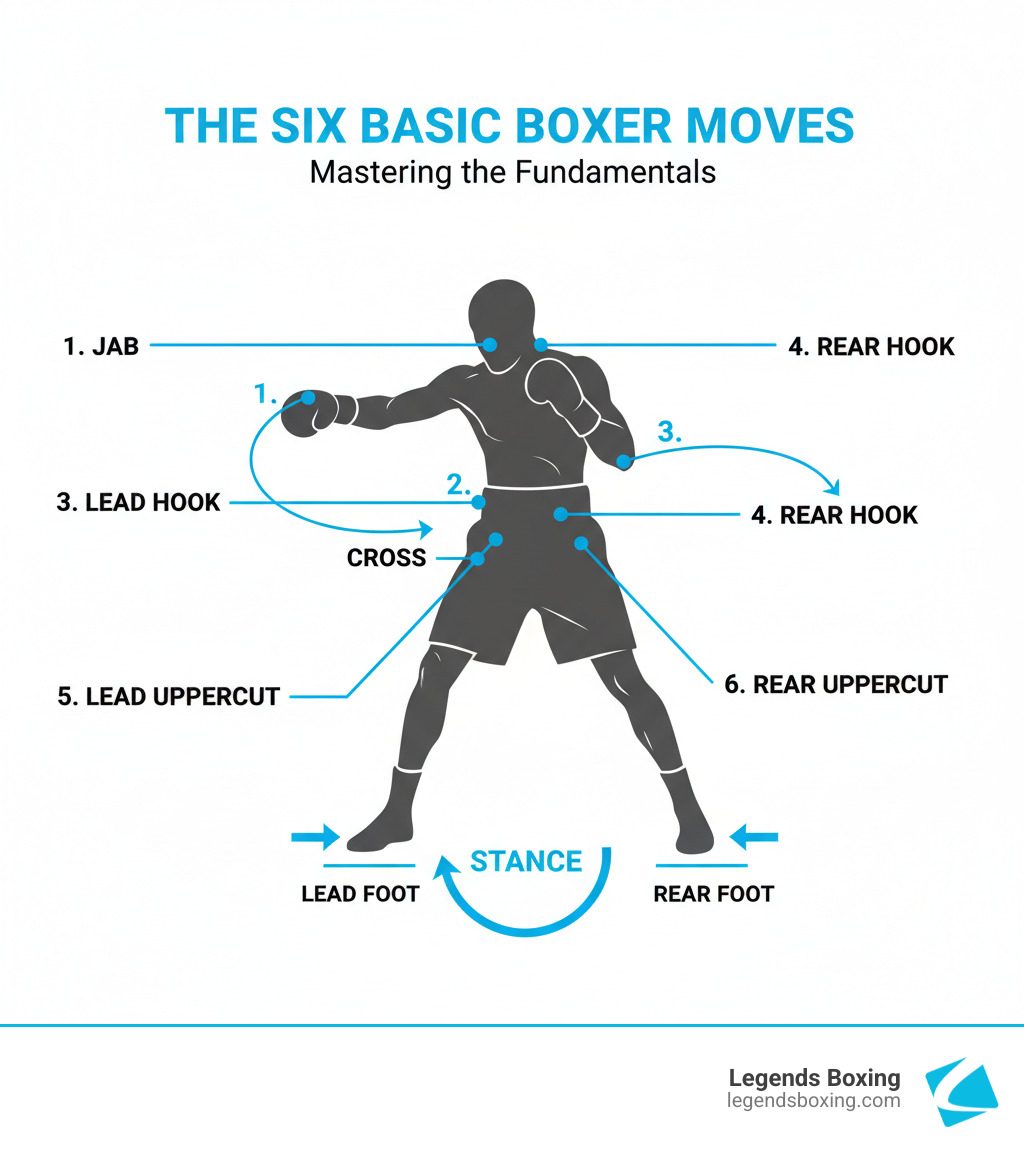
The six basic boxer moves, numbered 1–6:
| # | Punch | Hand |
|---|---|---|
| 1 | Jab | Lead hand — quick setup punch |
| 2 | Cross | Rear hand — primary power punch |
| 3 | Lead Hook | Front hand — circular punch |
| 4 | Rear Hook | Back hand — circular punch |
| 5 | Lead Uppercut | Front hand — upward punch |
| 6 | Rear Uppercut | Back hand — upward punch |
Remember: Odd-numbered punches use your lead hand; even-numbered punches use your rear hand.
Beyond punches, effective boxer moves include defensive techniques like slipping and weaving, plus the footwork that ties it all together. Boxing is about balance, timing, and strategy — not just throwing punches.
In a fitness setting, you don't need to spar to get the benefits. A 30-minute session burns 300–500 calories, builds full-body strength, improves coordination, and releases stress — all while developing skills that build real confidence.
I'm Robby Welch, National Head Coach for Legends Boxing. I've helped thousands master these fundamental boxer moves to transform their fitness. In this guide, I'll break down each technique, explaining the what and the why behind every movement.
The Foundation: Stance and Footwork
Before throwing a punch, you must understand where power comes from: the ground up. Every effective boxer move starts with a solid stance and smart footwork. Your stance is your home base for power, balance, and movement. Without it, punches feel weak and awkward. Once you nail your stance and footwork, everything else clicks into place, and boxing becomes a coordinated, powerful workout.
Orthodox vs. Southpaw Stance
Your stance determines your punch numbering. Most people use an orthodox stance. If you're right-handed, your left foot and shoulder are forward. This places your lead hand (left) out front for quick jabs, while your dominant rear hand (right) is coiled back, ready to deliver power punches.
If you're left-handed, you'll likely use a southpaw stance — the mirror image of orthodox. Your right foot and shoulder are forward, making your dominant left hand your power hand.
At Legends Boxing, we teach the punch numbering system based on an orthodox stance. Odd-numbered punches (1, 3, 5) come from the lead hand, and even-numbered punches (2, 4, 6) come from the rear hand. This pattern makes combinations intuitive to learn.
Mastering Basic Footwork
Your feet are as important as your fists. Great footwork generates power, creates angles, and maintains balance. Power starts in your feet, travels through your hips, and explodes through your fists.
- Moving forward: Step with your lead foot first, then slide your rear foot up — maintaining stance and balance
- Moving backward: Step with your rear foot first, followed by your lead foot — keeping your guard up
- Lateral movement: Shuffle side-to-side, stepping with the foot in your direction of travel first, then bringing the other foot to meet it
- Pivoting: Rotate on the ball of your lead foot while swinging your rear foot around — changes your position and creates new attack angles
To build these skills, we use jump rope for rhythm, ladder drills for agility, and shadow boxing to focus on fluid movement. Strong footwork is the foundation that makes everything else possible. See what to expect at Legends Boxing and discover why footwork is a game-changer.
The Arsenal: Mastering the 6 Basic Boxing Punches
With your foundation set, it's time to build your arsenal. The six basic punches are the core offensive boxer moves that make boxing an exhilarating workout. Once learned, you can combine them into endless, challenging combinations.
Power in boxing doesn't come from your arms — it's a full-body kinetic chain. Power starts from the ground, travels through your legs, is amplified by your rotating hips and core, and finally explodes through your fist.

1 & 2: The Jab and The Cross
The jab and cross are the dynamic duo of boxing, often thrown as a "one-two" combination. They are the first boxer moves we teach at Legends Boxing because they are foundational.
The Jab (Punch 1)
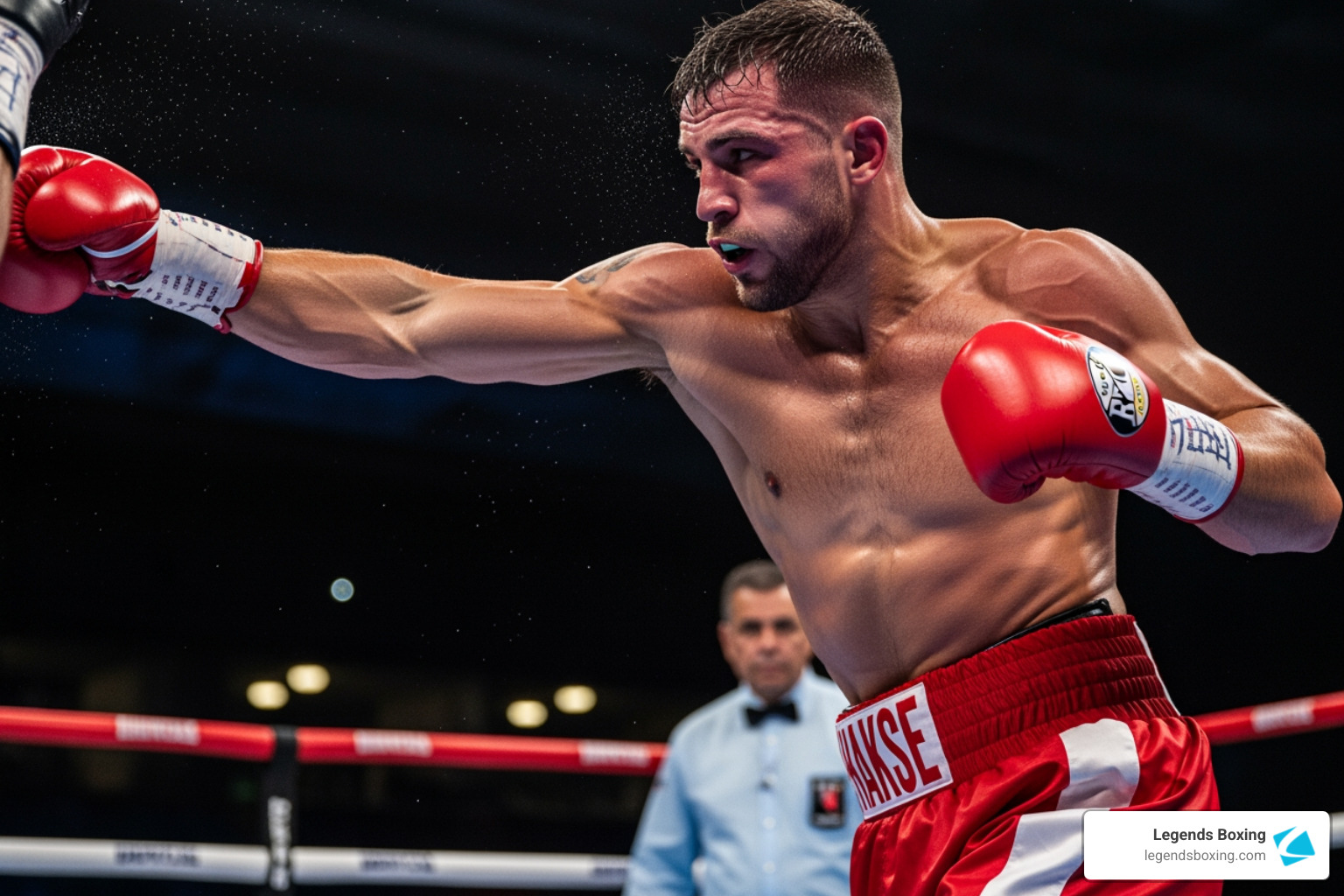
The jab is a quick, strategic punch thrown with your lead hand (left for orthodox). It's not about raw power — it's for setting up other punches. To throw a jab, extend your lead arm straight out, rotating your fist so your knuckles face down on contact. The key is speed: snap it out and bring it back quickly to your guard. The jab measures distance, disrupts opponents, and creates openings.
The Cross (Punch 2)
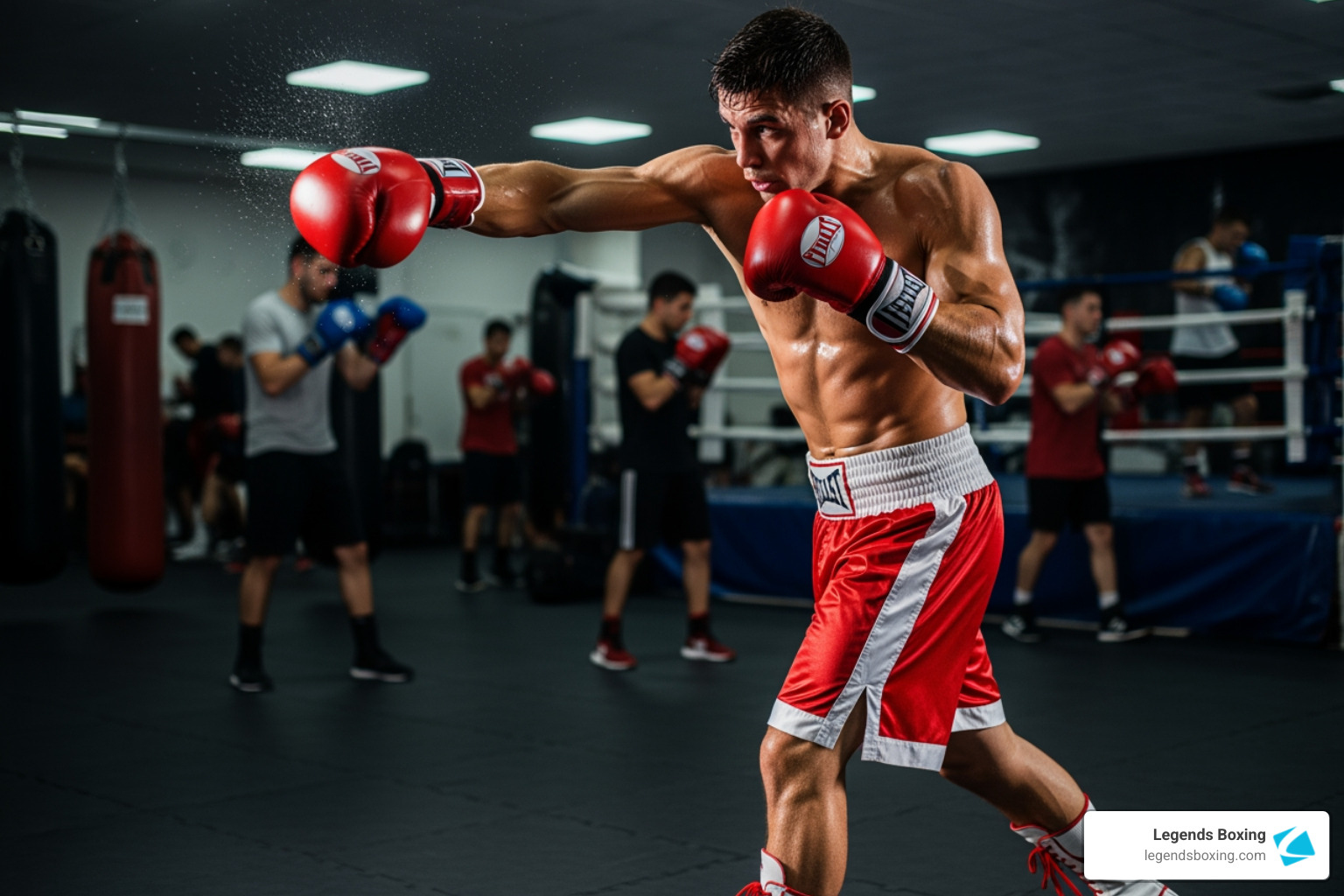
The cross is your power punch, thrown with your rear hand (right for orthodox). To generate force, pivot on the ball of your back foot, rotating your hips and shoulders forward. Your rear arm shoots straight ahead as you drive through the target. The power comes from hip rotation and weight transfer, making it a formidable punch.
3 & 4: The Lead Hook and Rear Hook
Hooks are circular punches that come from surprising angles — very effective and excellent for your core.
The Lead Hook (Punch 3)

The lead hook is thrown with your front hand. Shift your weight to your lead leg, bring your arm up with your elbow bent at 90 degrees, and pivot on your lead foot. As you pivot, rotate your hips and swing your arm in a tight horizontal arc. It's devastating at close range, targeting the head or body.
The Rear Hook (Punch 4)
The rear hook uses the same mechanics but with your dominant hand for more power. Bring your rear arm up to a 90-degree bend, pivot on your back foot, and rotate your hips and shoulders explosively. It generates tremendous force and is perfect for combinations.
5 & 6: The Lead Uppercut and Rear Uppercut
Uppercuts are upward-traveling punches ideal for close-range combat — and fantastic for engaging your legs and core.
The Lead Uppercut (Punch 5)
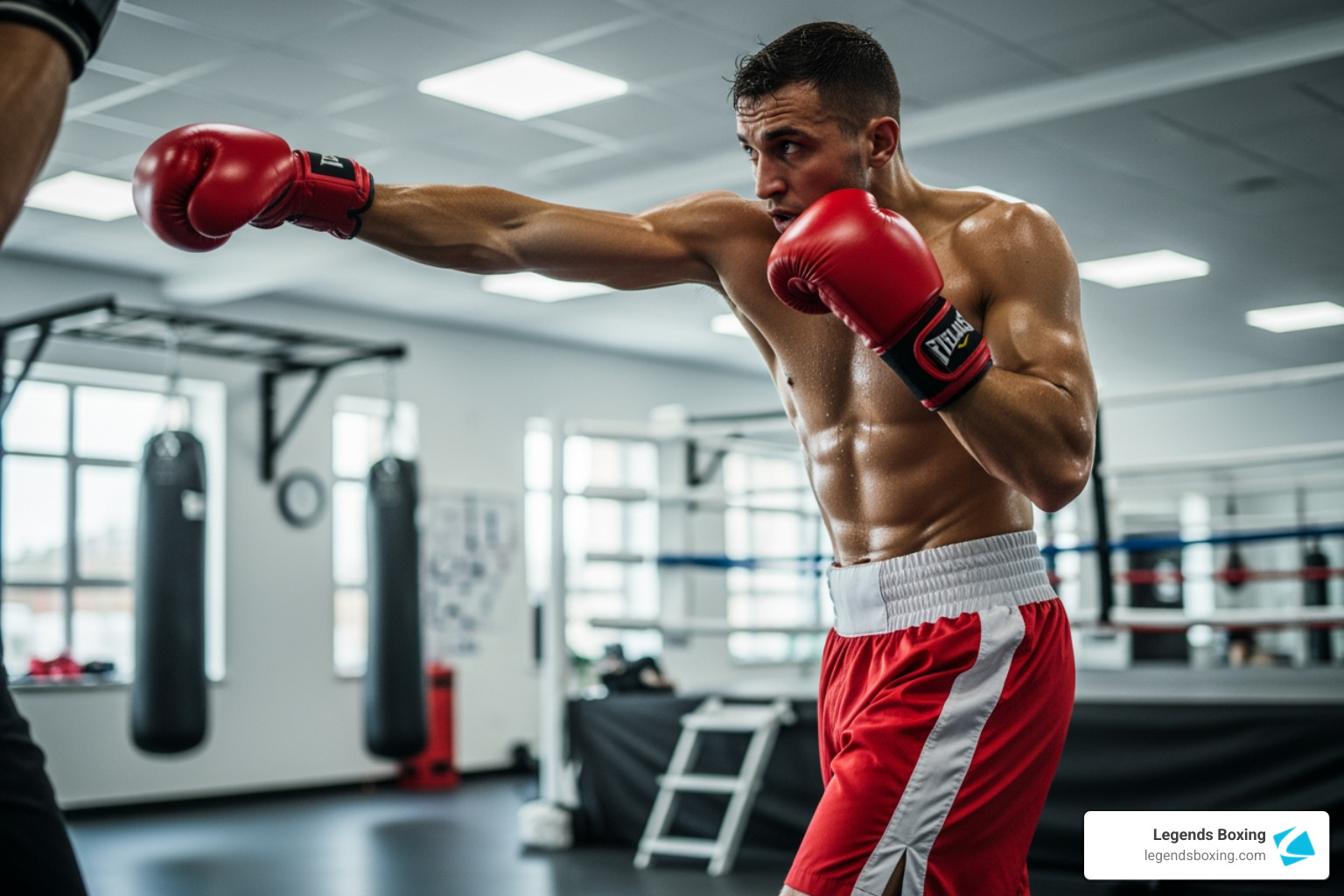
The lead uppercut uses your front hand. Bend your knees slightly, drop your lead hand with your palm facing you, and drive your fist upward using power from your legs. It's effective against opponents who lean forward and is a great leg workout.
The Rear Uppercut (Punch 6)
The rear uppercut follows the same principle but with your power hand. Bend your knees, drop your rear hand, and explode upward, adding a pivot on your back foot and hip rotation for maximum force. A clean rear uppercut is one of the most powerful boxer moves in your arsenal.
Essential Defensive Boxer Moves
Throwing punches is only half the game. A good defense is your best offense, creating opportunities for counter-attacks. At Legends Boxing, we emphasize that defensive boxer moves not only protect you but also provide incredible conditioning for your core and legs.
Slipping, Bobbing, and Weaving
These dynamic movements are designed to make punches miss while keeping you in position to fire back.
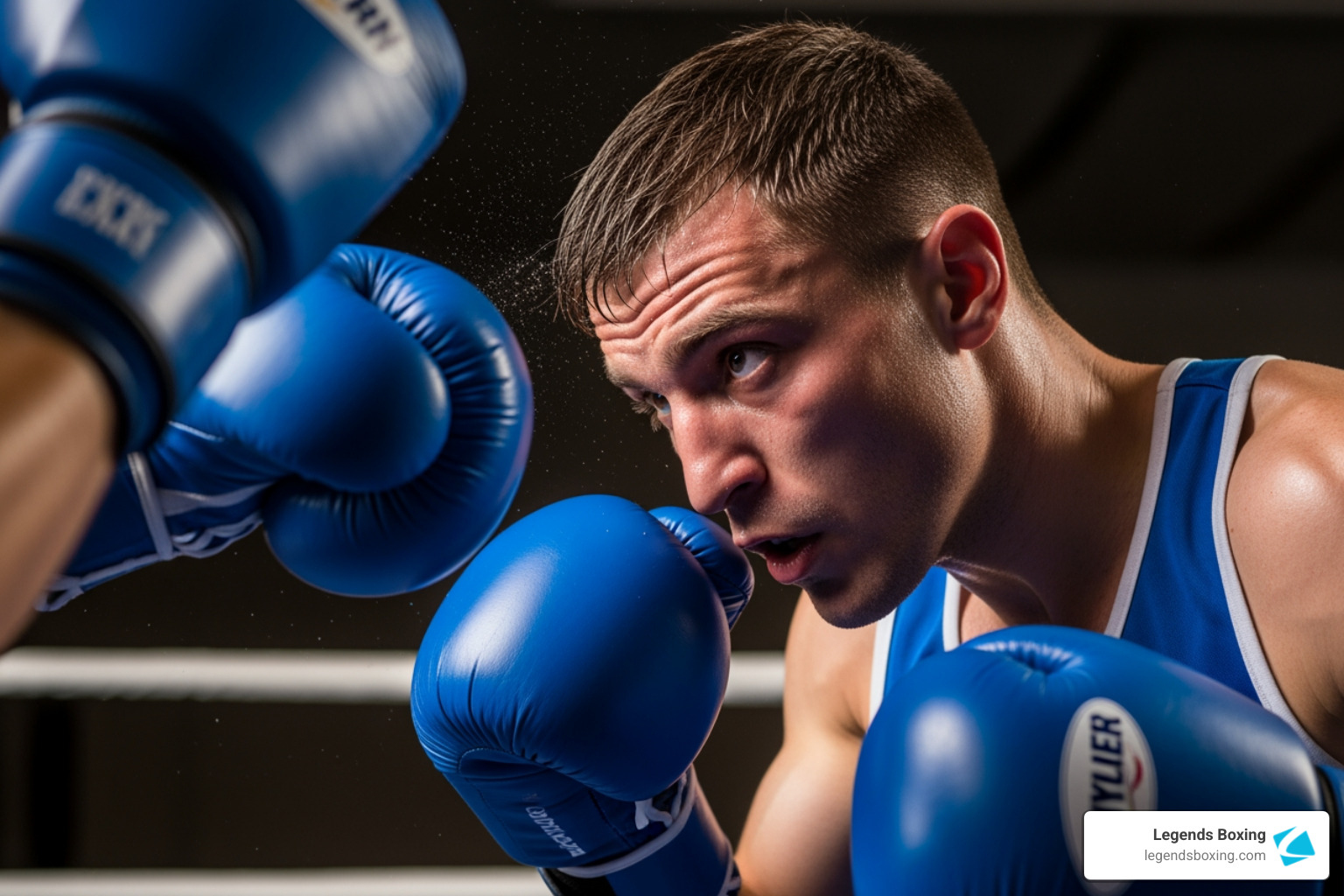
Slipping is efficient head movement. You move your head just a few inches off the centerline to let a straight punch (like a jab or cross) pass by. It's a subtle motion that conserves energy and sets up counters without losing your balance.
Bobbing and weaving is a more pronounced defensive technique. You bob by bending your knees to dip under a straight punch. You weave by moving your upper body in a U-shape to get around hooks. This fluid motion not only helps you evade punches but positions you inside your opponent's guard, creating perfect counter opportunities for uppercuts or body shots.
Blocking and Parrying
Blocking involves using your gloves and forearms to absorb the impact of a punch. A high guard position is crucial — hands protecting your face, elbows tucked in to shield your body. A good block takes the sting out of punches and keeps you close enough to counter immediately.
Parrying is a more advanced form of blocking. Instead of absorbing the punch, you use a quick tap from your glove to deflect or redirect it. A well-timed parry throws your opponent off balance, creating immediate openings for your own attack. It requires precision but is highly effective at disrupting an opponent's rhythm.
At Legends Boxing, we integrate these defensive techniques into every class, helping you build the muscle memory to make defense feel instinctive.
From Punches to Patterns: Combos and Boxing Styles
Once you've learned individual boxer moves, the real fun begins — stringing them into combinations. This is where boxing becomes a fluid, rhythmic art. Combinations create rhythm, disguise your intentions, and help you break through defenses.
Basic Boxing Combinations
Our 1–6 punch numbering system makes learning combos intuitive:
- 1-2 (Jab-Cross) — the most fundamental combo; the quick jab sets up the powerful cross. Simple, effective, the "bread and butter" of boxing
- 1-1-2 (Double Jab-Cross) — the first jab tests distance, the second draws a reaction, and the cross slips through the opening
- 1-2-3 (Jab-Cross-Lead Hook) — attacks from multiple angles; after two straight punches, the hook comes from the side, forcing defense in different directions
As you get comfortable, you'll build more complex sequences, developing a rhythm and flow that makes workouts more engaging.
The 4 Main Boxing Styles Explained
Every boxer naturally gravitates toward a particular style. Understanding these four main styles helps you appreciate the strategy behind the sport.
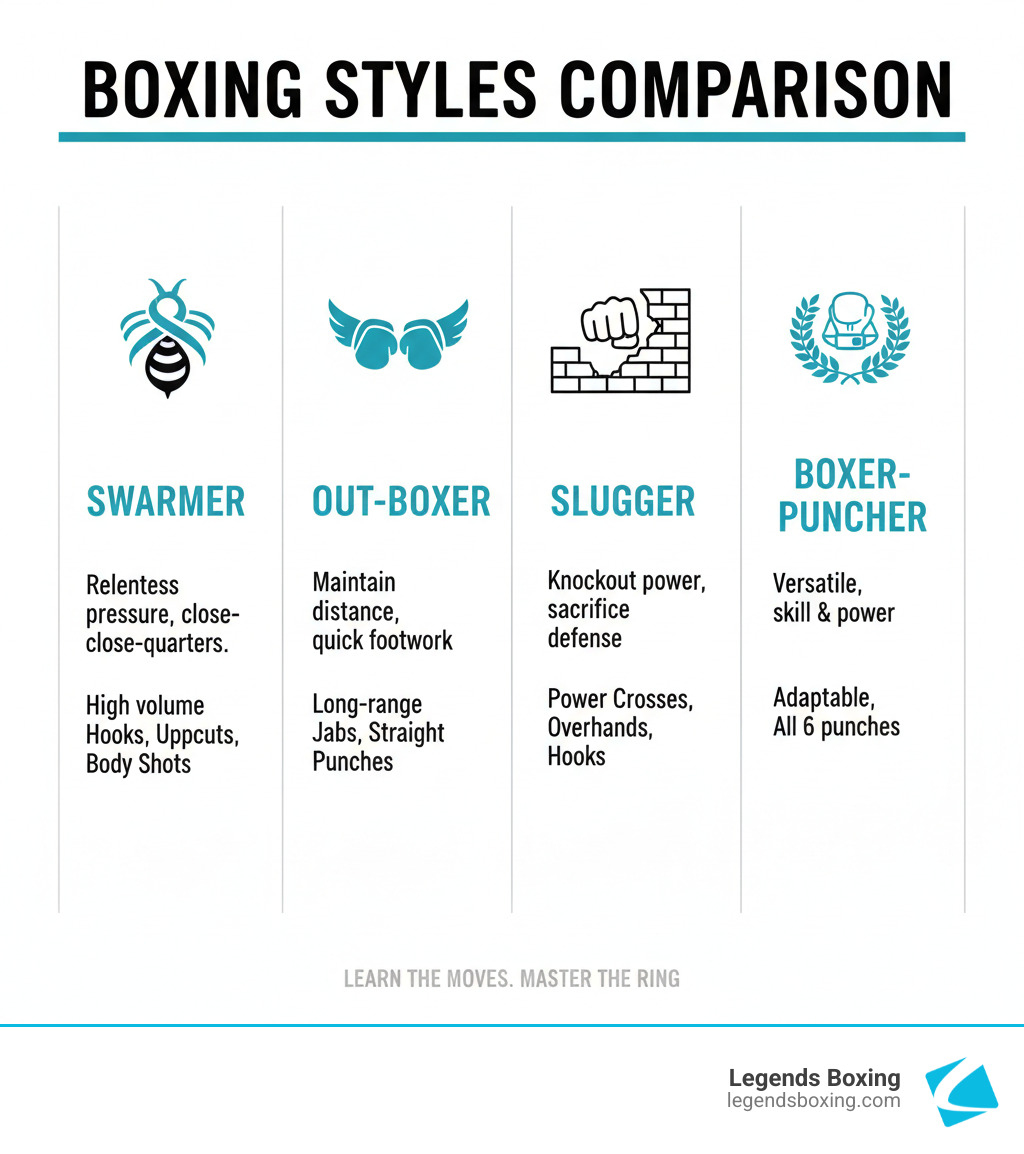
| Boxing Style | Primary Strategy | Famous Examples | Preferred Punches |
|---|---|---|---|
| Swarmer | Overwhelm with relentless pressure, high volume, close-quarters | Mike Tyson, Joe Frazier | Hooks, Uppercuts, Body Shots |
| Out-Boxer | Maintain distance, use footwork and long-range punches to score | Muhammad Ali, Floyd Mayweather | Jabs, Straight Punches |
| Slugger | Seek knockout with devastating power, sacrifice defense for power | George Foreman, Deontay Wilder | Power Crosses, Overhands, Hooks |
| Boxer-Puncher | Versatile; blend technical skill with knockout power | Sugar Ray Leonard, Canelo Álvarez | All 6 basic punches (strategic) |
At Legends Boxing, we encourage you to explore these styles. You might love the high-intensity output of a swarmer or the precision of an out-boxer. Either way, you'll get an incredible workout while developing real boxing skills.
How to Practice Your Boxer Moves
Mastering boxer moves requires practice, repetition, and consistency. The good news: practicing is fun, especially with the right guidance. At Legends Boxing, our classes are designed to give you a complete experience that builds both skill and fitness.
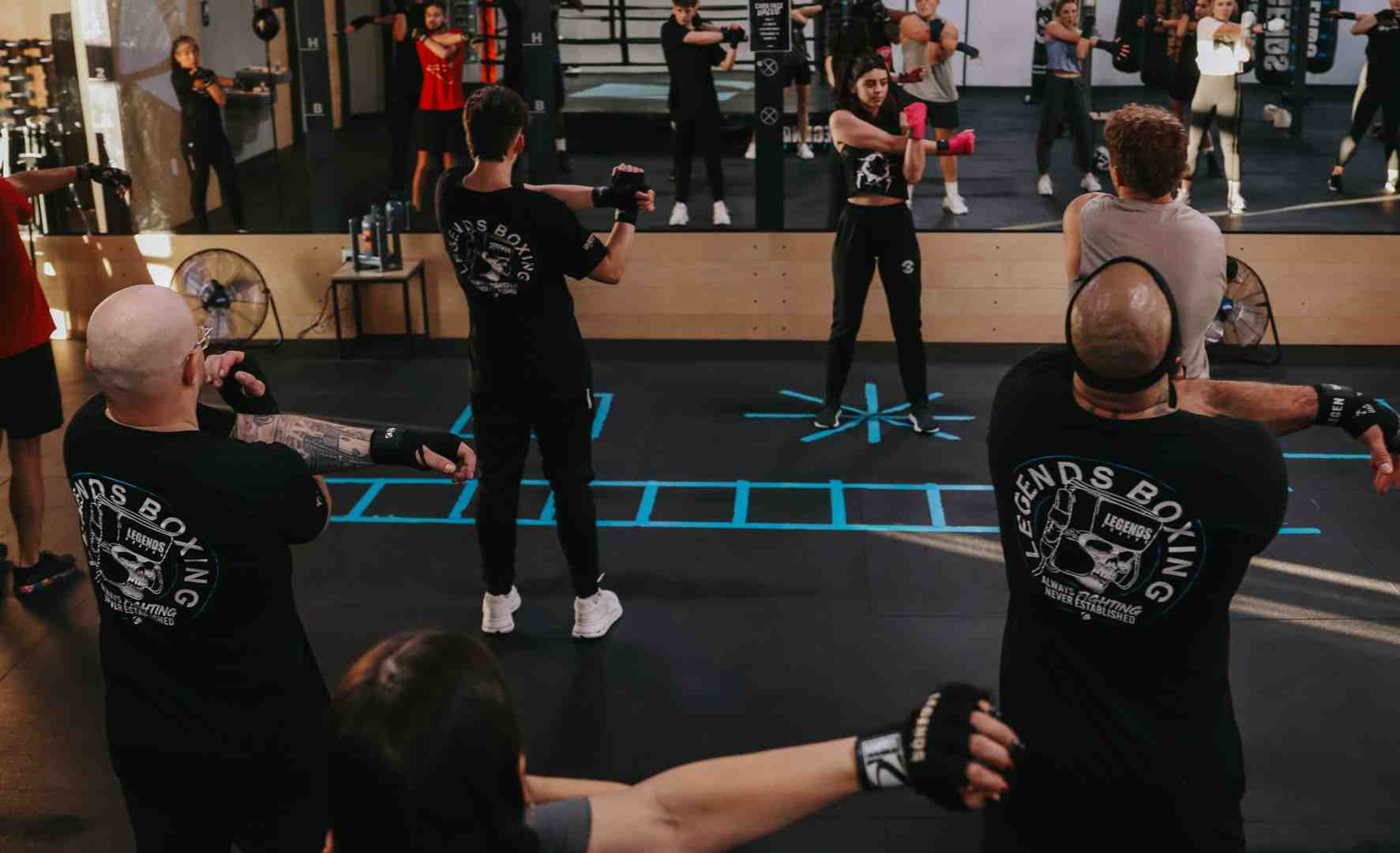
Drills for Improving Execution
An effective boxing workout incorporates a variety of training methods:
- Shadow boxing — focus purely on form without a bag or partner; builds the muscle memory that makes movements fluid and natural; also a fantastic warm-up
- Heavy bag work — develop real power and conditioning; landing punches helps you learn proper mechanics, weight transfer, and body rotation
- Focus mitt work — a coach calls out combinations and moves around, providing instant feedback on speed, accuracy, and timing in a dynamic drill that simulates real-time reactions
- Defensive drills — practicing your slips, bobs, and weaves in front of a mirror or with a partner makes protective boxer moves second nature
The Importance of Breathwork
Proper breathing is one of the most crucial skills in boxing — it's about maximizing power, extending endurance, and staying mentally sharp.
- Diaphragmatic breathing (belly breathing) — helps you stay relaxed and focused during intense rounds; deep, controlled breaths are more efficient than shallow chest breathing
- Box breathing — a technique for managing stress and resetting between rounds: inhale for four, hold for four, exhale for four, hold for four
- Paced breathing — coordinate your breath with your movements; a sharp exhale with each punch (the "tss" sound you hear in the gym) engages your core, increases power, and conserves energy
When you practice these breathing methods, your boxer moves become more powerful, you last longer, and you stay mentally present. It's a skill that benefits you far beyond the gym.
Your Blueprint for Boxing Mastery
You now have the blueprint for fundamental boxer moves — from stance and footwork to the six basic punches and essential defensive techniques. These aren't just moves for the ring; they are the foundation of an effective and engaging workout that challenges your entire body and mind.
Boxing is a transformative fitness tool because it combines skill, coordination, power, and stress relief. The confidence gained from mastering these boxer moves extends far beyond the gym.
At Legends Boxing, we make authentic boxing techniques accessible to everyone. Our classes blend the moves in this guide with conditioning and core work for a full-body workout that's as fun as it is effective. You'll burn calories, build strength, and find new capabilities in a welcoming community.
Our coaches across Utah, Florida, and Texas are passionate about helping you succeed — whether it's your first jab or your hundredth class. No boxing experience needed, just a willingness to learn.
Ready to put these boxer moves into action? Book a free workout at Legends Boxing today — or find a location near you and see where your journey begins.