
Double Trouble: Mastering the Boxing Bag Double End
The double end bag is the ultimate tool for developing speed, accuracy, and defensive reflexes that heavy bags can't teach. This complete guide covers how the double end bag works, how it compares to speed and heavy bags, top picks for 2024, a step-by-step home installation guide, tension adjustments, maintenance, and the training drills that will sharpen your boxing skills fast.
Why the Boxing Bag Double End is the Ultimate Training Tool
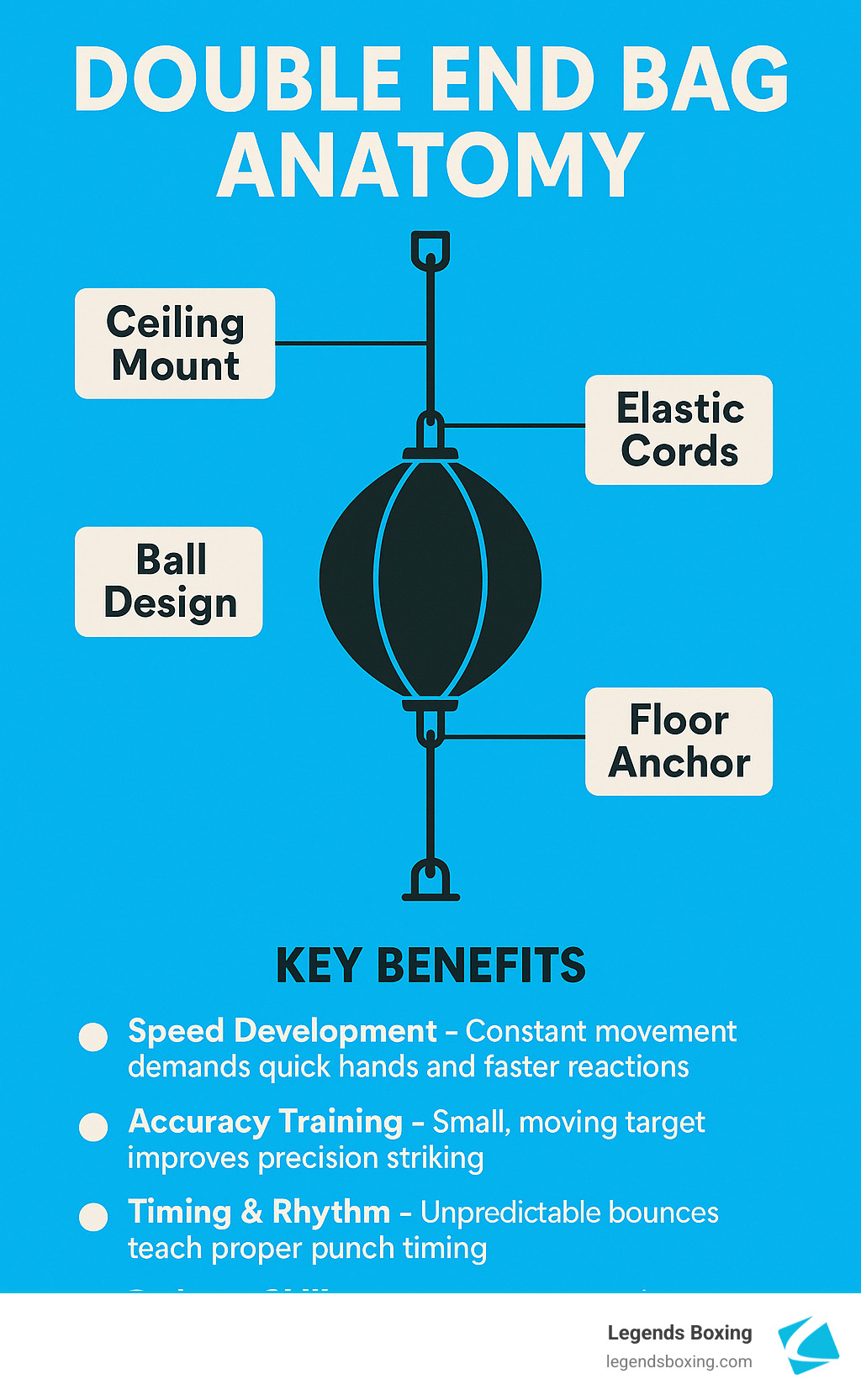
A boxing bag double end is a specialized training tool that connects between your ceiling and floor using elastic cords, creating a fast-moving target that bounces back with every strike. Unlike heavy bags that absorb impact, double end bags react instantly to your punches — forcing you to develop lightning-fast reflexes and pinpoint accuracy.
Key Benefits of Double End Bag Training:
- Speed Development — constant movement demands quick hands and faster reactions
- Accuracy Training — small, moving target improves precision striking
- Timing & Rhythm — unpredictable bounces teach proper punch timing
- Defense Skills — bag movement simulates opponent counter-attacks
- Hand-Eye Coordination — develops essential boxing reflexes
Common Sizes & Shapes:
- Small (4–5") — fast movement, precision training
- Medium (7") — balanced speed and power training
- Large (9") — slower movement, combo practice
- Shapes — round, hourglass, teardrop, or double-ball designs
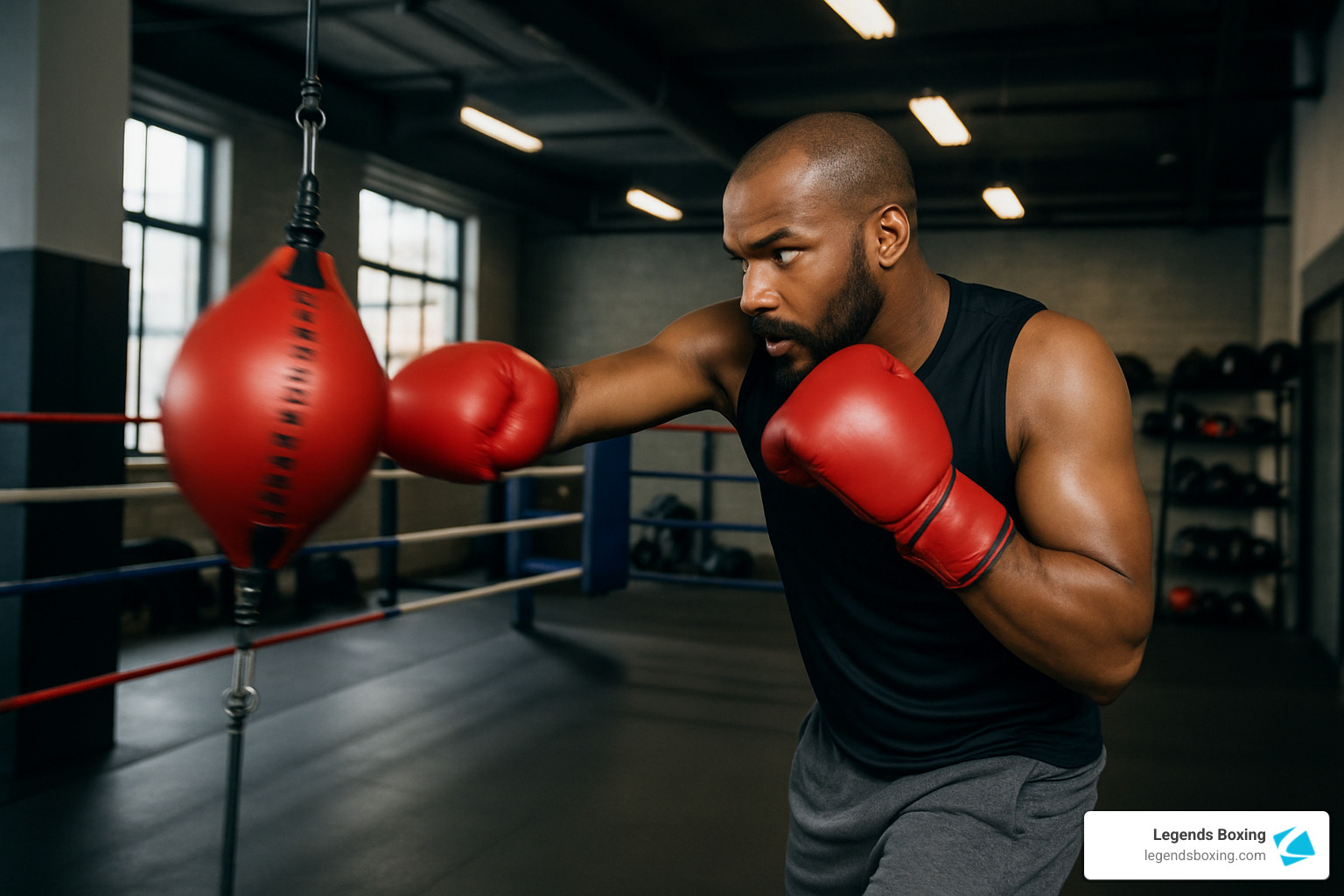
Double end bags are often called "crazy balls" because of their erratic movement when struck off-center. This unpredictable behavior perfectly simulates the challenge of hitting a moving opponent who fights back.
Robby Welch, National Head Coach at Legends Boxing, has over two years of experience developing comprehensive training programs. His nationwide coaching curriculum emphasizes double end bag training as essential for developing the speed, accuracy, and defensive skills that separate good boxers from great ones.
Double End Bag Essentials: Benefits, Skills & Key Comparisons
The boxing bag double end stands out as one of the most versatile pieces of equipment in any boxer's arsenal. What makes it so effective is constant movement and unpredictable rebound patterns that force you to stay sharp throughout every round.
Speed & Accuracy Development
- Small target area demands precise striking — you can't "muscle" your way to contact
- Fast rebound forces quick hand recovery back to guard
- Continuous movement builds hand speed naturally over time
- Micro-targeting improves punch placement accuracy across all six punches
Timing & Rhythm Training
- Unpredictable bounces teach proper punch timing
- Rhythm development through consistent contact with a moving target
- Counter-punch timing against erratic movement patterns
- Flow state development for combination work that adapts mid-sequence
Defense & Footwork
- Bag movement simulates opponent counter-attacks — you must think defensively while attacking
- Slip drills using the bag's natural swing
- Footwork patterns around a moving target rather than a static one
- Head movement coordination with strikes
How the Double End Bag Stacks Up
| Feature | Double End Bag | Speed Bag | Heavy Bag |
|---|---|---|---|
| Movement | Erratic, multi-directional | Predictable rhythm | Minimal movement |
| Primary Skills | Accuracy, timing, defense | Hand speed, coordination | Power, technique |
| Target Size | Small (4–9") | Very small (6–7") | Large (12–18") |
| Rebound Speed | Variable | Very fast | Slow |
| Setup Complexity | Moderate | Simple | Simple |
| Beginner Friendly | Yes | Challenging | Yes |
How the Double End Bag Boosts Speed, Accuracy & Defense
The double end bag creates what exercise scientists call "reactive training" — your nervous system must constantly adapt to unpredictable stimuli. This neural adaptation is why double end bag training produces such dramatic improvements in boxing performance.
Reflex Training Benefits:
- Faster neural pathways between eye and hand
- Improved reaction time to visual stimuli
- Enhanced peripheral vision awareness
- Better hand-eye coordination under pressure
Micro-Target Training: The small surface area (ranging from 4–9 inches in diameter) forces pinpoint accuracy. This precision training translates directly to better punch placement in sparring and competition.
Endurance Through Efficiency: Because the bag moves constantly, you can't rely on brute force. Instead, you develop efficient movement patterns that conserve energy while maintaining effectiveness — a crucial skill for later rounds.
Double End Bag vs Speed Bag
While both tools develop hand speed and coordination, the double end bag offers several advantages:
- Speed bags move in predictable figure-8 patterns — double end bags move erratically in all directions
- Speed bags attach to ceiling only — double end bags use floor and ceiling anchors for full range of motion
- The double end bag allows the full range of punches — jabs, crosses, hooks, and uppercuts. Speed bags primarily accommodate straight punches due to their predictable movement
- Speed bags teach consistent rhythm; double end bags develop adaptive rhythm — the ability to maintain timing even when your opponent disrupts your flow
Double End Bag vs Heavy Bag
These tools serve complementary, not competing, roles:
| Training Goal | Tool |
|---|---|
| Punching power and raw technique | Heavy Bag |
| Accuracy, timing, and reactive defense | Double End Bag |
| Proper weight transfer for max power | Heavy Bag |
| Quick weight shifts for combination flow | Double End Bag |
| Power combinations | Heavy Bag |
| Flowing combos that adapt to movement | Double End Bag |
The ideal training program uses both. Heavy bags build the engine — double end bags teach you to steer.
Buying Guide: Top Picks for 2024
Choosing the right boxing bag double end depends on your training goals, available space, and budget. Double end bags range from $25 for basic models to over $150 for professional-grade equipment.
Size Guidelines
| Diameter | Movement Speed | Best For |
|---|---|---|
| 4–5" | Maximum speed | Advanced users, precision training |
| 7" | Balanced | Most popular size for gyms, intermediate users |
| 9" | Slower, more forgiving | Beginners, combo practice |
Shape Options
- Round / Single Ball — traditional design, consistent rebound, best all-around choice
- Double Ball — two connected spheres for varied rebound angles
- Hourglass — wider striking surface, easier for beginners
- Teardrop — combines punching and kicking training
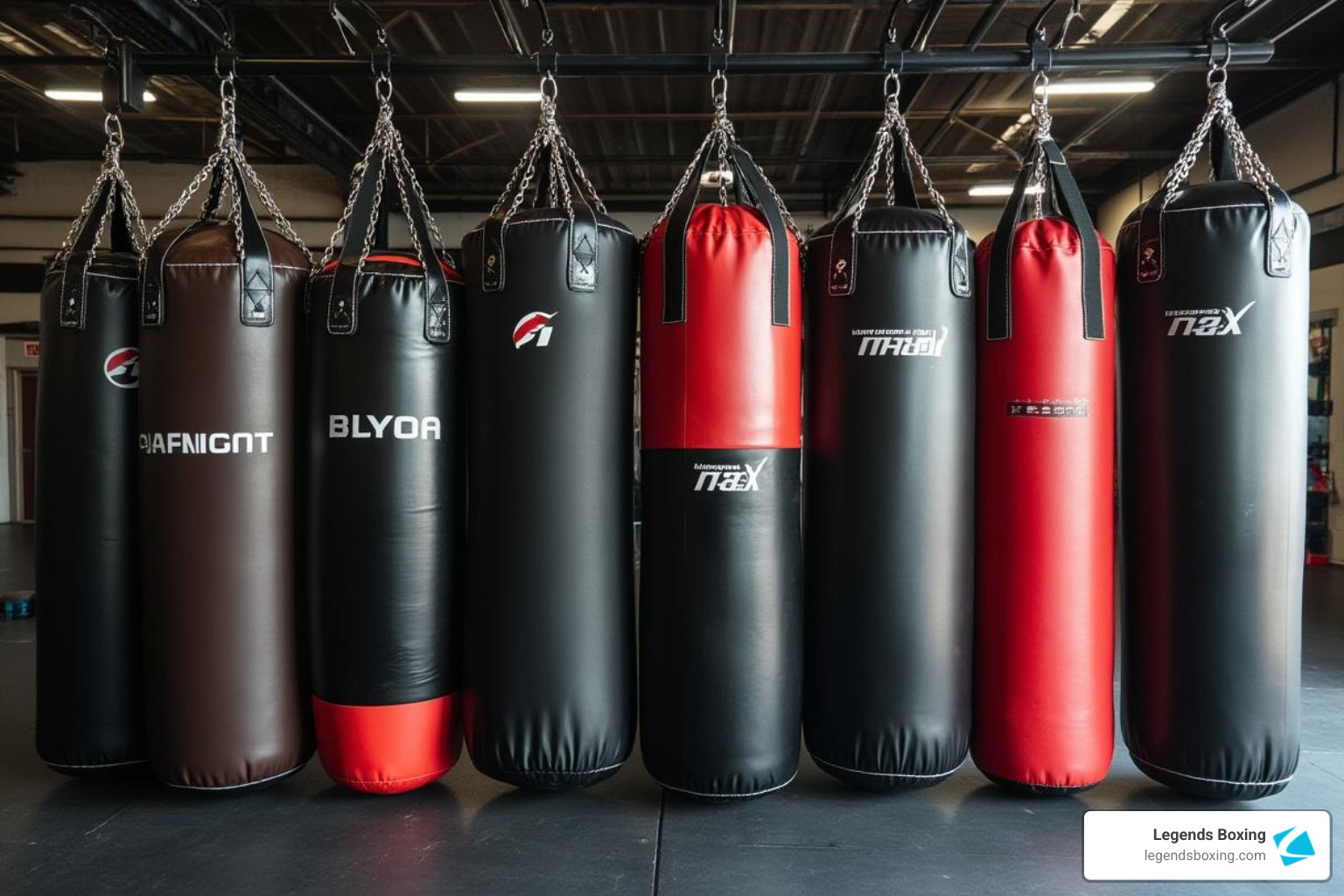
Shapes, Sizes & Materials Demystified
Material Comparison:
| Material | Pros | Cons |
|---|---|---|
| Genuine Leather | Superior durability, better strike feel, professional standard | Higher cost |
| PU Leather (Synthetic) | More affordable, good for occasional home use | May show wear faster with heavy training |
Most quality double end bags use latex bladders for consistent rebound. Latex provides better elasticity and longer life compared to rubber alternatives.
Durability Factors to Look For:
- Double or triple nylon stitching at seams
- Reinforced D-ring attachments
- Side-mounted air valves (avoid valves in the strike zone)
- Quality shock cord materials
Must-Have Accessories & Setup Kits
| Accessory | Spec | Purpose |
|---|---|---|
| Shock Cords | 27.5" (70cm) recommended | Optimal rebound performance |
| Floor/Ceiling Plates | Heavy-duty hardware | Secure mounting |
| Hand Pump | Manual only | Avoid compressors — they damage bladders |
| Replacement Bladders | Keep spares | Uninterrupted training |
| Carabiners | Quality rated clips | Secure attachment at both ends |
Professional gyms typically use shock cords measuring 27.5 inches for optimal rebound. Total assembled length including cords averages 68.9 inches.
Our 5 Favorite Double End Bags of 2024
1. Everlast 1910 Double End Bag — Best for Serious Home Gym Users Genuine full-grain leather, side-mounted air valve, reinforced D-ring mounts. Available in 7" and 9" sizes. ~$79.99
2. Ringside Double End Bag — Best for Gym Installations Professional gym quality, hourglass or round shape options, synthetic or leather available, engineered for heavy daily use. $60–100
3. RDX Floor-to-Ceiling Bag — Best for Multi-Sport Training PU leather exterior with latex bladder, heavy-duty braided nylon shock cords, 13.8" length, 24" circumference, includes air pump and needle. Mid-range
4. Combat Sports Heavy Double-End Bag — Best for Power Combo Training Filled bag weighing 42–45 lbs, 34" tall, 12" diameter, bottom D-ring floor attachment. Ideal for uppercuts and hooks. ~$139.95
5. Title Boxing Double End Bag — Best for Serious Training Facilities Circular shape for full punch arsenal, quality bounce-back reaction, professional gym standard, multiple size options. Professional tier
Setup, Tension Adjustment & Maintenance
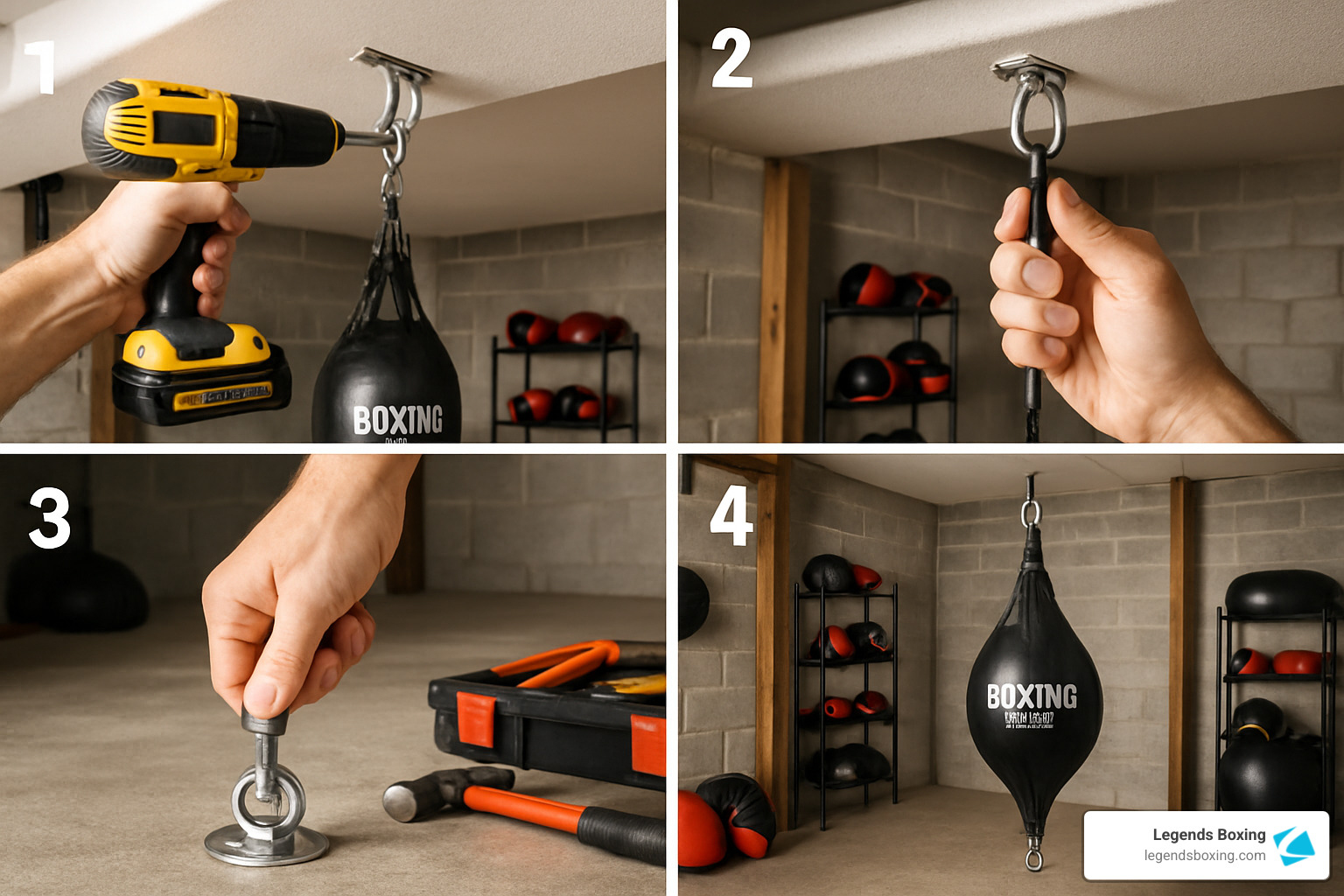
Proper installation is crucial for both safety and optimal training results. Improper setup is the leading cause of double end bag training frustration.
Perfect Home Installation in 5 Steps
Step 1: Locate Ceiling Support Use a stud finder to locate ceiling joists. The mounting point must support both bag weight and strike forces. Standard drywall anchors are insufficient — you need solid wood.
Step 2: Install Ceiling Mount
- Drill pilot holes into ceiling joist
- Install heavy-duty eye bolt or mounting plate
- Test with 2× the bag's weight before proceeding
- Ensure mounting hardware is rated for dynamic (impact) loads
Step 3: Mark Floor Position Use a plumb line to mark the exact floor position directly below the ceiling mount. Precision here ensures proper bag alignment and prevents premature wear on shock cords.
Step 4: Install Floor Anchor
- Concrete floor: use concrete anchors and mounting plate
- Wood floor: secure into floor joists with lag bolts
- Ensure floor anchor can handle lateral forces from off-center strikes
- Test stability before attaching bag
Step 5: Attach and Test Connect shock cords to both mounts, attach bag using quality carabiners, test with light strikes before full training, adjust tension for desired rebound.
Dialing in Tension & Height for Different Goals
Tension Settings:
| Setup | Effect | Best For |
|---|---|---|
| Loose cord | Slower rebound, heavier punches allowed | Beginners, timing/rhythm training |
| Tight cord | Faster rebound, demands quicker recovery | Advanced speed training |
Height Adjustments:
| User | Bag Position | Why |
|---|---|---|
| Standard boxing | Center at chin level in boxing stance | Optimal jab and cross training |
| Kickboxing | 6–8" lower than standard | Accommodates kick combinations |
| Kids & beginners | Center at chest level | Easier to maintain proper form |
Keeping Your Bag Fight-Ready
Weekly:
- Check inflation pressure (should feel firm but not rock-hard)
- Inspect shock cords for wear or fraying
- Wipe down exterior with damp cloth
- Check mounting hardware for looseness
Monthly:
- Deep clean with appropriate leather or synthetic cleaner
- Inspect D-rings and attachment points
- Test shock cord elasticity and replace if needed
- Check ceiling and floor mounts for stability
Bladder Replacement: When the inner bladder fails, insert the new bladder by size, align with the air hole, and inflate for use. Keep spare bladders on hand to avoid training interruptions.
Storage Tips:
- Slightly deflate for long-term storage
- Store in a temperature-controlled environment
- Keep away from sharp objects and UV exposure to prevent material degradation
Frequently Asked Questions
Is a boxing bag double end good for beginners?
Absolutely. The double end bag is excellent for beginners because it teaches proper timing and accuracy from day one. Unlike heavy bags where beginners can develop bad habits by throwing wild, powerful punches, double end bags demand precision and control from the start.
Start with: a larger 9" bag and looser cord tension. This creates slower, more predictable movement while you develop basic hand-eye coordination. As skills improve, progress to smaller bags and tighter tension.
At Legends Boxing, we introduce double end bag training in beginner classes because it naturally teaches the defensive awareness that keeps new boxers safe during their progression.
How often should I replace the inner bladder?
With proper care, a quality latex bladder should last 6–12 months of regular training. Signs it's time to replace:
- Difficulty maintaining air pressure
- Visible cracks or holes in the bladder
- Uneven inflation or soft spots
- Reduced rebound consistency
Always use hand pumps rather than compressors to prevent over-inflation damage. Keep the bag slightly under-inflated rather than rock-hard to extend bladder life.
Can I use kicks on a standard double end bag?
Most standard boxing bag double end models are designed primarily for punches, but can handle light kicks. For serious kick training:
- Lower the bag 6–8 inches from standard boxing height to accommodate kick combinations
- Use a larger 9" bag — it provides a better target and handles kick impact better than smaller precision bags
- Consider a teardrop-shaped bag — specifically designed for both punching and kicking, offering better versatility for mixed training
- Verify mounting strength — ensure ceiling and floor mounts can handle the additional lateral forces from kick impacts
Master the Double End Bag with Expert Coaching
The boxing bag double end represents one of the most effective single pieces of training equipment available to modern boxers. Its unique combination of speed development, accuracy training, and defensive skill building makes it an essential tool for fighters at every level.
Whether you're setting up your first home gym or upgrading your training routine, the double end bag offers unmatched versatility in developing the quick hands, sharp eyes, and defensive awareness that define skilled boxing.
At Legends Boxing, we've built our training philosophy around tools like the double end bag because they develop real fighting skills while providing an incredible workout. Our classes incorporate double end bag drills into full-body conditioning routines that build both boxing skills and overall fitness.
Ready to experience the double end bag difference? Find a Legends Boxing location near you and work with our expert coaches on proper technique and bag timing. Or book your first free workout — no equipment purchase required. We'll supply everything you need.