
Boxing Clubs Explained: From Beginner to Contender
Boxing clubs combine traditional boxing training with modern fitness programs — from beginner-friendly cardio classes to competitive amateur pathways. This guide covers the four main types of boxing clubs, what to expect in your first class, equipment and safety essentials, specialized programs for youth and seniors, how to find and evaluate a club near you, and the full development pathway from your first free trial to USA Boxing registration.
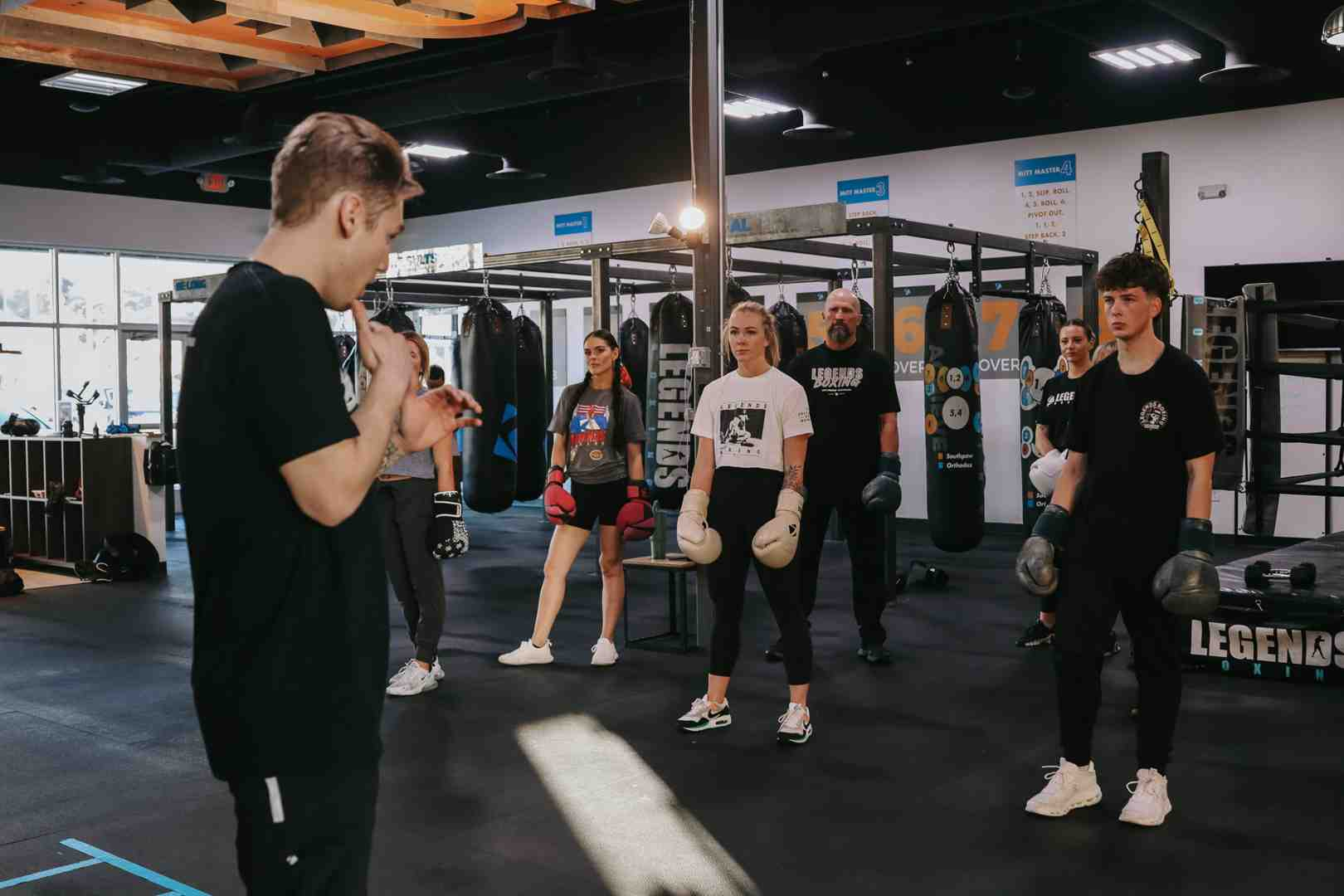
Why Boxing Clubs Are Changing How We Work Out
Boxing clubs are specialized fitness facilities that combine traditional boxing training with modern workout programs, offering everything from beginner-friendly fitness classes to competitive amateur training. Here's what you need to know:
Types of Boxing Clubs:
- Boutique fitness studios — focus on boxing-inspired cardio workouts
- Traditional amateur clubs — train competitive fighters and hobbyists
- Community gyms — affordable, neighborhood-based training
- Hybrid facilities — mix boxing with HIIT and strength training
Key Benefits:
- Burn up to 800 calories per hour — one of the most effective full-body workouts
- Learn real self-defense skills while relieving stress
- Join a supportive community that welcomes all fitness levels
- Classes available for ages 8 to seniors
Getting Started:
- Most clubs offer a free first class to newcomers
- All necessary gear typically provided for beginners
- No prior experience required — trainers guide you through basics
With over 2,400 registered clubs across the country through USA Boxing alone, plus thousands of fitness-focused boxing studios, there's likely a perfect fit near you. Whether you want to lose weight, build confidence, or just escape boring gym routines, boxing clubs offer something traditional fitness can't match.
The boxing community embraces an "everyone belongs" mentality. As one member put it: "I was intimidated at first, now I go every week." These aren't just workouts — they're transformative experiences that build both physical and mental strength.
I'm Robby Welch, National Head Coach for Legends Boxing with over two years of experience leading transformative fitness programs at boxing clubs nationwide. I've helped increase gym membership by 45% while developing comprehensive coaching programs that make boxing accessible to everyone, from complete beginners to amateur competitors.
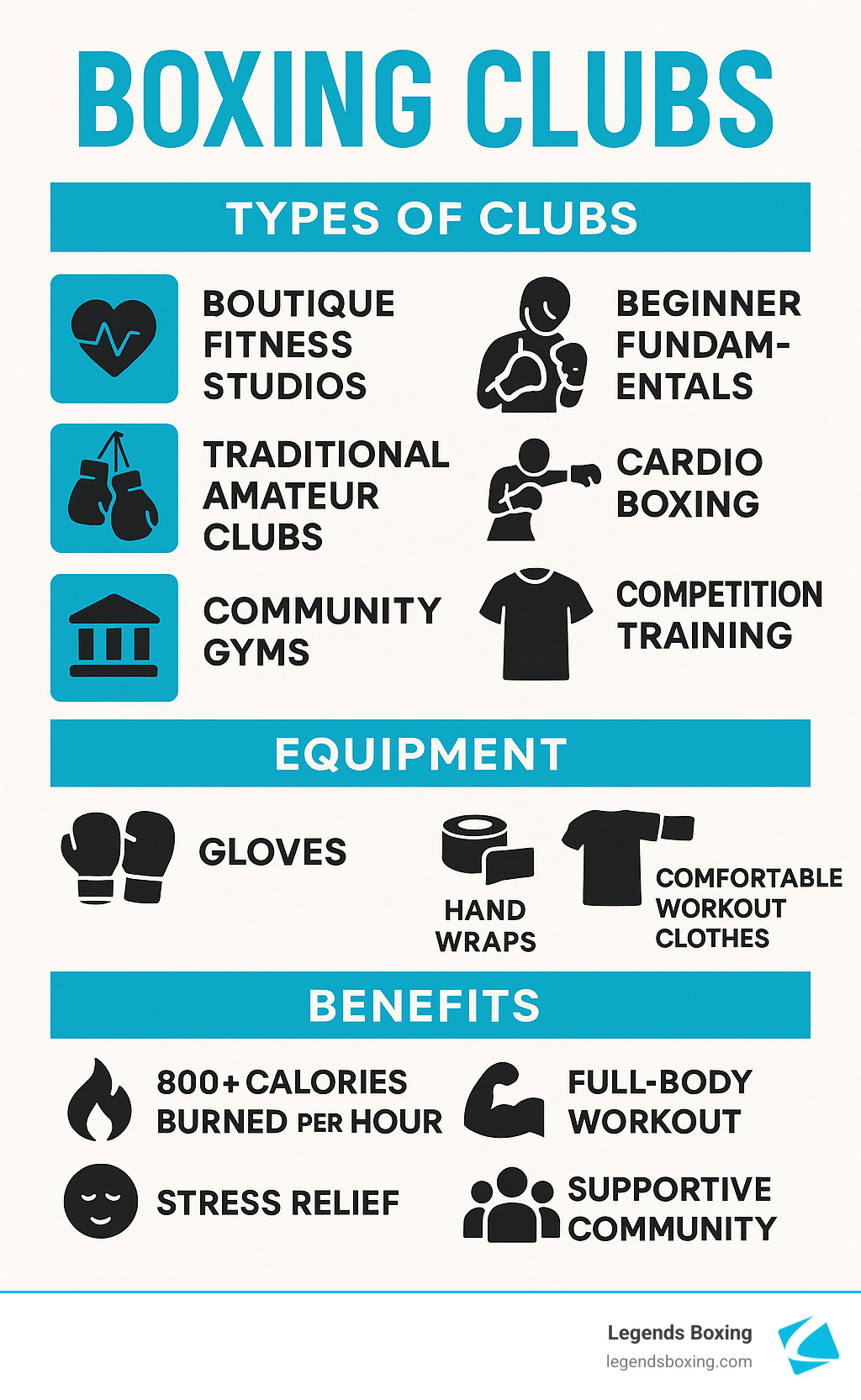
What Is a Boxing Club? Styles & Set-Ups
The world of boxing clubs has come a long way from the old-school, intimidating gyms you might picture from movies. Today's boxing scene is incredibly diverse, with something for everyone — whether you want to train like a future champion or just punch your stress away after work.
Traditional amateur boxing clubs have deep roots in community centers and athletic organizations. These places are the real deal — they've been developing competitive fighters for decades and often connect with USA Boxing, the sport's official governing body. Walk into one of these clubs and you'll find full-size boxing rings, heavy bags that have seen thousands of punches, speed bags, and coaches who've either fought professionally or trained champions.
Boutique fitness studios have completely transformed how people think about boxing. These sleek, modern facilities focus on boxing-inspired workouts rather than training the next heavyweight champion. Premium sound systems, energizing music, mood lighting, and classes that feel more like high-energy parties than grueling training sessions — TITLE Boxing Club has mastered this approach across 30+ states.
Community gyms hit that sweet spot between traditional and boutique. Many operate as nonprofits or charity organizations, which means they can offer sliding scale pricing and focus on serving their neighborhoods. These clubs often become the heart of their communities, bringing together people from all walks of life.
Hybrid HIIT facilities are the newest evolution. These innovative boxing clubs blend authentic boxing techniques with strength training, cardio circuits, and other fitness approaches. At Legends Boxing, we've perfected this concept by combining real boxing skills with conditioning and core work, creating a complete fitness experience that delivers amazing results without requiring any previous boxing knowledge.
Boxing Clubs 101: Community to Competition
Boxing clubs form the backbone of amateur boxing across America, and they come in fascinating varieties:
- Local recreation centers house the most welcoming programs, offering affordable training in no-frills facilities — perfect for just starting your boxing journey
- Private franchises (like Title Boxing Club and Rumble Boxing) deliver consistent, high-quality experiences whether you're in California or New York; their membership model allows investment in top equipment and professional instructor training
- Traveling fight teams represent the elite level — these specialized programs develop serious fighters for regional, national, and international competition, with members training 4–6 days per week
Specialized Boxing Clubs & Programs
The boxing community welcomes everyone through specialized programming that meets different needs:
- Women-only clubs address comfort concerns while offering training approaches designed specifically for female athletes, emphasizing fitness benefits and practical self-defense
- Youth academies work with kids aged 8–17, teaching life skills like discipline and respect alongside boxing fundamentals, frequently partnering with schools and community organizations
- Senior programs prove boxing benefits people of all ages — modified approaches work around physical limitations while keeping all the core elements; balance, coordination, and mental sharpness benefits make boxing particularly valuable for older adults
- Adaptive boxing programs serve individuals with disabilities — with para boxing now recognized as an official Paralympic sport, more clubs are developing inclusive programming
- MMA crossover facilities teach boxing fundamentals as part of broader combat sports training, recognizing that good boxing technique forms the foundation of all combat sports
Why Join a Boxing Club? Body, Mind, Lifestyle Gains
Walking into a boxing club for the first time can feel intimidating. But here's what happens next: you find a change that goes way beyond getting in shape. We've watched thousands of people find strength they never knew existed — and we're not just talking about muscles.
The ultimate full-body workout. Every punch starts from your feet, travels through your core, and explodes through your arms. Unlike isolation exercises that only work one muscle at a time, boxing engages your entire body in one fluid motion. It's functional fitness that makes you stronger for real life.
The calorie burn is honestly incredible. You'll torch 600–800 calories per hour — more than running or cycling. Boxing combines explosive bursts of punching with constant movement and footwork. Your body becomes a fat-burning machine that keeps working even after class ends.
Learning to defend yourself feels empowering in ways you can't imagine until you experience it. Proper punching technique, defensive positioning, and situational awareness build a confidence that follows you everywhere.
Weight loss happens naturally when you're having this much fun. The high-intensity training combined with the engaging format means you'll actually want to show up — boxing prevents workout boredom while the community keeps you accountable.
Discipline develops without you even realizing it. Boxing demands focus, technique refinement, and mental toughness. These qualities sneak into other areas of your life, improving everything from work performance to personal relationships.
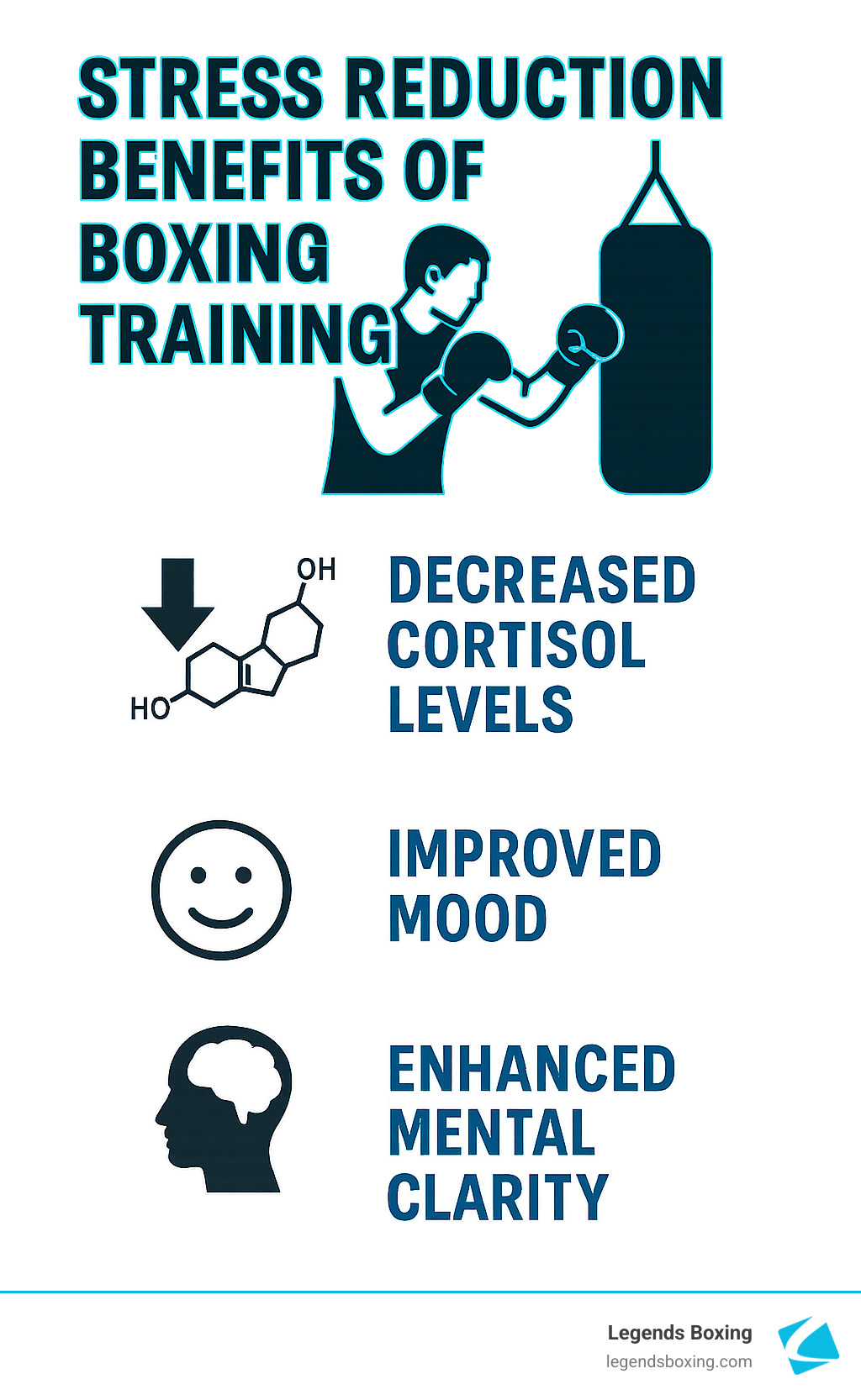
Stress relief like nothing else. There's something deeply satisfying about hitting heavy bags after a tough day. The physical release combined with the mental focus required creates the perfect stress-management tool. Members consistently tell us they leave class feeling "lighter" and more centered.
Fitness & Conditioning Benefits
Boxing training is like getting multiple workouts in one. Your VO₂ max improves rapidly because of the intense cardiovascular demands — the work-rest pattern of boxing rounds mirrors high-intensity interval training, the gold standard for improving aerobic capacity.
Your core strength develops naturally through proper boxing technique. Every punch requires deep abdominal muscle activation to generate rotational power. This creates functional core strength that improves posture and reduces back pain risk.
Balance and coordination improve almost without trying. Footwork patterns, defensive movements, and punch combinations challenge your spatial awareness in ways that reduce fall risk and make you more athletic in other activities.
Instead of spending hours targeting individual muscle groups, boxing sessions work your entire body while keeping you completely engaged.
Mental & Social Benefits Inside Boxing Clubs
The community in boxing clubs creates connections you won't find in regular gyms. While most people work out in isolation, boxing classes foster real interaction and mutual support. Partner drills, shared challenges, and group energy build lasting friendships.
Camaraderie develops through facing tough workouts together. When you're all sweating through the same challenging rounds, bonds form naturally. Members often describe their boxing community as a second family.
Accountability emerges when your training partners expect to see you at class. This social motivation helps you stay consistent even when personal motivation dips.
Empowerment becomes boxing's greatest gift. Learning to defend yourself, overcome physical challenges, and push through mental barriers creates confidence that transforms your entire life — especially powerful for women and youth participants.
Inside the Ring: How Boxing Classes Work
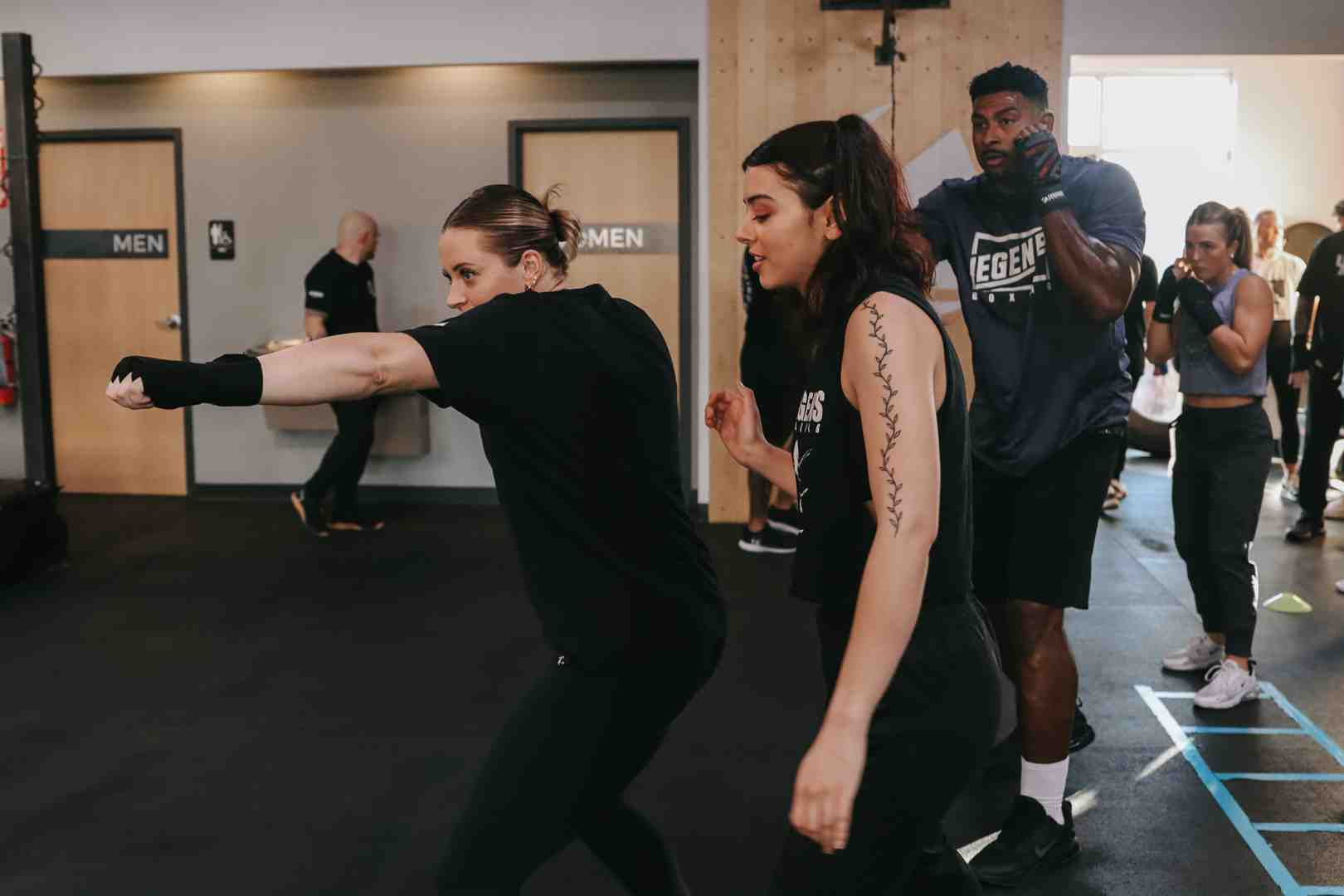
Walking into your first boxing class can feel like stepping into unknown territory, but boxing clubs have perfected a welcoming structure that works for everyone.
Warm-up (5–10 min) — jumping jacks, arm circles, and light movement to wake up your body and mentally shift into training mode.
Shadow boxing — throwing punches at an invisible opponent, building confidence with basic movements while instructors can watch form and offer tips.
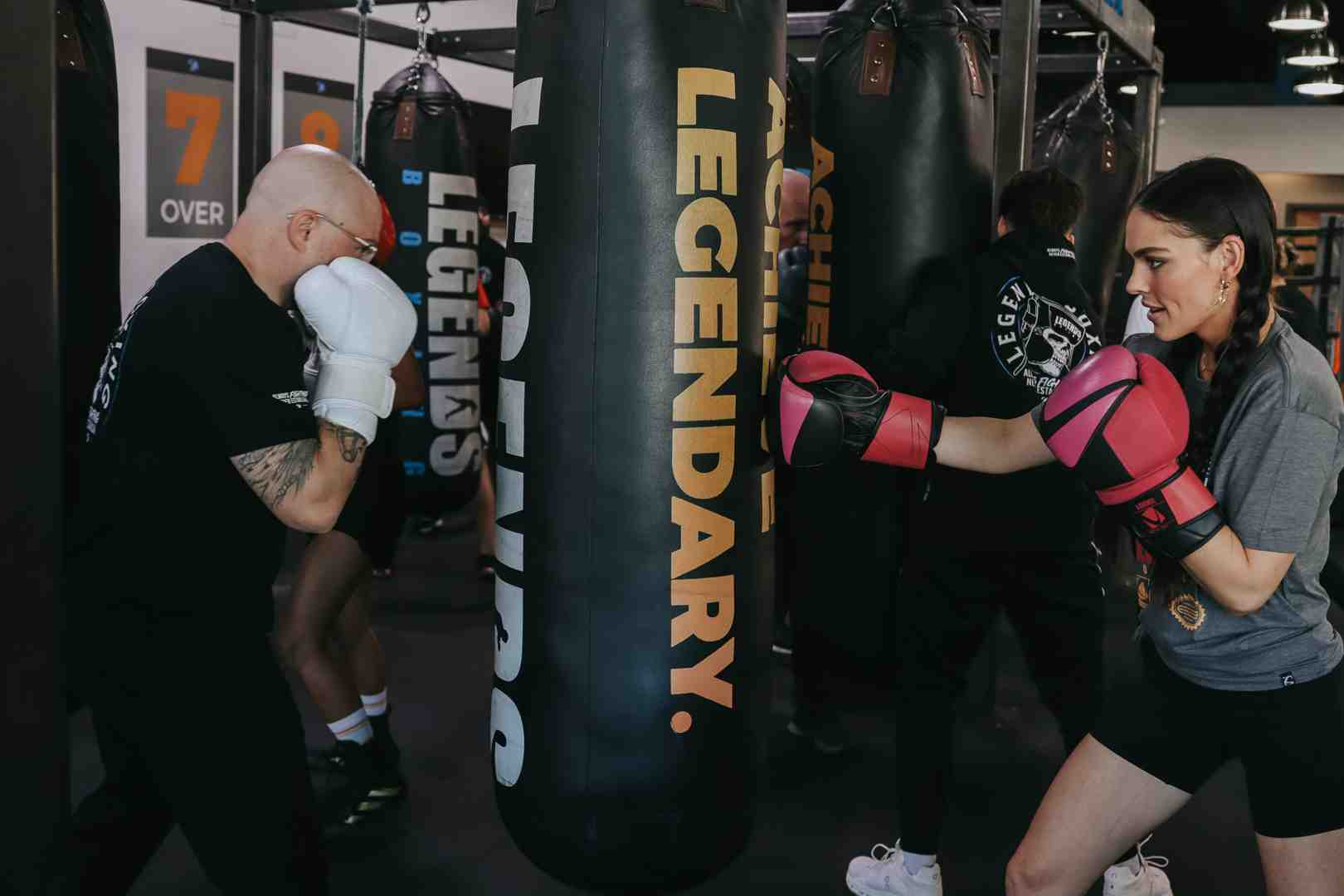
Heavy bag rounds — the heart of every class: 2–3 minutes of controlled intensity followed by short rest periods. Your instructor calls out combinations while you work at your own pace. Bag work meets you where you are, whether you're going all-out or just learning the ropes.
Mitt work — working with partners or trainers using focus mitts, practicing combinations while getting real-time feedback. It's like playing catch, but with punches.
Partner work — light drills or conditioning exercises that build both fitness and friendships. Safety rules are strict, with clear guidelines about contact levels.
Conditioning circuits — core work, bodyweight exercises, or boxing-specific drills. Your muscles might be tired, but these final challenges leave you feeling accomplished.
Cool-down — stretching and breathing exercises. Your heart rate settles while your body begins recovery.
Sparring protocols exist in some clubs but are reserved for experienced members who specifically request competition training, with strict safety guidelines, protective equipment, and qualified supervision.
First-Timer Experience
Arrive 30 minutes early — time to complete paperwork, get a facility tour, and settle any first-day nerves.
The hand wrap tutorial is your safety foundation. Proper wrapping protects the small bones in your hands and provides crucial wrist support during impact. Instructors are patient teachers who've guided thousands of newcomers through this essential skill.
Bag assignment ensures you have adequate space and equipment access. Instructors often position newcomers near experienced members who naturally become informal mentors and cheerleaders.
Learning the four basic punches builds your technical foundation: the jab (straight lead hand), cross (straight rear hand), hook (circular punch), and uppercut (upward punch). Master these, and you're well on your way to feeling like a real boxer.
Pacing yourself is the most important advice for first-timers. Your goal is building confidence and technique, not proving anything to anyone. The workout will challenge you plenty without overdoing it.
Equipment & Safety Essentials
Most boxing clubs provide everything you need for your first several classes:
- Boxing gloves (12 oz) — the sweet spot for most fitness training; provide excellent protection while allowing good speed and technique
- Hand wraps (180-inch) — absolutely essential; they protect the 27 small bones in your hands and wrists; there is no negotiating this safety requirement
- Headgear — only necessary for sparring; most fitness-focused programs don't include it
- Mouthguards — essential if you try sparring or competition prep; unnecessary for standard fitness classes
| Equipment | Club Provided | Personal Purchase Benefits |
|---|---|---|
| Boxing Gloves | Yes (sanitized after each use) | Custom fit, hygiene, personal preference |
| Hand Wraps | Yes (basic cotton wraps) | Better materials, proper sizing, hygiene |
| Water Bottle | Sometimes | Hydration control, preferred beverages |
| Workout Clothes | No | Comfort, moisture-wicking materials |
Club-provided equipment undergoes regular cleaning and sanitization. Many members eventually invest in personal gear for fit and comfort — most clubs offer member discounts on equipment purchases.
Programs, Levels & Paths to the Ring
Every boxing journey starts somewhere, and boxing clubs understand that everyone arrives with different goals and abilities.
Beginner fundamentals assume you've never thrown a punch in your life — and that's perfectly fine. You'll learn the basic four punches, simple footwork, and how to protect yourself. The focus is building confidence while your body adapts to this new type of movement.
Intermediate technique classes (typically after 2–3 months) start linking punches into smooth combinations, introduce more complex defensive moves, and increase workout intensity.
Advanced and competition team programs serve those who've caught the boxing bug and want to take it seriously. These require invitation or a tryout, and the training commitment jumps significantly.
Age-specific programs:
- Youth (ages 8–14) — mix boxing fundamentals with games and activities that teach respect and discipline; parents often say their kids come home more focused and confident
- Teen programs — bridge kid-friendly activities and serious adult training; many teenagers find competitive interests during this stage
- Adult programs — the heart of most boxing clubs; classes around busy professional schedules with evening and weekend options
- Senior programs — adapted to changing bodies while maintaining core benefits; balance, coordination, and mental sharpness often improve dramatically
Other formats: women-only classes, fitness-only cardio boxing, private lessons (one-on-one), small-group coaching (2–4 people), and online/on-demand options for when you can't make it to the gym.
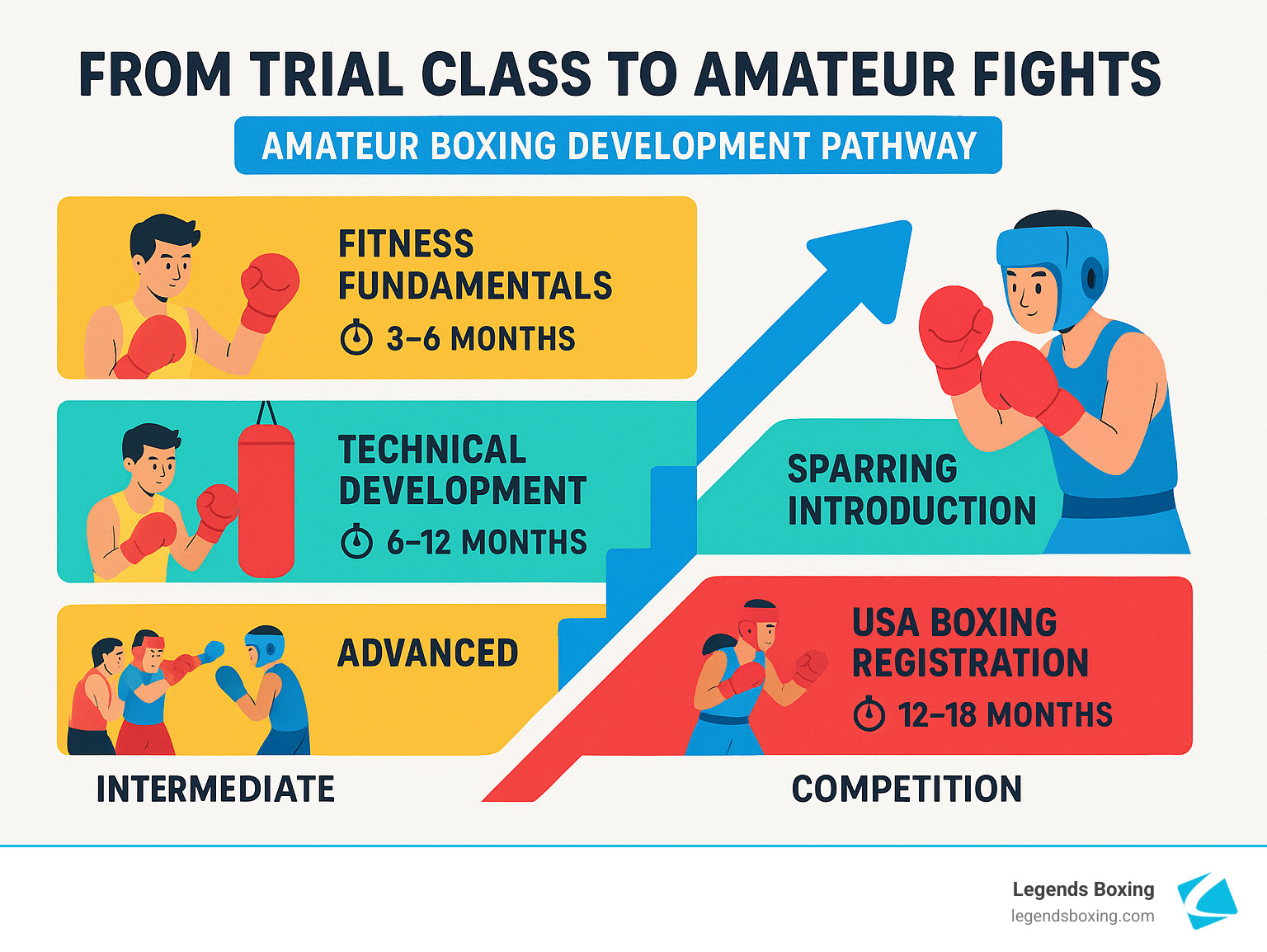
From Trial Class to Amateur Fights
The path from nervous beginner to confident competitor follows a well-worn trail that thousands have walked before you. The curriculum moves logically from fitness fundamentals through technical development, eventually introducing sparring for those who want it — typically 12–18 months of consistent training before someone is ready for their first sanctioned fight.
USA Boxing registration becomes necessary if competition interests you. This national organization oversees amateur boxing throughout the United States, ensuring safety standards and providing competition opportunities at every level. Their club finder helps locate registered facilities in your area.
Tournament participation starts locally before moving to regional and national levels. The amateur system is designed so everyone can find appropriate competition regardless of age, experience, or skill level.
Coaching credentials matter enormously for competitive boxing. USA Boxing requires specific certifications for coaches working with competitive athletes, ensuring you'll receive qualified instruction and proper corner support during fights.
Competition is completely optional. The vast majority of people who train at boxing clubs never step into a ring for an actual fight — and that's perfectly fine. The skills, fitness, and confidence you'll gain are valuable regardless.
Choosing & Joining the Right Boxing Club
Finding the perfect boxing club feels overwhelming at first, but focusing on a few key factors makes the decision much clearer.
Location matters more than you think. That club across town might look amazing online, but a 30-minute drive becomes a real barrier when you're tired after work. Look for options within 15 minutes of home or work.
Schedule compatibility can make or break your boxing journey. Some clubs offer multiple daily options while others might only have a few classes. Verify times match your lifestyle before committing.
Cleanliness standards tell you everything about how a club operates. Walk around and notice if equipment looks well-maintained, if there's proper ventilation, and whether gear is being sanitized between uses.
Certified coaches provide the foundation for safe, effective training. Look for credentials from USA Boxing, AIBA, or recognized fitness organizations — but also watch how they interact with students. Good coaches correct technique patiently and create an atmosphere where everyone feels supported.
Class size directly impacts your experience. The sweet spot usually falls between 8–15 participants, giving instructors enough bandwidth to help everyone while maintaining community energy.
Culture fit might be the most important factor. Visit during peak hours to get a real sense of the vibe. Do people seem supportive? Are beginners welcomed warmly?
Membership options should align with your commitment level. Month-to-month plans offer flexibility, while annual contracts typically provide 15–25% savings. Avoid clubs that pressure immediate decisions or won't explain their pricing clearly.
Most reputable clubs offer free trial classes — take advantage of these. They're the best way to evaluate instruction quality, facility cleanliness, and community atmosphere before committing your money. Read the fine print on cancellation policies before signing anything.
Finding Reputable Boxing Clubs Near You
- USA Boxing club finder — lists sanctioned clubs that meet specific safety and instruction standards
- Word-of-mouth recommendations — ask friends, coworkers, or your doctor; personal experiences carry more weight than anonymous reviews
- Social media — active Instagram or Facebook pages usually indicate engaged communities and professional management
- Trial visits — don't just try one place; visit 2–3 options to compare instruction styles, facility quality, and community vibe
Cost & Membership Breakdown
| Membership Type | Typical Cost Range |
|---|---|
| Monthly unlimited | $89–179/month |
| 5-class pack | $75–125 |
| 10-class pack | $140–220 |
| 20-class pack | $250–400 |
| Annual plan (vs. monthly) | 15–25% savings |
| Gear bundles | 20–30% savings vs. individual purchases |
Family discounts of 10–20% per additional family member are common. Annual plans work great if you're confident about long-term interest — but avoid annual contracts until you've trained consistently for at least a few months.
Frequently Asked Questions about Boxing Clubs
Is boxing safe for beginners with no experience?
Absolutely. Modern boxing clubs have transformed the sport into one of the safest fitness activities you can try. Injury rates in boxing fitness classes are actually lower than many popular activities like basketball, soccer, or even running — because fitness-focused boxing clubs prioritize technique over power and eliminate the contact elements that create risk in competitive boxing.
Your safety starts with proper instruction. Qualified coaches teach you correct punching form, footwork, and defensive positions from day one. Hand wraps and gloves protect the 27 small bones in your hands and wrists. And the progressive approach ensures your body adapts naturally — no one expects power punches or complex combinations on your first day.
Most boxing-related injuries happen in competitive sparring or professional fights — not fitness classes. The vast majority of boxing club members never engage in contact activities. You're hitting bags and pads, not other people.
What should I bring to my very first boxing club session?
The beauty of trying boxing is how little you need to get started. Most boxing clubs provide everything essential for your first workout.
Show up in comfortable workout clothes you can move freely in — athletic shorts or leggings and a moisture-wicking t-shirt. Athletic shoes (cross-trainers or running shoes) provide adequate support for your first few classes. Bring a water bottle — boxing workouts are intense and you'll work up a serious sweat.
Most clubs provide clean, sanitized gloves and hand wraps for beginners. Hand wraps are only about $10–15 if you prefer to buy your own for hygiene reasons. The most important thing to bring? An open mind and positive attitude. Consider bringing a friend too — many people find their first boxing class more enjoyable with a workout buddy.
Can boxing clubs help me prepare for sanctioned amateur competition?
Many boxing clubs can absolutely prepare you for amateur competition, but it's important to choose the right type. Not every facility offers competition training — some focus exclusively on fitness.
USA Boxing-affiliated clubs provide the most direct path to amateur competition. These clubs have certified coaches who understand competitive requirements and connections to the tournament system. The journey from beginner to competitive boxer typically takes 12–18 months of dedicated training, with competition preparation involving 4–6 sessions per week.
Competition is completely optional. Many people train at boxing clubs for years without ever wanting to compete — and that's perfectly valid. Quality clubs support both recreational and competitive goals equally well.
Find Your Boxing Club and Start Your Journey
Your journey into boxing clubs doesn't have to end here. These incredible communities offer something traditional gyms simply can't match — a perfect blend of intense workouts, genuine connections, and personal change that goes way beyond the physical.
Boxing clubs have cracked the code on making fitness both challenging and genuinely fun. Youth programs welcome kids as young as 8, while senior classes prove it's never too late to throw your first punch. Women-only sessions create comfortable spaces for building confidence, and competitive tracks support those dreaming of amateur tournaments.
But here's what really sets boxing apart — the mental change. The stress melts away with every combination thrown. Confidence builds with each class completed. The supportive community becomes a second family that celebrates your victories and encourages you through challenges.
At Legends Boxing, we've spent years perfecting this experience. Our approach eliminates the intimidation factor while keeping all the incredible benefits that make boxing so transformative — real boxing techniques combined with conditioning and core work, creating workouts that deliver real results without requiring any previous experience.
You don't need to be in perfect shape to start. You don't need natural coordination or athletic ability. You just need to show up with an open mind and a willingness to try something new.
Find your nearest Legends Boxing location across Utah, Florida, and Texas — or book your first free class today. No experience required. Our coaches will guide you through every step, from your first hand wrap tutorial to mastering complex combinations.