
A Practical Guide to Boxing Glove Sizes
Boxing glove sizes are measured in ounces—not S/M/L—and getting the right weight protects your hands and maximizes your workout. Here's the complete guide: body weight charts, hand measurement, glove types, lace vs. velcro, materials, and when to replace.
Why Getting Boxing Glove Sizes Right Matters
Boxing glove sizes are measured in ounces (oz), not traditional small, medium, or large. Here's the quick version before we dive in:
| Body Weight | Recommended Glove Size |
|---|---|
| Under 100 lbs (including kids) | 6–8 oz |
| 100–125 lbs | 10–12 oz |
| 125–150 lbs | 12–14 oz |
| 150–175 lbs | 14–16 oz |
| Over 175 lbs | 16–18 oz |
Getting the right glove size isn't just about comfort — it's about protecting your hands and wrists from injury while ensuring you get the most out of your workout. The wrong size can lead to poor technique, reduced performance, and injuries that sideline your fitness journey.
Many people think heavier gloves hit harder. That's actually backwards. Heavier gloves have more padding for protection, not more power. The ounce measurement refers to the weight of padding inside each glove, which absorbs impact and keeps your hands safe during training.
I'm Robby Welch, National Head Coach at Legends Boxing. I've spent years helping thousands of members find the perfect boxing glove sizes for their training needs. I've seen how proper glove selection transforms both safety and performance in the gym.
Understanding the Basics: Why Glove "Size" is Really About Weight (oz)
When you see "12 oz" on a boxing glove, that number tells you how much padding is packed inside each glove. It's not about how big your hands are (though that matters too) — it's about how much cushioning sits between your knuckles and whatever you're hitting.
This padding is doing serious heavy lifting when it comes to shock absorption. Every time you throw a punch, that padding absorbs the impact and spreads it out, protecting the delicate bones in your hands and wrists. Without enough padding, you're setting yourself up for injuries that could keep you out of the gym for weeks.
But it's not just about protecting you. If you're planning to spar, that padding also protects your training partners. Nobody wants to be on the receiving end of a punch from someone wearing gloves that are too light.
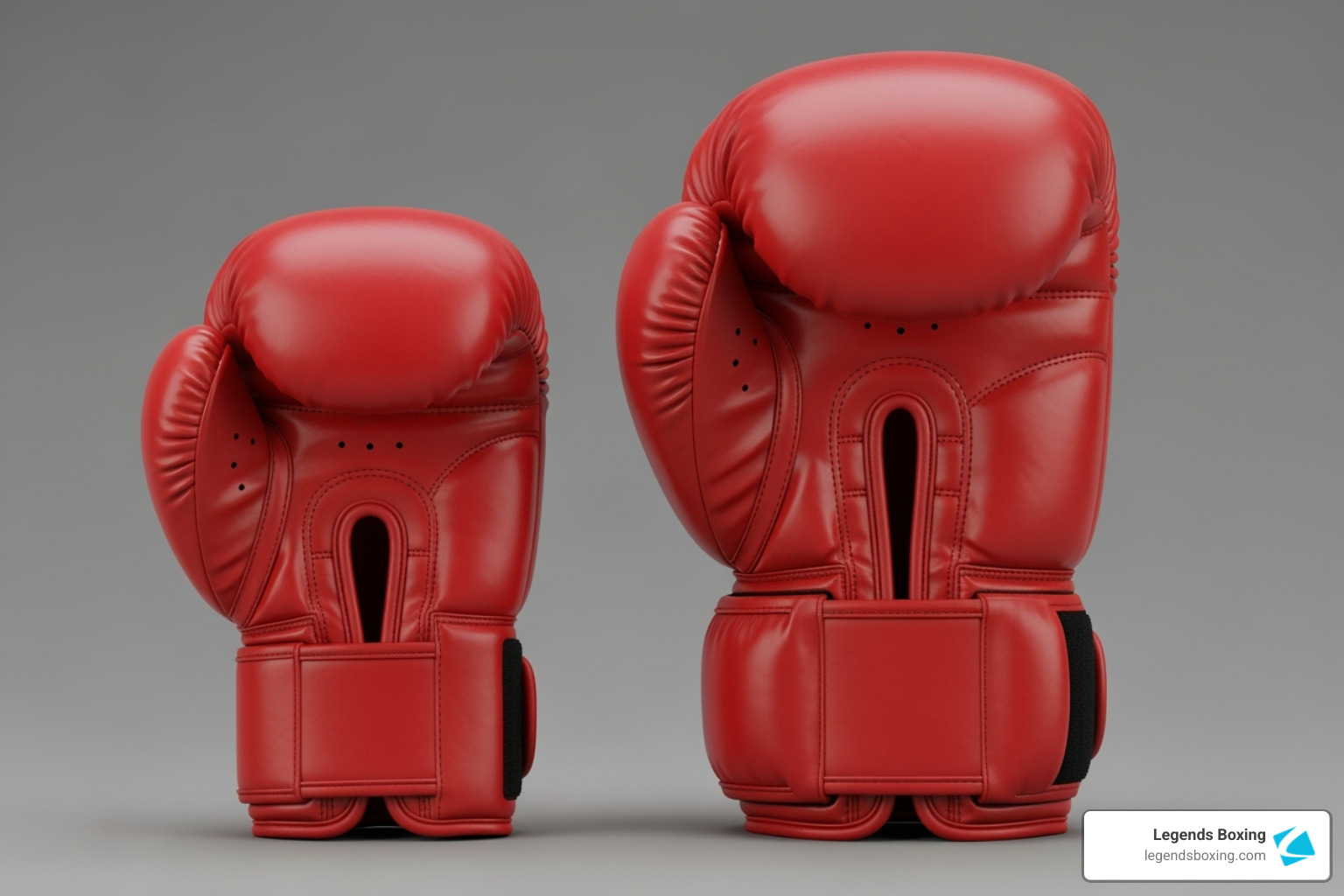
Most boxing gloves fall between 8 oz and 20 oz. The difference is dramatic when you see them side by side.
Does a Heavier Glove Hit Harder?
This question comes up in almost every beginner class — and the answer always surprises people. You'd think a heavier glove would pack more punch, right?
Nope. Completely backwards.
A heavier glove actually hits softer, not harder. All that extra weight is padding designed to cushion the blow, not amplify it. Think of it like the difference between getting hit with a hammer versus getting hit with a pillow that weighs the same as a hammer.
So where does real punching power come from? Technique. Proper footwork, hip rotation, timing — that's what separates a powerful punch from just swinging your arms around. A lighter glove might feel faster, but your skill determines how hard you hit.
The heavier gloves actually help you develop better technique because they force you to be more deliberate with your movements. Plus, they let you practice at full intensity without worrying about hurting anyone.
Choosing Your Glove Size by Body Weight and Hand Circumference
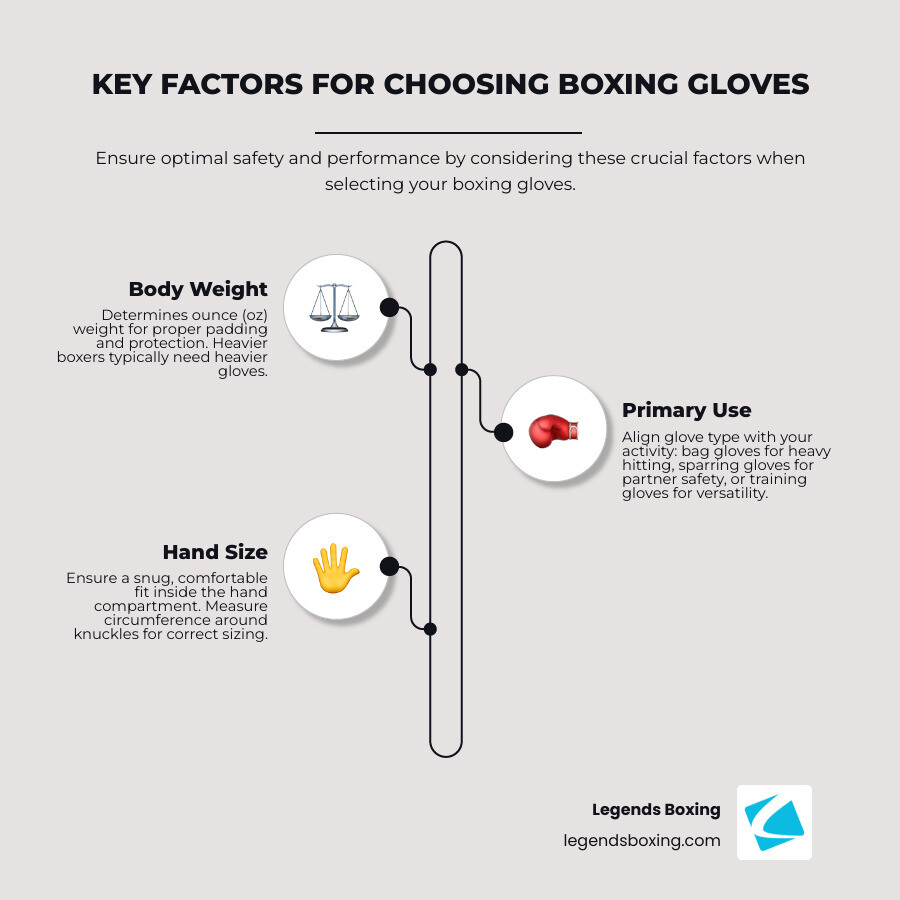
When it comes to boxing glove sizes, we look at two main things: body weight and hand circumference. Your body weight gives the starting point for the right ounce range, while your hand size ensures the gloves fit comfortably.
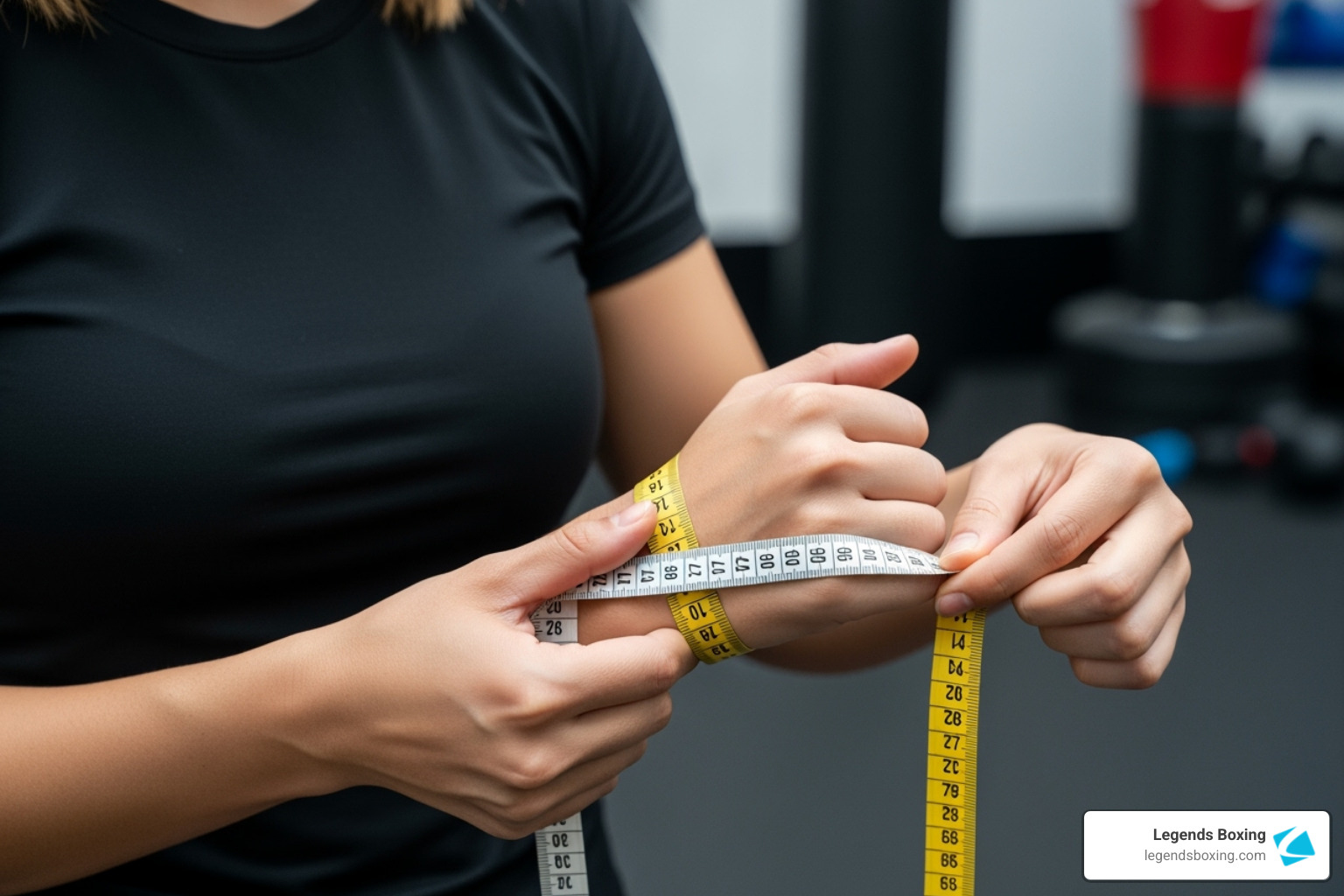
How to measure your hand: Wrap a tape measure around the widest part of your dominant hand, right below your knuckles — don't include your thumb. Always try gloves on with hand wraps already on; that's how you'll actually be wearing them.
Body Weight to Glove Weight
- Under 100 lbs — 6–8 oz: lighter gloves give you protection without feeling like you're carrying weights
- 100–125 lbs — 10–12 oz: 10 oz is perfect for bag work and pad training; 12 oz works as an all-around glove
- 125–150 lbs — 12–14 oz: 14 oz is better if you're planning to spar with partners
- 150–175 lbs — 14–16 oz: 14 oz works as a solid all-rounder; bump to 16 oz for serious sparring
- Over 175 lbs — 16–18 oz: extra padding is crucial when you've got more power behind your punches
Hand Circumference to Glove Fit
| Circumference | Glove Size |
|---|---|
| 6–7.5 inches | Small |
| 7.5–8.5 inches | Medium (fits most people) |
| 8.5–9.5 inches | Large |
| Over 9.5 inches | Extra-Large |
The glove should fit snugly without being tight. Your fingertips should touch the end of the compartment, but you shouldn't feel cramped. There also shouldn't be extra room for your hand to slide around — that's how injuries happen.
Matching Glove Type to Your Training Needs
Not all gloves are built the same way. Different types of training need different amounts of padding and protection.
| Glove Type | Weight Range | Best For | Avoid |
|---|---|---|---|
| Training Gloves | 12–14 oz | Bag work, pads, light sparring — the versatile all-rounder | Nothing — these do it all |
| Bag Gloves | 10–12 oz | Heavy bags, speed bags, focus mitts; feel your punches more | Never use for sparring — too little padding |
| Sparring Gloves | 14–18 oz | Partner sparring at full intensity; maximum protection | Not ideal for solo bag sessions |
| Competition Gloves | 8–16 oz | Actual boxing matches | No — not for training unless you're competing |
At Legends Boxing, our classes combine different training styles. Check out what to expect in a class to see how we structure our sessions.
Special Considerations for Men, Women, and Kids
Most boxing glove sizes work for everyone — the weight and hand circumference guidelines above apply regardless of gender. That said:
Women: Some brands offer gloves with a narrower hand compartment that fits better. Women's hands can be shaped differently than men's even at the same circumference measurement. If regular gloves feel too roomy, look for brands that specifically mention women's sizing or a more tapered fit.
Kids: Children's boxing glove sizes usually start at 4 oz and go up to 8 oz depending on age and size. These lighter gloves protect developing hands and wrists without being too heavy or bulky. For kids under 100 lbs, stick with 6–8 oz maximum. Age matters more than weight here — when in doubt, go lighter rather than heavier.
Key Features That Impact Your Choice
Lace-Up vs. Velcro (Hook and Loop) Gloves
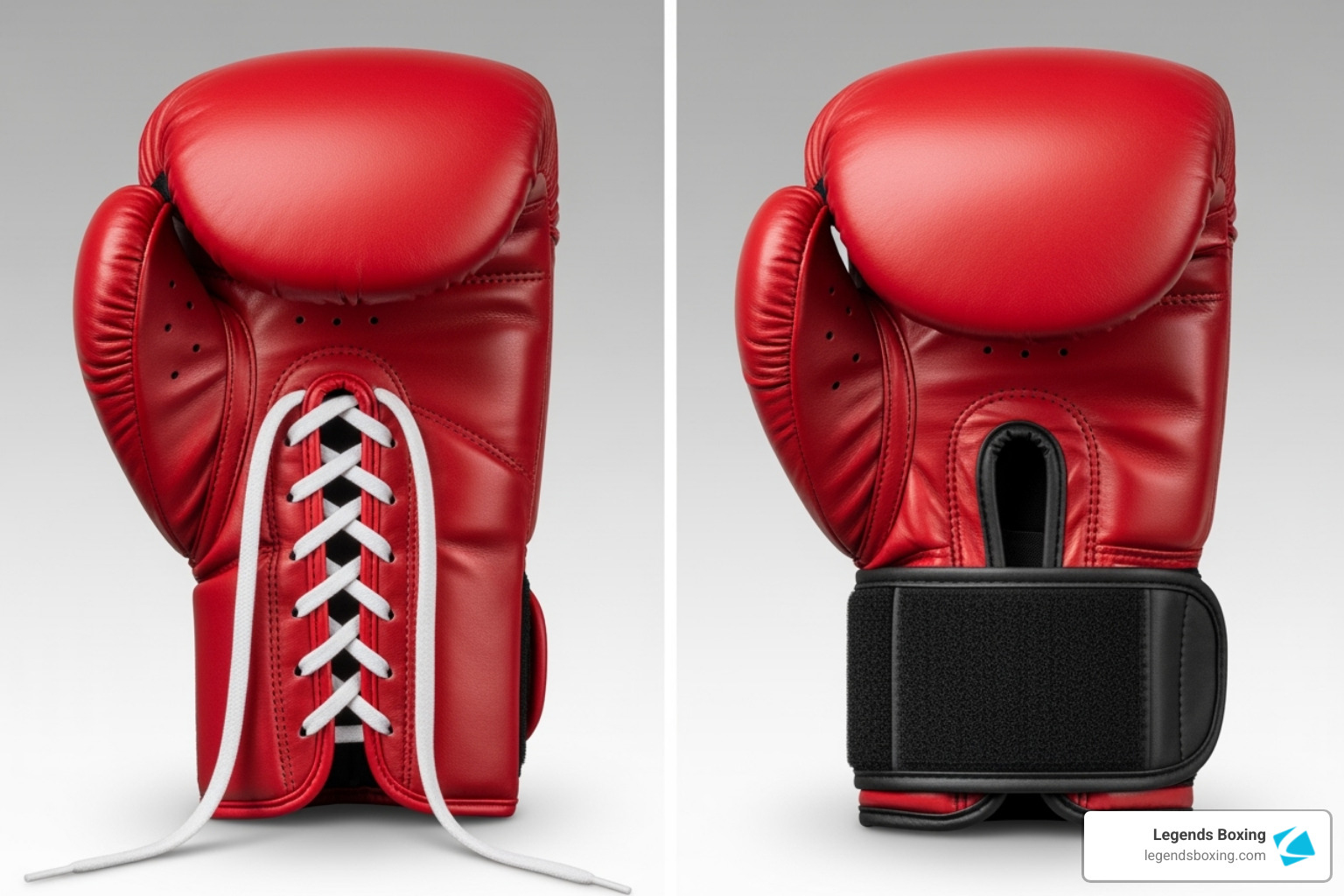
Lace-up gloves offer the most secure, customizable wrist fit you can get. Professional fighters swear by them — when you're throwing serious punches, that rock-solid wrist stability matters. The catch: you'll need a training buddy to get them on and off, making them impractical for solo workouts or busy fitness classes.
Velcro (hook-and-loop) gloves are the practical choice for most people. Slip them on, wrap the strap, and you're ready to go. No fumbling with knots between rounds. The wrist support isn't quite as customized as lace-ups, but paired with hand wraps it's more than enough for the vast majority of training situations.
At Legends Boxing, we recommend Velcro closure gloves for our members. Our classes move at a great pace — you want to spend your time throwing punches, not waiting for someone to help with your laces.
Glove Materials and Durability
| Material | Durability | Breathability | Price | Best For |
|---|---|---|---|---|
| Genuine Leather | Excellent — molds to hands over time | High | $$ | Serious, regular trainers |
| Synthetic Leather (PU) | Good — approaches real leather feel | Medium | $ | Most recreational boxers |
| Vinyl | Fair — less ideal for intensive training | Low | $ | Beginners, kids who'll outgrow quickly |
No matter which material you choose, look for high-density foam padding for shock absorption and a moisture-wicking inner lining to keep your hands comfortable. Quality stitching is crucial — you want those seams to hold up through countless training sessions.
If you're planning to make boxing a regular part of your fitness routine, investing in better materials upfront often saves money in the long run.
Frequently Asked Questions
Can I use the same gloves for bag work and sparring?
Using the same gloves for everything is like using dress shoes for hiking — it might work for a while, but it's not doing you any favors.
Heavy bag work compresses the padding over time. That flattened foam is no longer protecting your training partner the way fresh padding would. There's also the hygiene factor — all that moisture builds up inside.
Our recommendation: Invest in two pairs if your budget allows. Use lighter gloves (10–12 oz) for bag and mitt work, and keep a heavier, well-padded pair (14–18 oz) specifically for sparring.
What size gloves are best for a beginner in a fitness class?
For newcomers to our Legends Boxing classes, I recommend what we call the "Goldilocks zone" — 12 oz or 14 oz gloves.
- 12 oz — feel quick and nimble; enough padding to protect your hands during intense bag rounds without weighing your arms down; great for learning technique
- 14 oz — extra cushioning; especially nice if you're on the heavier side or you go all-out from day one; still allows for good speed
Both weights work beautifully for the mix of bag work, pad drills, and conditioning we do in our classes. Check out our memberships to see how we can help you reach your fitness goals.
How often should I replace my boxing gloves?
If you're training regularly (3–5 times a week), plan on replacing your gloves every 6 to 12 months. But the calendar matters less than what your gloves are telling you. Look for these signs it's time:
- Flattened padding over your knuckles — press down with your thumb; if it doesn't bounce back, shock absorption is compromised
- Cracks in the material — especially around knuckles and seams; a few scuffs are normal, but deep cracks mean the structure is breaking down
- Torn seams — once stitching comes undone, padding can shift or fall out
- Persistent bad odors — even after airing out and using deodorizers; bacteria and mold may have taken up permanent residence in the padding
Pro tip: Always wear hand wraps, never stuff sweaty gloves in your gym bag, and let them air dry completely after every session. A little care goes a long way.
Find Your Perfect Fit at Legends Boxing
Finding the right boxing glove sizes sets you up for success and safety in your boxing journey. To summarize:
- Ounces = padding, not power — heavier gloves cushion more, they don't hit harder
- Body weight + hand circumference are your two best guides for fit
- Match glove type to training — bag gloves for solo work, sparring gloves for partners, training gloves for everything in between
- Velcro for classes, lace-up for competition prep
- Replace when padding compresses, not on a fixed calendar
At Legends Boxing, our trainers know exactly how to help you find gloves that match your goals — whether you want to get fit, learn self-defense, or just try something completely different from boring gym routines.
Book a free workout and let us help you get started with the right gear. Or find a Legends Boxing location near you across Utah, Florida, and Texas.