
Beyond the Glove: Finding Your Perfect Boxing Hand Wraps
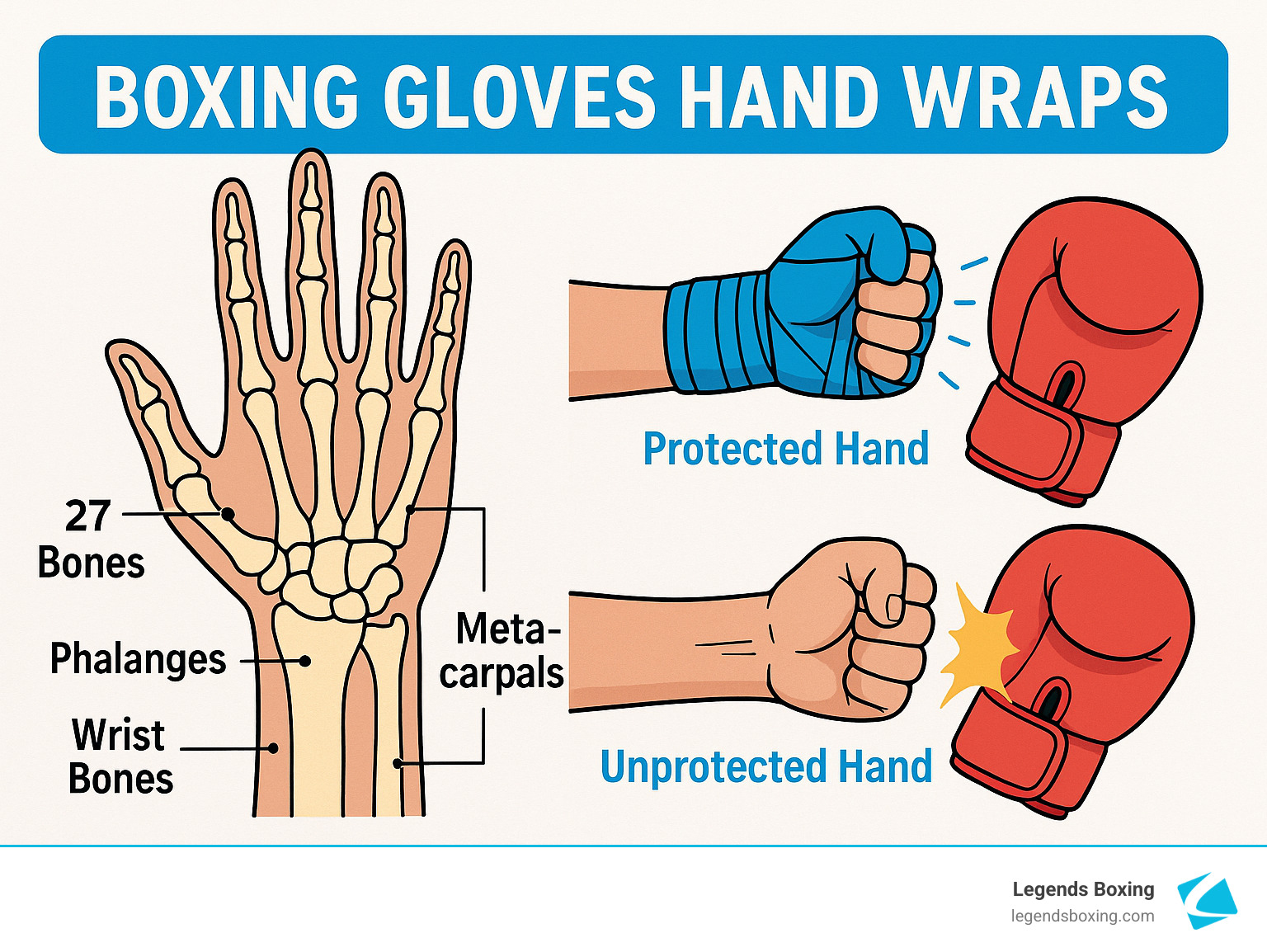
Boxing gloves and hand wraps are essential partners — gloves alone can't fully protect the 27 delicate bones in your hands and wrists. This guide covers everything you need: the three main types of hand wraps (traditional, quick wraps, and inner gloves), how to choose by length and material, a full step-by-step wrapping technique, alternative wrapping styles, and care tips that extend wrap life.
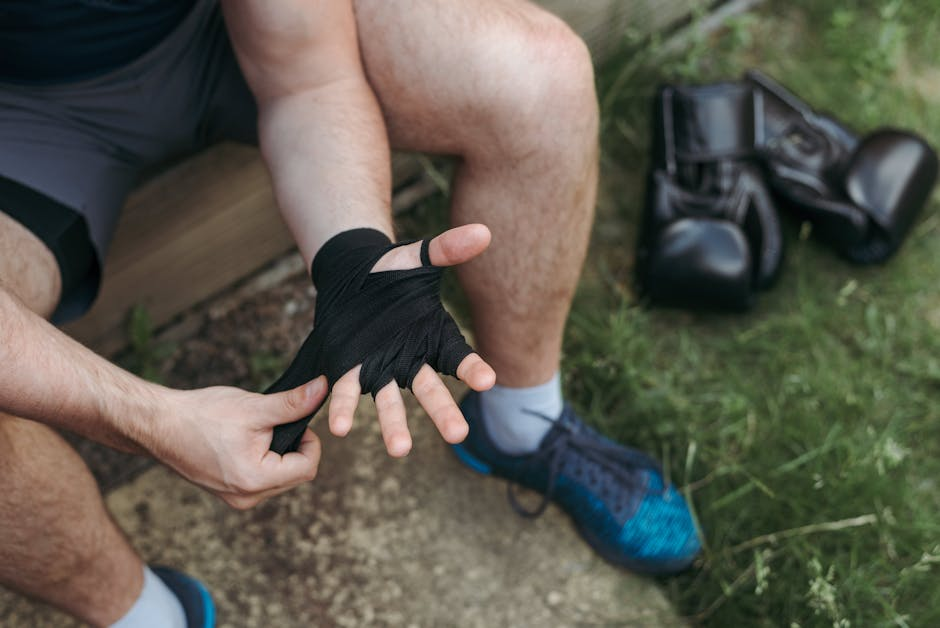
Why Your Fists Need More Than Just Gloves
Boxing gloves and hand wraps are essential partners in protecting your hands during training. Here's what you need to know upfront:
Key Types of Hand Wraps:
- Traditional Wraps — Cotton or elastic strips (120–180 inches) that you wrap manually for maximum protection and customization
- Quick Wraps — Slip-on gloves with built-in padding and velcro straps for convenience
- Inner Gloves — Fingerless gloves with gel padding for knuckle protection and easy on/off
Primary Benefits:
- Stabilize all 27 small bones in your hands and wrists
- Absorb impact and shock from punches that gloves alone can't handle
- Prevent fractures, sprains, and bruises
- Fill gaps in boxing gloves for a better, more secure fit
Your hands contain 27 delicate bones, and boxing is a high-impact sport. Even with the best boxing gloves, your hands need extra protection and support underneath. Hand wraps stabilize joints and ligaments, preventing them from twisting or bending during powerful punches. Think of hand wraps like the foundation of a house — without them, everything else falls apart.
I'm Robby Welch, National Head Coach for Legends Boxing. I've guided thousands of members through proper hand protection techniques and developed nationwide training programs focused on injury prevention.
The Contenders: Traditional Wraps vs. Quick Wraps vs. Inner Gloves
When you're ready to protect those hands, you've got three main options. Each has its own personality — finding your match depends on what matters most: maximum protection, convenience, or something in between.
| Feature | Traditional Hand Wraps | Quick Wraps | Inner Gloves |
|---|---|---|---|
| Wrist Support | Excellent (fully customizable) | Moderate | Minimal to Moderate |
| Knuckle Padding | Excellent (buildable layers) | Good (pre-set) | Good (gel, pre-set) |
| Convenience | Low (requires technique and time) | High (slip-on) | High (slip-on) |
| Customization | High | Low | Low |
| Best For | Serious training, sparring, competition | Quick workouts, beginners | Light workouts, hygiene, glove lining |
Traditional Hand Wraps (Cotton & Mexican Style)
Traditional hand wraps are the gold standard for serious fighters. These long fabric strips wrap around your hands like custom-made armor. You'll find two main varieties:
Cotton wraps are your reliable workhorses — affordable, durable, and give solid support when wrapped correctly. They don't stretch much, which means they stay put during intense training sessions.
Mexican-style wraps are the fighter's choice for good reason. Made from elastic material, they hug your hands like a second skin. Professional fighters swear by them because they create that perfect, snug fit that feels made just for you.
Why traditional wraps earn their reputation:
- Maximum support — you control exactly where the protection goes. Need extra padding on your knuckles? Wrap them thicker. Want more wrist stability? Add more layers there.
- Custom fit — every hand is different, and traditional wraps let you adjust for your unique shape. You can make them snug where you need support and looser where you need flexibility.
- Superior protection — nothing beats a properly wrapped traditional wrap for absorbing impact and stabilizing all those tiny hand bones
The downsides are real too. There's a learning curve — your first few attempts might look like you got tangled up with a fabric snake. They're also time-consuming (5 minutes to wrap when you're pumped up and ready to hit the bags can feel like forever). But it's worth every second.
Quick Wraps and Padded Inner Gloves
If traditional wraps are the sports car, quick wraps and inner gloves are your reliable city car — they get you where you need to go without all the fuss.
Quick wraps feature a slip-on design with built-in gel padding and velcro straps, made from stretchy materials like neoprene that conform to your hands. Padded inner gloves are essentially fingerless gloves with gel padding over your knuckles — slide them on and you're ready in seconds.
The wins: pure convenience, no technique required, great for beginners who are just starting their boxing journey, and excellent hygiene (they create a barrier between your sweaty hands and your boxing gloves).
The limitations: less wrist support than traditional wraps because you can't build up layers where you need them most, can feel slightly bulky inside gloves, and no customization — what you see is what you get.
Your choice comes down to priorities. Serious about training and competition? Traditional wraps are your best friend. Want convenience and ease? Quick wraps and inner gloves have you covered. Either way, you're protecting those hands.
Your Perfect Match: How to Choose the Right Hand Wraps
Choosing by Length and Material
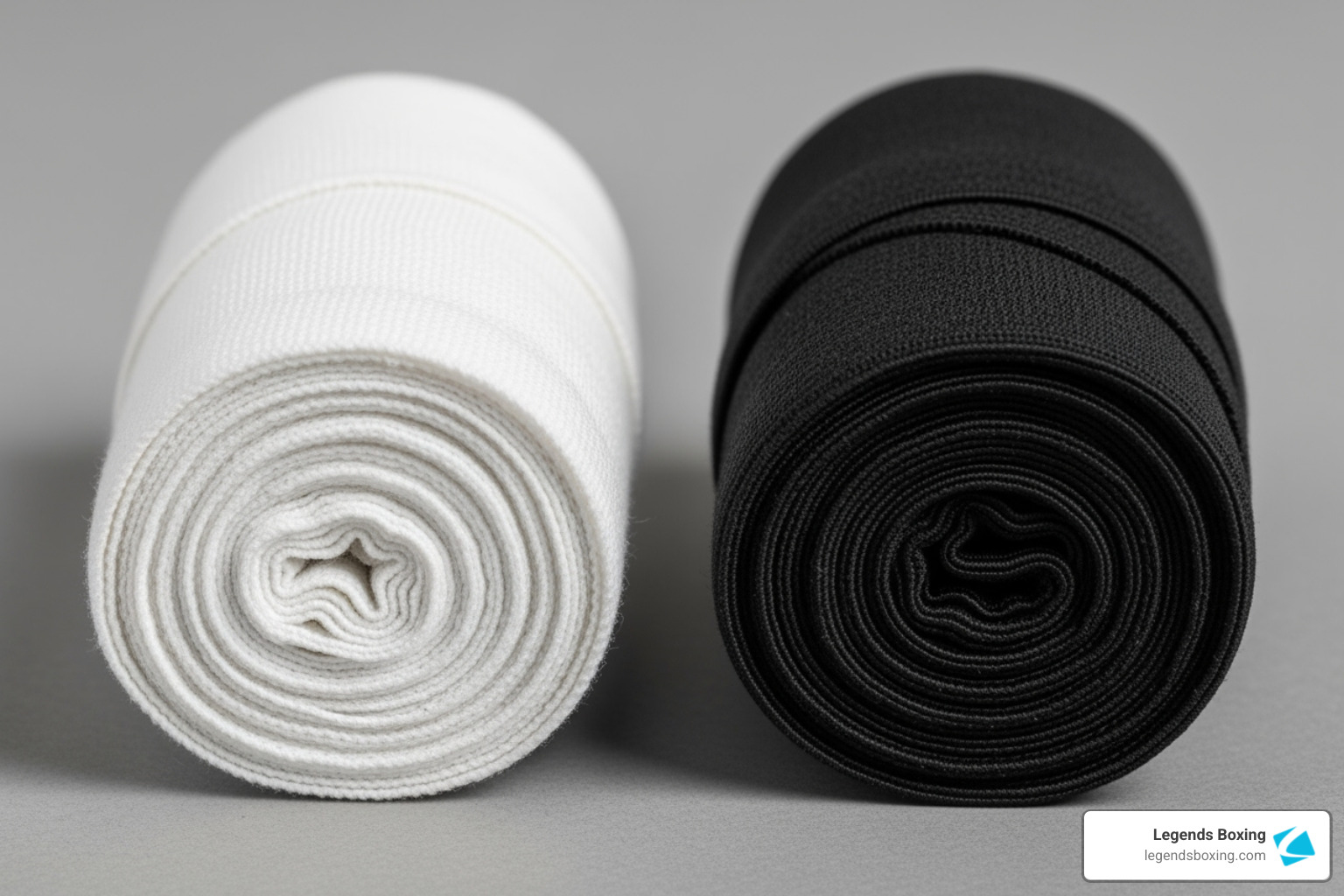
Length directly affects how much protection you can build around your hands and wrists:
- 120-inch wraps — ideal for smaller hands or beginners. Less intimidating to learn with, though most serious boxers find these limiting once they get comfortable with wrapping technique.
- 180-inch wraps — the sweet spot for most people. Standard length that properly protects both knuckles and wrists without going overboard. If you're unsure, start here.
Material matters just as much as length:
- Breathable cotton wraps — the classic choice. Durable, absorb sweat well, and give you a firm, secure wrap. They don't stretch much, which means consistent support every time.
- Stretchy polyester blends (Mexican-style) — more elastic material that conforms to your hand shape and feels snugger, almost like a second skin. Many experienced fighters prefer these for excellent compression that moves with your hands naturally.
Essential Features to Look For
Not all hand wraps are created equal. When investing in quality wraps, look for these non-negotiables:
- Thumb loop — anchors your entire wrap and prevents everything from sliding around mid-workout. Without it, you'll spend more time re-wrapping than training.
- Strong velcro closure — cheap velcro gives up mid-workout, leaving wraps loose and useless. Quality velcro should hold firm through even your most intense sessions.
- Reinforced stitching — especially around the thumb loop and closure areas, which take the most stress. Reinforced stitching here means your wraps will last significantly longer.
- Quality fabric weave — substantial but not bulky; smooth enough to wrap evenly, tough enough to handle repeated use and washing.
- Breathability — moisture-wicking material keeps your hands cooler during longer sessions and prevents that soggy, distracting feeling.
Recommendations by Experience Level
Beginners — focus on wrist support above everything else. New boxers are more likely to injure their wrists because punching technique is still developing. Consider starting with 120-inch wraps or even quick wraps while you're learning. The most important thing is that you actually use protection consistently.
Experienced fighters — you probably hit harder and train more frequently, which means higher knuckle padding needs. Those 180-inch wraps make real sense because you can build up more protective layers exactly where you need them. You also want maximum customization — after months or years of training, you know exactly where you need extra support (a previous wrist injury, extra knuckle protection on the lead hand, etc.). Durability for high-frequency training becomes crucial: premium materials aren't just nice-to-haves, they save money in the long run.
Master the Technique: Step-by-Step Hand Wrapping
Learning to wrap your hands properly is like learning to tie your shoes — it feels impossible at first, but once you get it, it becomes second nature. Think of wrapping as building a custom cast for your hands, one that protects all those delicate bones and joints.
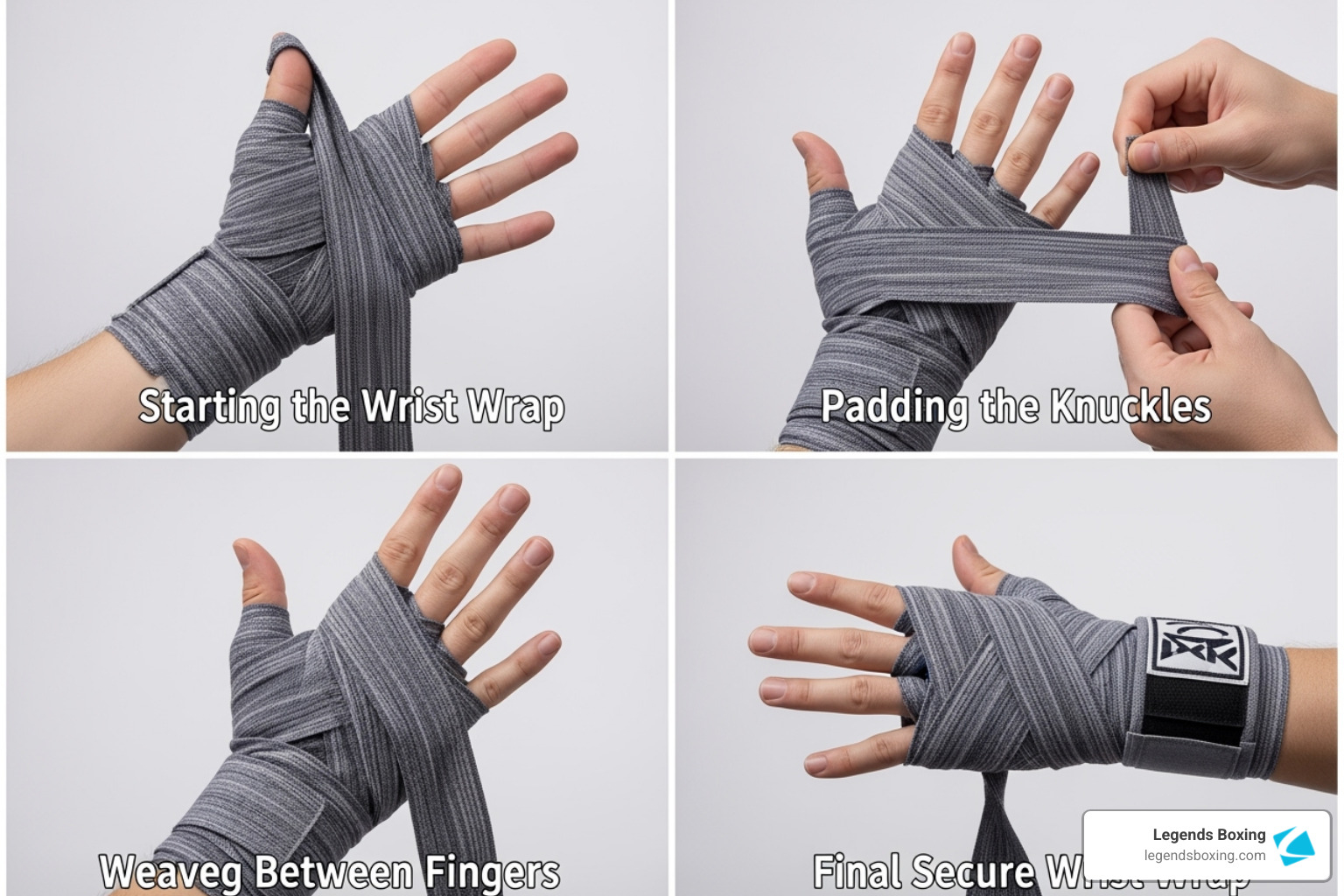
The Standard Boxing Hand Wrap Technique
This is your bread-and-butter method — solid wrist support and great knuckle protection for a safe, effective workout.
Step 1 — Build your wrist foundation. Slip the thumb loop onto your thumb and let the wrap fall over the back of your hand. Wrap around your wrist three times. This is your base — make it snug but not so tight that your hand turns purple. You should be able to wiggle your fingers comfortably.
Step 2 — Protect your knuckles. Bring the wrap diagonally across the back of your hand to your knuckles. Wrap around your knuckles three times, keeping your fingers slightly spread. This padding protects the metacarpal bones from taking a direct beating.
Step 3 — Weave between the fingers. Starting between your pinky and ring finger, go from your knuckles down to your wrist, then up through the webbing between your fingers. Hit each gap — pinky to ring, ring to middle, middle to index. This keeps everything aligned and supported.
Step 4 — Lock in the thumb. Loop the wrap around your thumb once or twice, creating an "X" pattern across the back of your hand. This prevents the thumb from hyperextending during punches.
Step 5 — Finish strong at the wrist. Use remaining wrap to create more "X" patterns across the back of your hand, connecting wrist to knuckles for extra support. Wrap any remaining material around your wrist and secure with the velcro closure.
Step 6 — Make a fist. It should feel snug and supportive, not painful or restrictive. If your fingers are tingling or turning colors, you've wrapped too tight — unwrap and try again.
Don't worry if it takes a few tries to get it right. At Legends Boxing, our trainers are always happy to help you master this essential skill.
Alternative Wrapping Styles
Once you've mastered the standard wrap, you might want to explore other styles:
- Thai style — focuses heavily on knuckle padding. Instead of spreading the wrap evenly, you create a thicker pad over the knuckles by folding or layering the material multiple times in that area. Popular with experienced fighters who have strong, stable wrists but want maximum knuckle protection for heavy bag work.
- Pro style — professional fighters use gauze and athletic tape applied by a cutman, creating an incredibly rigid protective cast. This is highly regulated and requires another person to apply — really only used in professional competition.
The beauty of boxing hand wraps is that you can adapt your technique as you grow in the sport. Start with the standard method, get comfortable, and then explore other styles as your needs change.
Frequently Asked Questions
How should I clean and care for my hand wraps?
Hygiene is absolutely key. After a solid workout, your wraps have absorbed a lot of sweat and bacteria.
- Wash after every use — this prevents odor from developing and keeps bacteria from building up
- Always use a mesh laundry bag — prevents wraps from tangling everything in the washing machine and protects the velcro from lint
- Secure the velcro before washing — this simple step prevents the hook-and-loop from snagging on fabric and keeps it working properly longer
- Never use the dryer — air dry completely to prevent shrinking and damage to the elastic fibers. Hang them up and let them dry fully before storing to prevent mildew
How tight should hand wraps be?
The sweet spot is snug and supportive, but never restrictive. Your wraps should feel like a firm, supportive hug around your hand and wrist — everything held securely in place.
The test that works every time: make a fist after wrapping. You should be able to close your hand completely without pain or restriction. The wrap should feel compressed and stable, but comfortable. If your fingers start tingling, going numb, or changing color, you've gone too tight.
Think of it like a good pair of athletic shoes — supportive enough to perform well, comfortable enough to wear for your entire workout.
How often should I replace my hand wraps?
Watch for these warning signs:
| Sign | What It Means |
|---|---|
| Elastic loses stretch, wrap feels loose | No longer providing adequate compression |
| Fabric fraying at edges or velcro area | Structural integrity is compromised |
| Velcro won't hold securely during training | Wraps won't stay closed when you need them most |
| Material thinning (especially over knuckles) | Reduced protective capability |
| Persistent odor despite washing | Bacteria have permanently colonized the fabric |
A good replacement timeline is every 6–12 months, depending on training frequency and intensity. Pro tip: rotate 3 pairs throughout the week. This gives each pair time to fully dry between uses, reduces wear and tear, and means you always have a clean pair ready to go.
Protect Your Hands and Unlock Your Potential
Boxing gloves and hand wraps are far more than an accessory — they're your first line of defense. Without proper hand protection, even the best boxing gloves can't fully safeguard those 27 delicate bones in your hands and wrists.
Whether you're throwing jabs at the heavy bag or working mitts with a trainer, proper hand protection lets you focus on technique instead of worrying about injury. The wrapping technique might feel awkward at first, but like learning to throw a proper jab, it becomes second nature with practice.
At Legends Boxing, our trainers emphasize proper gear and safety for every member — from complete beginners to seasoned fighters. Your boxing journey should be about pushing limits, not nursing preventable hand injuries.
Quality hand wraps, properly applied, are your ticket to training harder and longer while staying in the game. Book a free class at Legends Boxing and let our certified coaches help you get your wrapping technique right from day one. Find a location near you across Utah, Texas, and Florida.