
No More Guesswork: Picking Your Boxing Glove Size
The wrong boxing glove size leads to sore hands, poor form, and wasted money. This guide shows you exactly how to measure your hand, match your body weight to the right ounce rating, and pick the right glove type for bag work, sparring, or competition — plus what features actually matter for durability and wrist protection.
Why the Right Glove Fit Is a Knockout Necessity
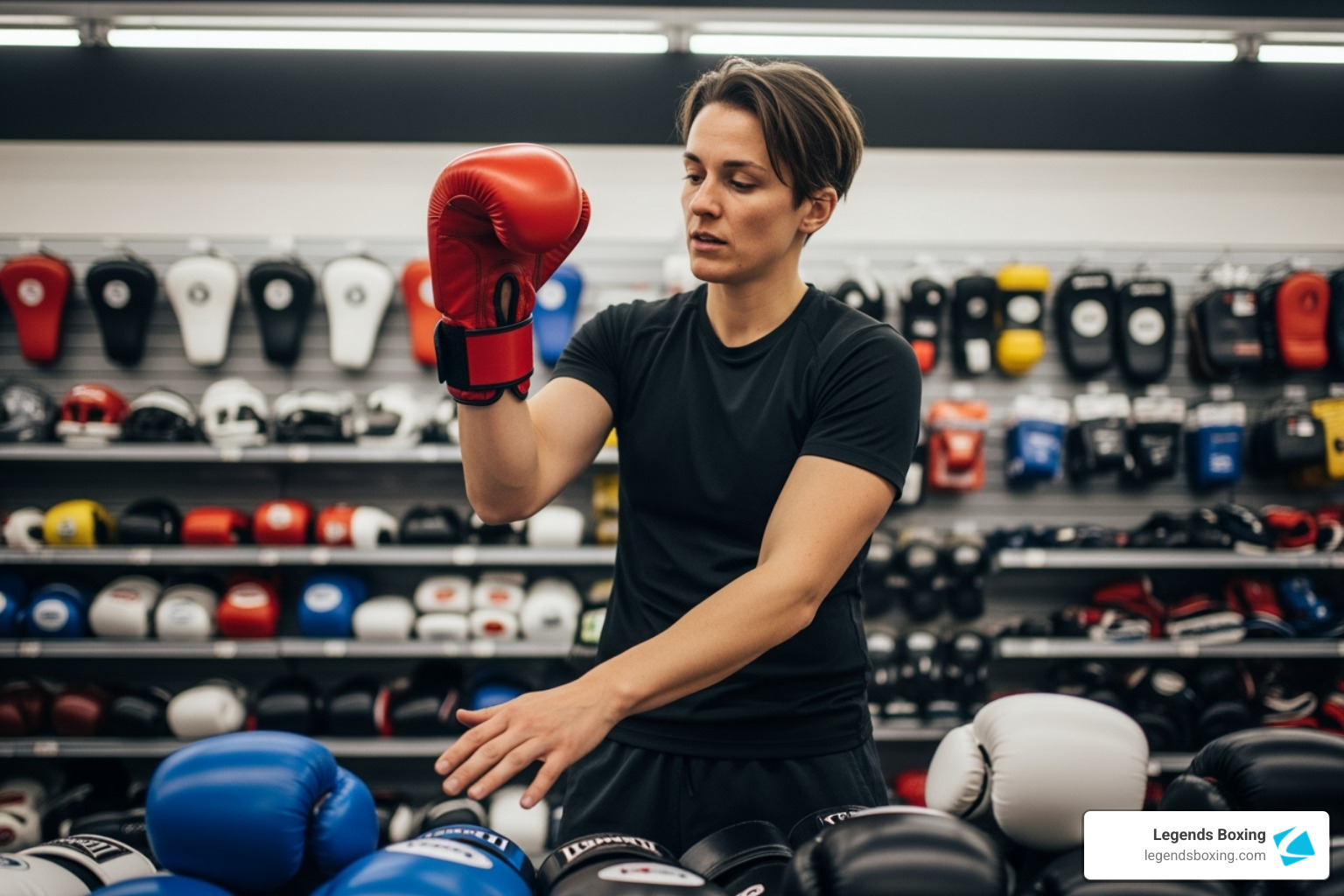
Choosing the right boxing gloves and how to choose size can be the difference between a great workout and a painful injury. An improper fit leads to sore hands, poor form, and wasted money on gear that doesn't work for you.
Quick answer: how to choose boxing glove size
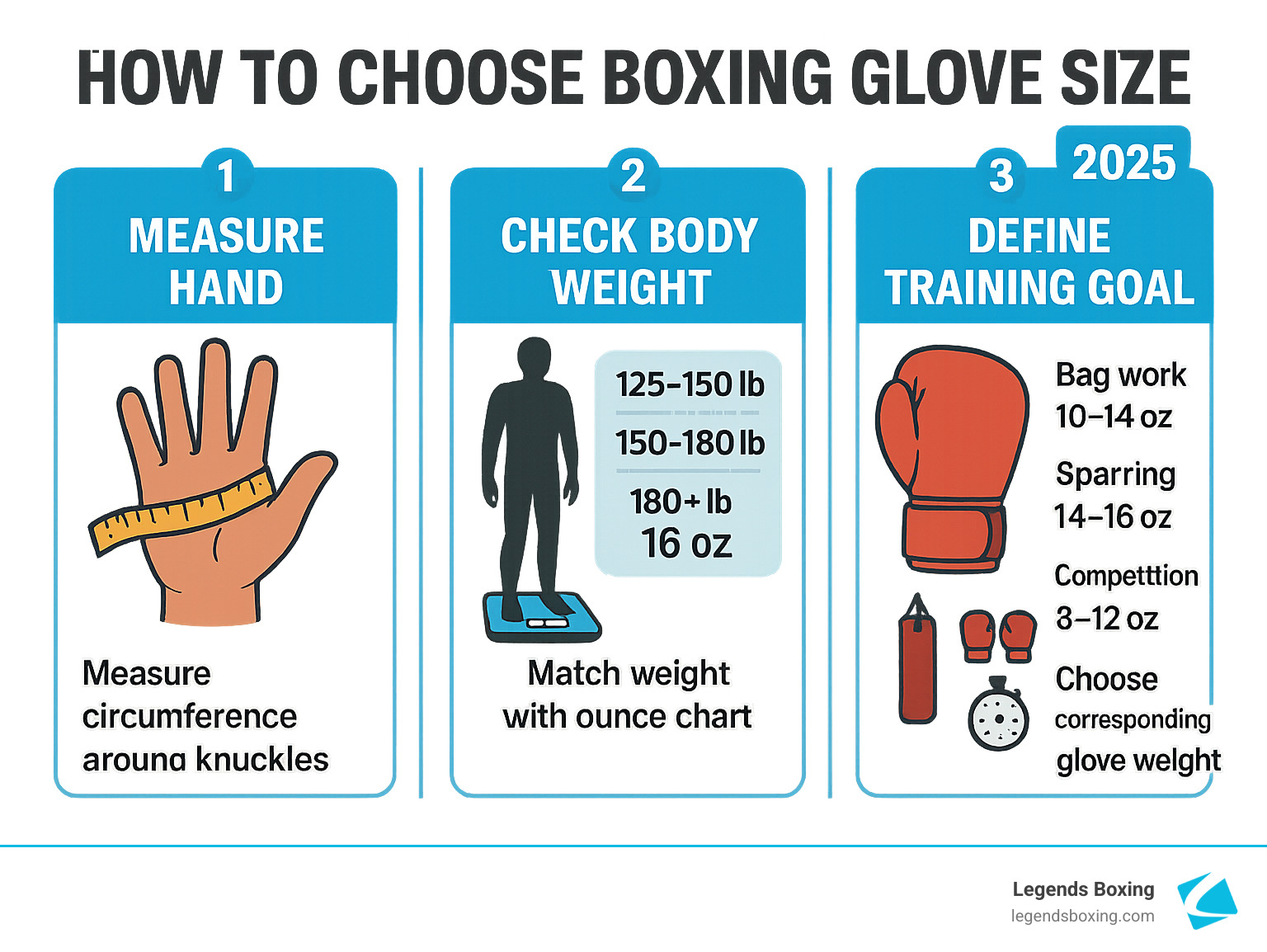
- Measure your dominant hand around the knuckles (6–7.5" = Small, 7.5–8.5" = Medium, 8.5–9.5" = Large, 9.5"+ = XL)
- Match your body weight to glove weight (125–150 lbs = 12oz, 150–175 lbs = 14oz, 175+ lbs = 16oz)
- Consider your training goal (bag work = 10–14oz, sparring = 14–18oz, competition = 8–12oz)
Boxing gloves are measured by weight in ounces — not traditional S/M/L. Most people need 12–16oz gloves for general training. A glove that's too tight cuts off circulation; one that's too loose causes wrist strain and poor punching form.
Your gloves are your most important piece of equipment. They protect your hands, improve your technique, and help you punch with maximum power. The right fit means you can train consistently without pain.
I'm Robby Welch, National Head Coach at Legends Boxing. With experience helping thousands of members find their perfect glove fit, I've seen how the right gear transforms someone's entire boxing experience.
Key Factors: How to Choose Size Based on Measurement and Weight
Boxing gloves are sized by weight in ounces (oz) — more ounces mean more padding and protection. A proper fit should feel snug and secure over hand wraps, but never tight enough to cut off circulation. An ill-fitting glove leads to poor technique and injuries.
At Legends Boxing, we focus on two key factors: your hand measurement and your body weight.
Step-by-Step Hand Measurement Guide
While gloves are measured in ounces, your hand's circumference determines how comfortably it fits inside.
- Get a flexible tape measure — a soft fabric one works best. No tape? Use a string and a ruler.
- Measure your dominant hand — wrap the tape around your open hand, just below the knuckles, keeping your thumb free.
- Note the measurement and use this guide for fit:
- 6–7.5 inches: Small
- 7.5–8.5 inches: Medium
- 8.5–9.5 inches: Large
- 9.5+ inches: Extra-Large
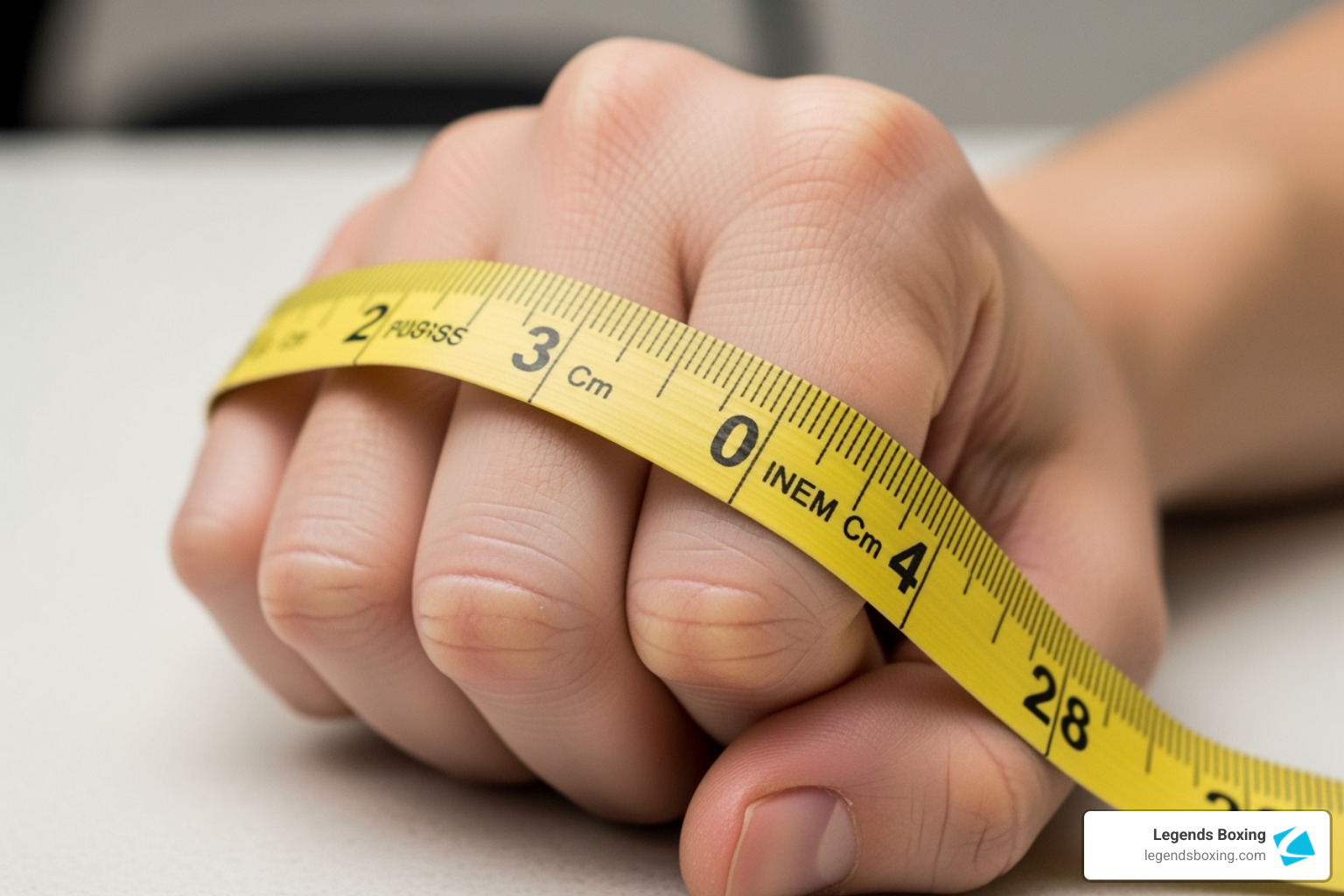
Always try on gloves with your hand wraps on. This ensures the glove has enough room without being too tight. The goal is a supportive, snug fit that feels like an extension of your hand.
Body Weight Guide for Glove Weight
Your body weight is a key factor in choosing glove weight. Heavier individuals generate more power and therefore need more padding to protect their hands and wrists.
| Body Weight | Recommended Glove Weight |
|---|---|
| Under 100 lbs (kids) | 6–8 oz |
| 100–125 lbs | 10 oz |
| 125–150 lbs | 12 oz |
| 150–175 lbs | 14 oz |
| 175+ lbs | 16 oz |
These are recommendations for bag work — sparring and competition have different requirements. A heavier glove offers more protection and can help build endurance, but it does not make your punches hit harder.
Matching Glove Weight to Your Training Purpose
After considering hand size and body weight, your training purpose is the final key. Using the wrong glove type can lead to injury or poor performance.
| Glove Type | Ounce Range | Padding Type | Primary Use |
|---|---|---|---|
| Training / Bag Work | 10–14 oz | Medium-density foam | Bag work, mitt work, fitness boxing |
| Sparring | 14–18 oz (16 oz standard) | Softer, multi-layered foam | Controlled sparring, partner drills |
| Competition (Amateur) | 10–12 oz | Medium-firm foam | Amateur bouts (regulated by weight class) |
| Competition (Professional) | 8–10 oz | Firmer foam | Professional bouts (regulated by weight class) |
Training & Bag Gloves (10–14oz)
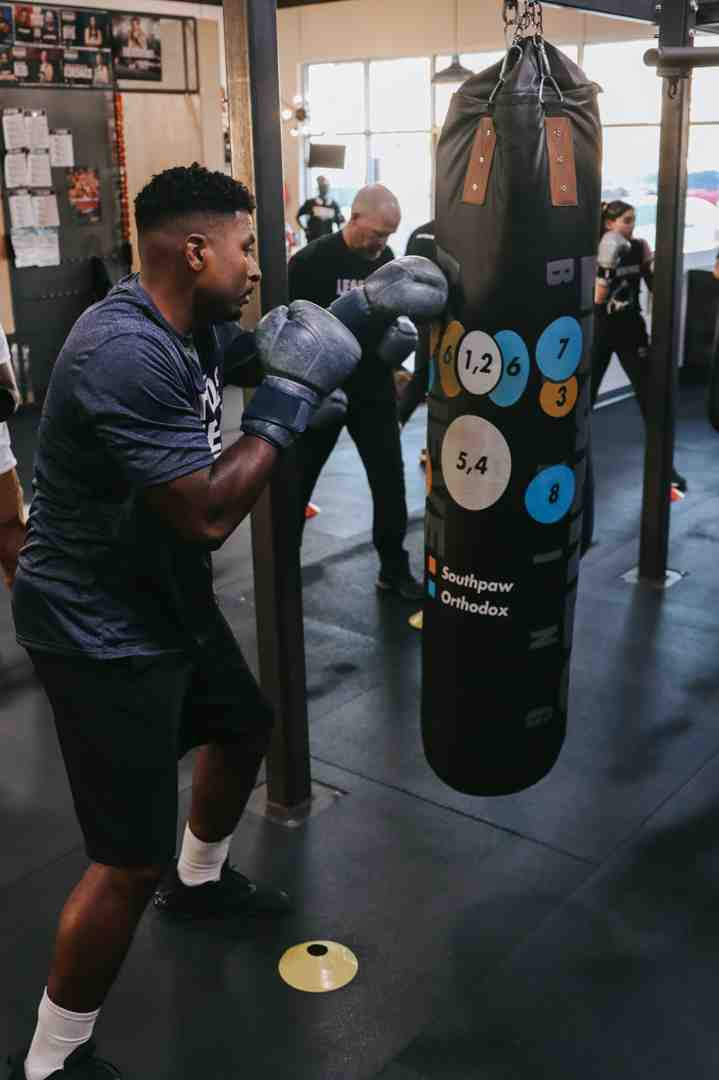
These are your everyday gloves for hitting the heavy bag, working mitts, and powering through fitness classes. They balance protection with feedback — crucial for developing proper technique.
For most adults, 12oz or 14oz training gloves are the sweet spot. Lighter individuals might prefer 10–12oz for speed, while heavier punchers may opt for 14oz or 16oz for extra padding. These gloves are built to withstand thousands of punches, making them perfect for your fitness boxing journey.
Sparring Gloves (14–18oz)
When working with a partner, safety is paramount. Sparring gloves are designed to protect your training partner as much as your own hands — which is why they have extra weight and softer, thicker padding.
Most gyms, including Legends Boxing, require 16oz gloves for sparring regardless of body weight. Some require 18oz for beginners or heavy hitters. The multi-layered foam disperses impact, allowing both partners to focus on technique in a safe environment.
Competition Gloves (8–12oz)
Competition gloves are lightweight, compact, and built for official fights. You won't use them in fitness classes, but understanding them completes the picture:
- Amateur gloves (10–12oz) follow strict regulations from bodies like USA Boxing — weight classes determine the exact ounce required
- Professional gloves (8–10oz) are even more minimal, with less padding for maximum impact delivery in regulated bouts
From 18oz sparring gloves to 8oz professional gloves, every ounce serves a specific purpose.
Beyond Sizing: Essential Glove Features to Consider
Getting the size right is the first step. Next, consider features that affect durability, comfort, and wrist support.
Material: Leather vs. Synthetic
Genuine Leather — the premium choice. Leather gloves mold to your hands over time for a custom fit and can last years with proper care. Typically the most expensive option; may require a break-in period.
Engineered Leather — high-quality synthetic materials designed to mimic the performance and feel of genuine leather, often at a more accessible price point.
Synthetic Leather (PU/Vinyl) — budget-friendly options great for beginners. Polyurethane (PU) is more durable than vinyl. Vinyl gloves are the most affordable but wear out quickly and offer less breathability.
For serious training, genuine or high-quality engineered leather is the smart choice. For newcomers to boxing, a quality PU glove is an excellent starting point.
Closure System: Lace-Up vs. Velcro
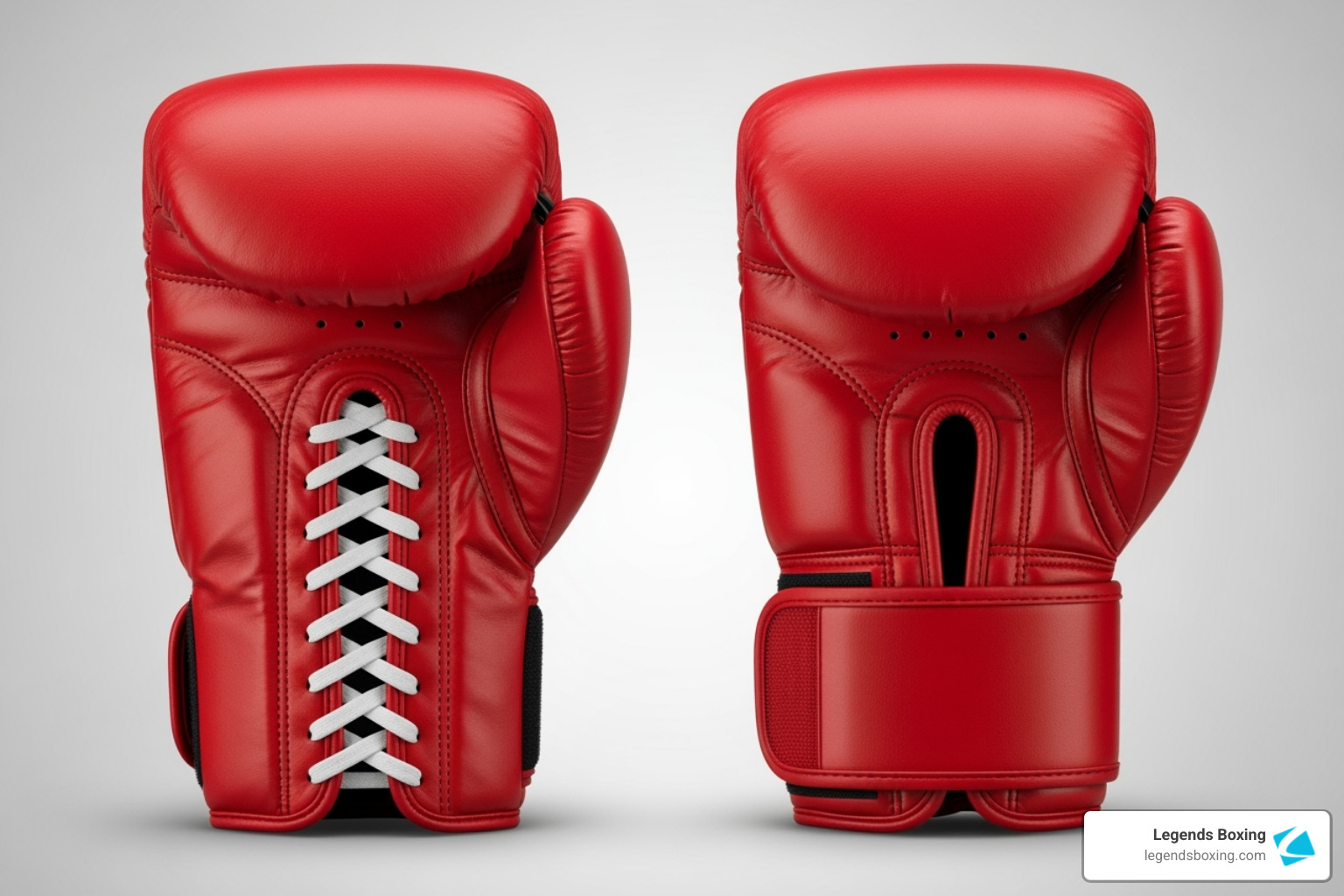
Lace-Up offers the most secure, customized fit and superior wrist stability — the standard for professional competition. The drawback: you need someone to help put them on and take them off, which makes them impractical for solo training or group classes.
Velcro (Hook and Loop) is incredibly convenient for gym classes and solo training. Easy to put on and adjust by yourself, and provides excellent wrist support for most training purposes. The Velcro can wear out over time, but modern wide-strap systems offer real stability.
For Legends Boxing workouts, we recommend Velcro closures. Their convenience lets you focus on your workout, not your gear.
Frequently Asked Questions About Choosing Boxing Gloves
Does a heavier glove hit harder?
No — this is a myth. Heavier gloves have more padding, which softens the blow and absorbs impact to protect both you and your sparring partner. The extra weight can slow your punches, which builds strength and endurance, but it does not increase impact power. To hit harder, focus on technique and power generation from your core and hips.
Are there different glove sizes for men and women?
Boxing glove sizing is generally unisex, based on weight (ounces) and hand circumference — not gender. However, some brands offer women-specific models with a narrower fit, which can be more comfortable for those with smaller hands. The best approach for everyone is to follow the measurement and weight guidelines and prioritize a comfortable, snug fit with hand wraps on.
How often should I replace my boxing gloves?
For regular training (3–5 times per week), plan to replace gloves every 6 to 12 months. Look for these signs of wear:
- Compressed padding — foam feels thin or squishy, no longer offering adequate protection
- Cracks or tears — the exterior material is visibly damaged
- Persistent odor — a bad smell that won't go away indicates bacteria buildup
- Loose fit — the glove no longer feels secure, even with wraps
To extend your gloves' life: wipe them down and air them out after every use. Never leave them in a closed gym bag and never machine wash them. Replacing worn-out gloves is a direct investment in your hand safety.
Step Into the Ring with Confidence
Choosing the right boxing gloves comes down to balancing ounce weight, hand measurements, body weight, and your specific training goals. Now you know how to measure your hand, read the weight chart, pick the right glove type for each purpose, and choose materials and closures that will actually serve your training.
Paying attention to these details means you're not just buying equipment — you're gearing up for long-term success and injury-free training.
At Legends Boxing, we're dedicated to helping you find your inner fighter through fun, challenging, and results-driven workouts. The right gloves let you punch with confidence knowing your hands are protected.
Book your first workout for free — come test your gloves on a real heavy bag. Find your nearest Legends Boxing location across Utah, Florida, and Texas.