
Knockout Power: Essential Good Boxing Moves — The Ultimate Guide
Good boxing moves are the foundation of effective boxing, combining offense, defense, and footwork. This guide covers the 6 basic punches, 10 essential combinations, defensive techniques, boxing styles, and the drills you need to make everything second nature — whether you're a beginner or a seasoned fighter.
Why Mastering Good Boxing Moves Changes Everything
Good boxing moves are the foundation of effective boxing, combining offense, defense, and footwork. Understanding these core techniques will transform your workout and your results, whether you're a beginner or a seasoned fighter.
Quick Answer: The Essential Good Boxing Moves Every Fighter Needs
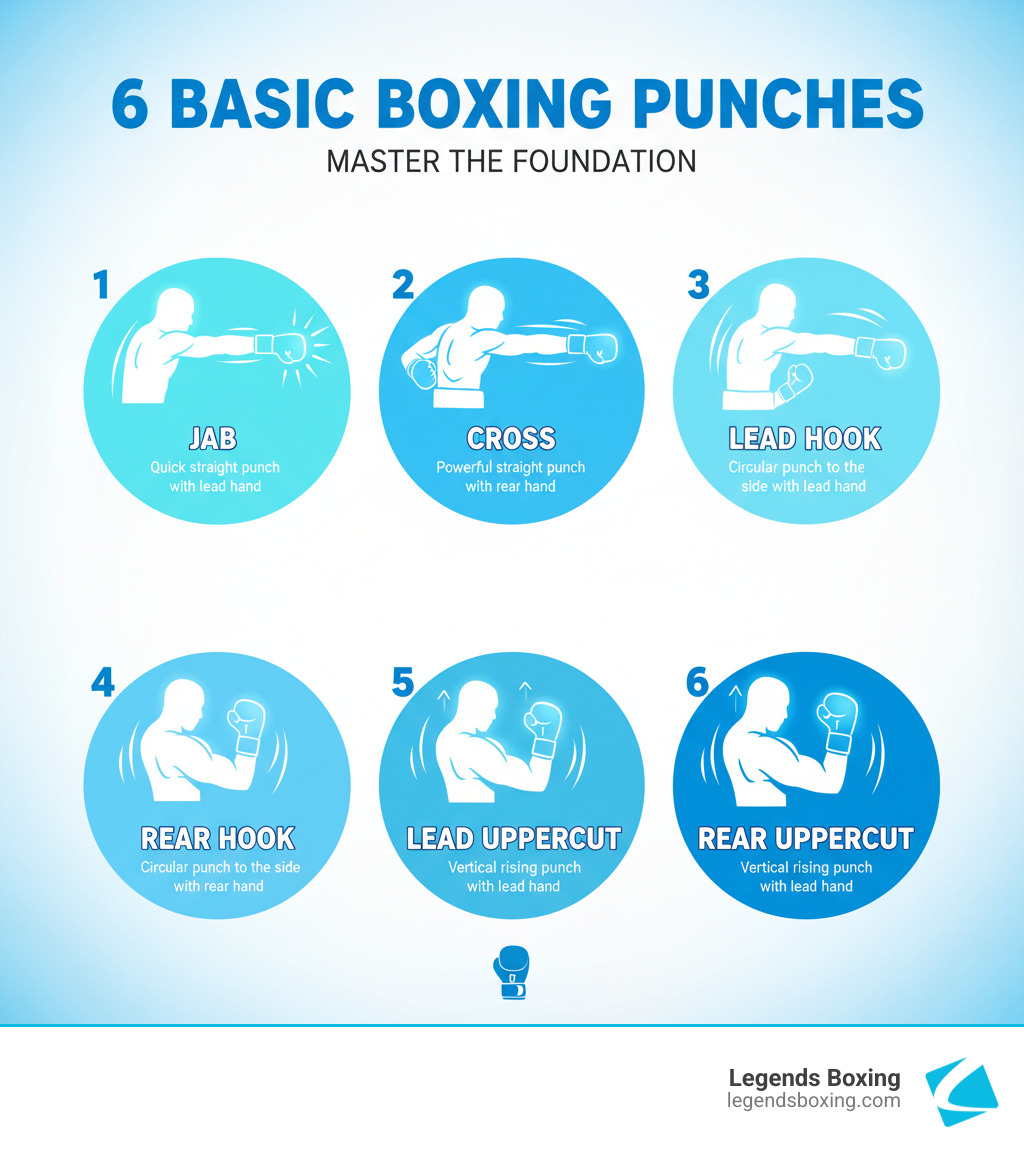
- The 6 Basic Punches: Jab (1), Cross (2), Lead Hook (3), Rear Hook (4), Lead Uppercut (5), Rear Uppercut (6)
- Defensive techniques: Slipping, rolling, bobbing and weaving, parrying, blocking
- Fundamental combinations: 1-2 (Jab-Cross), 1-2-3 (Jab-Cross-Lead Hook), 2-3-2 (Cross-Lead Hook-Cross)
- Footwork: Step-drag, pivoting, maintaining proper stance
- Strategic elements: Breathing techniques, mental focus, ring positioning
Boxing is more than just throwing punches — it's an art requiring precision and endurance. Executing good boxing moves means understanding how stance, footwork, defense, and offense work together. Mastering these fundamentals unlocks knockout power and delivers an incredible full-body workout that burns calories, builds muscle, and sharpens your mind.
This full-body engagement is why boxing delivers such impressive fitness results. You're not just working your arms; you're activating your entire kinetic chain from the ground up, engaging your calves, glutes, quads, hamstrings, and core to build a stable platform for every punch.
As National Head Coach for Legends Boxing, I've spent years teaching athletes how to master good boxing moves for real results. In this guide, I'll break down the essential combinations, defensive techniques, and drills to take your skills to the next level — whether your goal is stress relief, improved fitness, or learning to move like a fighter.
The Foundation: Stance, Footwork, and the 6 Basic Punches
A solid foundation is critical in boxing. Before throwing combinations, you must master your stance, footwork, and the six basic punches. These fundamentals are the difference between flailing and fighting with purpose and power.
Mastering Your Stance and Footwork
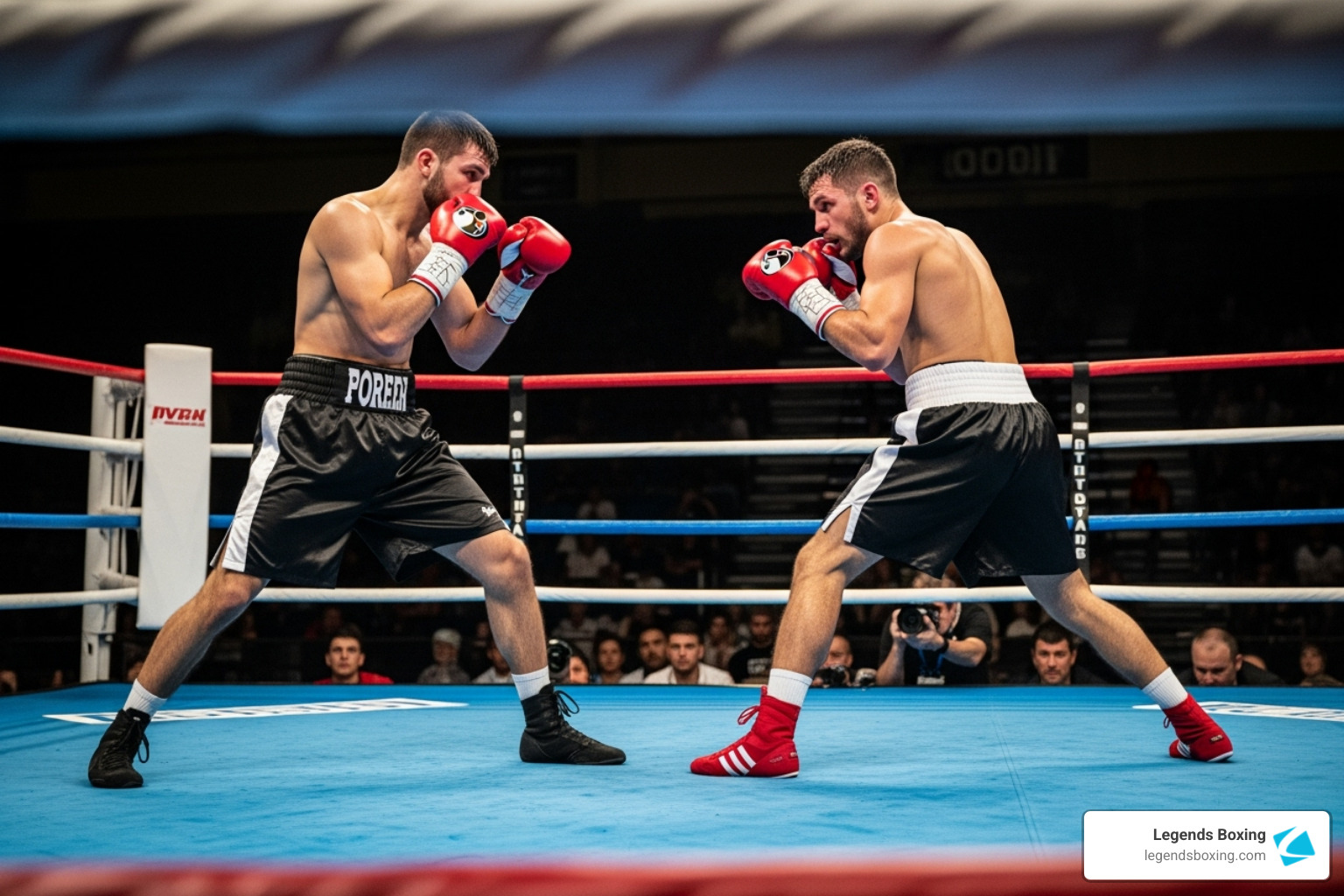
Your stance is your home base, keeping you balanced and ready to move. Most right-handed fighters use the orthodox stance (left foot forward), while lefties use the southpaw stance (right foot forward). For a proper stance: place your feet shoulder-width apart with knees bent, weight evenly distributed, and your dominant foot slightly back. This engages your entire lower body and core, creating a stable platform.
Footwork is key for creating angles and controlling distance:
- Step-drag — step with your lead foot, drag the rear foot to follow; your primary movement for maintaining balance and structure
- Pivoting — rotating on the ball of your front foot allows for quick directional changes to attack or evade
- Agility ladder and shadow-stepping drills — excellent for improving footwork speed and coordination
Good footwork isn't just defensive — it puts you in position to land punches. A fighter with great footwork makes every shot harder to land and every combination easier to throw.
The Building Blocks: Your Punching Arsenal
With a solid base, you can learn the six basic punches that form every good boxing move. We use a simple punch number system (for an orthodox stance):
| # | Punch | Description |
|---|---|---|
| 1 | Jab | Quick, straight punch with your lead hand — gauges distance and sets up other punches |
| 2 | Cross | Powerful, straight punch from your rear hand, driven by hip rotation and pivoting on your back foot |
| 3 | Lead Hook | Semi-circular punch with your lead arm, rotating your body to transfer weight into the punch |
| 4 | Rear Hook | Power hook from your rear hand, generated by pivoting the rear foot and rotating the hips |
| 5 | Lead Uppercut | Vertical, rising punch with the lead hand, powered by your legs — ideal for close range |
| 6 | Rear Uppercut | Vertical, rising punch with the rear hand, driven by hip rotation and leg power |
The secret to powerful punches is using your whole body. Power comes from the ground up through hip rotation and core engagement — not just arm strength.
10 Essential Boxing Combinations for Beginners
Individual punches are building blocks; combinations are the finished structure. Throwing "punches in bunches" overwhelms opponents and creates openings. When starting, focus on flow over force to build muscle memory. As you improve, add power by rotating your hips and vary your speed to keep opponents guessing. Always keep your chin down.
The Classic 1-2 (Jab-Cross)
The most fundamental combination in boxing. A quick jab (1) sets up a powerful cross (2). Perfect for gauging distance and disrupting opponents — its speed and efficiency make it effective at every level of the sport.
The Versatile 1-2-3 (Jab-Cross-Lead Hook)
Adds a lead hook (3) to the 1-2. The straight punches occupy the opponent's central guard, creating an opening for the hook to land from the side. Great for adding power and preventing counters.
The Power Play: 2-3-2 (Cross-Lead Hook-Cross)
A true power combination for close-range fighting. The sequence of cross (2), lead hook (3), cross (2) is designed to overwhelm an opponent. Each punch flows into the next, driven by hip rotation — significant knockout potential.
The Uppercut Setup: 1-2-5 (Jab-Cross-Lead Uppercut)
Designed to break through a high guard. The jab (1) and cross (2) draw the hands up, creating a path for the lead uppercut (5) to land underneath. An effective surprise attack that rewards fighters who are patient with their setup.
Close-Quarters Combat: 6-3 (Rear Uppercut-Lead Hook)
Perfect for inside fighting. A hard rear uppercut (6) forces an opponent's guard down, which creates openings for a devastating lead hook (3) to the head or body. Both are power shots ideal for pinning opponents against the ropes.
Other Key Combinations to Master
| Combination | Notes |
|---|---|
| 1-2-1 (Jab-Cross-Jab) | Excellent for controlling distance and setting up follow-up attacks |
| 1-6-3 (Jab-Rear Uppercut-Lead Hook) | A powerful sequence for after you've closed the distance |
| 5-6-3 (Lead Uppercut-Rear Uppercut-Lead Hook) | A flurry of power punches effective when an opponent is on the ropes |
| 1-1-2 (Jab-Jab-Cross) | The double jab makes it difficult for opponents to time your cross |
| 2-3 (Cross-Lead Hook) | Simple but powerful — changes the angle of attack |
Beyond the Punches: Defensive and Strategic Good Boxing Moves
Throwing punches is only half the battle. True boxing artistry lies in not getting hit. Effective defense and strategy are what separate a brawler from a boxer, turning good boxing moves into a complete system.
The Art of Not Getting Hit: Essential Defensive Moves
Mastering defense keeps you safe and creates counter-offensive opportunities:
- Slipping — moving your head slightly off the centerline to make a straight punch miss; a great core workout that creates angles for counters
- Rolling — moving your head and torso to evade hooks, letting the punch "roll" off you; sets up powerful counters as your opponent is off-balance
- Bobbing and weaving — U-shaped body movements to get under and around punches, creating a constantly moving target that's extremely difficult to hit cleanly
- Parrying — using your open hand to deflect or redirect an incoming punch, using their momentum against them
- Blocking — using your arms and gloves to absorb impact; your first line of defense and a setup for counter-offense
- Head movement — the combination of slipping, rolling, and bobbing so your head is never a stationary target
- Clinching — strategically tying up an opponent's arms at close range to stop their offense and give yourself a moment to recover
Ring IQ: Strategy, Breathing, and Mental Focus
Ring IQ is the mental side of boxing that separates good fighters from great ones.
Boxing styles — understanding different approaches is key:
| Style | Characteristics | Example |
|---|---|---|
| Swarmer | Aggressive in-fighter, overwhelms with volume and pressure | Mike Tyson |
| Out-Boxer | Uses range and movement to score points and avoid damage | Muhammad Ali |
| Slugger | Plants feet to deliver devastating power shots | George Foreman |
| Boxer-Puncher | Versatile hybrid with out-boxer skills and slugger power | Canelo Álvarez |
| Counterpuncher | Waits for opponents to make mistakes, capitalizes instantly | Floyd Mayweather Jr. |
Positioning theories:
- Centerline theory — move off the imaginary vertical line of your opponent's body to attack while presenting a harder target
- Triangle theory — create advantageous angles to strike from positions where your opponent cannot easily retaliate
Breathing: Exhale sharply with each punch to conserve energy and increase force. Use deep, diaphragmatic breaths between combinations to manage stamina — fighters who hold their breath fatigue two to three times faster.
Mental focus: Stay calm under pressure to anticipate moves and react instantly. Visualization and mindfulness can sharpen focus, which is as important as physical conditioning.
Putting It All Together: Drills to Perfect Your Combinations
Theory is nothing without application. To truly master good boxing moves, you need consistent practice with drills that turn knowledge into instinct.
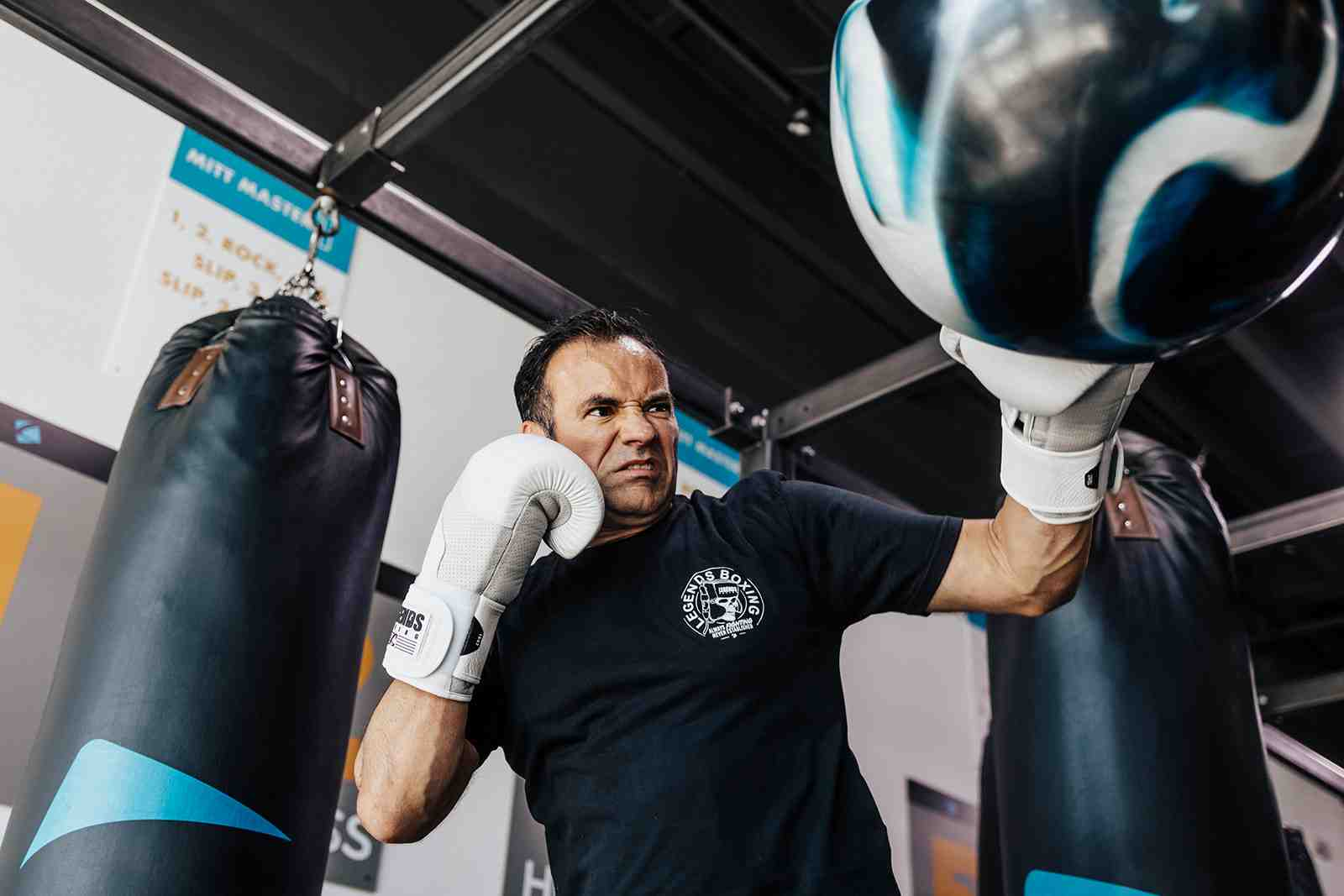
Shadowboxing and Heavy Bag Work
Shadowboxing is where you build muscle memory. It's a full-body workout that refines your technique without any equipment. Use a mirror to watch your form, practice combinations, and integrate footwork and head movement into every repetition. Focus on precision over power — speed and snap come from crisp mechanics, not effort.
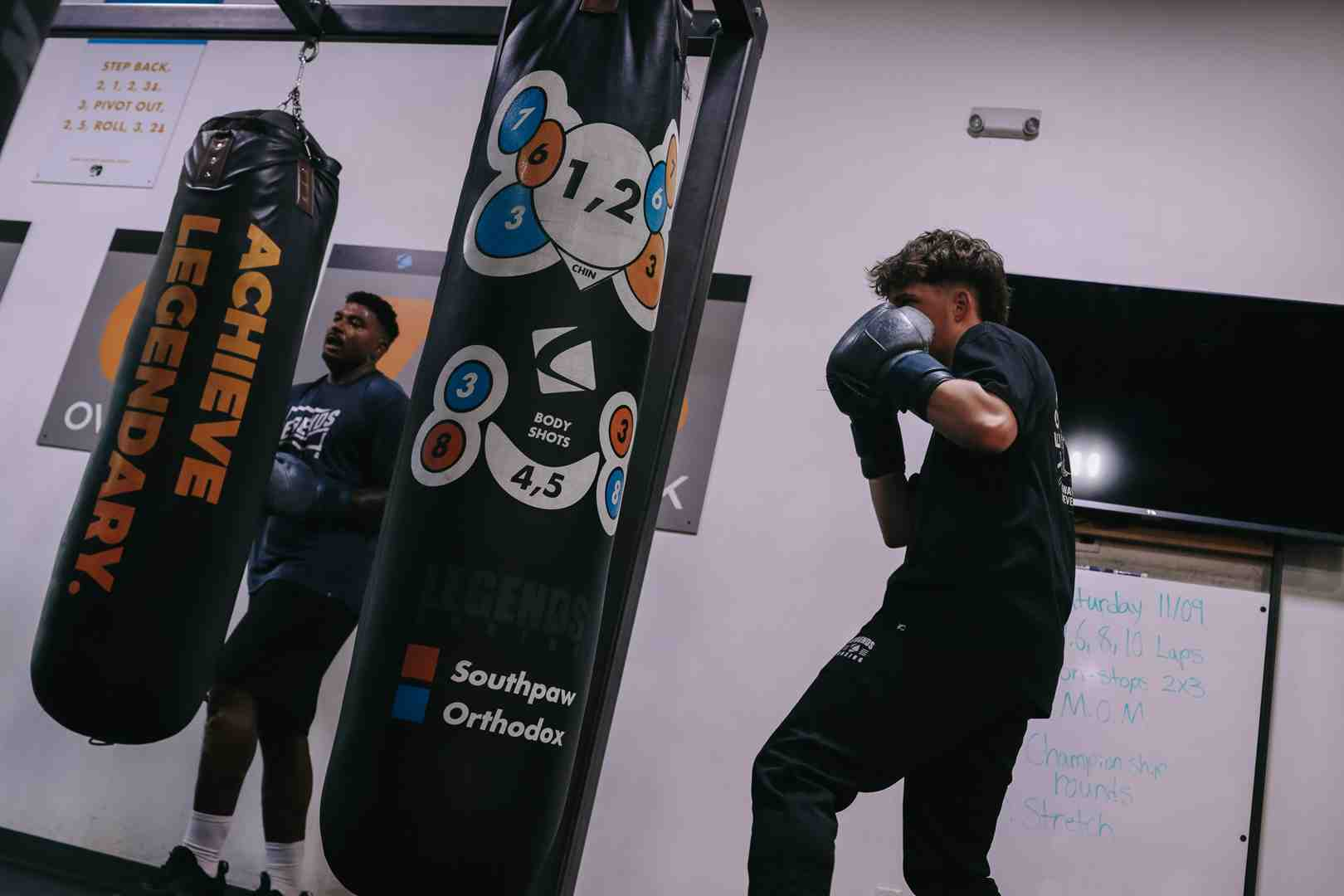
Heavy bag work is where you develop power. The bag provides resistance you can feel, teaching you how to transfer force from the ground up through your entire body. Practice moving around the bag, changing angles, and snapping your punches instead of pushing them. A fighter who pushes their punches will get slower over time; one who snaps them gets faster.
Jump Rope and Footwork Drills
Jump rope is a classic boxing drill for good reason. It builds cardiovascular health, coordination, and explosive leg power simultaneously. It trains you to stay light on the balls of your feet — essential for ring movement and the quick direction changes that create angles.
Footwork drills: Use agility ladders to improve foot speed and coordination. Practice the step-drag and pivoting movements until they become automatic. Dedicate at least 10 minutes per session to pure footwork — it's the foundation that puts you in position to land punches and avoid getting hit.
Frequently Asked Questions about Boxing Moves
What is the most important punch in boxing?
The jab is the most important punch in boxing. While not the most powerful, its versatility is unmatched. With the longest reach of any punch, it's used to control distance, set up combinations, and disrupt an opponent's rhythm. As a low-risk punch that keeps you behind your lead hand, it allows you to stay safe while gauging your offense, making it the true foundation of all good boxing moves.
How do I increase my punching power?
Punching power comes from technique, not arm strength. It's generated by using your entire body as a kinetic chain: power starts from the ground, pivots through the feet, drives torque from the hips, transfers energy through an engaged core, and finally delivers force through your fist. Fighters who try to punch with just their arms are leaving 60–70% of their potential power on the floor.
What are the main offensive boxing styles?
There are four main offensive styles, each with unique strengths:
- Swarmer — aggressive in-fighter who overwhelms with volume and pressure (e.g., Mike Tyson, Joe Frazier)
- Out-Boxer — long-range fighter who uses movement and speed to score points while avoiding damage (e.g., Muhammad Ali, Sugar Ray Leonard)
- Slugger — power puncher who plants their feet to deliver devastating blows (e.g., George Foreman, Sonny Liston)
- Boxer-Puncher — versatile hybrid with the skills of an out-boxer and the power of a slugger (e.g., Canelo Álvarez, Oscar De La Hoya)
Many fighters also adopt a counterpuncher mentality — waiting for opponents to make mistakes and capitalizing on them — a strategy perfected by Floyd Mayweather Jr. At Legends Boxing, we expose you to elements of all these styles, helping you find what feels natural in a fun, supportive environment.
Start Building Your Skills Today
Mastering good boxing moves is a rewarding journey of continuous improvement. The fundamentals in this guide — from stance and punches to combinations and defense — are the building blocks of a complete fighting system that builds strength, burns calories, and sharpens your mind.
At Legends Boxing, our classes blend authentic boxing techniques with full-body conditioning, creating a fun, results-driven workout for all fitness levels. No experience required. Consistency with drills like shadowboxing, heavy bag work, and jump rope is what builds real skill — with practice, you'll move with confidence and feel stronger than ever.
Book a free workout and experience what proper coaching can do for your technique. Find a Legends Boxing location near you across Utah, Florida, and Texas, and start your journey toward becoming the fighter you want to be.