
Beyond the Bell: Crafting Your Perfect Heavy Bag Circuit Routine
A heavy bag circuit combines the raw power of boxing with the intensity of circuit training to create one of the most effective full-body workouts available. This guide covers the full-spectrum benefits, how to structure rounds and rest periods, the essential striking drills and conditioning exercises that make it work, plus complete beginner and advanced sample circuits you can start today.
Release Your Inner Fighter: The Power of Heavy Bag Circuits
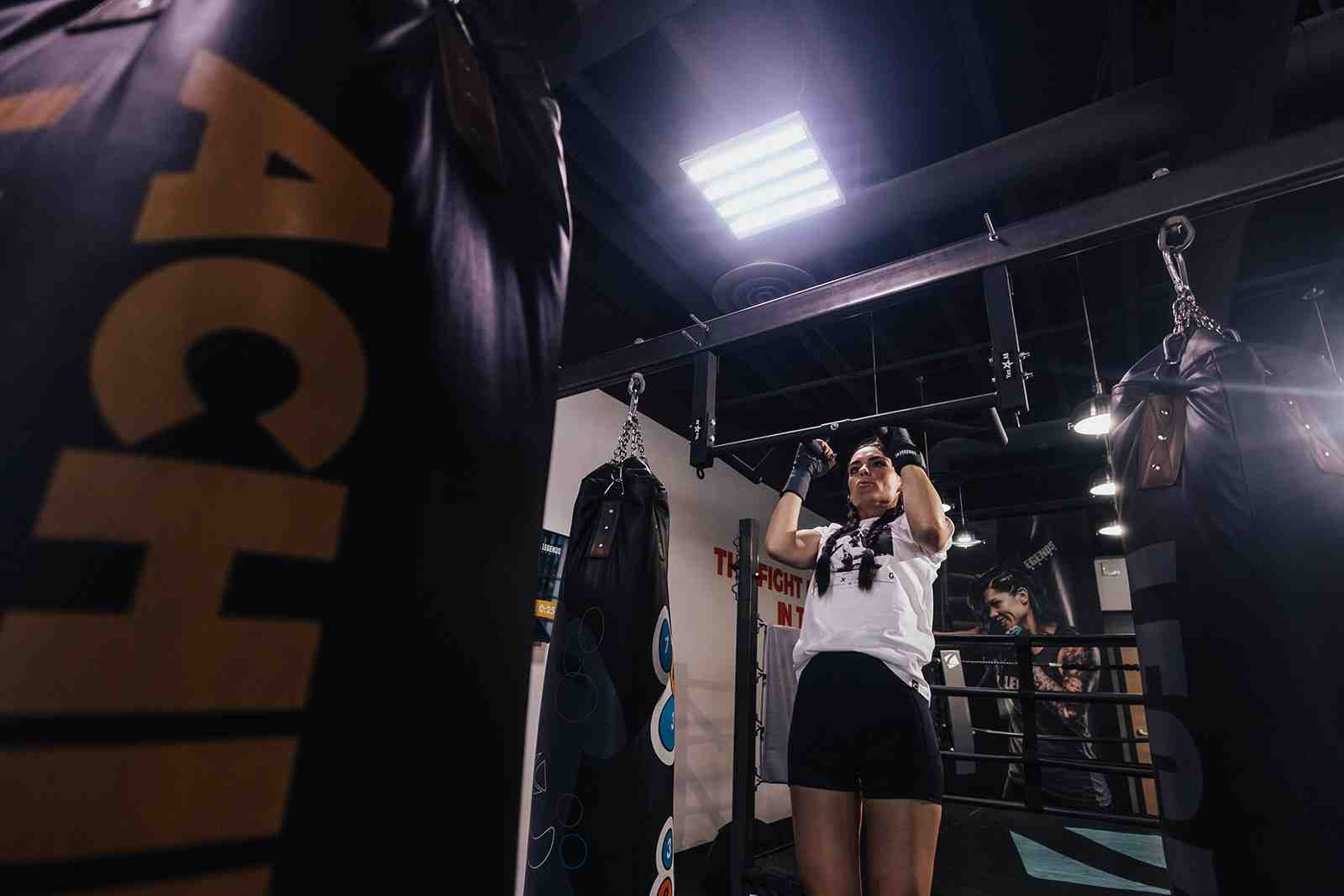
A heavy bag circuit combines the raw power of boxing with the intensity of circuit training to create one of the most effective full-body workouts available. Here's what makes it so powerful:
Key Components of a Heavy Bag Circuit:
- Work intervals: 30-second to 3-minute rounds of striking
- Rest periods: 15–90 seconds between exercises
- Conditioning exercises: Burpees, push-ups, squats mixed with bag work
- Variety: Different punches, kicks, and movement patterns
- Intensity: High-energy intervals that boost cardio and strength
Heavy bag training delivers incredible results because it engages your entire body. When you throw a proper punch, power starts from your feet, travels through your core, and explodes into your fist. Add circuit-style conditioning exercises like burpees and medicine ball slams, and you've got a workout that torches calories, builds muscle, and melts stress away.
The beauty of heavy bag circuits lies in their versatility. You can focus on explosive power shots one round, lightning-fast combinations the next, then switch to pure conditioning with bodyweight exercises. This variety keeps your body guessing and your mind engaged — no more boring gym routines.
Research shows that heavy bag workouts can burn up to 700 calories per hour while providing the kind of upper-body, bone-building impact you can't get from regular cardio. It's also one of the best stress relievers available — there's something deeply satisfying about releasing your frustrations on a 100-pound bag.
I'm Robby Welch, National Head Coach for Legends Boxing, where I've spent years developing heavy bag circuit programs that have helped transform thousands of members. My experience designing nationwide boxing curricula and coaching both beginners and competitors has shown me how transformative these workouts can be.
Why Circuits Reign Supreme: The Full-Spectrum Benefits
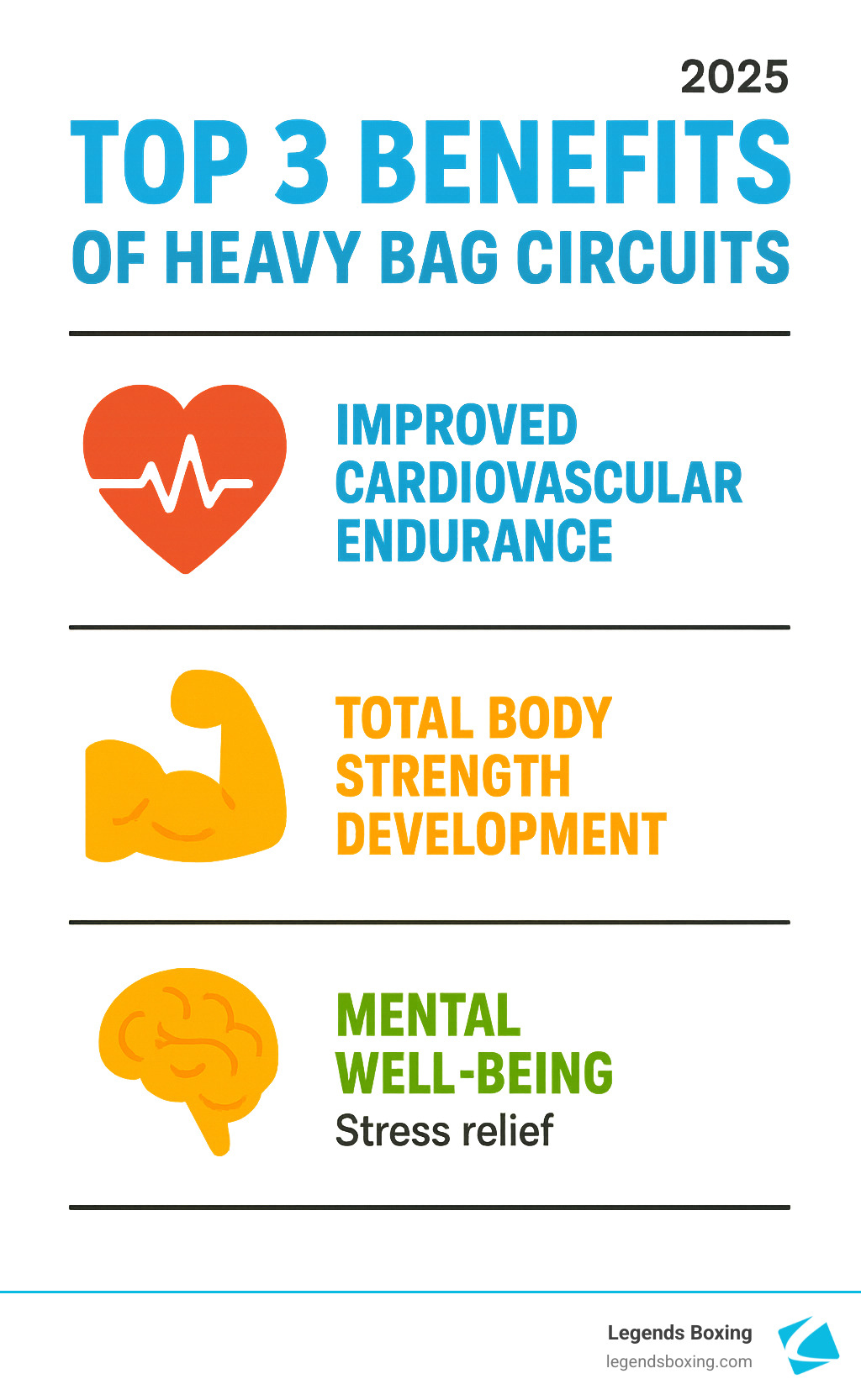
Think of a heavy bag circuit as your body's ultimate transformation tool. Unlike traditional workouts that focus on just one area, these circuits deliver a complete fitness overhaul that touches every aspect of your physical and mental health.
Cardiovascular endurance gets the biggest boost. When you're throwing punches in rapid-fire combinations, then dropping for burpees, your heart rate skyrockets and stays there. This high-intensity interval approach doesn't just burn calories during your workout — it keeps your metabolism fired up for hours afterward.
Explosive strength you'll develop is incredible. Every punch you throw meets serious resistance from that heavy bag. Your shoulders, back, chest, core, and legs all work together to generate power. This isn't just arm exercise — it's total-body strength training disguised as cardio. The resistance from striking builds real muscle that translates to hitting harder and feeling stronger in everything you do.
Speed and agility improve naturally as you move around the bag while throwing combinations. Your accuracy and coordination sharpen as you learn to hit specific targets while maintaining your balance. These skills make you more athletic in general, not just a better fighter.
Balance improvement happens as you learn to throw powerful strikes without losing your footing. Dancing around the bag, pivoting for different angles, and maintaining your stance all contribute to better overall stability and body control.
Muscle building is a benefit most people don't expect. The constant resistance creates the perfect environment for lean muscle development, especially in your upper body. You're essentially doing strength training while getting an amazing cardio workout.
Mental focus required for combinations and timing creates a meditative state that many members describe as their favorite part. You have to be completely present, which naturally pushes out daily stress and worries.
Bone density benefits round out the picture. Research shows that female boxers have high bone mineral density — the repetitive impact from striking provides skeletal benefits you simply can't get from regular cardio, making heavy bag circuits especially valuable for long-term health.
The Anatomy of the Perfect Heavy Bag Circuit
Think of a heavy bag circuit like a recipe — you need the right ingredients in the right proportions to create something amazing. The secret isn't just throwing punches randomly. It's about creating a structure that challenges your body while keeping you safe and engaged.
Structuring Your Rounds
The boxing world has given us a perfect template: professional fighters train in 3-minute rounds with 1-minute rest periods, and there's good reason for this timing. It pushes your body just long enough to create adaptation without completely burning you out.
For your heavy bag circuit, start with work intervals that match your current fitness level. New to boxing? Try 30–60 second bursts of bag work mixed with conditioning exercises. As you get stronger, 2–3 minute rounds become your sweet spot for building real endurance.
Rest periods are where the magic happens. Use 60–90 second breaks between full rounds, but only 15–30 seconds between exercises within a round. This keeps your heart pumping and mimics the pressure of an actual fight.
Total workout duration should feel challenging but doable. Most beginners thrive with 15–30 minute sessions, while experienced athletes can push to 45–60 minutes. Typical structure is 5–10 total rounds depending on intensity — either 5 rounds of 3-minute bag work with conditioning bursts, or 10 shorter, high-energy rounds.
Pacing and Intensity
Here's something that surprises many people: you don't need to punch at 100% power all the time. In fact, most of your strikes should be at 50–70% of your maximum power. This sweet spot lets you maintain proper form, throw clean combinations, and last through the entire workout without gassing out or getting hurt.
Pacing for endurance means finding your rhythm and sticking with it during longer rounds. Think steady, consistent punches rather than wild haymakers. This builds your body's ability to perform when you're tired.
Progressive overload is the key to long-term success. Each week, challenge yourself a little more — add an extra round, shorten your rest periods, or throw more punches per minute. Small increases lead to big results.
Building Your Arsenal: Drills, Combos, and Conditioning
Now that you understand the structure, let's dive into the fun part — what actually goes into a killer heavy bag circuit. Think of this as building your fighting toolkit, where each drill serves a specific purpose.
Essential Striking Drills
Power shots are your foundation. Dedicate entire rounds to throwing single punches with maximum force. Focus on hip rotation and feel the power traveling from your feet, through your core, and exploding into the bag. This isn't about speed — it's about perfecting the mechanics that generate knockout power.
The flash-combo drill is where things get exciting. Throw two-punch combinations so fast they sound like one impact — a jab-cross that flows like lightning. Aim for 30-second bursts landing as many clean combinations as possible. This drill transforms you into someone who can catch opponents completely off-guard.
Punching combinations bring everything together in flowing sequences. Start simple with the classic 1-2 (jab-cross), then build complexity by adding hooks and uppercuts. Move around the bag as you work — each combination should tell a story of attack, with some punches targeting the head and others going to the body.
Body shots are fight-changers that deserve full dedicated rounds. Attack the midsection with shovel hooks and straight punches while practicing lateral footwork. A perfectly placed body shot can end a fight, which is why they get serious attention in every session.
The movement drill keeps you mobile — circle the bag continuously, throwing punches as you move. Step in with combinations, step back, change angles. The key is never staying in one spot, just like you wouldn't in a real fight.
Integrating Conditioning Blasts
Between striking rounds, blast your conditioning with exercises that complement your boxing work perfectly.
Burpees are the ultimate full-body test. Drop into 10–15 reps right after a heavy bag round, and you'll feel every muscle working together. They build the explosive power that translates directly to better punches.
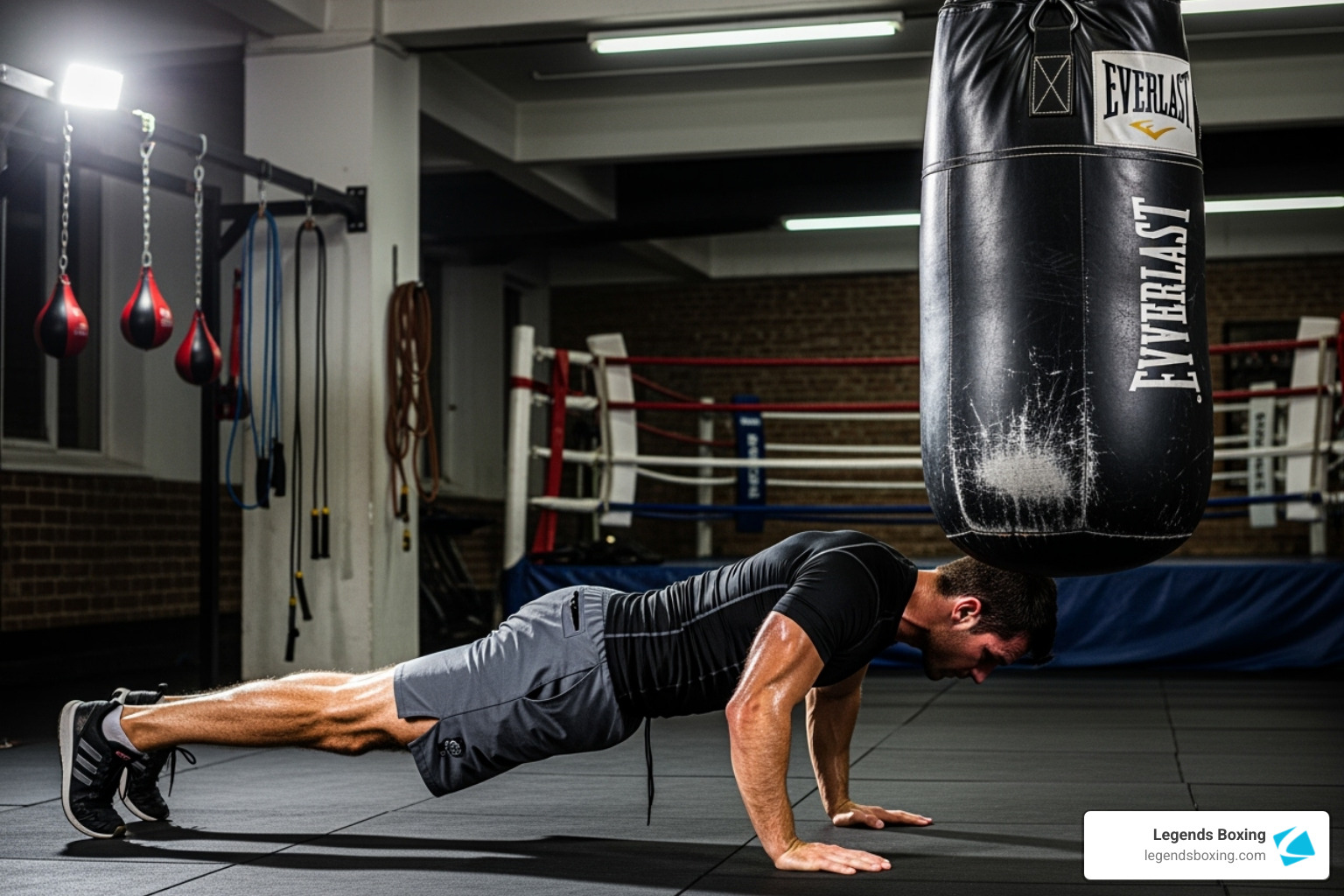
Push-ups strengthen everything from your chest to your core, giving you the foundation for powerful strikes. Knock out a quick set between rounds, or get creative with plank punches — hold that plank position and throw punches at the air.
Squats power up your legs, which is where all great punches start. Whether bodyweight squats, jump squats, or squatting while throwing light punches, you're building the base that makes everything else possible.
Kettlebell swings mirror the hip explosion you use in powerful punches. That same hip snap that drives the kettlebell up is what puts serious power behind your cross.
Jump rope keeps that boxer's rhythm alive while giving you active recovery between intense rounds — cardio, footwork practice, and coordination training all in one.
Medicine ball slams release your inner beast while building explosive core power. Start each round with 30 seconds of slams, and you'll feel that power transfer directly into your striking.
MMA and Kickboxing Variations
A well-rounded heavy bag circuit can incorporate the full spectrum of striking arts.
Kicking power opens up a whole new training dimension. Round kicks, front kicks, and low kicks each require different muscle groups and movement patterns. The same hip rotation principles that make your punches powerful apply to your kicks.
Ground-and-pound drills bring the fight to the floor. Lay the heavy bag flat and practice from full mount position. Work timed rounds of punches and elbows from this dominant position — a completely different kind of conditioning that builds functional strength.
Knee and elbow strikes excel in close-range combat. These devastating weapons require different timing and body mechanics than punches and kicks. Practice them separately first, then weave them into combinations.
Combination flows are where the real magic happens — a 1-2-kick, or following up a kick with punches, is where you start moving like a complete martial artist. These variations keep your training fresh and your body guessing, which means you'll keep seeing results long after traditional workouts would plateau.
From First Jab to Final Bell: Adapting Your Workout
Whether you're throwing your first punch or you've been training for years, the beauty of a heavy bag circuit lies in its flexibility. Every fighter starts somewhere, and the key is building proper technique while gradually increasing intensity as you grow stronger.
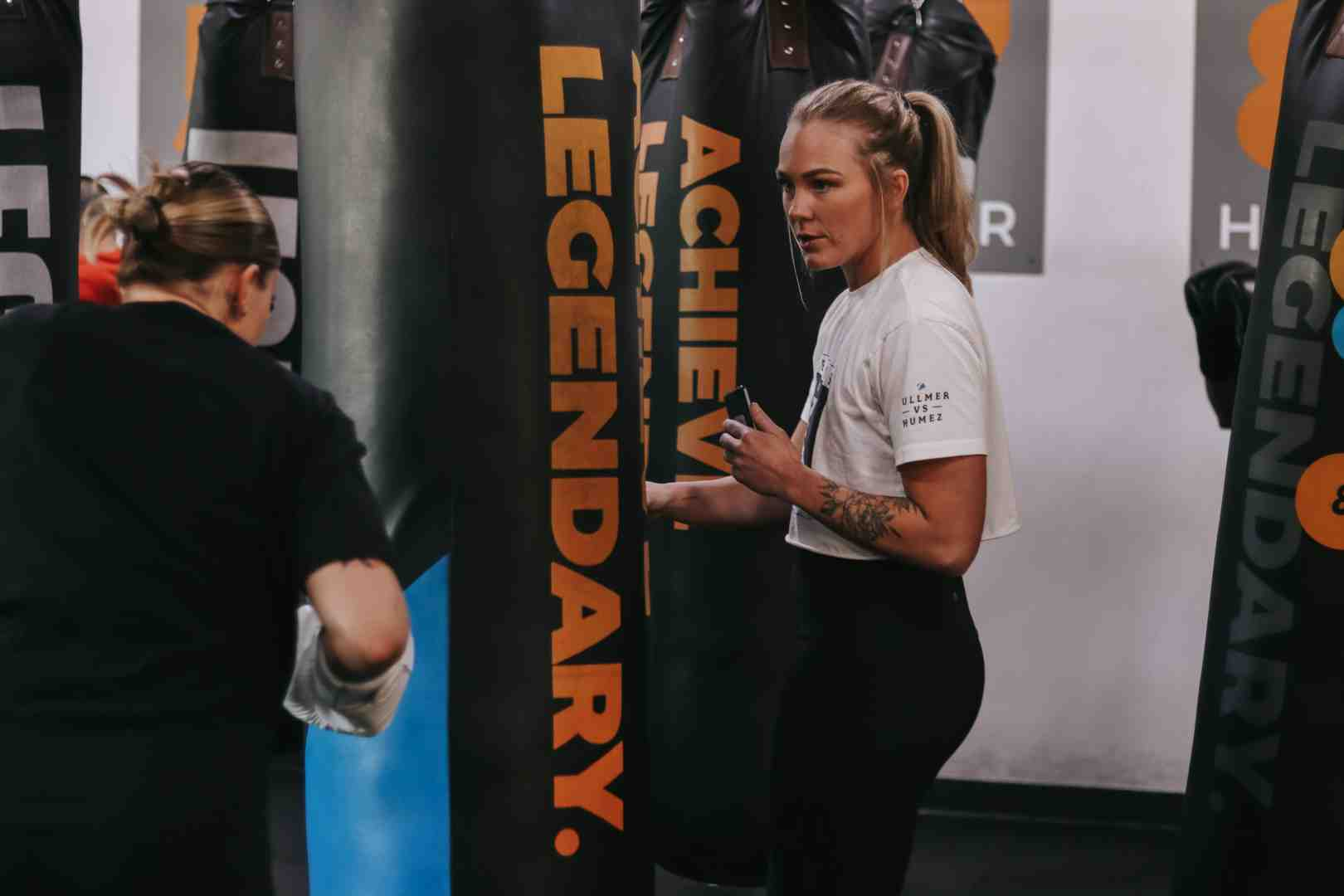
Sample Beginner Heavy Bag Circuit
If you're new to boxing, don't worry about throwing knockout punches on day one. Focus on building a solid foundation of basic punches and proper form.
Warm-up (5 minutes): Light jogging in place, jumping jacks, arm circles, and gentle shadowboxing to get your body moving and mind focused.
Round 1 — Basic punches (3 minutes): Throw jabs and crosses individually, then practice the classic 1-2 combination. Keep power at 30–50% and focus on proper stance, hip rotation, and bringing your hands back to guard. Technique beats power every time.
Rest (60 seconds): Light movement.
Round 2 — Combinations and footwork (3 minutes): Practice the 1-2-3 combo (jab-cross-lead hook) while taking small steps around the bag. Smooth, controlled movement is what we're after.
Rest (60 seconds): Light movement.
Round 3 — Conditioning focus (3 minutes): Alternate 30 seconds of jab-cross combinations with 30 seconds of burpees, repeating three times.
Cool-down (3 minutes): Combine everything you've learned in a flow round, then stretch your arms, shoulders, back, and legs.
This beginner circuit takes just 17 minutes but delivers incredible results. As you get comfortable with the movements, add more rounds or extend your work intervals. Find a Legends Boxing location near you where our coaches can guide you through proper form from day one.
Sample Advanced Heavy Bag Circuit
For seasoned athletes ready to push their limits, this circuit cranks up the intensity, complexity, and mental challenge.
Warm-up (10 minutes): Jump rope, resistance band shadowboxing, and dynamic stretches to fully prepare your body.
Round 1 — Power shots and movement: Throw single, explosive punches at 80–100% power while maintaining constant movement around the bag. Every punch should be thrown with knockout intention, but never sacrifice technique for power.
Active rest (30 seconds): High knees or light footwork.
Round 2 — Complex combinations: 5–7 punch sequences that vary targets between head and body, incorporating defensive movements like slips or rolls after each combo. Think 1-2-3-2-slip-2 — your brain and body working together at fight speed.
Round 3 — MMA and kickboxing integration: Mix punching combinations with powerful kicks, knees, or elbows. Try a 1-2-roundhouse kick combo, or add a knee strike after your cross-hook combination. Spend time on ground-and-pound work with a flat bag.
Round 4 — Speed and volume ("Marathon Man Drill"): Throw as many light, fast punches as possible for the entire three minutes while maintaining perfect form. This builds the hand speed that separates good fighters from great ones.
Round 5 — Southpaw and head movement: Switch to your non-dominant stance and practice combinations while incorporating slips, ducks, and weaves. This develops the adaptability that makes you unpredictable.
Repeat this cycle 2–3 times for a total of 6–9 heavy bag rounds, plus conditioning exercises during active rest. Finish with 10 minutes of static stretching.
Frequently Asked Questions About Heavy Bag Circuits
How long should a beginner's heavy bag workout be?
We recommend keeping your first sessions to 15–30 minutes, including warm-up and cool-down. This might seem short, but it's plenty when you're learning proper form and getting used to the intensity — your hands, shoulders, and core will definitely feel it. Starting shorter lets you focus on technique over exhaustion, which is exactly what you want as a beginner.
As your stamina builds and you get more comfortable with the movements, gradually add more rounds or extend your work intervals. Consistency beats intensity when you're starting out.
How hard should I hit the heavy bag?
Most of your strikes should be at 50–70% of your maximum power. This moderate intensity lets you maintain proper form, practice smooth combinations, and avoid injury. The bag provides plenty of resistance even at this level — you'll still build muscle and improve your punching power.
Once your technique becomes second nature, you can add power bursts at 80–100% during specific drilling rounds. But even professional boxers spend most of their bag time working at controlled intensity. Technique first, power second.
Can I build muscle with a heavy bag circuit?
Absolutely. Every time you throw a punch, you're doing resistance training for your arms, shoulders, back, chest, hips, and legs — the heavy bag pushes back with every strike, creating the perfect resistance for muscle building.
When you add conditioning exercises like burpees, push-ups, and squats between your striking rounds, you're working multiple muscle groups in one efficient workout. The result is functional muscle that translates to real-world strength — not just looking good (though that's a nice bonus). And unlike traditional weight training that isolates specific muscles, heavy bag training builds muscle while improving your cardio, coordination, and mental toughness all at once.
Your Championship Round Awaits
The heavy bag circuit is a workout that goes far beyond throwing punches at a bag. This training method transforms your entire body while giving your mind the kind of release that traditional gym equipment simply can't match.
From structuring your rounds with proper work intervals and rest periods, to mastering essential striking drills and integrating challenging conditioning exercises — whether you're a complete beginner focusing on basic punches or an advanced athlete mixing complex combinations with MMA variations, there's a heavy bag circuit that's perfect for your level.
The science backs up what we see every day at Legends Boxing. Our members experience dramatic improvements in cardiovascular endurance, explosive strength, coordination, and even bone density. But perhaps most importantly, they walk out feeling mentally refreshed and genuinely excited about their next workout.
Consistency is the key. Like any worthwhile pursuit, the real magic happens when you show up regularly and put in the work. The beauty of heavy bag training is that it never gets boring — there's always a new combination to master, a conditioning challenge to conquer, or a technique to refine.
At Legends Boxing, our coaches understand that everyone starts somewhere different, and we're here to guide you through every jab, cross, and burpee. No boxing experience required — just the willingness to find what your body is truly capable of.
Ready to experience this for yourself? Book a free workout and find why so many people are choosing boxing-based fitness over traditional gym routines. Find a Legends Boxing near you across Utah, Texas, and Florida — your championship round is waiting.