
Heavy Bag Interval Training to Knock Out Calories
Heavy bag interval training combines boxing with HIIT to burn 400–700 calories per hour while building strength, endurance, and explosive power in just 20–30 minutes. This guide covers work-rest ratios for every level, the physiology behind the afterburn effect, a beginner 8-round blast and advanced 15-round fighter circuit, exercise pairings to turn bag rounds into full-body conditioning, and how to track progress without overtraining.
Why Heavy Bag Interval Training is Your Ultimate Calorie-Burning Weapon
Heavy bag interval training combines the raw power of boxing with high-intensity interval training (HIIT) to create one of the most effective full-body workouts available. This training method alternates short bursts of intense striking with brief recovery periods, delivering maximum results in minimal time.
Quick Overview:
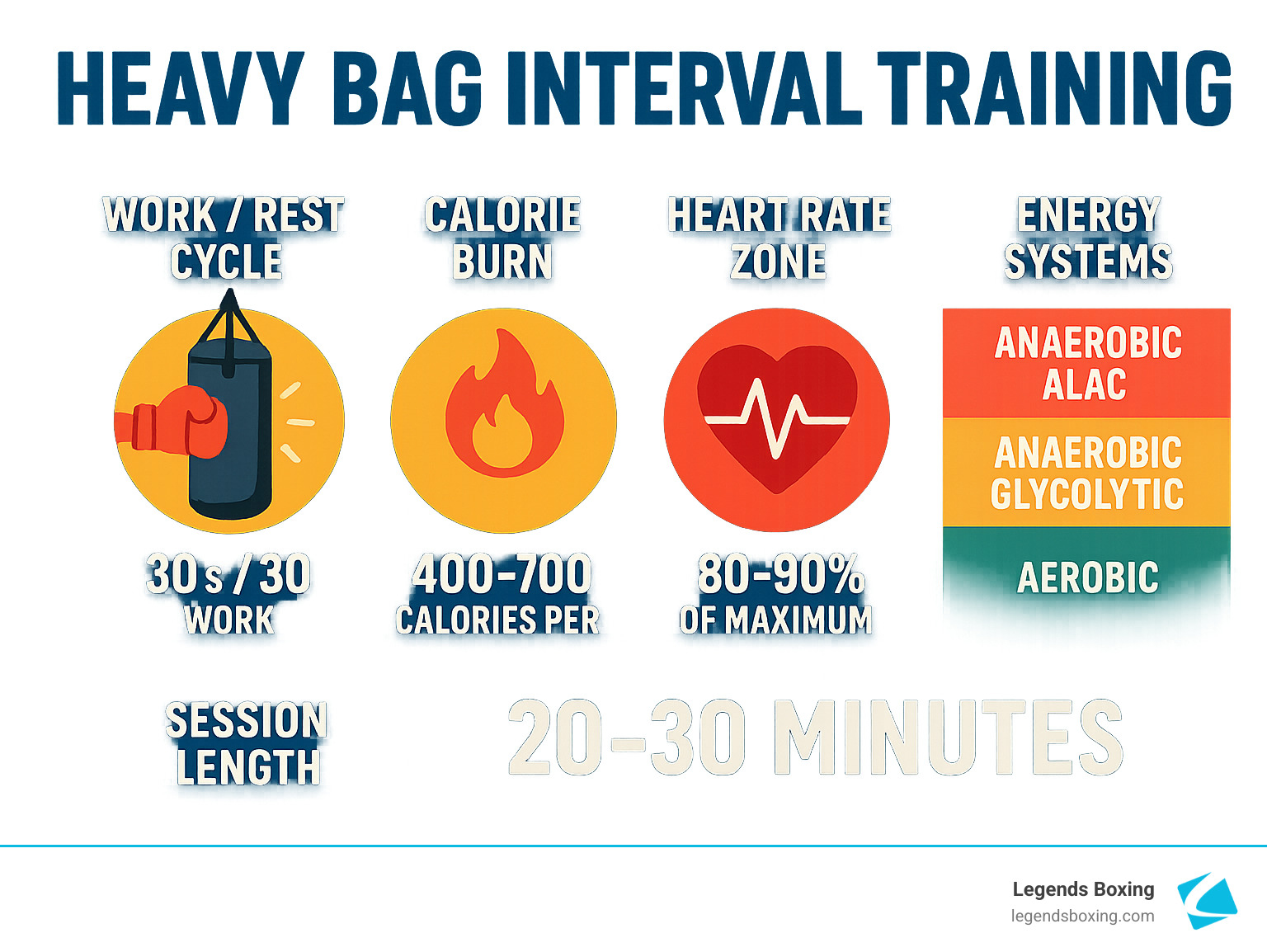
| Work/Rest Ratios | 10s/10s, 20s/10s, or 30s/30s intervals |
| Calorie Burn | 400–700 calories per hour depending on intensity |
| Heart Rate | 80–90% of maximum during work intervals |
| Session Length | 20–30 minutes including warm-up and cool-down |
| Frequency | 2–3 times per week for optimal results |
Unlike traditional steady-state cardio, heavy bag intervals keep you engaged while simultaneously building strength, endurance, and explosive power. Research shows that boxing bag HIIT workouts can increase cardiovascular endurance by up to 13% after just 8 weeks of regular training.
The intense striking patterns engage major muscle groups from your legs and core all the way up to your shoulders and arms. And the mental release of hitting a heavy bag provides stress relief that you simply can't get from a treadmill.
Robby Welch, National Head Coach for Legends Boxing with over two years of experience developing heavy bag interval training programs implemented nationwide.
Heavy Bag Interval Training 101
Heavy bag interval training alternates between intense bursts of striking and brief recovery periods. Instead of throwing punches at a steady pace, you're forcing your body to use both aerobic and anaerobic systems — like getting two workouts in one session.
During a typical session, you'll burn between 400 and 700 calories per hour depending on your intensity and body weight. Scientific research on boxing and bone density shows that female boxers maintain high bone mineral density despite low body fat, proving that impact-based training supports bone health — a benefit you won't find on a stationary bike.
During 30-second punch-out drills, boxers often throw 2–3 times more punches than during regular rounds. More strikes equal more calories burned and better conditioning in less total time.
What Makes Heavy Bag Intervals Different?
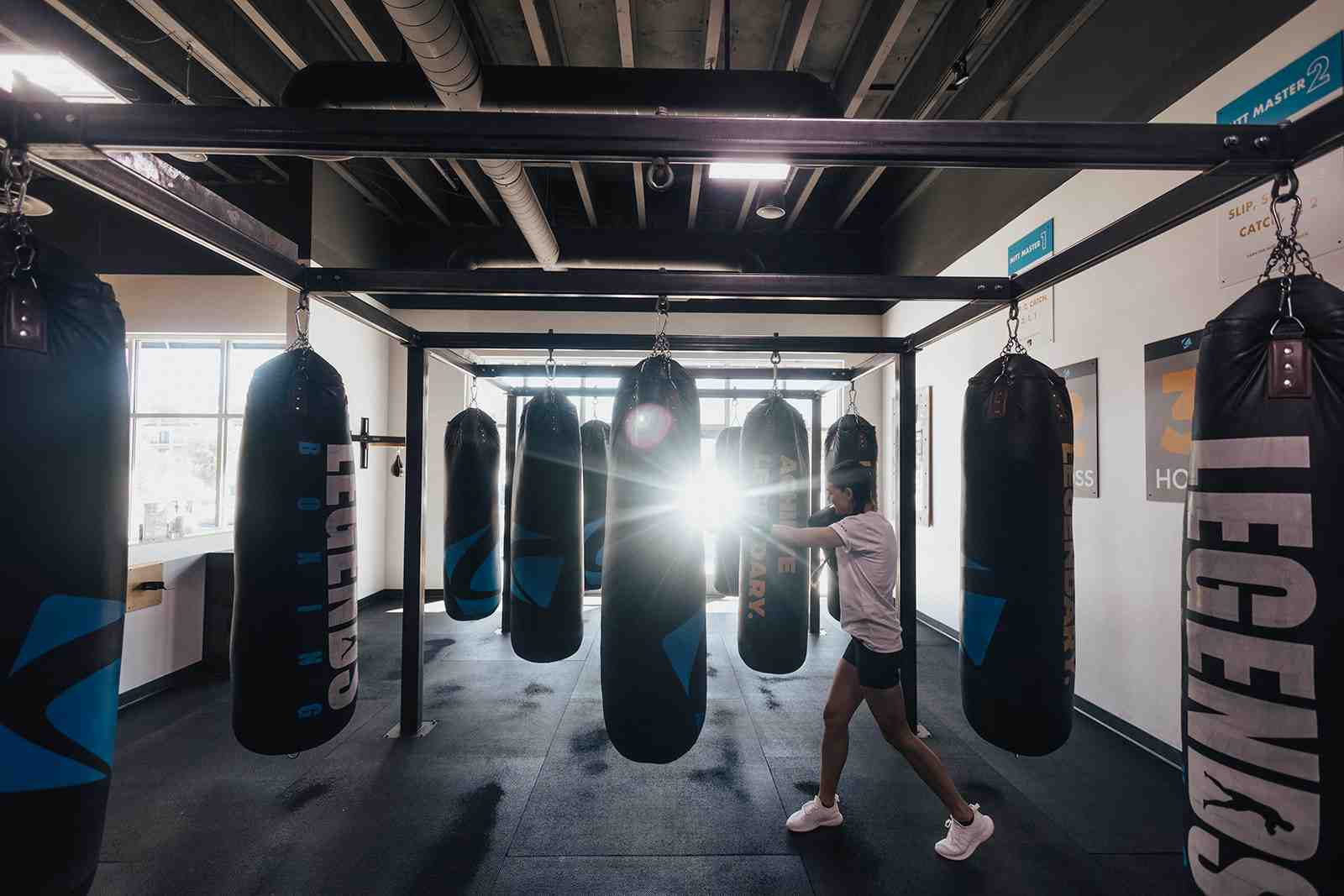
Traditional boxing follows the 3-minute round, 1-minute rest pattern. Heavy bag interval training uses shorter, more intense work periods that don't give you time to pace yourself.
Interval formats to know:
- Beginner-friendly: 10 seconds of high-intensity punching, 10 seconds of light movement — perfect for managing fatigue while learning
- Tabata-inspired: 20 seconds maximum effort, 10 seconds rest — challenges anaerobic power and mental toughness
- Balanced: 30 seconds bag work, 30 seconds active recovery — the most versatile format for all levels
- Punch-out drills: short bursts of maximum-speed punching that train both power and anaerobic capacity
- Reverse pyramid: start with 15-second intervals and add 5 seconds each round until you reach 60 seconds
Key Physiology Behind the Results
During intense intervals, your body rapidly burns through energy stores and starts producing lactate, training your anaerobic power system. VO2 max improvements happen because high-intensity intervals force your heart and lungs to work at maximum capacity.
EPOC — the "afterburn effect" — is significantly higher after interval training, meaning you keep burning calories at an elevated rate for up to 24 hours after your workout. This is why 20 minutes of bag intervals can outperform 45 minutes on a treadmill for total daily calorie burn.
During work intervals, your heart rate typically reaches 80–90% of maximum — the sweet spot for improving both cardiac output and metabolic adaptations that drive fat burning.
Gear Up: Equipment & Safety Essentials
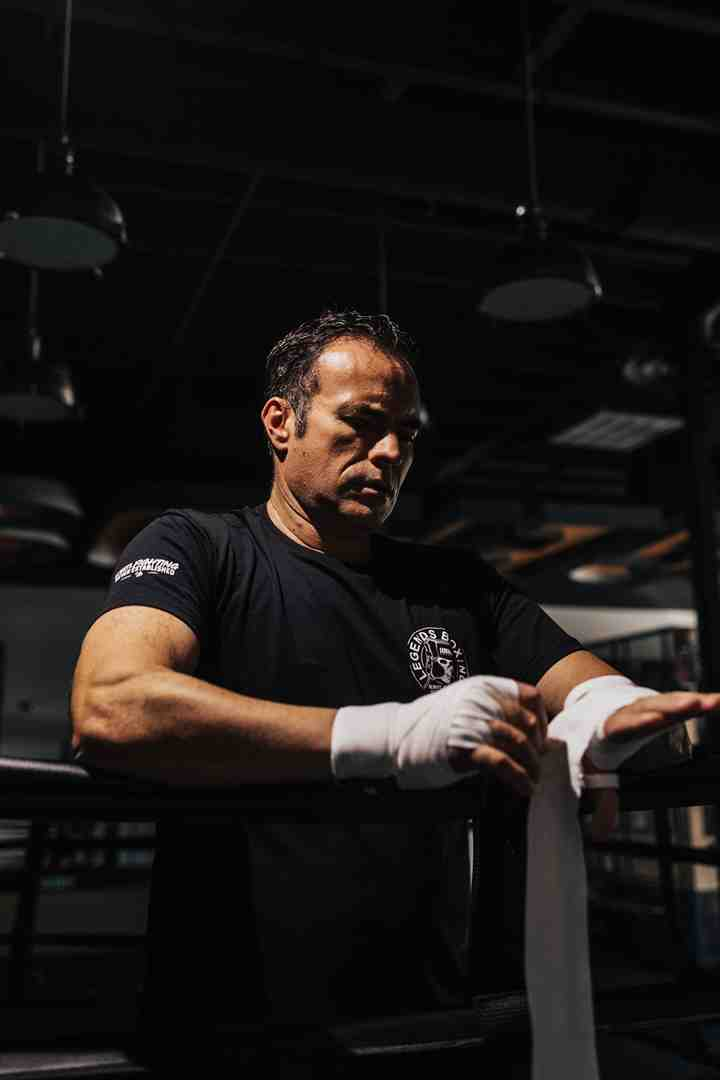
Hand wraps are an absolute must-have — not just a suggestion. These 180-inch strips provide crucial wrist support and knuckle protection during rapid-fire combinations.
Boxing gloves: 12–16 oz depending on your experience. Heavier 16 oz gloves offer maximum protection and add conditioning challenge. Lighter 12 oz gloves allow faster combinations but require better technique to use safely.
Heavy bags: typically 50–150 pounds, but 70–100 pounds works best for interval training. A bag that's too light swings wildly during intense intervals; one that's too heavy can jar your joints during rapid exchanges.
Essential kit checklist:
- 180-inch hand wraps (non-negotiable)
- 12–16 oz boxing gloves
- Heavy bag (70–100 lbs ideal)
- Reliable boxing timer app with customizable work-rest intervals
- Jump rope for warm-up
- Mouthguard for intense sessions
- Medicine balls (10–20 lbs) for functional strength between rounds
- Resistance bands for warm-up and recovery
- Heart rate monitor for accurate training zones
Safe striking fundamentals: keep your wrist straight and locked with your first two knuckles making primary contact — proper wrist alignment becomes especially critical when fatigue sets in. Breathe sharply out on each punch. Feet shoulder-width apart, non-dominant foot slightly forward, hands up protecting your face even when hitting the bag. Maintain proper distance, move your head before and after combinations, and step away between sequences to practice footwork.
Structuring Your Heavy Bag Interval Workouts
Building effective heavy bag interval training requires matching your workout structure to your current fitness level.
| Training Level | Round Duration | Work/Rest Ratio | Total Rounds | Rest Between Rounds |
|---|---|---|---|---|
| Beginner | 2 minutes | 10s high / 10s low | 8 rounds | 1 minute |
| Intermediate | 2–3 minutes | 20s work / 10s rest | 10 rounds | 45 seconds |
| Advanced | 3 minutes | 30s work / 30s active | 12–15 rounds | 30 seconds |
Your warm-up deserves a full 10 minutes. A 5-minute cool-down is not optional — these bookends are integral parts of every effective training session.
Sample Routine: Beginner 8-Round Blast
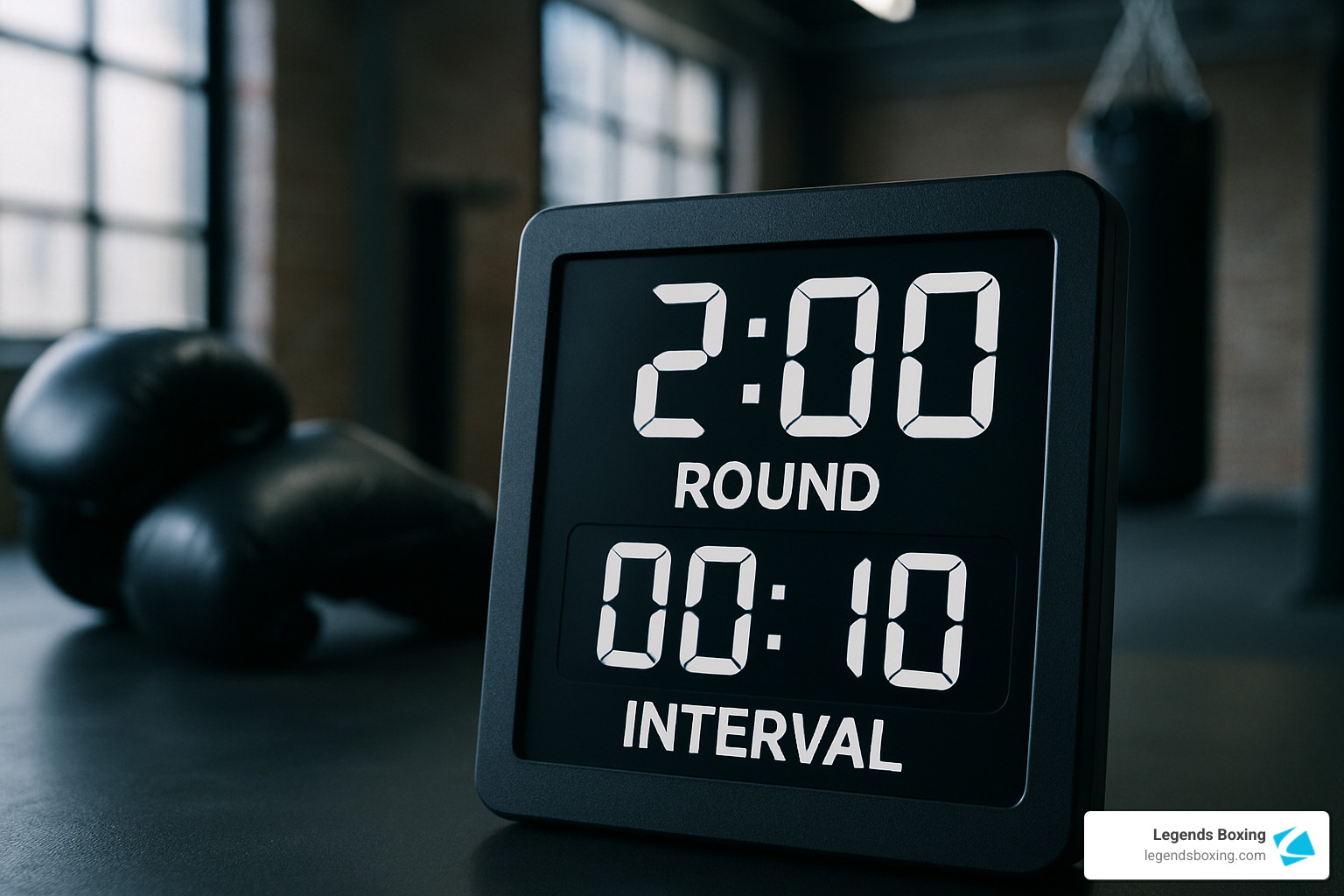
Uses gentle 10-second high-intensity, 10-second low-intensity patterns.
10-minute warm-up: 3 minutes light cardio → 2 minutes joint mobility → 3 minutes progressive shadowboxing → 2 minutes light bag work.
- Rounds 1–2: Jab-cross combinations during high-intensity bursts; light jabs with footwork during recovery
- Rounds 3–4: Add hooks; 30 seconds of bodyweight squats between rounds
- Rounds 5–6: Focus on power; 30 seconds of push-ups between rounds
- Rounds 7–8: Free-flowing combinations; 30 seconds of burpees between rounds
5-minute cool-down: Light shadowboxing and comprehensive stretching.
Sample Routine: Advanced 12–15-Round Fighter Circuit
15-minute warm-up: Progressive jump rope → complex shadowboxing → moderate bag work.
- Rounds 1–5: Continuous 3-minute rounds at 85–90% intensity with 30 seconds rest
- Rounds 6–8: Two minutes moderate pace, then 30 seconds maximum-intensity punch-out
- Rounds 9–12: Integrate kicks and knees — 30 seconds punching / 30 seconds kicking / 30 seconds combinations
- Rounds 13–15: Reverse pyramid — varying work-rest ratios from 45s/15s down to 15s/45s
10-minute cool-down: Light movement and comprehensive stretching.
Technique & Exercise Integration
When pushing through heavy bag interval training, proper technique prevents injury and maximizes every second of work time.
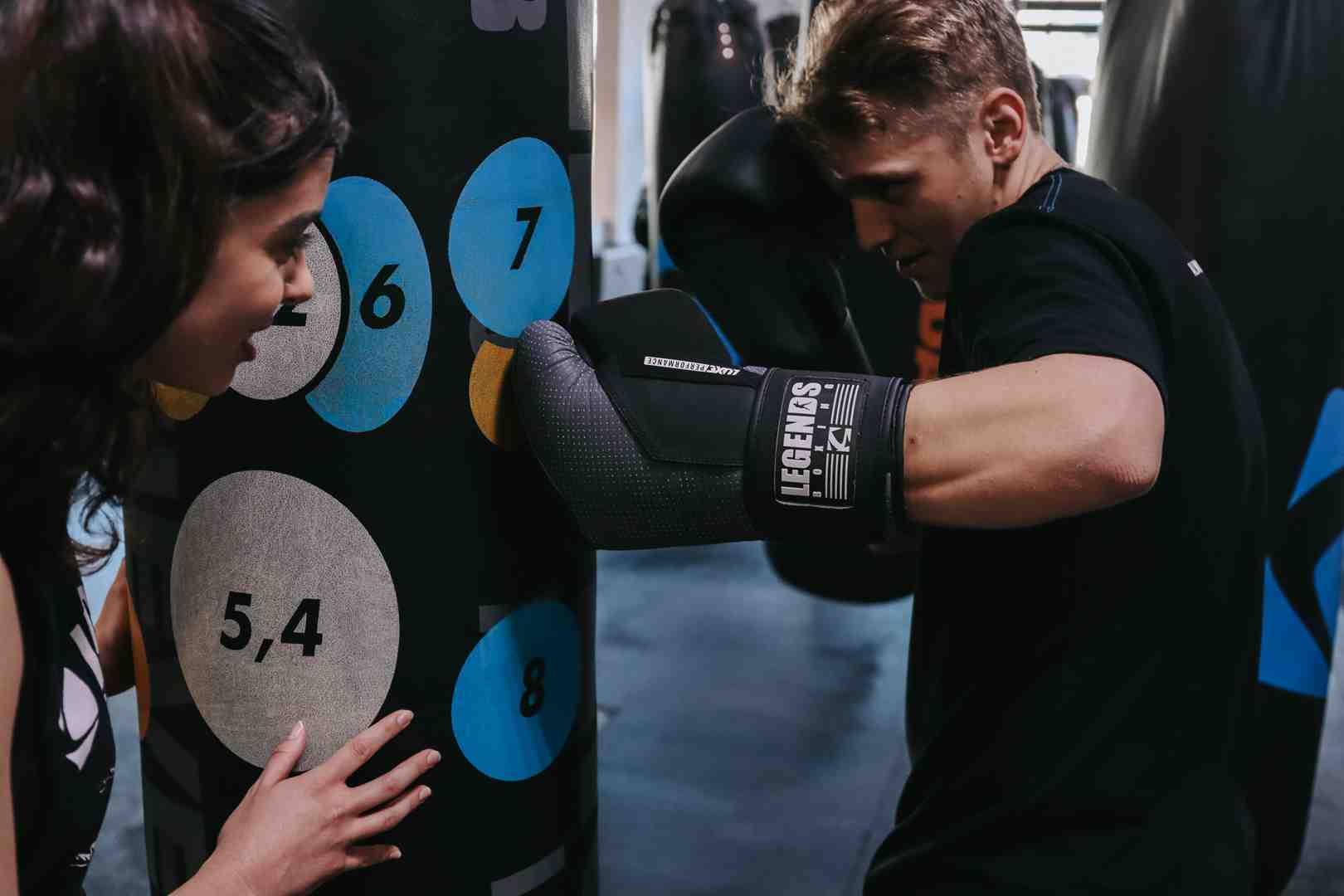
Jab: snap out like a whip and return quickly — speed and accuracy over power.
Cross: drives from your back foot with hip twist and shoulder snap — your shoulder should touch your chin at full extension.
Hooks: come from your core rotation, not your arm; elbow parallel to the ground, body rotating as one unit.
Uppercuts: drive up from your legs; think of scooping ice cream rather than lifting your arm straight up.
Movement is mandatory — duck, weave, pivot, and slip between combinations to engage your core and legs. This is what separates real heavy bag interval training from just punching until tired. Keep your chin tucked, breathe out sharply with each punch, return to guard immediately after every strike, and maintain proper stance even when exhausted.
Adding Functional Strength Between Rounds
Combining striking with functional exercises between rounds transforms your workout into full-body conditioning.
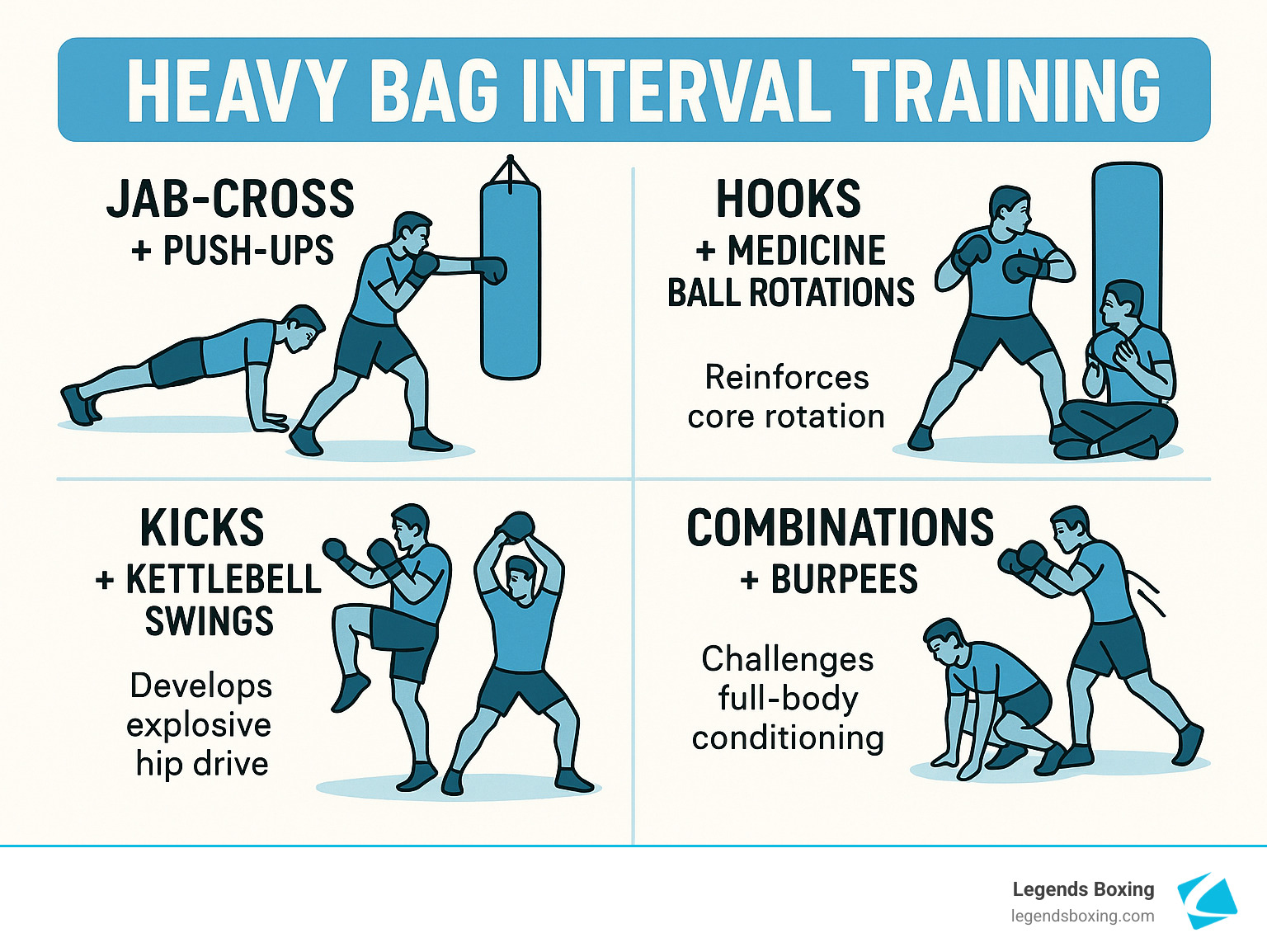
Smart pairings that reinforce boxing mechanics:
- Jab-cross rounds + push-ups — keeps upper body fired up while reinforcing the pushing motion of straight punches
- Hook combinations + medicine ball rotations — directly reinforces the core rotation that generates hook power
- Power rounds + kettlebell swings — builds explosive hip snap for more powerful punches
- Speed rounds + mountain climbers — develops the leg drive and cardiovascular capacity for sustained combinations
- Kicks + kettlebell swings — develops explosive hip drive that translates across all striking techniques
- Combination work + burpees — challenges full-body conditioning and simulates the all-out effort of a hard round
Tracking Progress & Avoiding Common Mistakes
Smart tracking helps spot improvements in power, endurance, and technique while catching plateaus early.
- Impact Wrap devices measure strike force, punch count, and power output during timed intervals
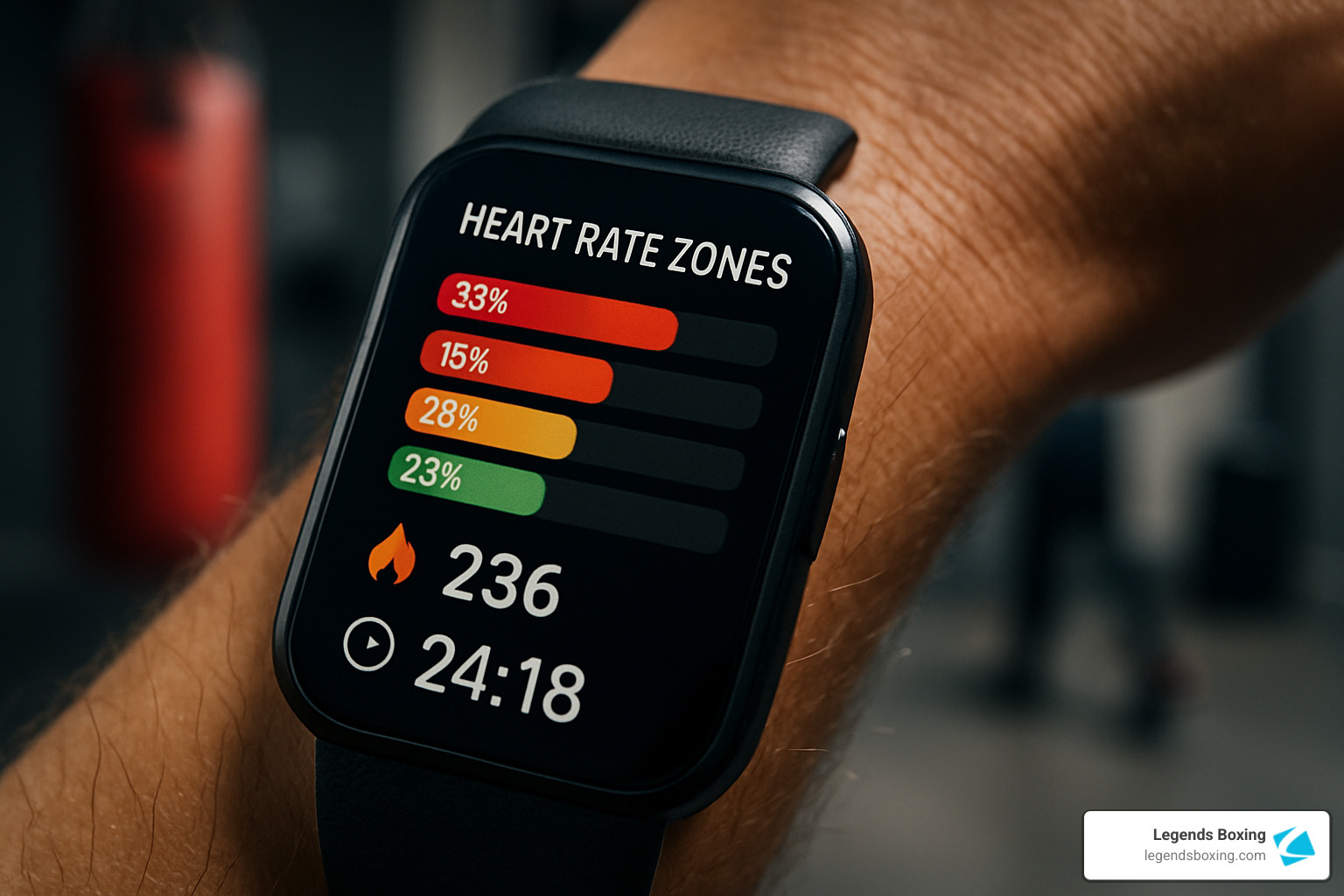
- Heart rate monitoring: target 80–90% maximum during work intervals, recovering to 60–70% during rest — a smartwatch is enough to confirm you're in the right zones
- Workout journal: track round duration, work-rest ratios, session difficulty, and technique focus; seeing progress over time is powerful motivation
Real progression shows up as: increased strike count during timed intervals, maintained power output over longer sessions, faster heart rate recovery between rounds, better technique consistency when exhausted, and completing workouts that were previously impossible.
Watch for overtraining signs: persistent fatigue, declining performance, increased injury risk, or dreading workouts you used to love. If these appear, add rest days before adding more volume.
Top Mistakes & How to Fix Them
- Poor stance and footwork when fatigue hits — reduce intensity rather than drilling bad movement patterns; fix technique first
- Bag hugging — step back and maintain proper punching distance even when tired
- Skipping defensive movement — turns bag training into basic cardio instead of skill-building
- Inconsistent timing — invest in a boxing timer app with audible interval cues
- Skipping warm-up and cool-down — these are non-negotiable parts of every session, not optional add-ons
Frequently Asked Questions
How often should I do heavy bag interval training?
The sweet spot is 2–3 sessions per week. Beginners should stick to twice weekly with 48 hours between sessions to allow full recovery. After consistent training for several months, bump up to three sessions with varied intensity — follow tough interval days with technique-focused sessions at lower intensity.
Quality always beats quantity: three focused sessions will deliver better results than five sloppy ones.
What if I don't have a heavy bag at home?
Shadowboxing with the same HIIT principles works extremely well. Use identical work-rest ratios — 10s/10s, 20s/10s, whatever protocol you'd use on the bag — and focus on crisp technique rather than impact.
Other options: resistance bands anchored to a door provide punching resistance, or focus mitts with a workout partner offer moving targets and coach-called combinations. At Legends Boxing, we provide professional-grade equipment and expert coaches so you can experience the full training effect from your first session.
Can heavy bag interval training help me lose weight faster?
Absolutely. Heavy bag interval training burns 400–700 calories per hour, plus your body continues burning extra calories for hours afterward through the EPOC effect. Combined with consistent nutrition habits, it's one of the most effective approaches to fat loss available. The afterburn effect keeps your metabolism elevated long after you've finished training — something steady-state cardio simply doesn't deliver to the same degree.
Your Strongest Self is Waiting
Heavy bag interval training delivers results that traditional cardio can't match: 400–700 calories burned per hour, cardiovascular endurance improvements of up to 13% in just 8 weeks, and strength gains that transform your physique — all in 20–30 minute sessions.
The full-body benefits come from every layer of the workout: legs drive power, core rotates and stabilizes, upper body develops functional strength, and your cardiovascular system adapts to intense demands that steady-state training never creates. And the stress relief that comes from channeling daily frustrations into focused, powerful strikes? Consistently, members leave feeling mentally clearer and emotionally lighter than when they walked in.
No boxing experience required. Every session is scalable, every round is yours to control, and every punch brings you closer to the stronger, more confident version of yourself waiting on the other side of that heavy bag.
Find your nearest Legends Boxing location and experience heavy bag interval training with expert coaching and professional equipment — or book your first free class today and discover what 20 minutes can really do.