
Unleash Your Inner Fighter with Heavy Bag MMA Drills
A heavy bag MMA workout combines boxing, Muay Thai, and ground-and-pound techniques into a full-body conditioning session that burns 400–700 calories per hour while building real-world skills. This complete guide covers essential gear, safe striking mechanics, beginner and advanced workout circuits, progressive drill progressions, and everything you need to unleash your inner fighter — no experience required.
Why Heavy Bag MMA Workouts Are Taking Over Traditional Cardio
A heavy bag MMA workout combines striking techniques from boxing, Muay Thai, and mixed martial arts to deliver a full-body conditioning session that burns serious calories while building real-world skills. Unlike running on a treadmill or lifting weights, these workouts engage your entire body through dynamic movements that improve power, speed, coordination, and mental focus.
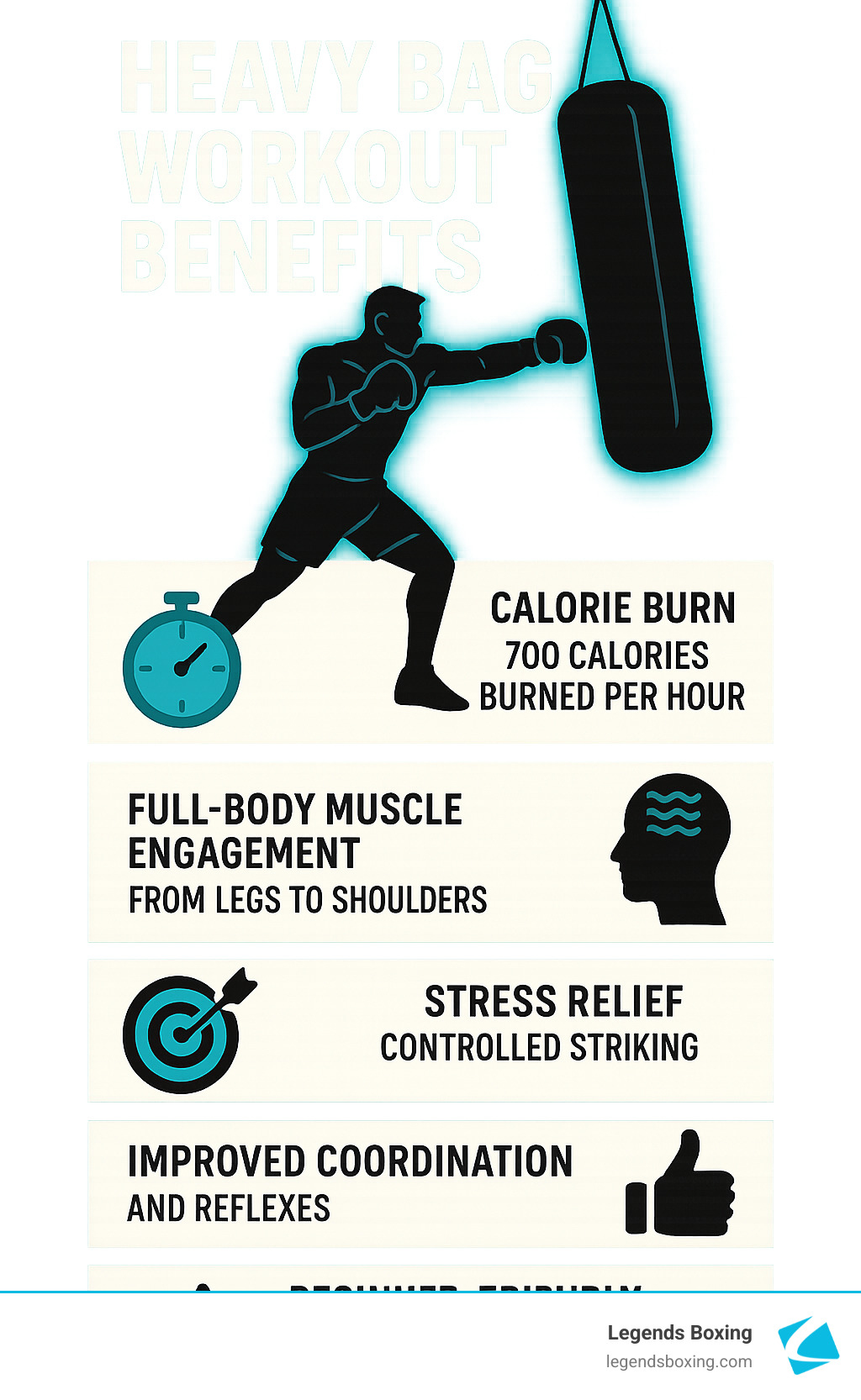
Key Benefits of Heavy Bag MMA Workouts:
- Calorie Burn — up to 400–700 calories per hour
- Full-Body Engagement — works legs, core, shoulders, and back simultaneously
- Stress Relief — physical striking releases tension and boosts mood
- Skill Development — learn practical self-defense techniques
- No Experience Required — beginner-friendly with proper instruction
Heavy bag workouts offer what traditional cardio can't — the satisfaction of hitting something while building functional strength. What makes MMA bag training different? Unlike boxing-only sessions, MMA workouts incorporate kicks, knees, elbows, and even ground-and-pound techniques. This variety keeps sessions engaging while targeting different muscle groups and energy systems.
Most heavy bag sessions last 15–30 minutes for beginners, structured in 3–5 minute rounds with short rest periods. You can start with basic jab-cross combinations and advance to complex striking sequences as your skills and fitness grow.
Robby Welch, National Head Coach at Legends Boxing, has over two years of experience developing heavy bag MMA workout programs used nationwide. His background includes competing as an amateur fighter while coaching thousands of members through transformative sessions that build both physical and mental strength.
What Is a Heavy Bag MMA Workout?
Think of a heavy bag MMA workout as boxing's adventurous cousin who learned karate and wrestling. While traditional boxing focuses on perfecting your punches, MMA bag training opens up a whole new world of striking possibilities.
The magic happens when you combine boxing fundamentals like jabs and crosses with Muay Thai elements including powerful kicks and crushing knees. Add in some ground-and-pound techniques from wrestling, and you've got a workout that challenges every muscle in your body.
Different energy systems get activated depending on how you structure your rounds:
- Single power shots → explosive power and fast-twitch muscle development
- Flowing combinations → cardiovascular endurance and coordination
- Interval work → both systems simultaneously, producing maximum conditioning
MMA strikes teach you to think like a fighter, developing what coaches call fight IQ — the ability to see openings, chain techniques together, and maintain composure when your heart rate spikes. This mental training translates surprisingly well to handling stress in everyday life.
Clinch work using the bag teaches you to control distance and positioning, while takedown setups combine strikes with level changes and footwork patterns — engaging your entire kinetic chain in a single movement.
Why It Differs From Traditional Bag Sessions
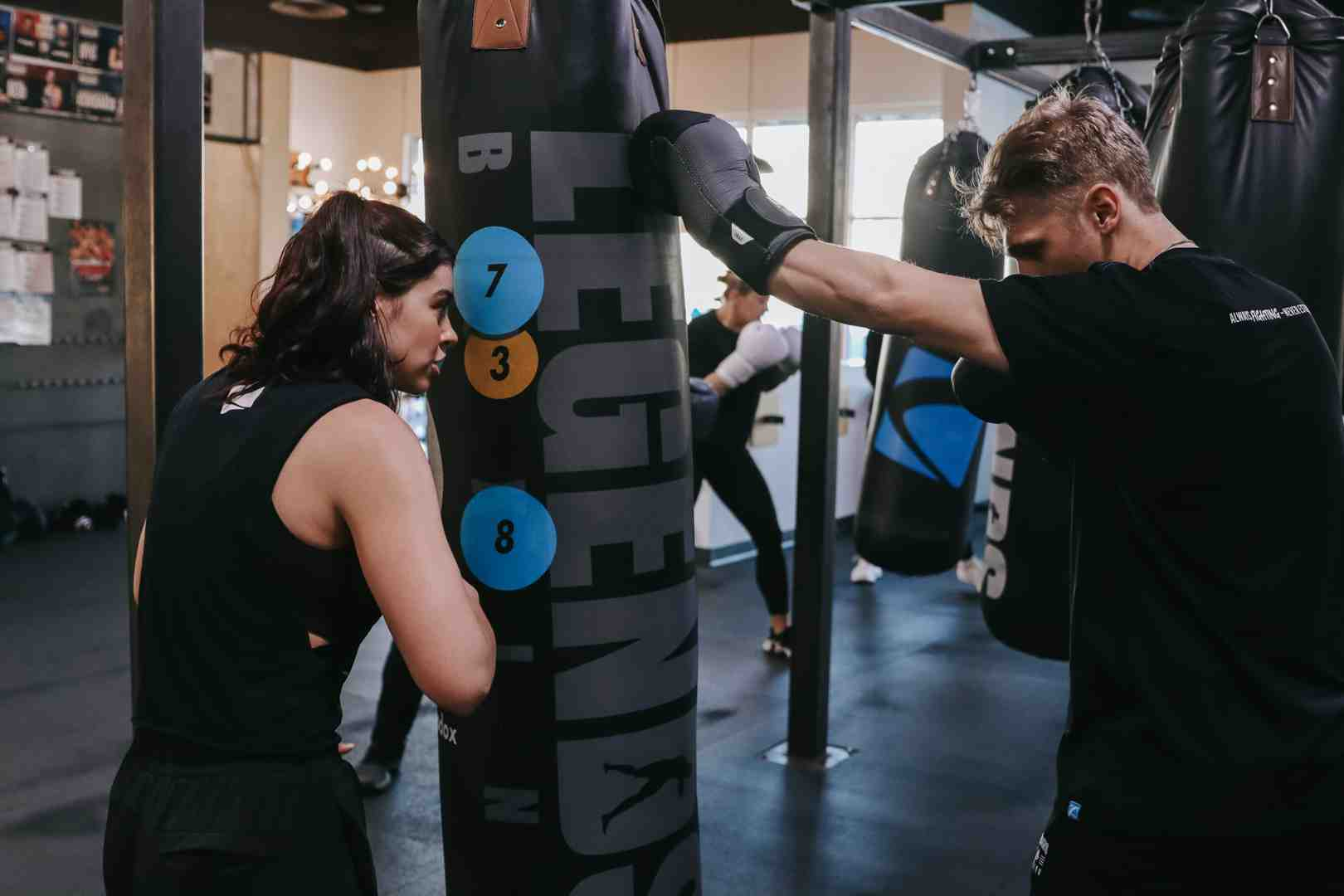
Traditional boxing bag sessions are fantastic for building upper-body strength and hand-eye coordination. But MMA bag training releases your entire arsenal:
- Kicks and knees target the bag's lower sections, developing hip flexibility and leg strength that boxing alone can't build
- Elbows bring you into close-range combat, building shoulder stability and core strength through devastating short-range strikes
- Clinch control teaches you to use the bag as a training partner, practicing how to control distance and positioning
- Ground-and-pound drills (bag laid flat on the floor) teach you to generate power from different angles — a full-body challenge unlike any traditional workout
This variety prevents workout boredom while challenging different muscle groups and movement patterns. Your body never gets too comfortable with the routine, which means better results and faster progress.
Essential Gear, Setup & Safety
Getting your heavy bag MMA workout setup right is like building a solid foundation for your house — everything else depends on it.
The Basics:
- Hand wraps — 180-inch cotton or elastic, the gold standard for protecting knuckles and wrists
- Heavy bag gloves — 12–16 oz range provides the padding you need without sacrificing feel
- Heavy bag — 70–150 lbs for most users; start lighter if you're new, heavier if you're built for power
- Shin guards — optional at first, essential once you start throwing real kicks
- Timer app — structure proper rounds with work/rest intervals
Bag Types Compared:
| Bag Type | Weight Range | Best For | Installation |
|---|---|---|---|
| Heavy Bag | 70–150 lbs | Power, combinations | Ceiling mount |
| Teardrop | 50–100 lbs | Speed, angles | Single point mount |
| Wrecking Ball | 40–80 lbs | Footwork, timing | Swivel mount |
Free-Standing vs. Hanging:
- Free-standing — great for rentals, limited ceiling height, or portability; tends to move during power shots
- Hanging — feels more solid, doesn't walk away from you during hard training; requires proper ceiling mount
Impact on Bone Density: Research on impact training shows that heavy bag work actually improves bone mineral density. The controlled stress from striking makes your bones stronger over time — a long-term benefit most cardio workouts simply can't offer.
Additional Gear Worth Having:
- Mouthguard — helps you get into the fighter mindset and protects during high-intensity sessions
- Water bottle and towel — non-negotiable; you will sweat
- Basic first aid kit — even experienced fighters occasionally need an ice pack
Safe Striking Mechanics
The right gear means nothing with poor technique. Before you throw full power:
Knuckle Alignment: Hit with your first two knuckles — the pointer and middle finger. This distributes impact properly and protects your hand from the force you're generating.
Hip Rotation is the Engine: Your power doesn't come from your arms. Think of your body as a whip — energy starts from your feet, travels through your legs and hips, and snaps out through your fist. Arm punching is like trying to drive a car with just your steering wheel.
Exhale on Impact: This isn't just about breathing — it helps generate more power and prevents you from holding your breath during combinations, which tanks your endurance fast.
Bag Control: Don't let the bag swing wildly. Work with its movement and control the rhythm. A swinging bag is harder to hit accurately and throws off your timing.
Start at 50–70% Power: Even experienced fighters don't throw full power for most of their training. This isn't about being cautious — it's about building proper technique and letting your body adapt to the impact before dialing up intensity.
Common Mistakes to Avoid:
- Going hard before your body is warmed up — five minutes of light shadowboxing prevents weeks of injury recovery
- Skipping hand wraps — your hands are your tools; protect them
- Using worn-out gloves that no longer provide proper padding
- Arm punching instead of using full body rotation
- Poor stance — feet shoulder-width apart, weight evenly distributed, never cross your legs
Structuring the Perfect Heavy Bag MMA Workout
Creating an effective session is like building a house — you need a solid foundation before adding the fancy details. The best sessions follow a natural flow that builds skills while pushing fitness to new levels:
Session Blueprint:
- 5–10 minute warm-up — dynamic shadowboxing, jump rope (or no-rope footwork), shoulder and hip mobility
- 3–5 rounds of focused training — 3–5 minutes per round, 30–60 second rest between rounds
- Cool-down — static stretching, foam rolling, hydration
Mental Visualization: During warm-up, picture yourself executing perfect techniques. Elite athletes use this because your brain can't fully distinguish between real and imagined practice — the neural pathways fire either way.
Core Round Blueprint (5 Rounds)
| Round | Focus | Techniques |
|---|---|---|
| Round 1 | Boxing fundamentals | Jabs and crosses — your most reliable weapons |
| Round 2 | Full-body striking | Kicks and teeps (push kicks) for distance control |
| Round 3 | Close-range combat | Elbows and knees — builds core stability and pressure |
| Round 4 | Defense + offense | Strike, then move. Duck, weave, circle. Offense needs defense |
| Round 5 | Ground-and-pound | Bag laid flat, strikes from mount position if space allows |
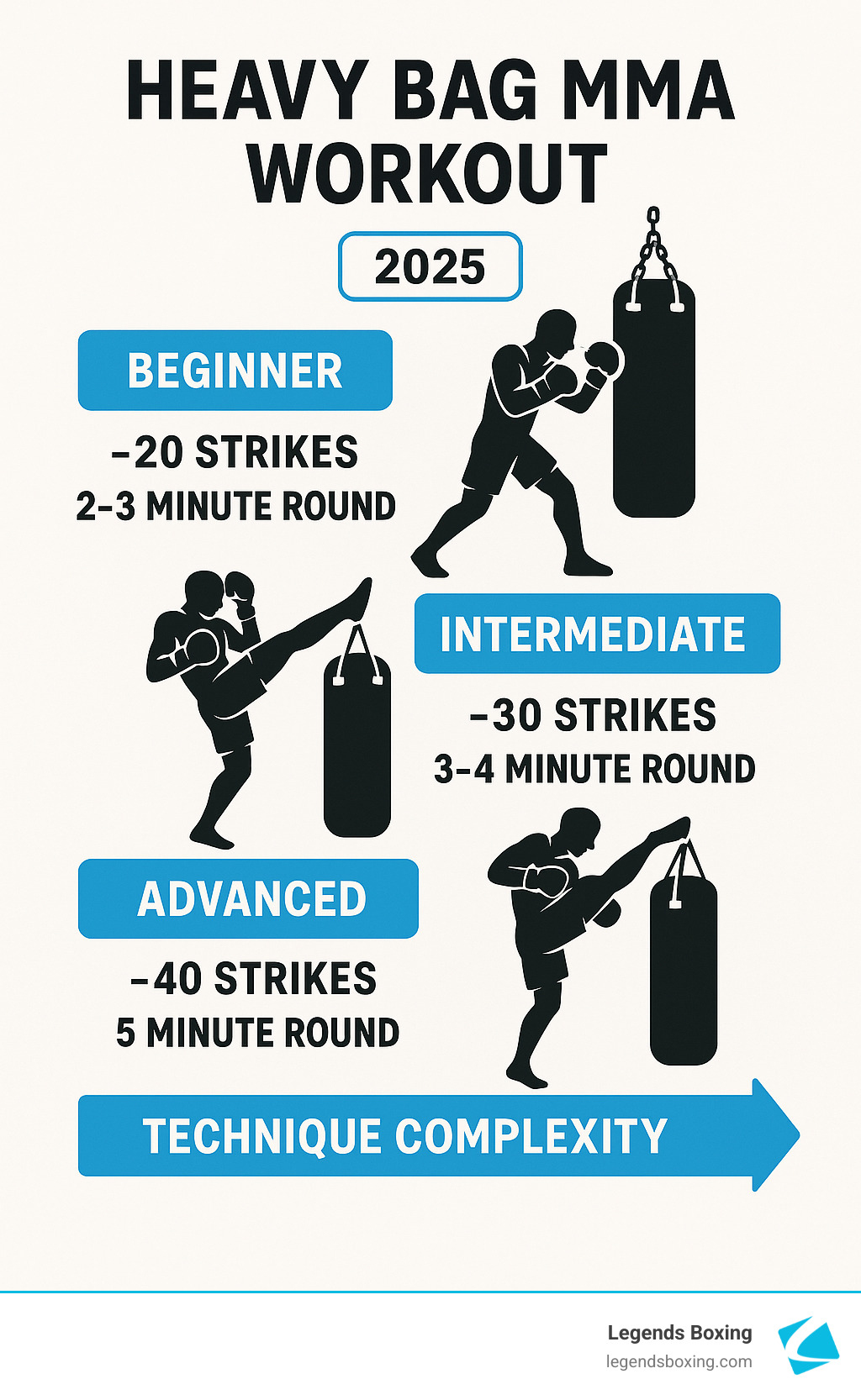
Round Timing by Level:
| Level | Round Duration | Rest Period |
|---|---|---|
| Beginner | 2–3 minutes | 60 seconds |
| Intermediate | 3–4 minutes | 45 seconds |
| Advanced | 5 minutes | 30 seconds |
Cool-Down & Recovery
Recovery is where the magic actually happens. Your body doesn't get stronger during workouts — it gets stronger during rest:
- Static stretching — hold each stretch 15–30 seconds; focus on shoulders, chest, hips, and legs
- Foam rolling — target your shoulders, lats, and legs to work out knots and reduce soreness
- Hydration — replace the fluids you lost; don't wait until you feel thirsty
- Sleep — aim for 7–9 hours; this is when your body repairs muscle tissue and consolidates the motor patterns you just practiced
Progressive Drills & Sample Routines
Building your skills is like learning to drive — you start in the parking lot before hitting the highway. Think of your training journey in monthly chunks:
- Weeks 1–2: Comfortable with basic jabs and crosses
- Weeks 3–4: Throwing simple combinations
- Weeks 5–6: Flowing through complex sequences
- Weeks 7–8: Training at fight pace
Training Tools to Add Variety:
- Speed ladder combos — hands and feet working together
- Power shots at 70% max — that satisfying thud without destroying your joints
- 30-on/30-off intervals — conditioning that makes everyday activities feel easy
- Southpaw switch rounds — develop your weaker side and become more well-rounded
Beginner Heavy Bag MMA Workout Circuit
Three rounds of three minutes each — the same timing professional fighters use:
Round 1 — Basic Striking Patterns:
- 30 sec: Jab-cross-low kick combinations
- 15 sec: Rest
- 30 sec: Teep-cross combinations
- 15 sec: Rest
- Repeat for the full 3 minutes
Round 2 — Building Combinations:
- 45 sec: Jab-cross-hook combinations
- 45 sec: Knee-cross combinations
- 30 sec: Rest
- Repeat
Round 3 — Conditioning Finish:
- 1 min: Continuous light punches
- 30 sec: 10 power shots
- 30 sec: Active recovery movement
- 1 min: Power flurry to finish
Rest 1–2 minutes between rounds. Keep strikes at 50–60% intensity. Your goal is building technique and conditioning — not proving how hard you can hit.
Advanced Heavy Bag MMA Workout Circuit
Five rounds of five minutes each — the same duration as professional MMA fights:
Round 1 — Complex Coordination:
- Spinning back kick-cross-hook combinations
- Duck-cross-elbow sequences
- Switch kick-cross-uppercut combinations
- 90 sec high intensity / 30 sec active recovery, repeated throughout
Round 2 — Power Development:
- 10 maximum power shots, then move lightly for 30 seconds
- Repeat for the entire round
Round 3 — Speed & Volume (Tabata-Style):
- Maximum hand speed for 15 seconds
- 15 seconds complete rest
- Repeat throughout the round
Round 4 — Ground-and-Pound:
- Bag laid flat on the floor
- Mount position: ground slam-knee-elbow flurries for 45 seconds
- Transition/reset for 15 seconds
- Repeat
Round 5 — Fight Simulation:
- Mixed combinations at fight pace
- Include defensive movement between exchanges
- Visualize opponent reactions throughout
Rest only 30–60 seconds between rounds. By this point, you're ready for the challenge.
Frequently Asked Questions
How often should I train on the heavy bag?
The sweet spot is 2–3 sessions per week for most people — enough practice to build skills and conditioning without overtraining:
- Beginners: 2 sessions per week, 15–20 minutes each. Your hands, wrists, and shoulders need time to adapt to impact
- Intermediate: 3 sessions per week, 20–30 minutes each. Your body has adapted to the striking demands
- Advanced: 3–4 sessions per week, 30–45 minutes each. More isn't always better — quality beats quantity every time
The real secret: consistency trumps intensity. Training twice a week for six months will get you better results than going all-out for two weeks and burning out.
Can I progress without a partner or coach?
Absolutely. Heavy bag MMA workouts are perfect for solo training — you don't need another person to get an incredible workout and build real skills. The bag gives you immediate feedback through impact and movement: hit it wrong, and you'll feel it in your wrist; get your technique right, and you'll hear that satisfying thud.
Keys to successful solo training:
- Start with proper instruction from a qualified coach or structured program to learn correct technique first
- Video yourself occasionally to check your form from the outside
- Set specific goals ("improve my jab-cross combo", "increase my round duration")
- Track progress and celebrate small wins
What common mistakes should I avoid?
- Going too hard, too fast — build intensity gradually over weeks, not days
- Poor stance — feet shoulder-width apart, weight evenly distributed; too narrow loses balance, too wide kills movement
- Arm punching — power comes from your feet through your hips, not just your shoulders
- Skipping the warm-up — five minutes of light shadowboxing can save you weeks of injury recovery
- No hand wraps — training without them is like riding a motorcycle without a helmet
- Wrong bag weight — 70–100 lbs works for most people; too heavy hurts you, too light provides no resistance
- Copying movie technique — real, functional technique takes time to build. Focus on basics first
Your Transformation Starts With a Single Punch
Your heavy bag MMA workout journey doesn't end when you finish your last round — it's just the beginning of finding what you're truly capable of. The combination of boxing, Muay Thai, and ground techniques creates something special that goes far beyond traditional cardio. You're not just burning calories; you're building real skills that translate into everyday confidence.
The heavy bag doesn't lie — it gives you immediate feedback on your power, timing, and technique. When you land a perfect combination, you feel it. When your form breaks down, you know it instantly. That honesty is what makes this training so transformative.
At Legends Boxing, we've watched countless members walk in nervous about their first class and leave feeling empowered, energized, and eager for more. The physical changes are obvious — improved conditioning, better posture, increased strength. But the mental shift is what really gets us excited.
Your progression doesn't require perfection. Start with basic jab-cross combinations and gradually add kicks, knees, and defensive movement. Consistency over intensity: two quality sessions per week will deliver better results than one brutal workout that leaves you too sore to return.
Ready to release your inner fighter? Find your local Legends Boxing and experience the rush of your first heavy bag MMA workout — our coaches make it fun, safe, and effective from day one. Or book your first free class right now. No experience required. Just bring your energy and we'll handle the rest.
The heavy bag is waiting. Your transformation starts with a single punch.