
Swing Into Action With These Must-Try Heavy Bag Punching Drills
Heavy bag punching drills are structured exercises that combine punching techniques with movement patterns to build power, speed, endurance, and coordination — burning 300–700 calories per hour while engaging every major muscle group. This guide covers five drill categories (power, speed, endurance, footwork, and defense/counter-punch), a complete session programming framework, a beginner-vs-advanced workout comparison, and the most common mistakes that sabotage progress.
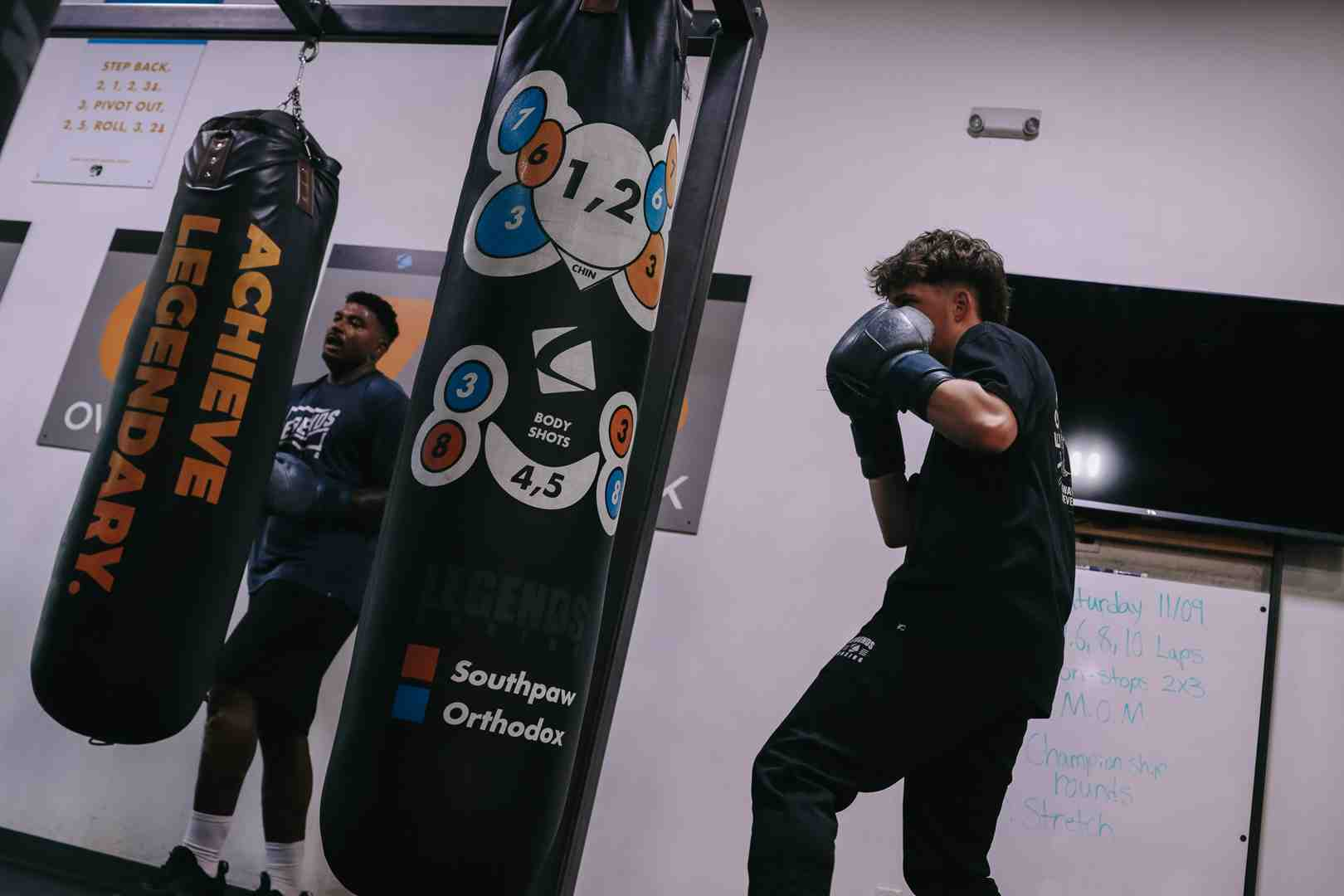
Why Heavy Bag Punching Drills Transform Your Fitness Game
Heavy bag punching drills are structured exercises that combine punching techniques with movement patterns to build power, speed, endurance, and coordination. Here are the essential drills every beginner should master:
- Power Drills — single-punch rounds focusing on maximum force (60-second intervals)
- Speed Drills — Tabata-style intervals (15 seconds on/15 seconds off) for hand speed
- Endurance Rounds — marathon-style continuous punching (3–6 rounds) for stamina
- Footwork Drills — moving around the bag while throwing combinations
- Accuracy Drills — targeting specific zones using tape markers or numbered targets
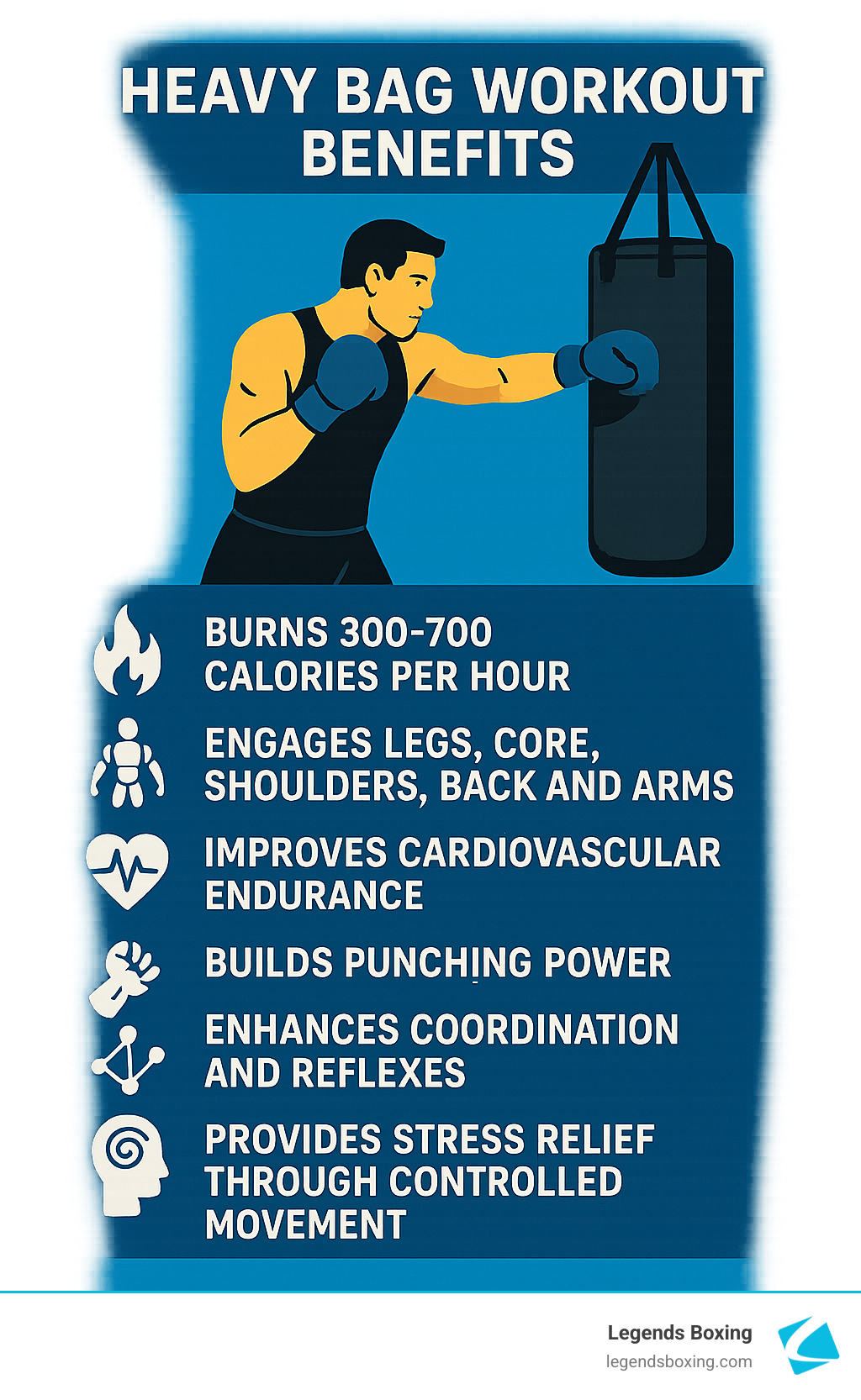
Heavy bag training has exploded in popularity because it delivers what busy professionals crave: maximum results in minimum time. Research shows these workouts can burn 300–700 calories per hour while engaging every major muscle group from your legs to your shoulders.
Unlike endless treadmill sessions or boring weight routines, heavy bag work provides the perfect outlet for stress relief. As one boxing coach put it: "Heavy bag drills are more than just fitness — they're destructive therapy that lets you release frustration while building real strength."
The beauty of heavy bag training lies in its simplicity. You don't need years of boxing experience or expensive equipment. Just proper hand wraps, basic gloves, and the willingness to swing into action.
I'm Robby Welch, National Head Coach for Legends Boxing, where I've spent over two years developing curriculum and training programs focused on heavy bag punching drills. My experience coaching thousands of members has shown me exactly which drills deliver the fastest results for beginners and seasoned athletes alike.
Why Heavy Bag Work? Benefits & Safe-Start Checklist
Every time you throw a punch, you're engaging your entire body in one explosive movement. Your feet drive power through your legs, your core transfers that energy, and your shoulders deliver the final impact. It's like getting a full-body workout disguised as something way more fun than traditional gym exercises.
The benefits go far beyond just breaking a sweat:
- Punching power builds through proper technique and body mechanics
- Hand speed increases as you practice rapid-fire combinations
- Cardiovascular endurance skyrockets from sustained effort across multiple rounds
- Mental toughness develops when you're three rounds deep, shoulders burning, technique still sharp
Safe-Start Checklist
Before you release your inner fighter, make sure you're set up for success:
Equipment:
- Hand wraps — absolutely non-negotiable; they protect your wrists and knuckles from injury
- Gloves (12–16 oz) — go heavier if you're just starting out
- Heavy bag — should weigh about 50–75% of your body weight for the right resistance

Form fundamentals:
- Warm up for 5 minutes first — light jogging, arm circles, and shadowboxing prepare your joints for impact
- Breathe correctly — inhale during the pull-back phase and exhale sharply on impact; this pattern maximizes power while keeping fatigue at bay
- Stance — feet shoulder-width apart, hands protecting your face, stay light on your feet for better mobility
The science backs up what we see in our classes every day: structured heavy bag training significantly improves heart health, coordination, and overall fitness markers when you stick to a consistent 2–3 times per week schedule. The best part? You don't need years of boxing experience to start seeing results.
Must-Try Heavy Bag Punching Drills
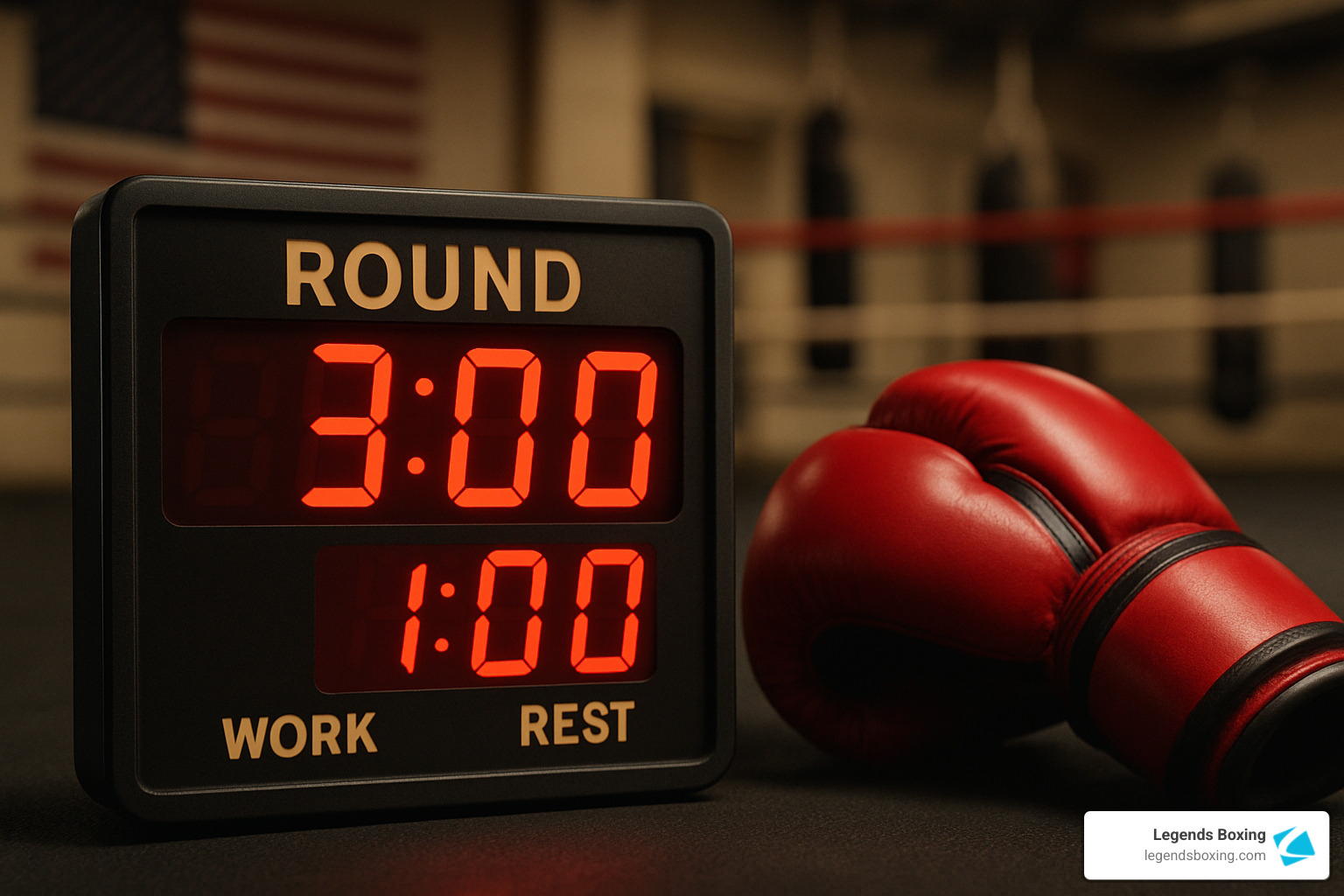
The key to effective heavy bag punching drills lies in structured programming. Professional boxers organize their training around 3-minute rounds with 1-minute rest periods to simulate actual fight conditions. This format builds both physical conditioning and mental resilience.
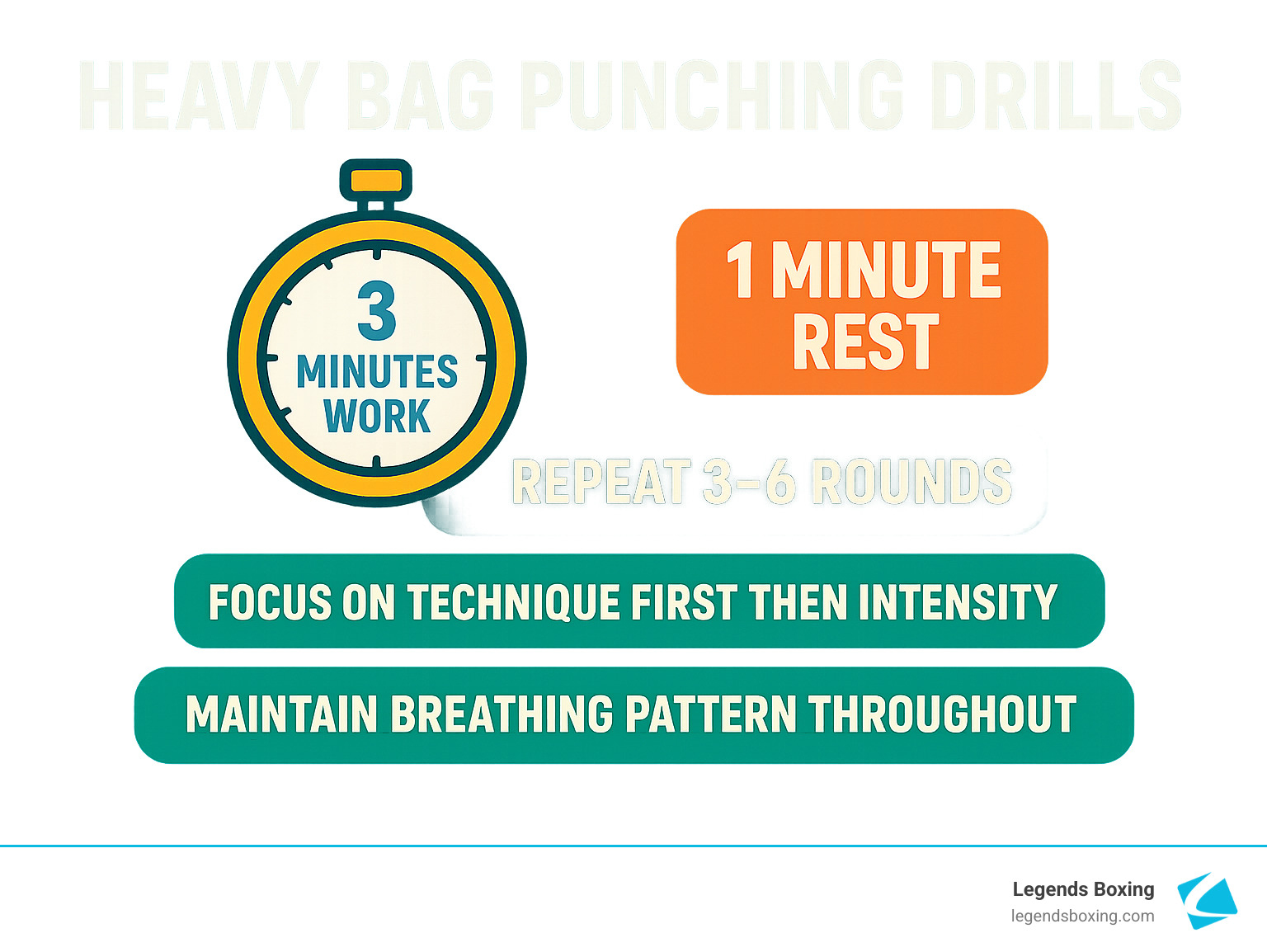
We've organized these drills by primary training goal — the best workouts combine elements from each category for comprehensive development.
Power-Builder Heavy Bag Punching Drills
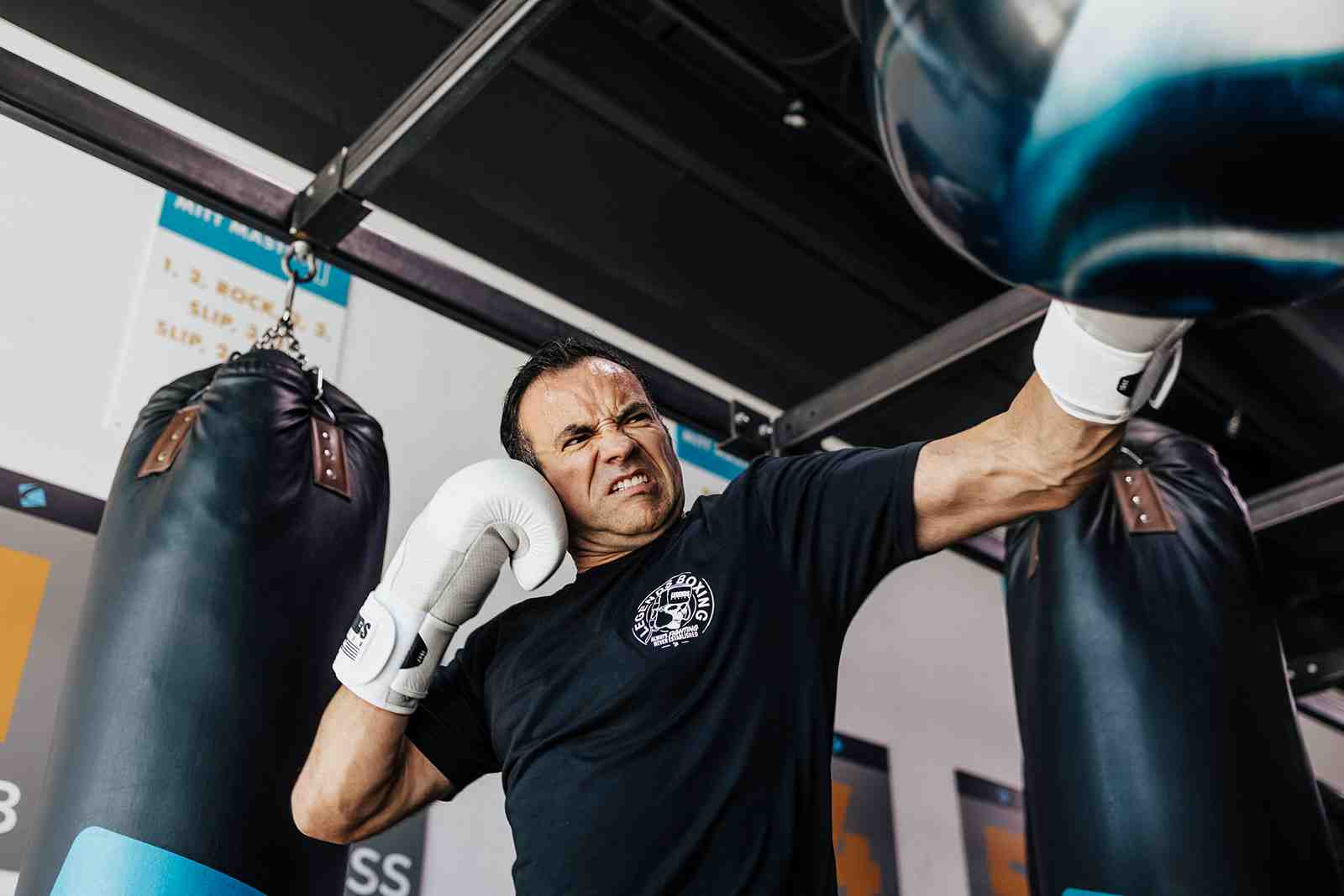
Power development requires focused attention on single-punch mechanics rather than rapid combinations. These drills emphasize proper form and maximum force generation.
Single-Punch Power Rounds: Dedicate entire 3-minute rounds to perfecting one punch type. Round 1 focuses solely on jabs, Round 2 on crosses, Round 3 on hooks, and so on. This isolation approach lets you concentrate on the torque and hip drive that generates knockout power.
The secret to devastating punches isn't arm strength — it's learning to transfer energy from your feet through your entire body. Think of it like pouring water from a pitcher: the rotation starts from your core and flows through to your fist.
60-Second Max-Effort Intervals: After mastering basic technique, incorporate high-intensity bursts. Throw your hardest punches for 60 seconds, then rest for 2 minutes. Limit power output to 70–80% initially to maintain proper form — sloppy technique at full power creates bad habits and increases injury risk.
Speed & Reflex Heavy Bag Punching Drills
Speed development requires a different approach than power training. These drills focus on rapid muscle contractions and neural adaptation.
15-Second Tabata Intervals: This drill alternates 15 seconds of maximum-speed punching with 15 seconds of rest. The key is throwing as many clean punches as possible without sacrificing form. Focus on straight punches (jabs and crosses) to minimize excessive bag movement that disrupts rhythm.
Flash-Combo Sequences: Practice throwing two punches so quickly they sound like one impact. This drill exploits the involuntary blink response — when someone gets hit, they blink automatically, creating an opening for the second punch. Start with simple 1-2 combinations and gradually add complexity.
For improved speed training, consider incorporating double-end bag work between heavy bag rounds. The rapid rebound of a double-end bag forces faster hand-eye coordination and reaction time.
Endurance & Conditioning Rounds
Endurance training on the heavy bag builds the cardiovascular base essential for sustained performance. These drills teach your body to maintain output when energy systems are depleted.
Marathon Man Drill: Popularized by Floyd Mayweather's training team, this drill involves continuous punching for 3–6 rounds with minimal rest. The trick is using smaller, controlled punches rather than power shots. Focus on volume and breathing — exhale with every punch to maintain oxygen flow.
Small-Punch Volume Training: Throw light, rapid punches for entire rounds, emphasizing technique and breathing over power. This builds the muscular endurance needed for later rounds when fatigue sets in. Think of it as conditioning your punch delivery system rather than trying to knock out the bag.
The mental component is equally important: "There's no point cheating during endurance drills — you're only limiting your own results." Push through the discomfort to build the mental toughness that separates champions from quitters.
Footwork & Angle Attack Drills
Movement separates real boxers from heavy bag bashers. These drills integrate footwork with punching to simulate actual fighting conditions.
Move-with-Bag Drill: Use a bag weighing 50–75% of your body weight so it swings when hit. Circle the bag while throwing combinations, timing your punches with the bag's movement. This teaches distance management and angle creation — skills essential for real boxing applications.
L-Step and Angled Escape: After throwing a combination, step at a 45-degree angle away from the bag's centerline. This simulates moving off your opponent's attack line while maintaining punching range. Practice this movement until it becomes automatic after every combination.
Duct Tape Target Training: Apply duct tape rings or numbered targets to different areas of the bag. Call out specific targets during combinations to improve accuracy and focus. This prevents the common mistake of throwing punches anywhere on the bag without precision.
Defense & Counter-Punch Sequences
The most advanced heavy bag punching drills incorporate defensive movements with immediate counter-attacks. These sequences bridge the gap between bag work and actual sparring.
Slip-and-Counter Combinations: Practice slipping an imaginary jab by moving your head to the outside, then immediately throwing a cross-hook combination. The bag becomes your opponent — visualize their attacks and respond accordingly.
Layback-Cross Sequence: Pull your head back to avoid an imaginary straight punch, then immediately fire a cross down the middle. This drill teaches the timing and distance control essential for effective counter-punching.
Block-Hook-Uppercut Series: Raise your guard to block an imaginary hook, then immediately respond with your own hook to the body followed by an uppercut to the head. These defensive-to-offensive transitions are what separate reactive fighters from proactive ones.
Programming Your Session: Workouts, Progress & Pitfalls
Building an effective heavy bag punching drills routine isn't just about throwing punches harder — it's about smart progression that keeps you improving while staying injury-free.
Session Structure
Always begin with 5 minutes of jump rope or shadowboxing. This isn't just busy work — you're literally warming up your joints and lifting your heart rate so your body is ready for impact.
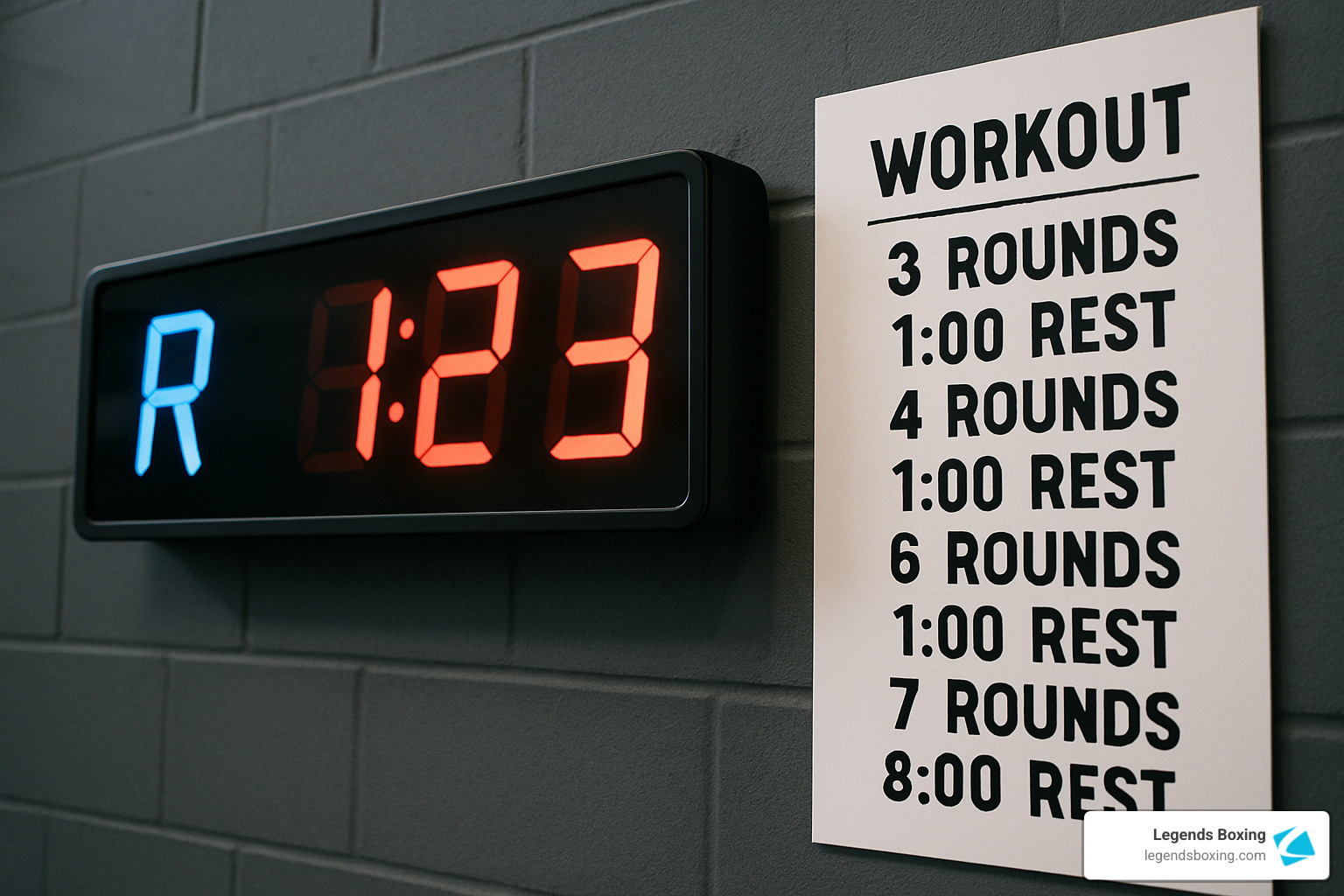
After your warm-up, structure your main workout around 5 rounds of 3 minutes on the bag with 1-minute rest periods. This mirrors how professional boxers train and builds the specific conditioning your body needs for sustained punching power.
Finding Your Training Sweet Spot
| Beginner | Advanced | |
|---|---|---|
| Sessions per week | 2–3 | 4–5 |
| Rounds per session | 3–4 | 5–6 |
| Focus | Technique first | Technique + intensity |
| Power output | 50–70% | 70–90% |
| Combinations | Basic | Complex sequences |
| Session length | 15–30 minutes | 30–45 minutes |
Beginners should train 2–3 times per week, giving their bodies time to recover and adapt. Your hands, wrists, and shoulders need time to build up the conditioning for regular impact. Advanced practitioners can handle 4–5 weekly sessions — but listen to your body. Overtraining doesn't make you tougher; it makes you slower, weaker, and more prone to injury.
Consistency beats intensity every time. It's better to show up three times a week with good form than to go all-out once and spend the rest of the week recovering.
Track Your Progress Like a Pro
Modern technology makes tracking improvement easier than ever. Punch-tracking apps can measure your output volume and power over time, giving you concrete data on your progress. Don't overlook the power of video review either — record yourself monthly to spot technique improvements and catch persistent flaws before they become bad habits.
Avoiding Rookie Mistakes
Even with perfect programming, bad habits can sabotage your progress:
- Dropping your guard — keep those hands up constantly, even when the bag isn't "hitting back"; you're building defensive muscle memory
- Pushing punches instead of snapping them — your punches should snap like a whip, not push like you're moving furniture; pushing creates arm fatigue without building real power or speed
- Standing still — circle the bag, step in and out of range, and practice angle changes with every combination; movement is what separates real boxers from heavy bag bashers
- Ignoring proper breathing — exhale with every punch to maintain oxygen flow and power output; holding your breath during combinations is like trying to drive with the parking brake on
Frequently Asked Questions About Heavy Bag Training
How hard and how often should I hit the bag?
Here's the truth that might surprise you: hitting harder doesn't automatically make you better. Start with 50–70% of your maximum power until proper form becomes second nature. Think of it like learning to drive — you don't floor the gas pedal during your first lesson. Once your technique is solid, gradually ramp up to 80–90% intensity for power-focused heavy bag punching drills.
Training frequency should match your experience level. Beginners need 2–3 sessions per week with at least one rest day between workouts — your hands, wrists, and shoulders are adapting to impact stress they've never experienced before. Advanced practitioners can handle 4–5 weekly sessions, but vary your intensity. Even professional boxers have light days mixed with intense training.
What's the difference between a heavy bag, double-end bag, and freestanding bag?
Each bag type serves a specific purpose in your boxing development:
Heavy bags (4–5 feet tall, ceiling-mounted) are the workhorses of boxing training. They provide maximum resistance for building knockout power and are perfect for all the power-building drills covered in this guide.
Double-end bags are smaller, denser bags connected to both the floor and ceiling with elastic cords. They bounce back rapidly when hit, forcing you to react quickly — incredible for developing speed, accuracy, and hand-eye coordination that heavy bags simply can't provide.
Freestanding bags solve the installation problem many people face at home. Instead of ceiling mounting, they use a weighted base for stability. While convenient and portable, they tend to move around more during intense power training compared to hanging bags.
At Legends Boxing, we use all three types because each one develops different skills.
How do I mix heavy bag punching drills with sparring or pad work?
Think of each training method as serving a unique purpose:
- Heavy bags build your power foundation and conditioning base
- Pad work with a partner develops timing, combination flow, and reactive skills
- Sparring applies everything under real-time pressure with an unpredictable opponent
A balanced weekly schedule might include two heavy bag sessions, one pad work session, and one sparring session. Bag work builds your engine, while pad work and sparring teach you how to drive it effectively. You need both components to become a complete boxer, whether your goal is fitness, competition, or just having fun while getting in incredible shape.
Start Your Heavy Bag Journey Today
Heavy bag punching drills aren't just another workout trend — they're a complete game-changer that delivers everything your body and mind have been craving. Where else can you burn up to 700 calories an hour while building real functional strength and releasing the stress that's been building up all week?
Start with the basic drills covered here — focus on proper form rather than trying to knock the bag across the room. Your technique will improve with each session, and before you know it, you'll be flowing through combinations like you've been boxing for years. Even the greatest fighters started exactly where you are right now.
The improvements come faster than you'd expect when you stay consistent. Track your journey — count punches, record monthly videos, or simply notice how much better you feel walking out of each session.
At Legends Boxing, we've watched thousands of members transform their fitness and confidence through structured heavy bag programs. Our coaches make sure you learn the right way from day one, so you can focus on having fun while getting the best workout of your life.
Find a Legends Boxing near you across Utah, Florida, and Texas — or book your first free class today. Your stress levels, your strength, and your confidence are all about to get a serious upgrade.