
Punch Up Your Routine: Best Heavy Bag Exercises to Try Today
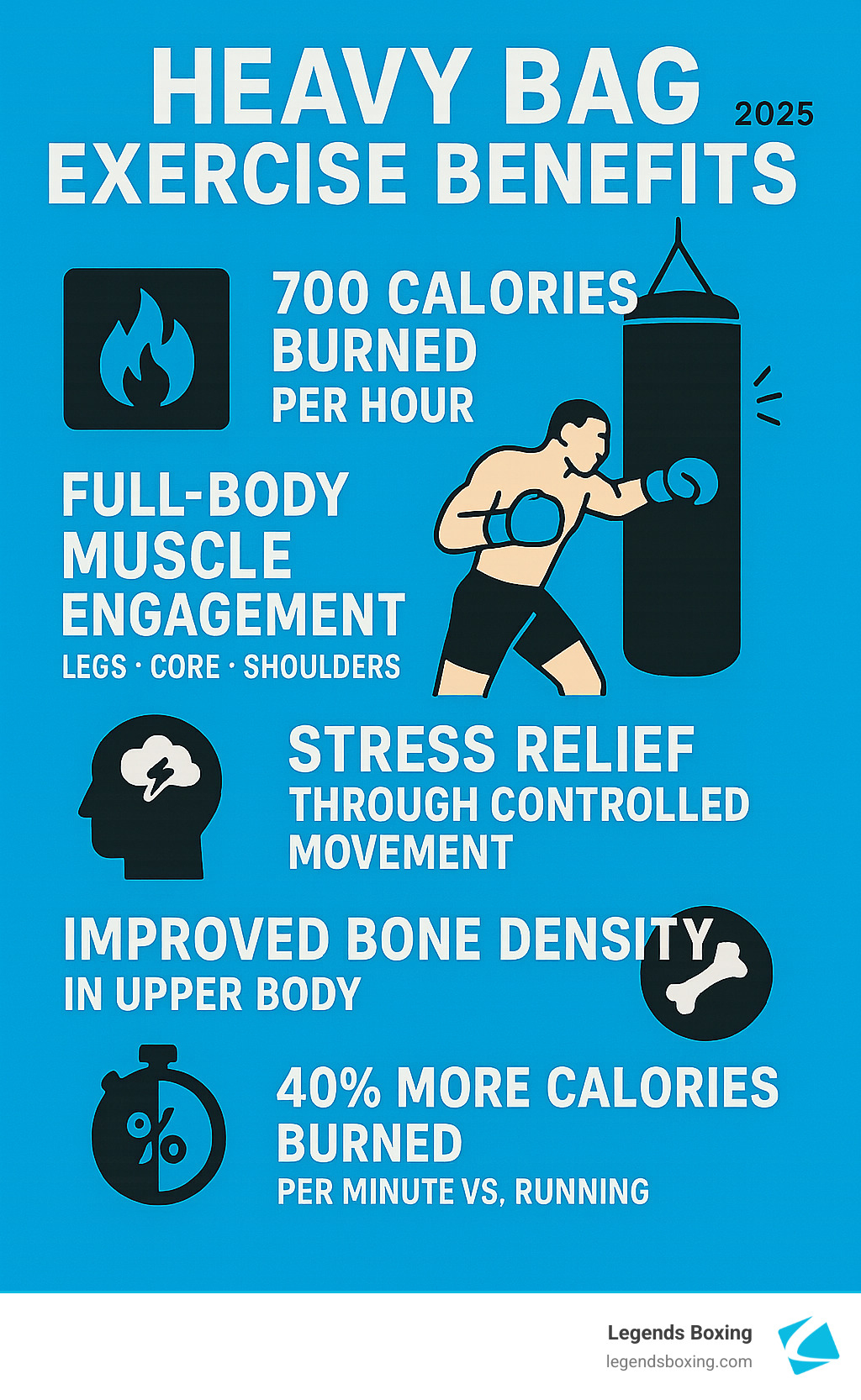
Heavy punching bag exercises combine cardio, strength training, and stress relief in a single session that burns up to 700 calories per hour — 40% more per minute than running. This guide covers 10 power, speed, and endurance drills, proper gear setup, how to structure your session from warm-up to cool-down, and the common mistakes that hold beginners back.
Why Heavy Punching Bag Exercises Transform Your Fitness Game
Heavy punching bag exercises offer one of the most effective full-body workouts you can do. They combine cardio, strength training, and stress relief in a single, engaging session that burns up to 700 calories per hour.
Top Heavy Punching Bag Exercises:
- Jab-Cross Combinations — build basic striking power and coordination
- Hook-Uppercut Sequences — develop rotational strength and core stability
- Plank Punches — combine core work with striking for balance training
- Kick-Punch Combos — full-body engagement with Muay Thai elements
- Power Shot Intervals — high-intensity bursts for maximum calorie burn
- Footwork Circles — movement drills that improve agility and ring mobility
The heavy bag forces your entire body to work together. Every punch starts from your feet, travels through your core, and explodes through your fists — creating functional strength that translates to real-world power.
Why Heavy Bags Beat Other Cardio:
- More engaging than running on a treadmill
- Builds muscle while burning fat
- Releases stress through controlled aggression
- Improves hand-eye coordination and reflexes
- Works both anaerobic and aerobic energy systems
Robby Welch, National Head Coach at Legends Boxing, has over two years of experience designing heavy punching bag exercise programs for thousands of members — from complete beginners to competitive fighters.
Heavy Bag Benefits Backed by Science
When most people think about heavy punching bag exercises, they picture a basic cardio option. But the science tells a much more interesting story.
Bone Density: Research on boxing and bone density reveals something remarkable — female boxers maintain incredibly strong bones despite having low body fat and burning massive amounts of energy. Why? Because boxing delivers something most cardio can't: repetitive upper body impact that actually builds bone density. While your friends are doing endless hours on the elliptical, you're literally building stronger bones with every punch.
Cardiovascular Output: Your heart goes into overdrive during intense bag work — heart rates in the high triple digits, the kind of cardiovascular challenge that builds both aerobic capacity and explosive power simultaneously.
Full-Body Muscle Activation: Every muscle fires together when you throw a proper punch. Your legs drive the power, your core transfers it, and your shoulders and back deliver it. The bag doesn't lie — it forces you to generate real force, not just go through the motions.
Neurological Training: Hitting a moving target while maintaining balance and form is like playing chess with your whole body. Your hand-eye coordination improves, balance becomes rock-solid, and overall body awareness sharpens.
Calorie Burn: A 180-pound person torches 500–700 calories per hour during bag work — equivalent to running a 7-minute mile pace, except you're having fun and building muscle at the same time.
Why a 100-lb vs. 300-lb Bag Feels Different
The weight of your bag completely changes your workout. The half-bodyweight rule is a reliable starting point: if you weigh 200 pounds, start with a 100-pound bag.
- Lighter bags (100–150 lbs) swing and dance when you hit them, teaching you timing and accuracy because you have to chase your target — perfect for beginners building confidence and form
- Heavier bags (200–300 lbs) barely budge, forcing you to generate maximum power with every strike — serious muscle building, but they demand perfect technique
Start with a lighter bag to master your technique, then work up to the heavy stuff as your power and conditioning improve.
Gear Checklist Before You Swing
Getting the right equipment isn't optional — it's the difference between building skills and building injuries.
Essentials:
- Hand wraps (180-inch cotton) — your foundation; wrap wrists 3–4 times, weave between each finger to secure knuckles, then finish with several wraps across the knuckles themselves
- Boxing gloves (12–16 oz for bag work) — heavier gloves protect your hands better and increase workout intensity
- Cross-training shoes — good ankle support for moving around the bag
- Athletic wear you don't mind soaking through
Bag Options:
| Type | Height | Best For |
|---|---|---|
| Standard heavy bag | 4–5 ft | Learning basic combinations, home use |
| Free-standing bag | 4–5 ft | No ceiling mounting required |
| Teardrop / wrecking ball | Varies | Punching and kicking variety |
Setup Safety Checklist:
- Never hit the bag without wraps and gloves
- Check that hanging bags are securely mounted before throwing power shots
- Properly weight free-standing bags at the base
- Keep the area around the bag clear for movement
- Stand at arm's length from the bag — when you extend your arm, your fist should just barely touch the surface
- Start with lighter punches and build up gradually
Heavy Punching Bag Exercises: 10 Power, Speed & Endurance Drills
Here's where the real fun begins. These drills are organized into three categories targeting different aspects of fitness: power, speed, and endurance. Each serves a unique purpose in building boxing skills and conditioning.
The beauty of boxing rounds: Most workouts use 3-minute rounds with 1-minute rest periods. This isn't just tradition — it's the optimal work-to-rest ratio for building both skill and cardiovascular fitness. You'll be amazed how much you can accomplish in three focused minutes.
Power Drills
Power is where you'll feel the biggest confidence shift. These heavy punching bag exercises help you generate serious force from your entire body — not just your arms.
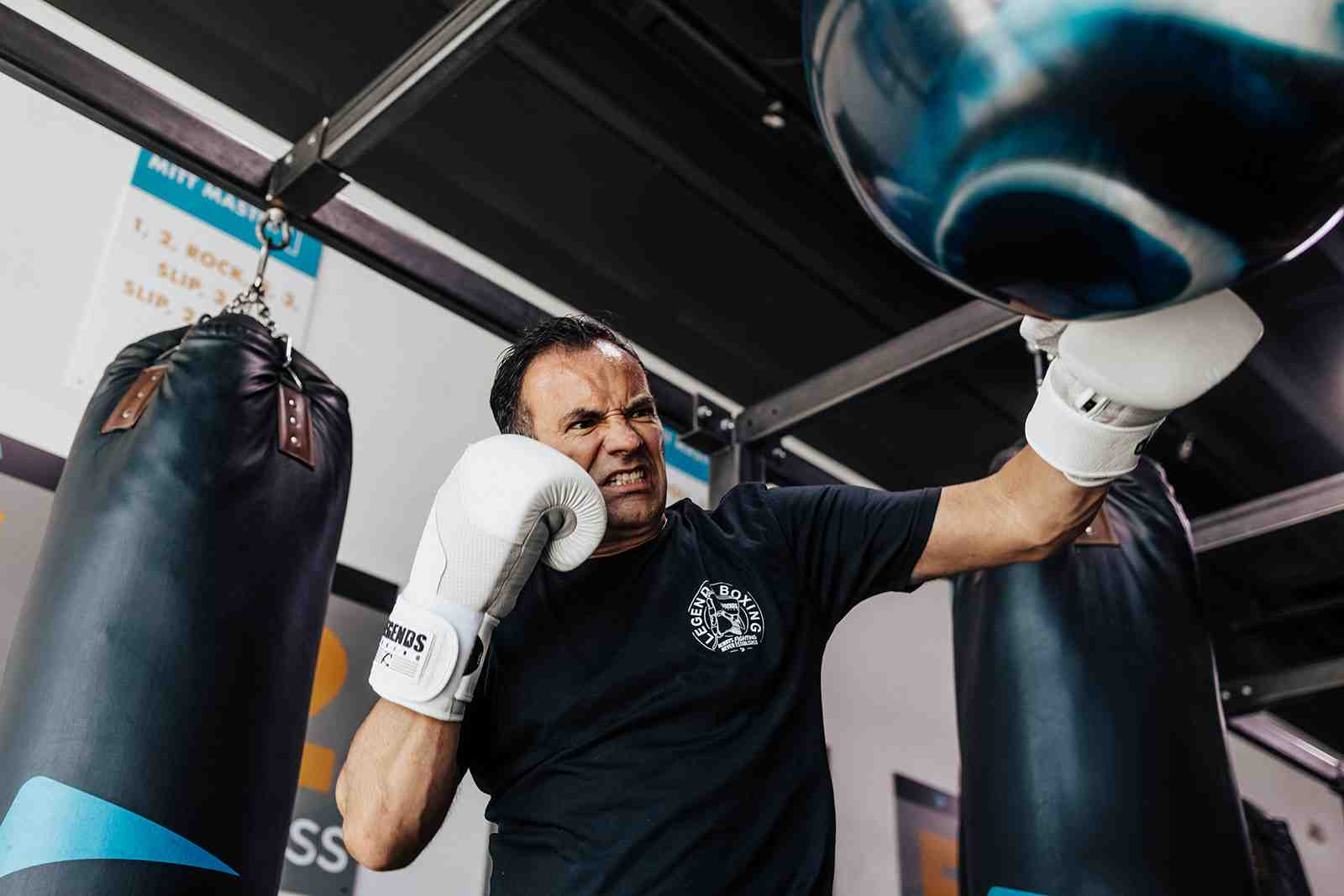
The Punching Power Drill is the go-to exercise for building devastating power. Perform six 3-minute rounds, dedicating each round to perfecting one specific punch: jabs → crosses → left hooks → right hooks → left uppercuts → right uppercuts. Throw each punch as hard as possible while maintaining perfect form.
What makes this drill effective is the focused repetition. When you only think about one punch for three minutes, you learn to generate power from your legs and hips — where real punching power actually originates.
Hip Rotation Power Shots teach the "pouring a glass" motion that transfers maximum power through your fist. Practice this torque movement during 30-second intervals of maximum power shots, followed by 30 seconds of light movement to recover.
Body Shot Blasters alternate between head-level and body-level punches for 2 minutes, focusing on driving through the bag rather than just hitting the surface. This teaches you to change levels while maintaining power — a skill that translates to incredible functional strength.
Speed & Accuracy Drills
Speed work is where boxing becomes almost meditative. These drills sharpen reflexes and dramatically improve hand-eye coordination.
The Flash Combo Drill makes your hands lightning fast through quick two-punch combinations focused on speed over power:
- Jab-cross for 30 seconds
- Double jab for 30 seconds
- Jab-hook for 30 seconds
- Hook-cross for 30 seconds
- Rest 1 minute, repeat
Counter-Puncher Training combines defensive movement with quick counters: slip left and throw a right cross, slip right and throw a left hook. This five-round drill improves reaction time and accuracy while moving — skills that carry over to every sport.
Alternating Head and Body Shots teach your brain to attack different targets fluidly:
- Jab to head → cross to body
- Hook to head → hook to body
- Uppercut to body → cross to head
Endurance & Core Finishers
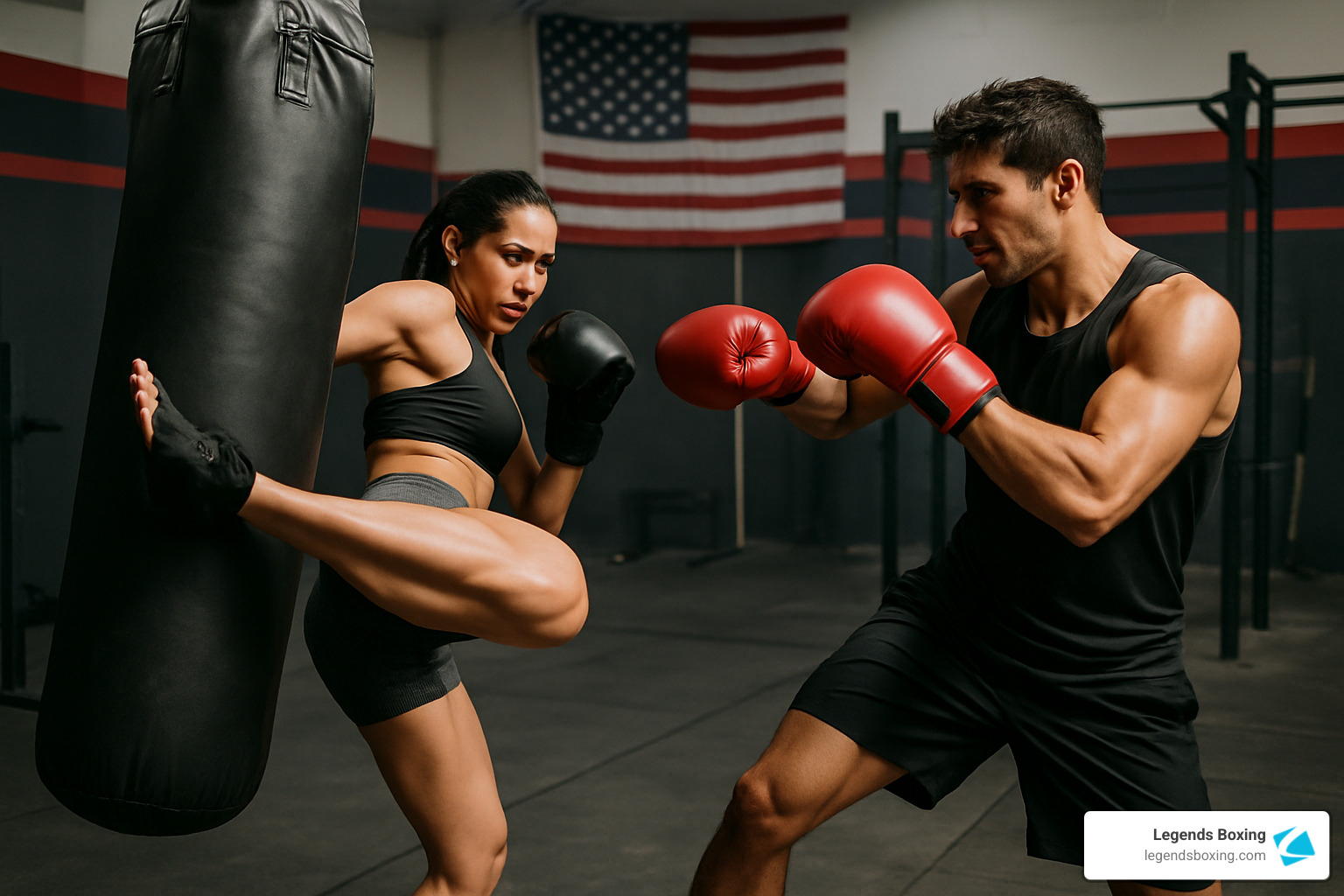
The Marathon Man Drill (popularized by Floyd Mayweather's team) builds unbelievable endurance: throw nonstop punches for three full minutes without stopping. Start with light shots and gradually increase intensity throughout the round. Complete at least three rounds to truly test your limits.
Plank Punches are brutal and effective. Get into a plank position in front of the bag and alternate punching with each hand. Perform for 5 minutes, focusing on balance and form over power — your core will thank you (eventually).
Boxer Sit-Ups target your core while building punching endurance. Sit on the floor facing the bag, perform a sit-up, and punch the bag at the top of the movement, alternating hands with each rep. This builds the core strength essential for generating power in all your punches.
Kick-Punch Combinations add a Muay Thai element that takes your workout to the next level:
- Two lead kicks → left cross → rear kick
- Low kick → jab-cross → high kick
These full-body movements challenge coordination while delivering an incredible conditioning challenge.
The beauty of all these drills: they're fully scalable. Beginners focus on form at lighter intensity; advanced athletes push power and speed to their limits. Every punch teaches you something new about generating force, timing, and coordination.
Structuring Your Heavy Bag Session From Warm-Up to Cool-Down
Think of your session like a great story — it needs a solid beginning, an exciting middle, and a satisfying ending. Skip any part, and you're setting yourself up for injury or disappointment.
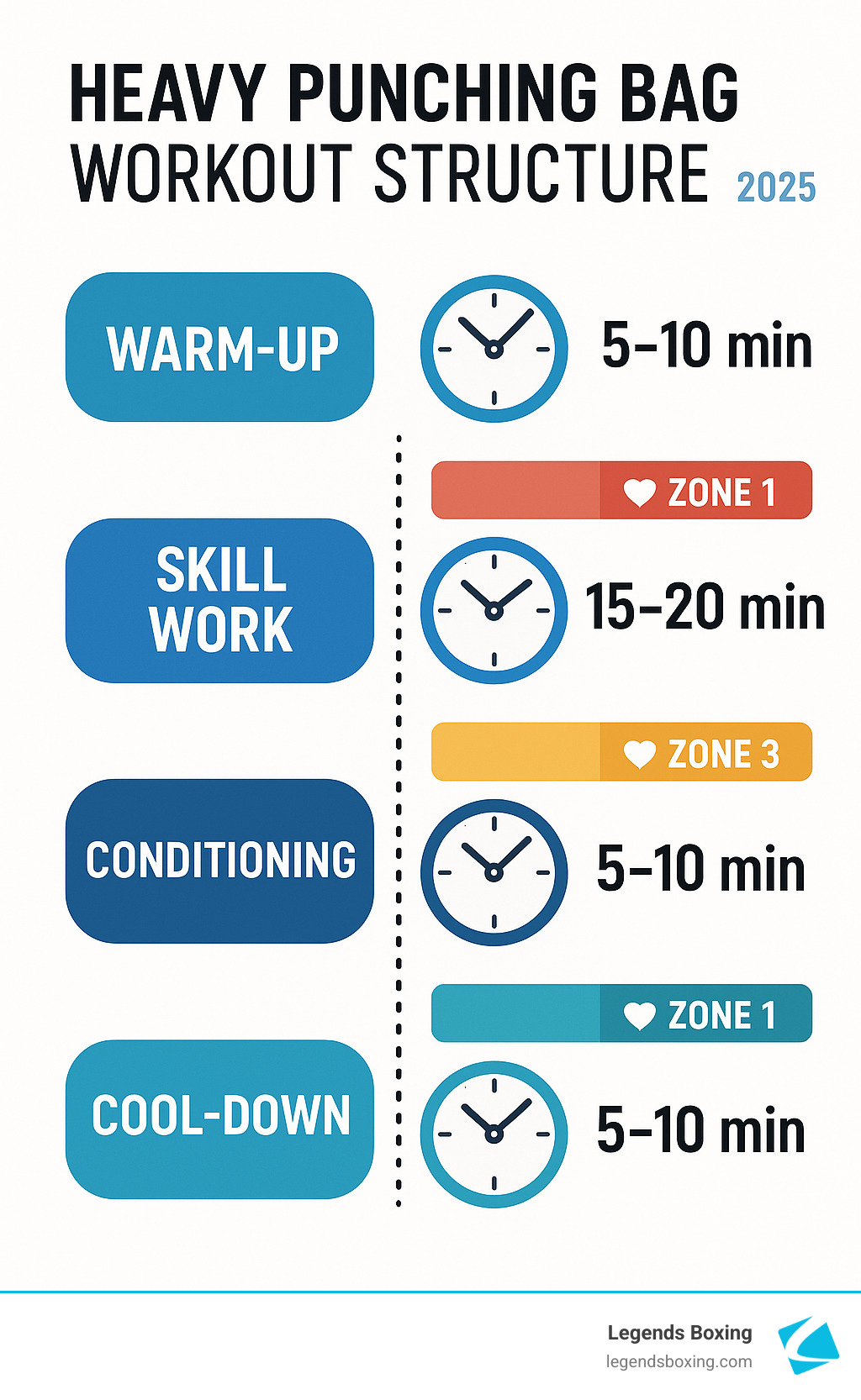
Session Blueprint:
| Phase | Duration | Purpose |
|---|---|---|
| Warm-Up | 5–10 min | Prepare body for action |
| Skill Work | 15–20 min | Practice technique and combinations |
| Conditioning | 5–10 min | Push your limits, maximize sweat |
| Cool-Down | 5–10 min | Safely return to normal heart rate |
Beginner vs. Advanced Structure:
| Beginner | Advanced | |
|---|---|---|
| Rounds | 3 × 2 minutes | 5 × 3 minutes |
| Rest | 1 minute | 1 minute |
| Intensity | 50–60% power | 70–80% power |
| Focus | Form | Intensity |
| Frequency | 2–3 sessions/week | 4–5 sessions/week |
Warm-Up Flow
Never skip your warm-up. Cold muscles are like cold rubber bands — they snap under pressure.
Dynamic Stretches (5 min):
- Arm circles forward and backward — prepare shoulders
- Leg swings side-to-side and front-to-back — wake up hips
- Hip circles in both directions
- Shoulder rolls
Movement Preparation (3–5 min):
- Light shadowboxing — throw punches in the air like you're fighting an invisible opponent
- Boxer's shuffle around the bag
- High knees and butt kicks
- Jumping jacks
Technique Review (2 min): Practice your stance, throw slow and controlled punches, and focus on form over speed or power.
Cool-Down & Recovery
What you do after your workout determines how you'll feel tomorrow.
Immediate Cool-Down (5 min):
- Keep moving lightly to gradually lower your heart rate
- Deep breathing exercises
- Basic stretches for shoulders, back, and hips
Full Recovery Protocol:
- Hydrate — replace the fluids you lost; don't wait until you feel thirsty
- Sleep 7–9 hours — this is when your muscles actually rebuild stronger
- Foam roll tight areas, especially shoulders, lats, and legs
- Eat protein within 2 hours post-workout
Note on DOMS: Delayed onset muscle soreness is practically guaranteed when you start heavy bag work. Combat it with light movement on rest days, proper hydration, and gradual intensity increases. Your muscles don't grow during the workout — they grow during recovery.
Avoid These Common Mistakes & Recover Like a Pro
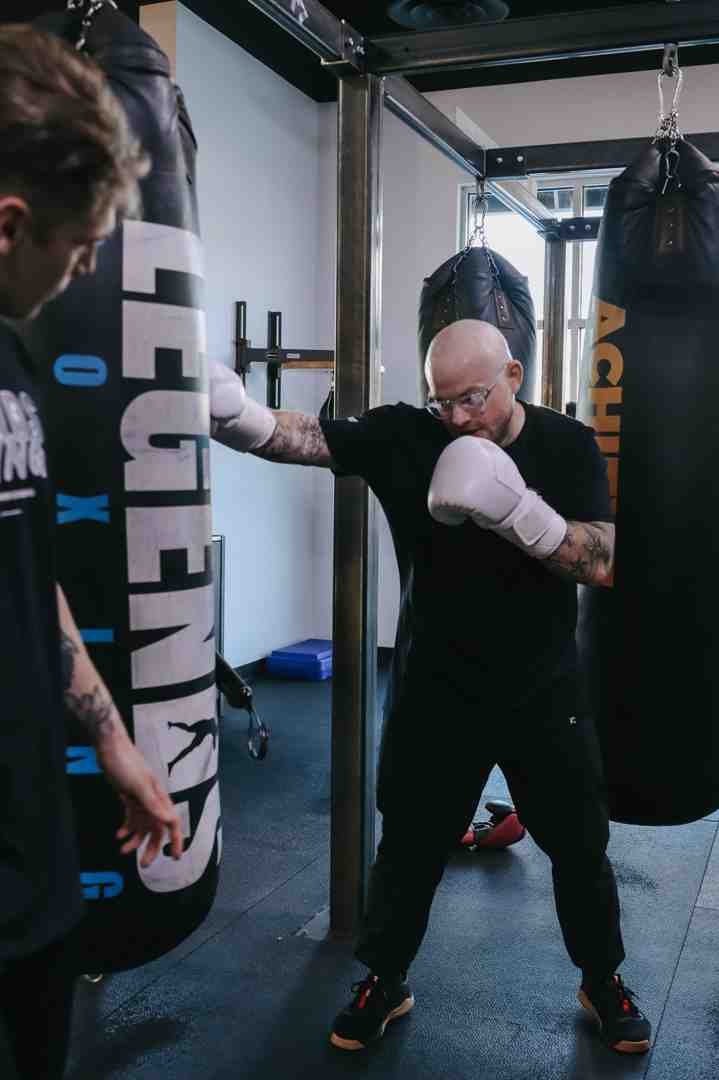
Even experienced athletes make these mistakes when starting heavy bag training:
Mistake #1: Dropping Your Guard Many people drop their hands after throwing punches, creating bad habits. Keep your hands up by your cheeks at all times — even when you're tired.
Mistake #2: Arm Punching Throwing punches with just your arms is ineffective and exhausting. Power comes from your legs and core. Drive from your calves through your hips and waist — your arms are just the delivery mechanism.
Mistake #3: Over-Powering Beginners often try to throw every punch at 100% power. This leads to poor form and quick fatigue. Start at 50–70% and focus on technique — a technically sound punch at 70% always beats a sloppy punch at 100%.
Mistake #4: Poor Breathing Holding your breath during combinations will gas you out fast. Exhale sharply with each punch, inhale during recovery movements.
Mistake #5: Standing Still Keep moving — circle the bag, step in and out, practice slips and ducks. Footwork is half the workout.
Mistake #6: Overtraining Daily heavy bag work causes overuse injuries. Take rest days and vary training with speed bags, shadowboxing, or other activities.
Pre-Round Mental Checklist:
- ✓ Hands up by your cheeks
- ✓ Feet shoulder-width apart
- ✓ Knees slightly bent
- ✓ Core engaged
- ✓ Eyes on target
- ✓ Ready to move
Frequently Asked Questions
How often should I train on a heavy bag?
Start with 2–3 sessions per week if you're new to boxing. Your hands, wrists, and shoulders need time to adapt to repetitive impact — each session 15–30 minutes when beginning.
Think of it like learning to play guitar: your fingertips need to toughen up before you can practice for hours. Your knuckles and wrists are adjusting to a completely new type of stress.
As conditioning improves, you can bump up to 4–5 sessions weekly. But listen to your body — if your hands are still sore from yesterday's session, take a rest day and do shadowboxing instead.
Can heavy bag work help me lose weight and build muscle?
Yes — emphatically. Heavy punching bag exercises hit the fitness jackpot: fat burning and muscle building simultaneously.
The calorie burn is exceptional (500–700 calories per hour for a 180-pound person), but here's what really sets it apart: the bag fights back. Every punch meets resistance, which forces your muscles to work harder than during regular cardio. Traditional steady-state cardio can break down muscle tissue; boxing preserves and builds it.
- Upper body — shoulders, chest, back, and arms get sculpted through constant punching
- Core — becomes a powerhouse from generating rotational force with every hook and cross
- Lower body — legs and glutes develop strength since every powerful punch starts from the ground up
What's the safest way to increase punching power?
Power development is all about patience and progression:
- Weeks 1–2: Pure technique at 50% power — building the foundation for everything
- Weeks 3–4: 60–70% power — you'll feel that satisfying thud when you connect well
- Weeks 5–6: Up to 80% power — form is solid, body has adapted to the impact
- Week 7+: Occasional 90–100% power shots only when technique is perfect
Power comes from your entire body working as a kinetic chain: calves → legs → core → shoulders → fist. Master that chain before worrying about maximum power output.
Your Strongest, Most Stress-Free Self Is Waiting
Heavy punching bag exercises deliver the perfect storm of fitness benefits — serious calorie burn, full-body strength building, and stress relief that actually feels good. You're not going through the motions on a treadmill. You're developing real power, coordination, and confidence with every punch.
At Legends Boxing, we've watched thousands of members find what makes heavy bag training so addictive. It's the 700 calories torched in an hour, yes — but it's also the feeling of walking out after a tough session knowing you conquered something genuinely challenging.
No experience required. Our coaches start everyone at square one, teaching proper hand wrapping, basic stance, and safe punching technique. We provide all the equipment — gloves, wraps, bags — so you can focus on learning and sweating. Your change starts with consistency, not perfection. Two to three sessions per week will build your skills and conditioning steadily.
Find your nearest Legends Boxing location and experience your first session — or book your free workout now. The heavy bag is waiting. Your strongest, most stress-free self is just a few workouts away.