
Knockout Deals: Top Heavy Punching Bags for Every Fighter
Heavy punching bags offer an effective full-body workout combining cardio, strength training, and stress relief. This guide covers every bag type, how to choose the right weight and material, top-rated models for every budget, and the safety essentials that keep your wrists and joints healthy.
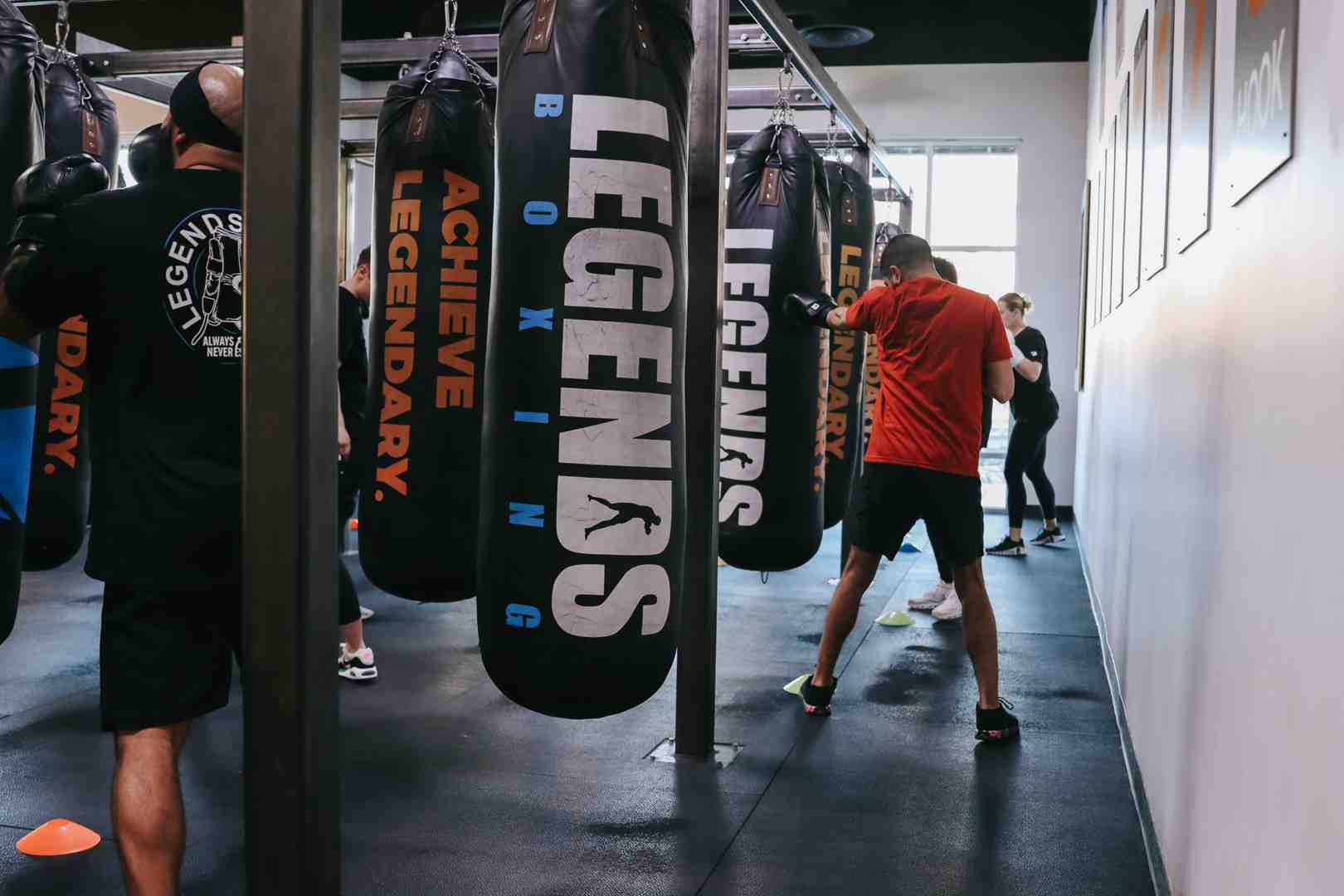
Why Heavy Punching Bags Deserve a Spot in Your Workout Routine
Heavy punching bags offer an effective full-body workout, combining cardio, strength training, and stress relief. Whether you want to build power, improve endurance, or blow off steam, the right heavy bag can transform your fitness routine.
A heavy bag workout strengthens your core, improves confidence, and provides serious stress relief. It engages your entire body — improving reaction time, balance, power, and coordination — all in a single session.
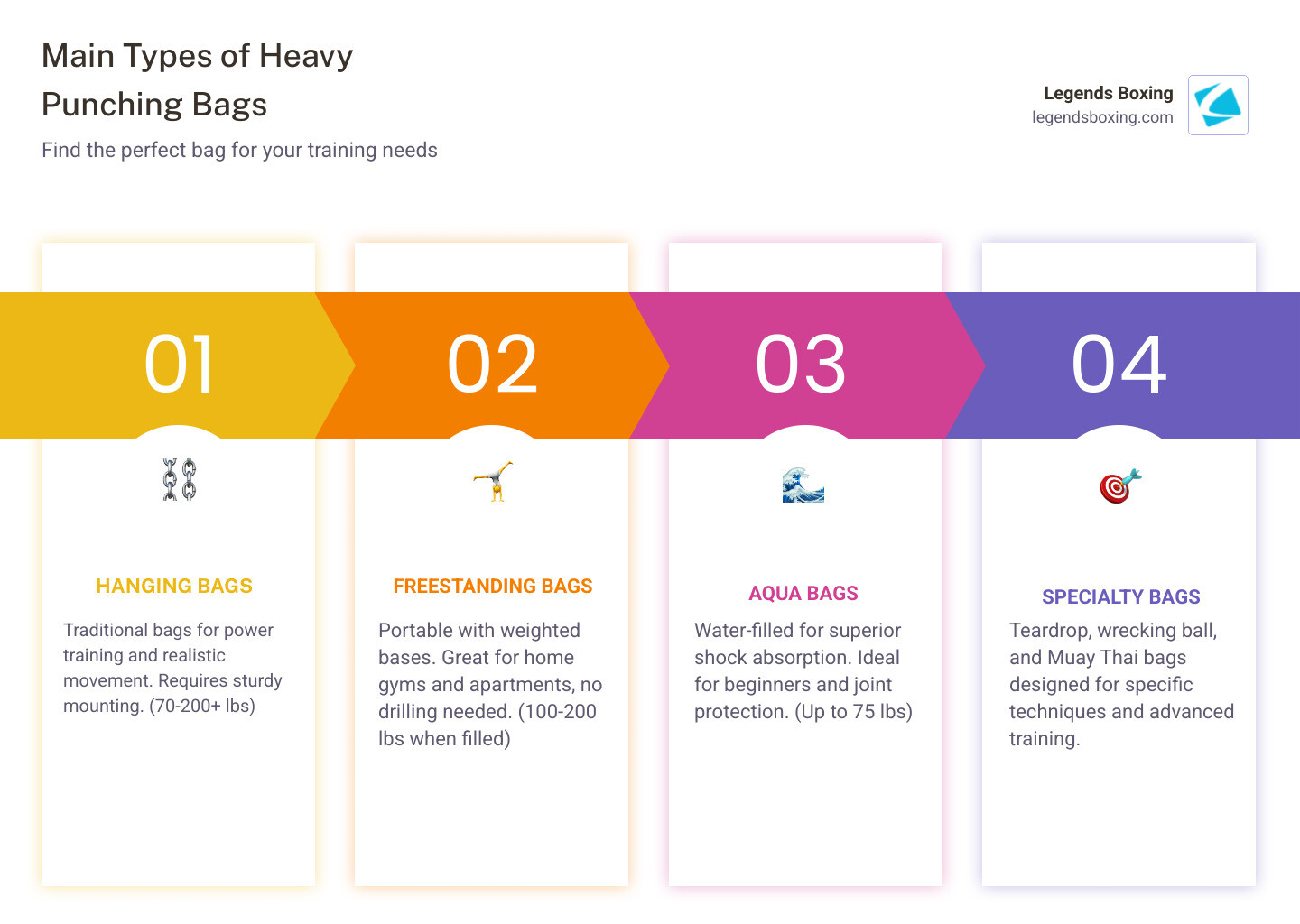
Quick guide to the four main types:
| Type | Best For | Weight Range |
|---|---|---|
| Hanging Bags | Power development and realistic swing movement | 70–200+ lbs |
| Freestanding Bags | Portability, home gyms, no drilling required | 100–200 lbs filled |
| Aqua Bags | Shock absorption, beginners, joint protection | Up to 75 lbs |
| Specialty Bags | Specific techniques — teardrop, wrecking ball, Muay Thai | Varies |
When choosing a bag, the key factors are:
- Weight — aim for roughly half your body weight
- Material — leather or high-quality vinyl for durability
- Height — 3–4 feet for beginners, 5+ feet for experienced users
- Filling — foam, fabric, sand, or water depending on your needs
- Type — hanging vs. freestanding based on your space
I'm Robby Welch, National Head Coach at Legends Boxing. I've helped thousands of members find the perfect heavy punching bags for their goals, and my experience across our nationwide locations gives me unique insight into what works for different fitness levels.
Choosing Your Champion: Key Features for the Perfect Heavy Punching Bag
Picking the perfect heavy punching bag means matching it to your training goals, skill level, and space. Let's look at the key features that separate a good bag from a great one.
Hanging vs. Freestanding Bags
Your first choice is between a traditional hanging bag and a portable freestanding one.
Hanging bags offer 360-degree access for footwork and a realistic swing that improves timing. The trade-off is they require drilling into ceiling joists or a wall mount, making them a permanent fixture that can create noise for neighbors.
Freestanding bags are portable and require no drilling — perfect for apartments. Just fill the base with sand or water. The trade-off is they can move during heavy hits if the base isn't heavy enough, and they lack the dynamic swing of a hanging bag.
For installation, hanging bags need sturdy mounting and clearance to swing. Freestanding bags need a level surface and a properly filled base for stability.
How to Choose the Right Weight and Material
The right weight and material are crucial for an effective and safe workout. A good rule of thumb: choose a bag that's about half your body weight.
- Beginner weight — start around 70 lbs; enough resistance without being overwhelming
- Advanced weight — experienced fighters can use 100 lbs or more for power development
A bag that's too light will swing wildly, while one that's too heavy can strain your wrists.
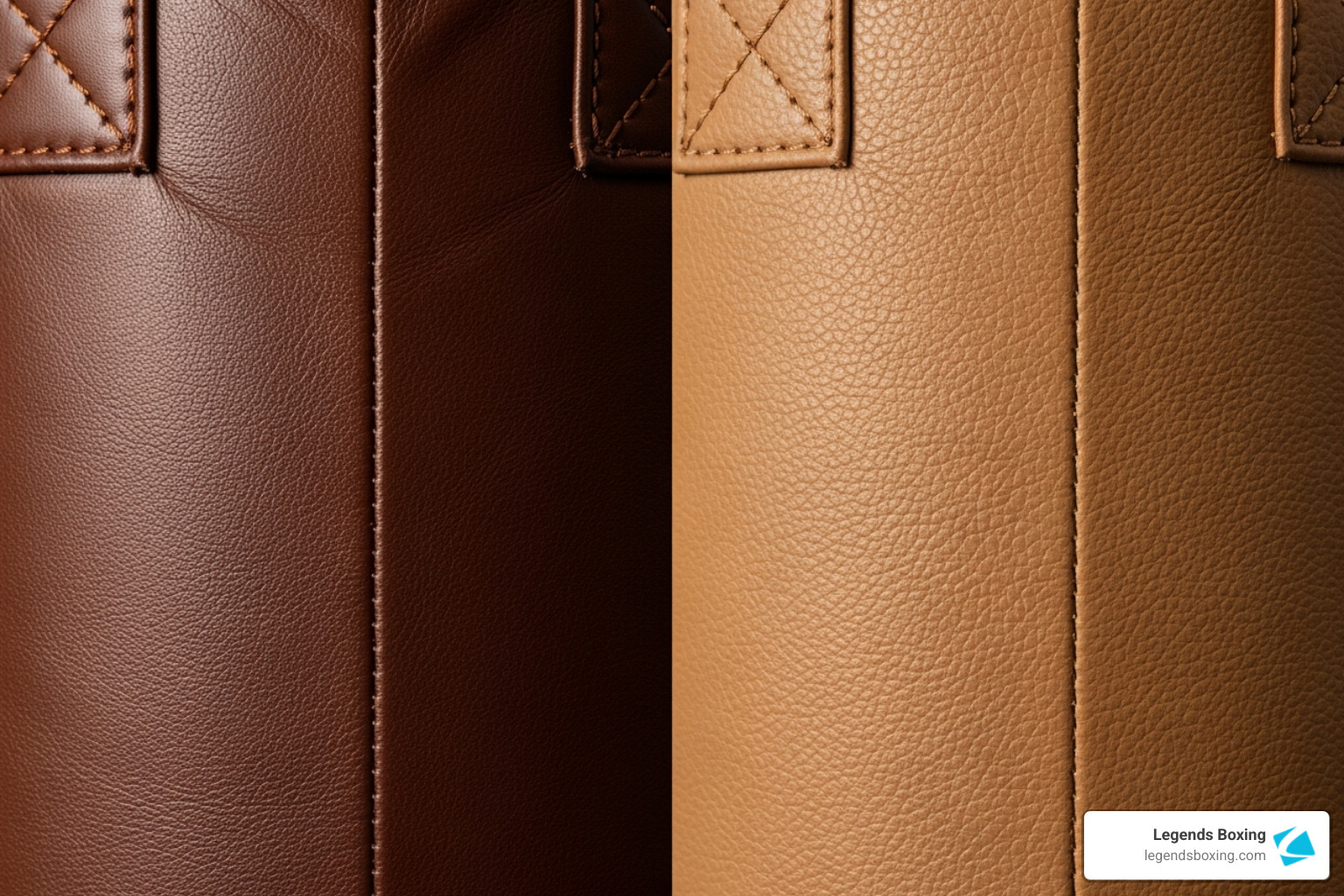
For materials, durability is key:
- Leather — the premium, most durable choice for long-term training
- Synthetic leather (PU leather) — excellent durability, easier to clean, more affordable
- Vinyl — solid, weather-resistant option great for garages or outdoor use
Filled vs. Unfilled Bags
Pre-filled bags offer convenience — ready to use out of the box with a consistent feel — but shipping costs more.
Unfilled bags allow customization and save on shipping. You control the density and feel.
Common fillings:
- Fabric — forgiving on joints, prevents hard spots from forming
- Sand — adds weight, but can create hard spots over time
- Water — aqua bags provide exceptional shock absorption, making them ideal for beginners and joint-conscious fighters
The choice comes down to convenience vs. control. See how we use different equipment in our classes to get a feel for what fits your training style.
The Main Event: Top-Rated Heavy Punching Bags
We've covered the technical details — now let's look at some top-rated heavy punching bags that earn high marks for durability, effectiveness, and value.
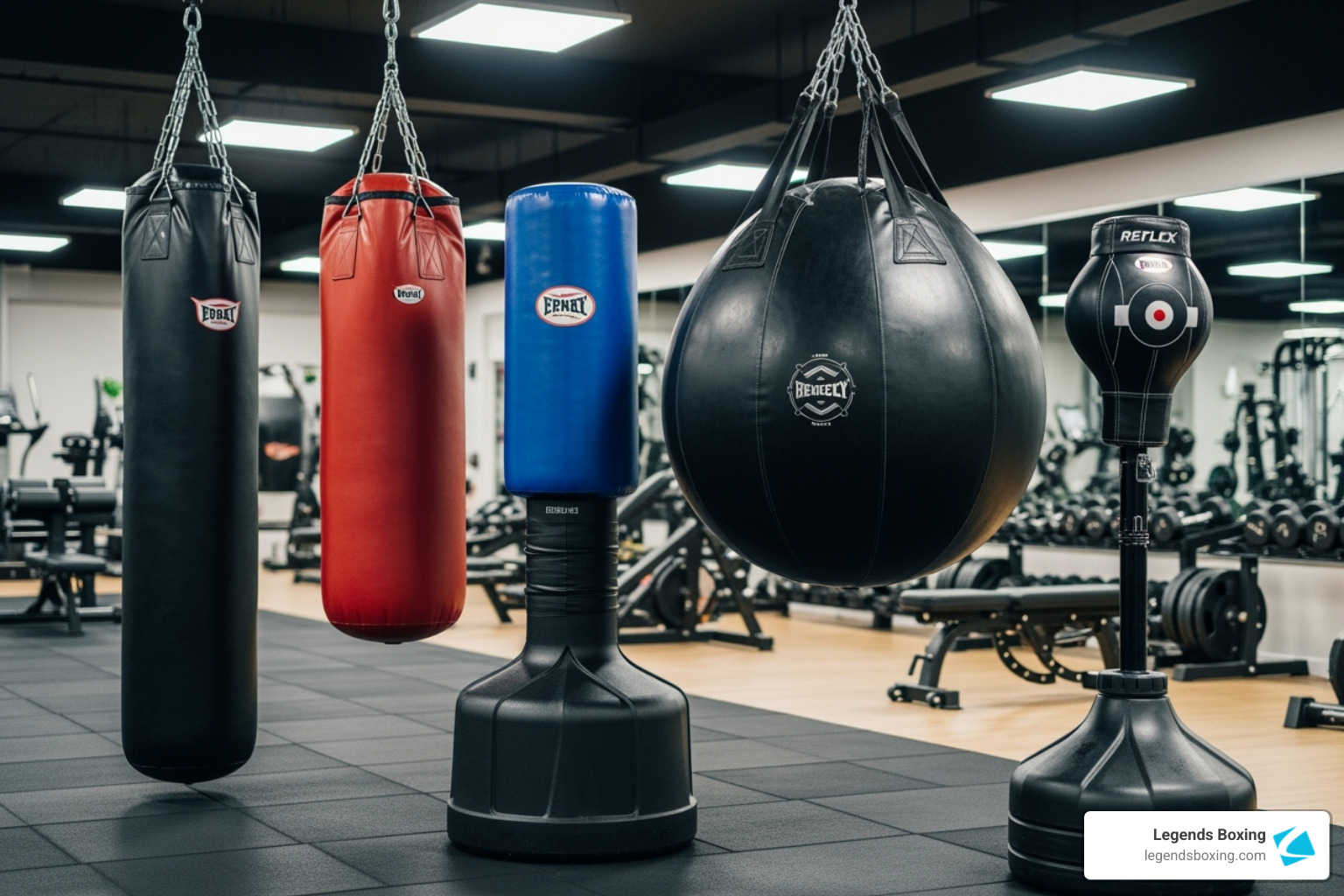
Best Overall: Everlast Single Station Heavy Bag Kit
For an all-in-one solution perfect for beginners, the Everlast Single Station Heavy Bag Kit is a top choice. It includes a 70-pound heavy bag and a freestanding steel stand, providing a complete home gym setup without any drilling. The 70-pound weight offers enough resistance for a great workout without being overwhelming, and its density is forgiving on hands and joints. This kit's value and simplicity make it ideal for starting your boxing journey immediately.
~$349 — available at major retailers.
Best for Beginners: FITVEN Freestanding Punching Bag
The FITVEN Freestanding Punching Bag is a knockout choice for beginners or anyone needing a portable option. Standing 70 inches tall with a 205-pound filled base, it offers excellent stability. The synthetic leather and foam surface is "just right — not too hard and not too soft." Key beginner-friendly features include 12 suction cups for extra stability and built-in shock absorbers gentle on joints, letting you focus on technique without fear of injury.
~$165 — available at major retailers.
Best for Power: Outslayer 100-Pound Punching Bag
For serious power hitters, the Outslayer 100-Pound Punching Bag is built to take a beating. This 100-pound bag is filled with fabric, which prevents hard spots from forming and provides a consistent striking surface that's easier on your hands. It absorbs powerful shots with minimal swing, allowing for continuous training. Backed by a 10-year warranty and often made in the USA, it's a durable long-term partner for developing raw power.
~$195 — available at major retailers.
Best for Kicks: Combat Sports Muay Thai 100-Pound Heavy Bag
Muay Thai practitioners and kickboxers need length, and the Combat Sports Muay Thai 100-Pound Heavy Bag delivers. At 72 inches tall, this 100-pound bag provides a full six feet of striking surface for practicing low, mid, and high kicks. Made from durable synthetic leather, it hangs and provides realistic movement. Its stability allows for precise combinations of punches and kicks without wild swinging — excellent for full-body conditioning.
~$240 (regularly $300) — available at major retailers.
Training, Setup, and Safety
Owning a heavy punching bag is the first step; using it safely and effectively is the next.
How to Use a Heavy Bag for Power, Speed, and Endurance
A heavy bag is a versatile tool for boosting all three training qualities:
Power punches — generate force from the ground up. Drive power from your calves up through your glutes, hips, waist, and torso. Rotate your hips and waist to transfer weight and deliver powerful strikes.
Speed drills — focus on quick, snappy combinations. Throw rapid-fire jabs and crosses, pulling your hands back to your guard just as fast as you throw them.
Endurance rounds — mimic a real boxing match with 2–3 minutes of nonstop rounds. Mix power shots with lighter strikes to maintain pace and build cardio.
Footwork — don't stand still. Practice pivoting, stepping around the bag, and slipping and sliding to improve your movement and angles.
Combination practice — blend different strikes (punches, kicks, knees) to create a natural rhythm and a more complete workout.
Our Legends Boxing classes guide you through all of these techniques with expert coaching. Find a gym near you to train with our coaches in person.
Proper Setup and Maintenance
Proper setup is critical for safety and longevity:
- Hanging bags — always anchor to a sturdy ceiling joist or robust wall mount; never use drywall; ensure enough clearance for the bag to swing freely
- Freestanding bags — fill the base completely with sand or gravel for maximum stability (water works but sand provides more weight to prevent sliding)
- Maintenance — wipe down synthetic or vinyl bags with a damp cloth; use a leather conditioner on real leather bags; regularly inspect all straps, chains, and mounting hardware for wear and replace damaged components immediately
Essential Safety Precautions
Using a heavy bag incorrectly can lead to injury. Follow these essentials:
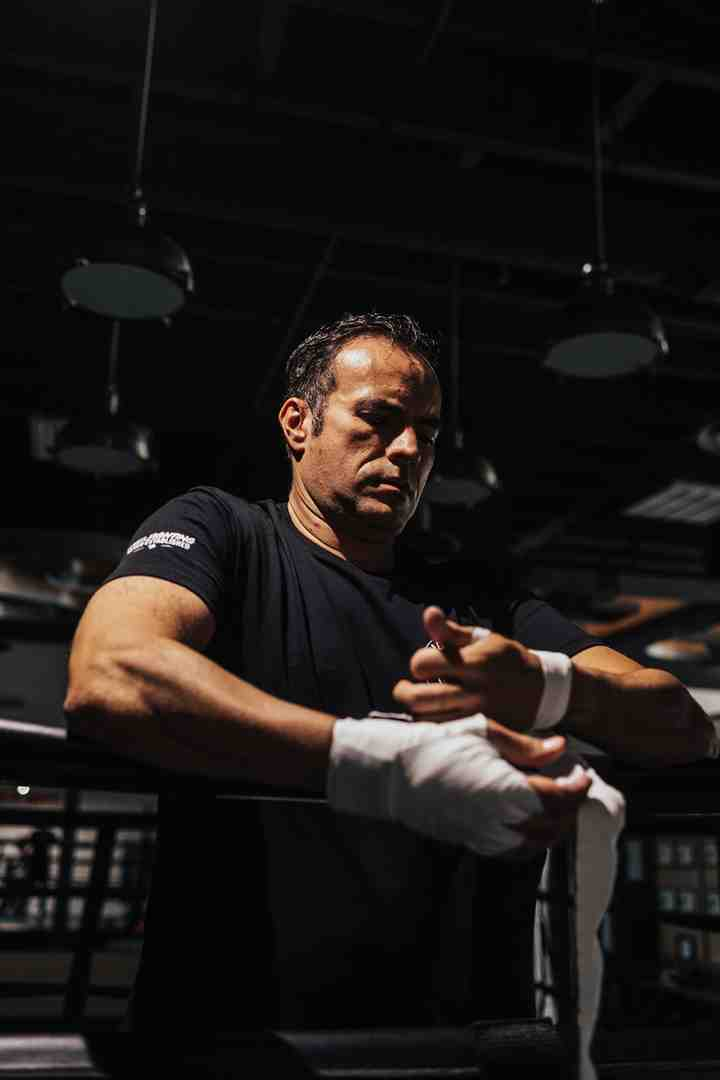
- Hand wraps — always wrap your hands; they are non-negotiable for supporting your wrists and protecting the small bones in your hands
- Boxing gloves — use 12–16 oz gloves to absorb impact and protect your knuckles
- Proper technique — strike with a straight wrist, making contact with your knuckles first; if unsure, work with a qualified instructor
- Correct bag weight — a bag that's too heavy can strain your joints; start at roughly half your body weight
- Warm-up and cool-down — always warm up before and cool down after your session to prevent injury and aid recovery
Frequently Asked Questions
Which type of punching bag is best?
There's no single "best" bag — the right one depends on your goals, space, and skill level:
- Hanging bags — best for power development and realistic movement
- Freestanding bags — ideal for portability and spaces where you can't drill holes
- Aqua bags — excellent for joint protection due to superior shock absorption
- Specialty bags (Muay Thai, teardrop) — designed for specific techniques like kicks and uppercuts
The best bag is the one that fits your needs and that you'll actually use consistently.
Is a 100-pound punching bag too heavy?
It depends on your body weight. The general rule is a bag that's about half your weight. A 100-pound bag is ideal for someone weighing 200 pounds or more, or for advanced fighters who want more resistance. For lighter individuals (150 pounds or less), a 100-pound bag may be too static and could cause strain — a 70-pound bag is a better starting point. Listen to your body; if your wrists ache after sessions, consider a lighter bag.
Does boxing build muscle?
Yes, absolutely. Training on a heavy punching bag is a full-body workout that builds functional, athletic muscle. Every punch engages your legs, hips, core, back, shoulders, and arms. You're developing real-world power, speed, and endurance — not just bulk. In addition to muscle, heavy bag training provides serious cardiovascular benefits, improves coordination, and sharpens your balance and agility. It's one of the most comprehensive workouts available.
Your Next Move
Choosing the right heavy punching bag is a long-term investment in your fitness. The differences between hanging and freestanding bags, key features like weight and material, and top models like the FITVEN, Outslayer, and Combat Sports bags all point toward one conclusion: the right bag matched to your goals and space will transform your training.
Proper setup and safety are paramount. Securely mount your bag, always use hand wraps and gloves, and focus on proper technique — that's how you train safely and consistently for years.
At Legends Boxing, we see members transform themselves every day through results-driven workouts, expert guidance, and a supportive community. No boxing experience required — all you need is the willingness to give it your all.
Book a free workout at Legends Boxing today and experience the heavy bag the right way — or find a location near you across Utah, Florida, and Texas.