
Don't Get Boxed In: The Smart Way to Choose Your Boxing Glove Size
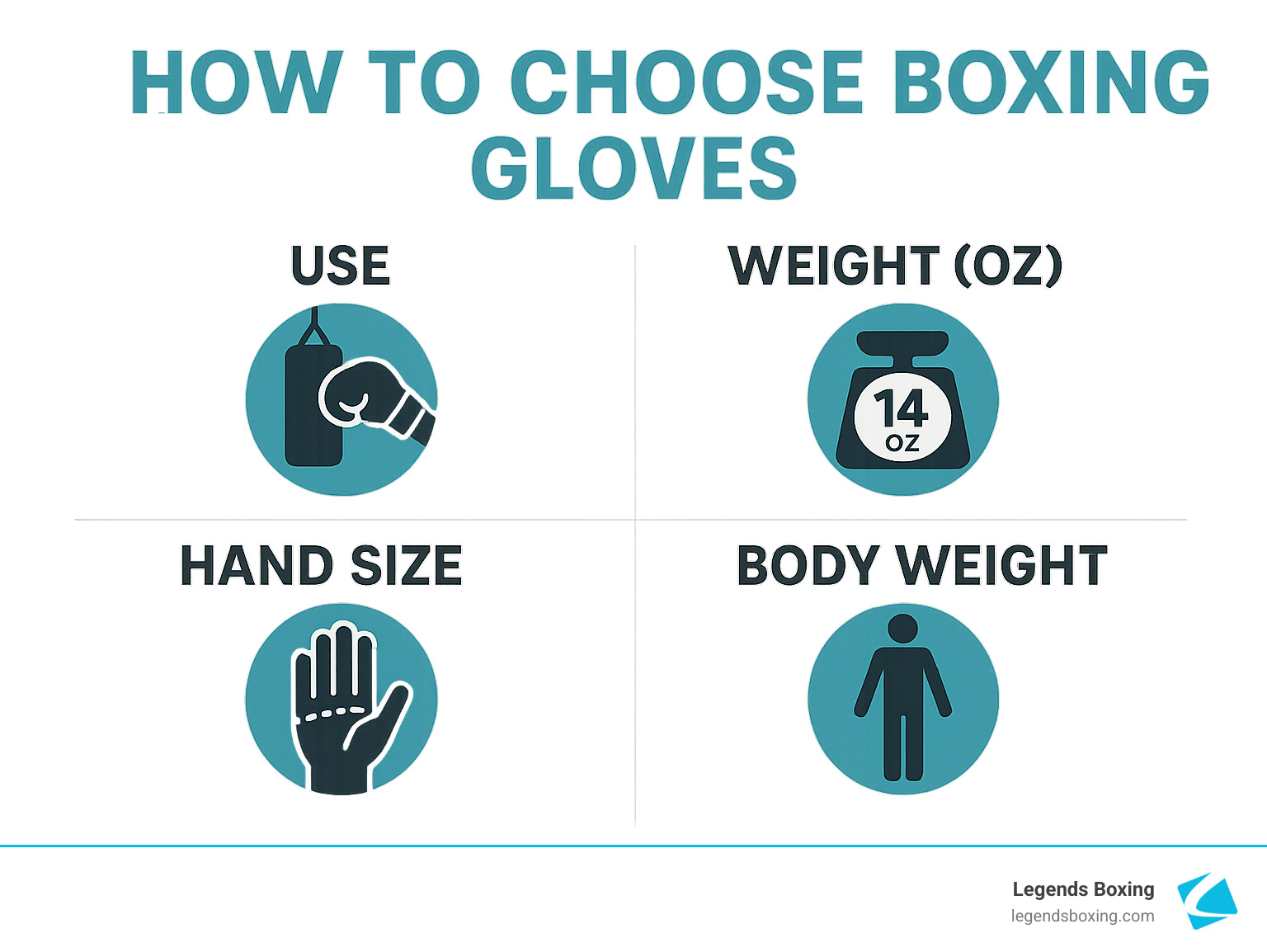
How do I know what size boxing gloves to get? The answer comes down to four things: your hand circumference, your body weight, your training type, and the right fit test. This guide covers every glove type, a two-step sizing method with specific ounce charts, what to look for when you try them on, kids sizing, and answers to the most common glove questions.
Why Getting the Right Boxing Glove Size Matters
How do I know what size boxing gloves to get? Here's the quick answer:
- Measure your hand circumference around your knuckles (excluding thumb)
- Consider your body weight — heavier people need more padding to absorb force safely
- Match to your training type — bag work uses lighter gloves (10–12oz), sparring needs heavier ones (14–18oz)
- Try them on with hand wraps — they should feel snug but never tight
Getting the wrong size boxing gloves is like wearing shoes that don't fit. Too small, and you'll feel pinched with potential numbness in your fingers. Too big, and your hand will float around inside, making every punch feel sloppy and putting your wrists at risk.
The right gloves protect your hands and wrists from injury while helping you throw better punches. Proper fit directly impacts your performance — whether you're hitting the heavy bag or working with a partner.
Most boxing gloves range from 8oz to 20oz, with the weight indicating how much padding protects your hands. Lighter gloves give you speed and better "feel" for your punches. Heavier gloves provide maximum protection for both you and your training partner.
I'm Robby Welch, National Head Coach for Legends Boxing, and I've helped thousands of people find their perfect glove fit over my years in the sport. Understanding how to choose the right glove size has been central to keeping our members safe and performing at their best.
Understanding Glove Types and Ounces
When you're shopping for boxing gloves, you'll see numbers like 10oz, 14oz, or 16oz everywhere. These ounces refer to the amount of padding packed inside each glove, not just the overall weight. More ounces equals more cushioning for your knuckles — and your training partner.
The key to choosing the right glove weight comes down to what you're planning to do with them. Pounding the heavy bag? Technical pad work? First sparring session? Each activity calls for a different level of protection.
| Glove Type | Purpose | Padding Level | Common Weights |
|---|---|---|---|
| Bag Gloves | Heavy bag, pad work, speed drills | Less | 8oz, 10oz, 12oz |
| Training Gloves | All-around training, light sparring, bag work | Medium | 12oz, 14oz |
| Sparring Gloves | Partner sparring, maximum protection | More | 14oz, 16oz, 18oz |
| Competition Gloves | Official bouts, regulated events | Varies | 8oz, 10oz, 12oz |
Bag Gloves
Bag gloves are built for one thing: hitting stuff that doesn't hit back. Whether you're working the heavy bag, speed bag, or focus mitts, these gloves have less padding in the knuckles on purpose. With less cushioning, you can feel your punches land properly, giving you instant feedback on your technique — are you hitting with the right part of your fist? Landing straight?
Just remember: never use bag gloves for sparring. Your training partner won't appreciate the extra impact. Most people do great with 10oz or 12oz bag gloves for heavy bag sessions.
Training Gloves
Think of training gloves as the Swiss Army knife of boxing gear. They're designed to handle almost everything — bag work, pad work, light sparring with a patient partner. Training gloves are perfect if you're just starting out or only want to buy one pair. You'll typically see 12oz and 14oz as the most popular choices.
If you're taking your first class at a Legends Boxing gym, training gloves are usually the way to go.
Sparring Gloves
When you're ready to work with a live partner, safety becomes the top priority for everyone involved. Sparring gloves pack significantly more padding, serving two purposes: protecting your partner from unnecessary punishment and saving your hands from repeated hard impacts.
The standard for most sparring is 16oz gloves — some gyms require them. If you're a bigger person or want maximum protection, 18oz gloves offer even more cushioning. Sparring gloves also have better wrist support built in, which becomes crucial when you're throwing harder punches.
Competition Gloves
Competition gloves play by completely different rules. Unlike training gear that prioritizes safety and comfort, these meet strict regulations while still allowing fighters to score effectively. They have less padding in the knuckles compared to sparring gloves.
The weight depends on your body weight and competition type. In professional boxing, fighters under 147 lbs typically use 8oz gloves, while heavier fighters use 10oz. Unless you're planning to compete officially, you probably won't need competition gloves.
How Do I Know What Size Boxing Gloves to Get? The 2-Step Sizing Method
Finding the perfect boxing glove size isn't about guessing or grabbing whatever looks good on the shelf. It's a straightforward process once you know what to measure.
Step 1: Measure Your Hand Circumference
Your hand circumference is the most important measurement for finding gloves that actually fit. Here's how to measure your dominant hand accurately:
Grab a flexible measuring tape (or a string you can measure with a ruler). Wrap it around the widest part of your hand, just below your knuckles. Exclude your thumb — measure only the main part of your hand that goes into the glove compartment. Keep the tape snug but not tight.
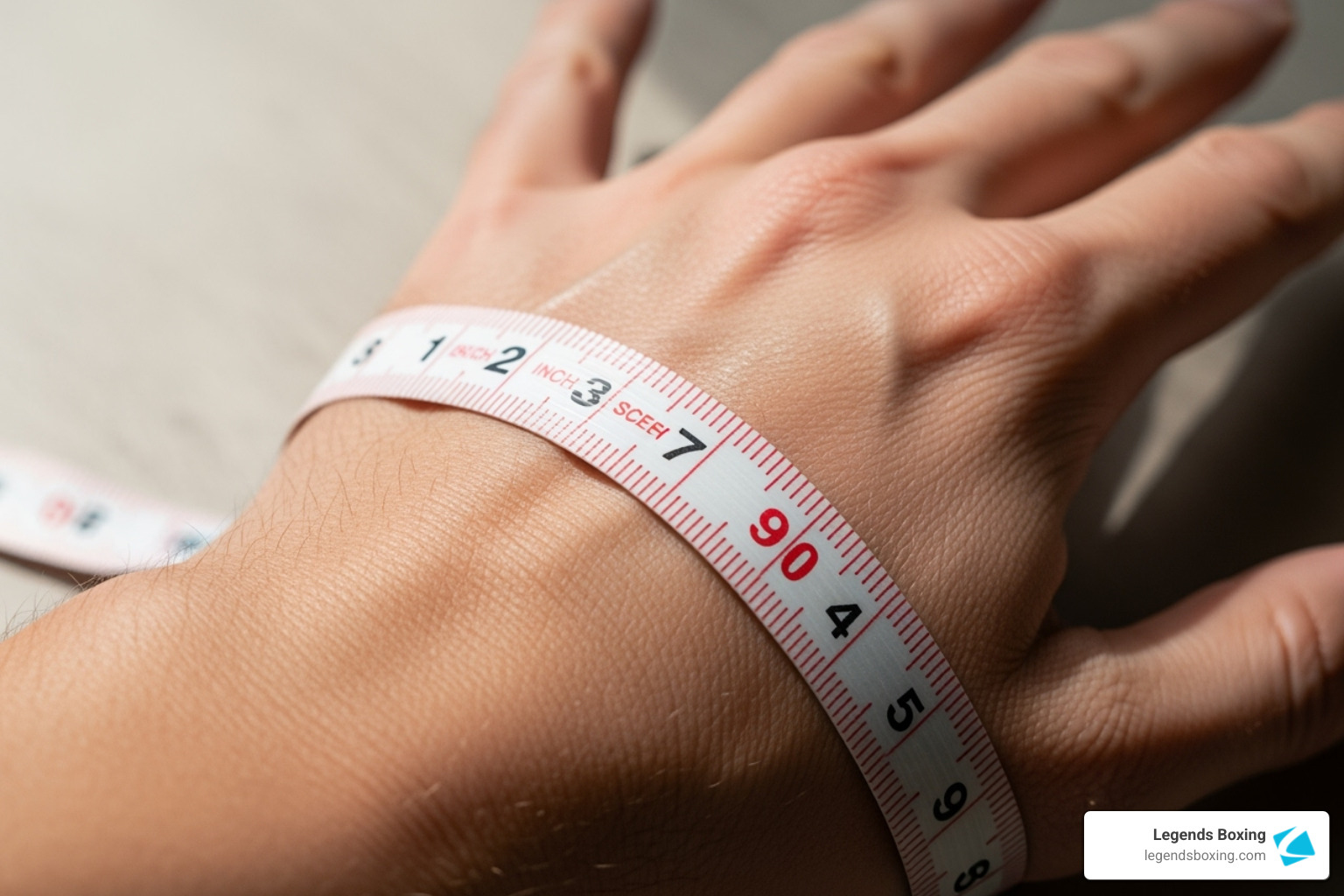
Once you have your measurement, here's what it typically means:
| Hand Circumference | Recommended Glove Size |
|---|---|
| Small — 6.5″ to 7.5″ | 12oz to 14oz |
| Medium — 7.5″ to 8.5″ | 14oz to 16oz |
| Large — 8.5″ to 9.5″ | 16oz to 18oz |
If your measurement falls right between two sizes, go with the smaller size. A snug fit is better than a loose one because it keeps your hand stable and prevents sliding around during punches.
Step 2: Factor in Your Body Weight and Training Type
Your hand size gives you the foundation, but your body weight and training goals help fine-tune the perfect choice. Heavier people generate more force when they punch, which means they need more padding to protect their hands and distribute that impact safely.
For bag work, pad work, and mitt training:
| Body Weight | Recommended Glove |
|---|---|
| Under 100 lbs (including kids) | 6–8oz |
| 100–125 lbs | 10oz |
| 125–150 lbs | 12oz |
| 150–175 lbs | 14oz |
| Over 175 lbs | 16oz |
For sparring and general training (step up for everyone's safety):
| Body Weight | Recommended Glove |
|---|---|
| Up to 90 lbs | 8–10oz |
| 91–135 lbs | 12–14oz |
| 136–150 lbs | 14–16oz |
| Over 150 lbs | 16–18oz |
Here's a simple rule of thumb: when you move from bag work to sparring, size up by about 2 ounces. So if you love your 14oz gloves for the heavy bag, grab 16oz gloves when it's time to spar.
Beyond the Size: Other Key Factors for the Perfect Fit
Once you've figured out the right ounce weight and measured your hands, there are a few more pieces to this puzzle. The material, the closure system, and — most importantly — how you try them on can make or break your boxing experience.
The Most Important Test: Try Them On With Hand Wraps
Always try on gloves while wearing hand wraps. This isn't just a suggestion — it's essential. Hand wraps add bulk to your hands and are mandatory for any serious boxing training. A glove that feels perfect on your bare hand will suddenly feel cramped once you add wraps.
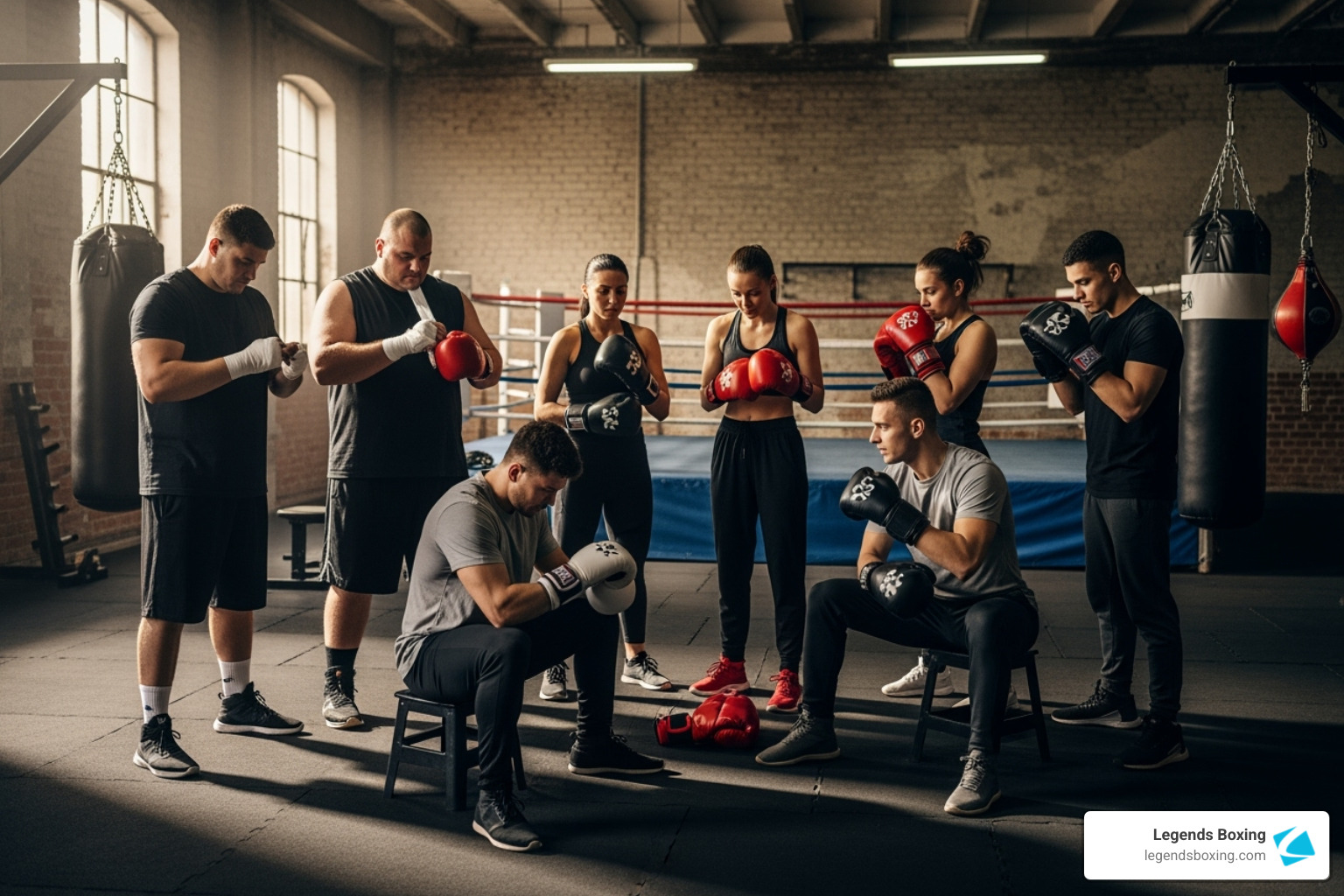
The perfect fit should feel snug but never tight — think of it like a firm handshake. Your fingers should reach the end of the glove compartment without being jammed in. There shouldn't be extra space at your fingertips either, as this will cause your hand to slide around inside.
Pay special attention to:
- Thumb position — it should sit naturally in its compartment without feeling twisted. Your thumb takes a lot of impact, so proper alignment prevents injury.
- Wrist support — whether Velcro or laces, you should be able to secure the glove firmly. If you can easily slip your hand out while the closure is fastened, the glove is too big.
Velcro vs. Lace-Up Gloves
Velcro gloves are the workhorses of the boxing world. You can slip them on and off by yourself in seconds — perfect for fitness classes where you're switching between exercises quickly. The hook-and-loop system provides solid wrist support for most training activities. For most people starting their boxing journey, Velcro gloves are the practical choice.
Lace-up gloves offer the most secure and customized fit possible because you can adjust the tightness exactly where you need it. This is why professional boxers and serious competitors often prefer them. The downside? You'll need a training partner to help lace you up properly.
Leather vs. Synthetic Materials
Genuine leather gloves are the premium option. They're incredibly durable, breathe better, and actually mold to your hand shape over time, creating a custom fit that gets more comfortable with use. The trade-off is a higher price tag and a brief break-in period.
Synthetic materials like vinyl or engineered leather offer excellent value for most boxers. They're more budget-friendly, require little to no break-in time, and modern synthetics are surprisingly durable. Perfect for beginners or anyone who trains recreationally.
What About Kids' Glove Sizes?
Getting the right gloves for young boxers is especially important because their hands and coordination are still developing. Kids' gloves are much lighter than adult versions:
| Age Group | Recommended Gloves |
|---|---|
| Ages 3–6 | 2oz or 4oz |
| Ages 6–10 | 4oz or 6oz |
| Ages 10–14 | 6oz or 8oz (larger teens may use 10oz) |
The key with kids is ensuring the gloves fit properly and feel comfortable. Oversized gloves can make training frustrating and potentially unsafe. When kids have properly fitting gloves, they can focus on learning technique and having a blast — which is what boxing should be all about at that age.
Frequently Asked Questions About Boxing Gloves
Do heavier gloves hit harder?
Here's something that catches a lot of people off guard: heavier gloves actually don't hit harder — it's the opposite. When we talk about a glove's "weight" in ounces, we're really talking about how much padding is packed inside. More ounces means more cushioning, which makes your punches feel softer to whoever's on the receiving end.
Think of it like this: would you rather get hit by someone wearing thick winter mittens or thin driving gloves? The winter mittens (like heavier boxing gloves) spread out the impact and make it feel much gentler. The real power in your punches comes from your technique, speed, and proper form — not from the weight of your gloves.
Can I use the same gloves for bag work and sparring?
While you technically could use the same pair for everything, it's strongly not recommended. Bag work is tough on gloves. Every hard punch gradually compresses and breaks down the padding inside. After months of bag sessions, that protective cushioning isn't what it used to be.
Now imagine using those worn-down gloves for sparring with a partner. The padding that's supposed to protect your training buddy has been compromised — that's not fair to them, and it's not safe. Having dedicated sparring gloves (usually 16oz or 18oz) keeps that crucial padding fresh and protective. Your gloves will also last longer overall when you're not beating them up on the heavy bag every session.
How often should I replace my boxing gloves?
With regular use — three or four times a week — plan on replacing your boxing gloves every 6 to 12 months. Your gloves will tell you when they're ready for retirement:
- Padding feels compressed or thin around your knuckles
- You're feeling more impact in your hands during bag work
- Cracks in the leather or synthetic material
- Velcro that won't stick anymore
- Wrist support that feels loose and wobbly
- A smell that just won't go away no matter how much you clean them
Proper care can help extend their life: wipe them down after every workout, let them air dry completely, and use glove deodorizers.
Find Your Perfect Punch at Legends Boxing
You now have all the tools to confidently answer "how do I know what size boxing gloves to get?" Start by measuring your hand circumference around your knuckles, then factor in your body weight and training goals. Whether you're planning to work the heavy bag with 12oz gloves or step into sparring with 16oz protection, you've got the knowledge to make the right call.
The right boxing gloves are one of the best investments you can make in your fitness journey. They protect your hands, improve your technique, and give you the confidence to throw every punch with power and precision.
Whether you're ready to release some stress on the heavy bag or learn the sweet science from our expert coaches, we're here to guide you every step of the way. No boxing experience? No problem.
Book a free workout with us and let's find your perfect punch together. Find a Legends Boxing location near you — we can't wait to get you started.