
Leather Love: Caring for Your Boxing Gloves the Right Way
Regular cleaning and proper drying can extend the lifespan of leather boxing gloves by up to 50% — and it only takes five minutes after each session. This guide covers the daily wipe-down routine, deep cleaning solutions (including vinegar and baking soda), monthly conditioning, glove dogs, proper storage, the biggest mistakes that destroy gloves prematurely, and exactly when it's time to replace them.
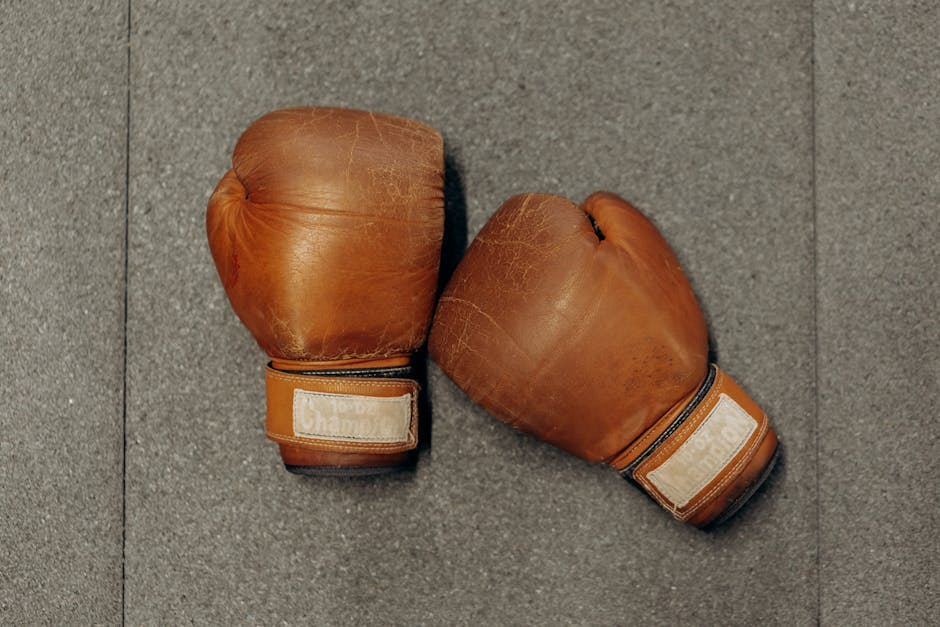
Protect Your Investment: The Right Way to Care for Leather Gloves
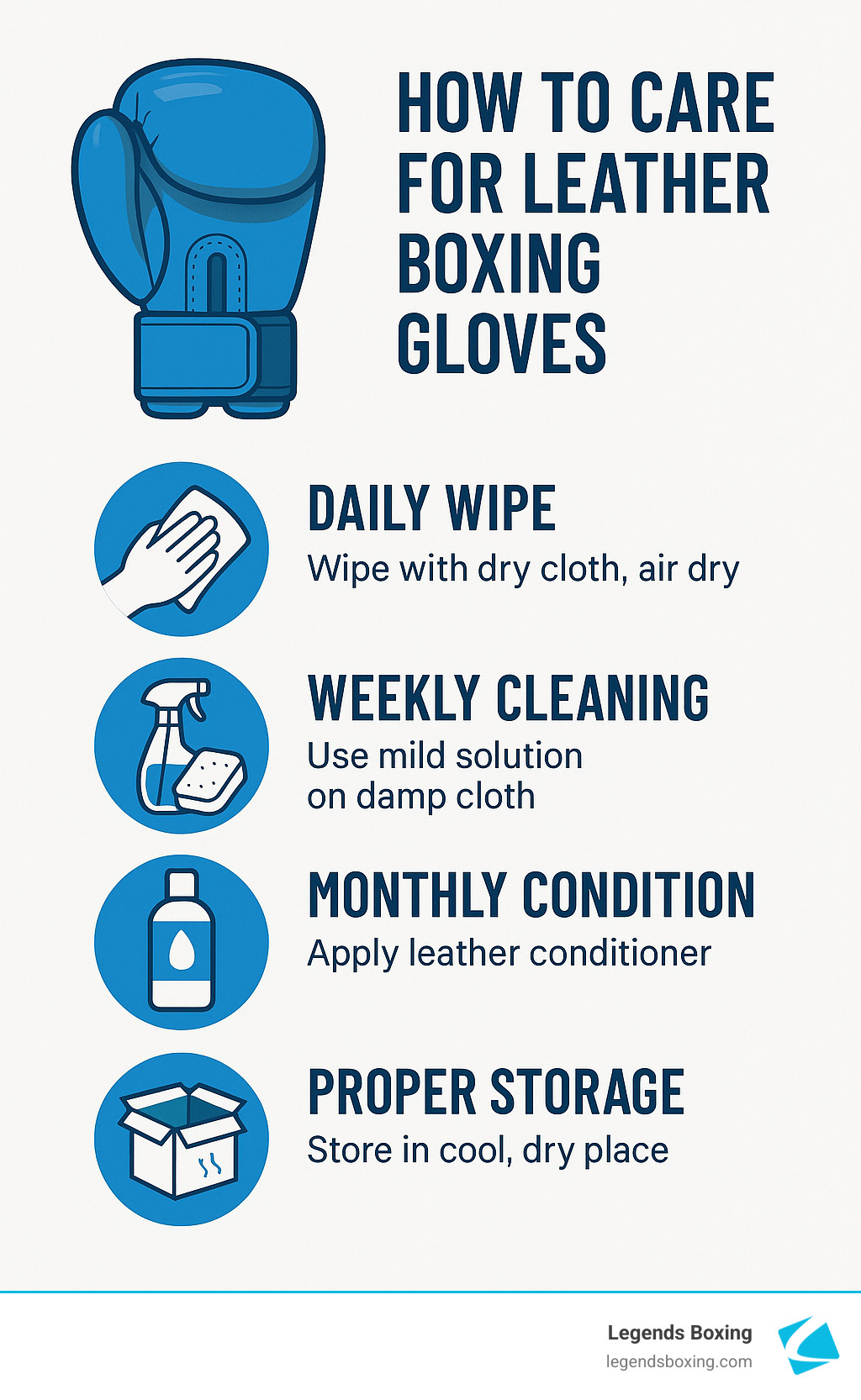
How to care for leather boxing gloves is essential knowledge for any boxer who wants their equipment to last. Here's the quick version:
- Daily Care — wipe with a dry cloth after use, leave to air dry in a ventilated area
- Weekly Cleaning — use mild soap or a 1:10 vinegar-water solution on a damp cloth, wipe interior and exterior
- Monthly Maintenance — apply leather conditioner to prevent cracking
- Odor Prevention — use glove dogs or cedar chips to absorb moisture and eliminate odors
- Storage — keep in a cool, dry place with good airflow; never leave in a sealed gym bag
Regular cleaning and proper drying can extend the lifespan of leather boxing gloves by up to 50%. Leather boxing gloves are an investment — quality pairs typically run $80–200. Without regular maintenance, the combination of sweat, oils, and bacteria will break down the leather and padding, leading to premature deterioration, unpleasant odors, and potentially even skin infections.
I'm Robby Welch, National Head Coach at Legends Boxing with extensive experience teaching fighters how to care for leather boxing gloves to maximize their performance and longevity.
Why Proper Glove Care Matters
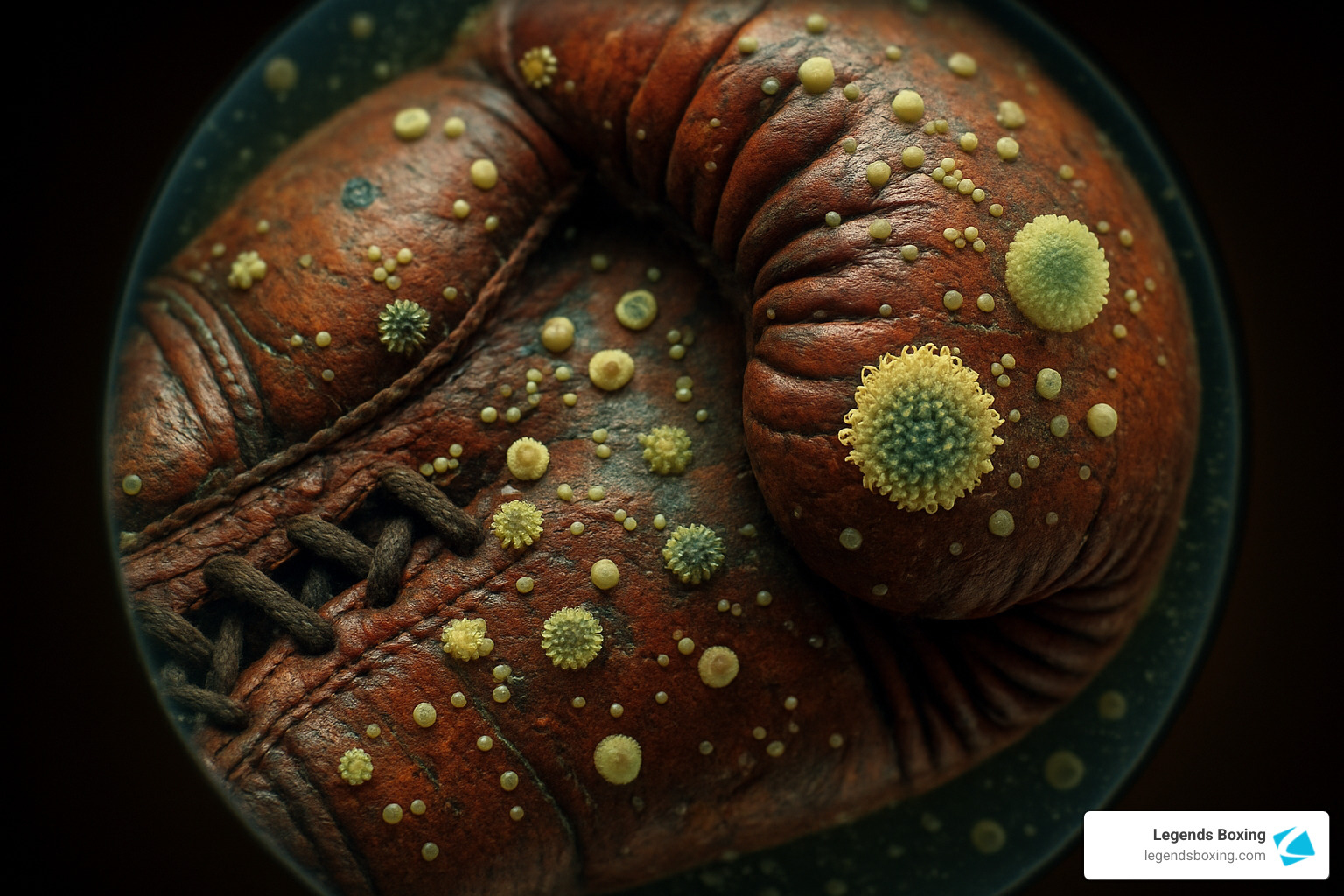
Let's get real for a moment — your boxing gloves are basically sweat sponges. Every time you train, they're pressed against your skin for an hour or more, soaking up sweat, oils, and dead skin cells. Without proper care, you're essentially creating a five-star hotel for bacteria and fungi, complete with all-you-can-eat buffet and spa facilities.
That unmistakable "gym bag funk" isn't just unpleasant — it's a warning sign. And bad odors are just the beginning. Those microscopic organisms thriving in your damp, dark gloves can lead to skin infections like ringworm that will sideline your training completely. That moisture cocktail slowly breaks down both the leather exterior and the protective foam inside, compromising the very purpose of wearing gloves in the first place.
Here's something that might surprise you: how to care for leather boxing gloves isn't complicated, but it makes a massive difference. At Legends Boxing, I've seen this play out countless times. Two boxers buy identical premium gloves on the same day. Six months later, one pair is cracked, compressed, and smelling like a forgotten gym locker, while the other looks nearly new. The difference isn't the gloves — it's what happens to them after each sweaty session.
How glove care connects to hand protection: when leather cracks and padding compresses, your risk of hand injuries increases dramatically during training. Properly maintained gloves provide consistent padding protection where you need it most. When padding breaks down unevenly, your knuckles and wrists become vulnerable to the very impacts your gloves are supposed to absorb.
One often overlooked aspect of glove care starts before you even put them on: hand wrap hygiene. Washing your hand wraps after every session can reduce bacteria and odor transfer to your gloves by up to 80%. Your wraps catch much of the sweat that would otherwise soak directly into the glove lining — think of them as your gloves' first line of defense.
Daily Post-Workout Routine: Five Minutes That Save Hundreds
After crushing it at the gym, the last thing you want is another chore. But here's the good news: taking care of your gloves doesn't have to be a whole production. Just five minutes of attention after each session can save you from premature replacement costs down the road.
As soon as you peel those gloves off your hands, grab a dry cloth and give them a quick wipe-down. This immediate action prevents sweat from soaking deep into the leather and padding. For a deeper clean without much hassle, keep a light sanitizing solution handy — a cloth barely dampened with mild soap or a super-diluted vinegar spray (just one tablespoon of white vinegar in a spray bottle of water) works wonders, killing bacteria without damaging your leather.
Don't forget the inside! The interior collects the most sweat and is the primary breeding ground for funky odors. Reach as far inside as possible with your cleaning cloth to disrupt bacteria before they establish their smelly kingdom.
Step-by-Step Quick Clean Checklist:
- Wipe exterior with a dry cloth immediately after use
- Lightly dampen a clean cloth with a 1:10 vinegar-water solution
- Wipe down the exterior leather with gentle circular motions
- Reach deep inside with the same cloth to clean the interior
- Use a dry rag to remove any remaining moisture
- Leave gloves open in a well-ventilated area until completely dry
- Insert glove dogs or DIY moisture absorbers (optional but highly recommended)
Glove Dogs: Small Heroes Inside Your Mitts
If you haven't discovered glove dogs yet, you're missing out on one of the boxing world's best-kept secrets. These unassuming fabric tubes — filled with moisture-absorbing materials like cedar chips, bamboo charcoal, or silica gel — work silently to rescue your gloves while you recover from your workout.
Using glove dogs can reduce internal moisture by over 70%, dramatically decreasing the bacterial playground that causes odor. As a bonus, they help your gloves maintain their shape while drying, preventing that sad, collapsed look that poorly maintained gloves develop.
Don't want to buy commercial glove dogs? Create your own with clean old socks and cedar chips from any pet store. Fill the socks with cedar, tie off the ends, and insert them into your gloves after wiping them down. For a pleasant scent, add one or two drops of essential oil — but no more, as too much oil could irritate your skin during your next session.
Deep Cleaning & Deodorizing the Inside and Outside
Your daily wipe-down keeps your gloves in decent shape, but every few weeks, those leather mitts deserve some extra TLC. At Legends Boxing, we recommend a deep clean every 2–4 weeks depending on your training frequency.
Cleaning solutions to choose from:
- Saddle soap — specifically formulated for leather care; works wonders
- Specialized leather cleaner — excellent for premium gloves
- Diluted apple cider vinegar (1:2 with water) — remarkably effective thanks to natural antibacterial properties; also helps restore leather's natural pH balance, preventing cracks and fading
- Mild dish soap in water — gentle option for light cleaning
Beyond traditional cleaning, these methods tackle stubborn odors:
- Baking soda treatment — sprinkle inside your gloves overnight to absorb moisture and neutralize smells; shake out thoroughly the next morning
- Freezing method — place completely dry gloves in a sealed plastic bag and freeze overnight to kill odor-causing bacteria
- Saline solution — a cloth dampened with salt water can help draw out deep-seated odors
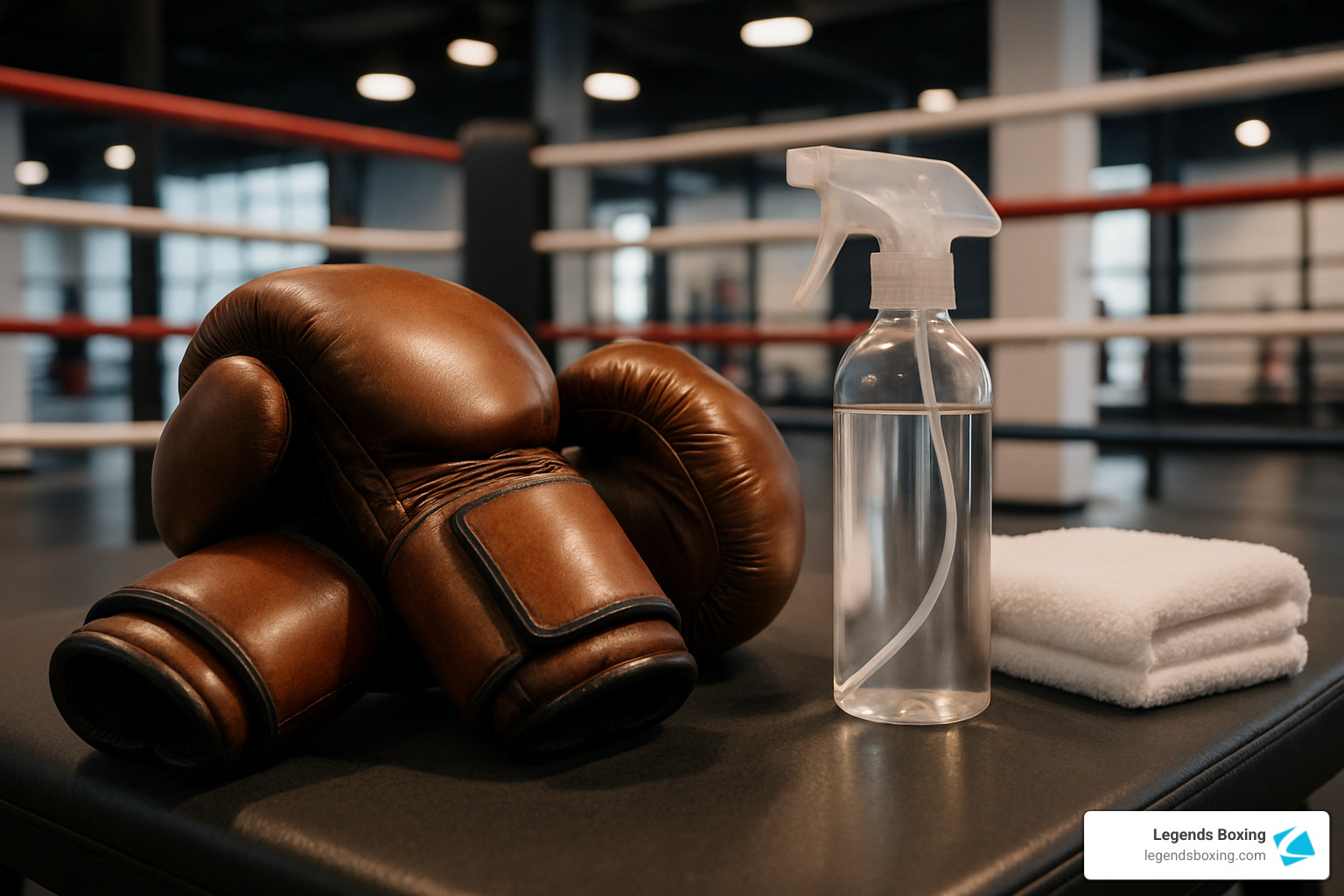
Exterior cleaning technique: work your cleaner into a lather first, apply to cloth (never directly to the glove), use gentle circular motions to lift dirt, reach seams and crevices with a soft-bristled toothbrush, wipe away residue with a slightly damp cloth, and buff dry with a soft cloth. Remember: leather is porous and excessive moisture is its enemy — clean the surface without saturating the material.
Interior deep cleaning: use a 50/50 mix of water and white vinegar in a spray bottle — key word is "mist," not "soak." Lightly spray the interior just enough to dampen it. Wrap a clean cloth around your fingers to reach as deep into the glove as possible. Follow up with a dry cloth to absorb remaining moisture. Position gloves upside-down to allow gravity to help air circulation. A gentle fan speeds drying, but avoid hair dryers and heaters — direct heat cracks leather faster than a solid right hook.
Conditioning & Softening: Keeping Leather Supple
One of the most overlooked aspects of how to care for leather boxing gloves is regular conditioning. Think of leather as a second skin — it needs moisture to stay flexible, prevent cracking, and maintain its protective qualities. When leather dries out, it creates tiny cracks where bacteria love to hide.
Conditioner comparison:
| Conditioner Type | Pros | Cons | Best For |
|---|---|---|---|
| Mink Oil | Deep conditioning, water resistance | Can darken leather | Very dry leather |
| Leather Balm | Balanced conditioning, natural shine | Moderate darkening | Regular maintenance |
| Petroleum Jelly | Inexpensive, readily available | Can oversaturate, may damage stitching | Emergency conditioning |
| Natural Oils (Coconut, Olive) | Eco-friendly, gentle | Variable results, potential rancidity | Light conditioning |
Most coaches recommend a quality leather balm for regular maintenance — it provides enough moisture without dramatically darkening your gloves. Fighter-approved options include Leather Honey Conditioner, Bickmore Bick 4, Chamberlain's Leather Milk, and Obenauf's Leather Oil. Always do a small patch test on an inconspicuous area first.
Application technique:
- Start with clean, dry gloves — conditioning dirty leather just locks in the grime
- Use a pea-sized amount per glove — less than you think is right
- Apply with gentle circular motions using a soft cloth or your fingertips; work it into high-stress areas (knuckles and thumb joints) that flex constantly and are most prone to drying and cracking
- Allow at least 30 minutes for absorption — some products recommend up to 24 hours for deep conditioning
- Buff away any excess with a clean, dry cloth — leftover conditioner attracts dirt
- Give gloves a full 24 hours to air dry before training again
Over-conditioning can be just as harmful as neglect. Leather that's too saturated with oils can stretch, lose shape, or even rot. For most fighters at Legends Boxing, conditioning once every 1–2 months hits the sweet spot — though dry climates like Arizona may call for every 2–3 weeks, while humid environments can stretch to 6 weeks.
Storage, Mistake-Proofing & Replacement Timeline
The way you store your boxing gloves is just as crucial as how you clean them.
The perfect home for your gloves is a cool, dry place with plenty of air circulation. That ventilated mesh bag hanging in your closet? Perfect. That sealed gym bag tossed in your hot car trunk? Disaster waiting to happen. We've seen too many fighters at Legends Boxing heartbroken when their premium leather gloves developed that unfixable funk after being trapped in a sweaty gym bag overnight.
Key storage rules:
- Avoid direct sunlight — it fades and cracks leather over time despite killing some bacteria; opt for indirect light and good airflow
- For longer-term storage, tuck silica gel packets inside to absorb ambient moisture
- Gently stuff acid-free tissue paper inside to help gloves maintain their shape while resting
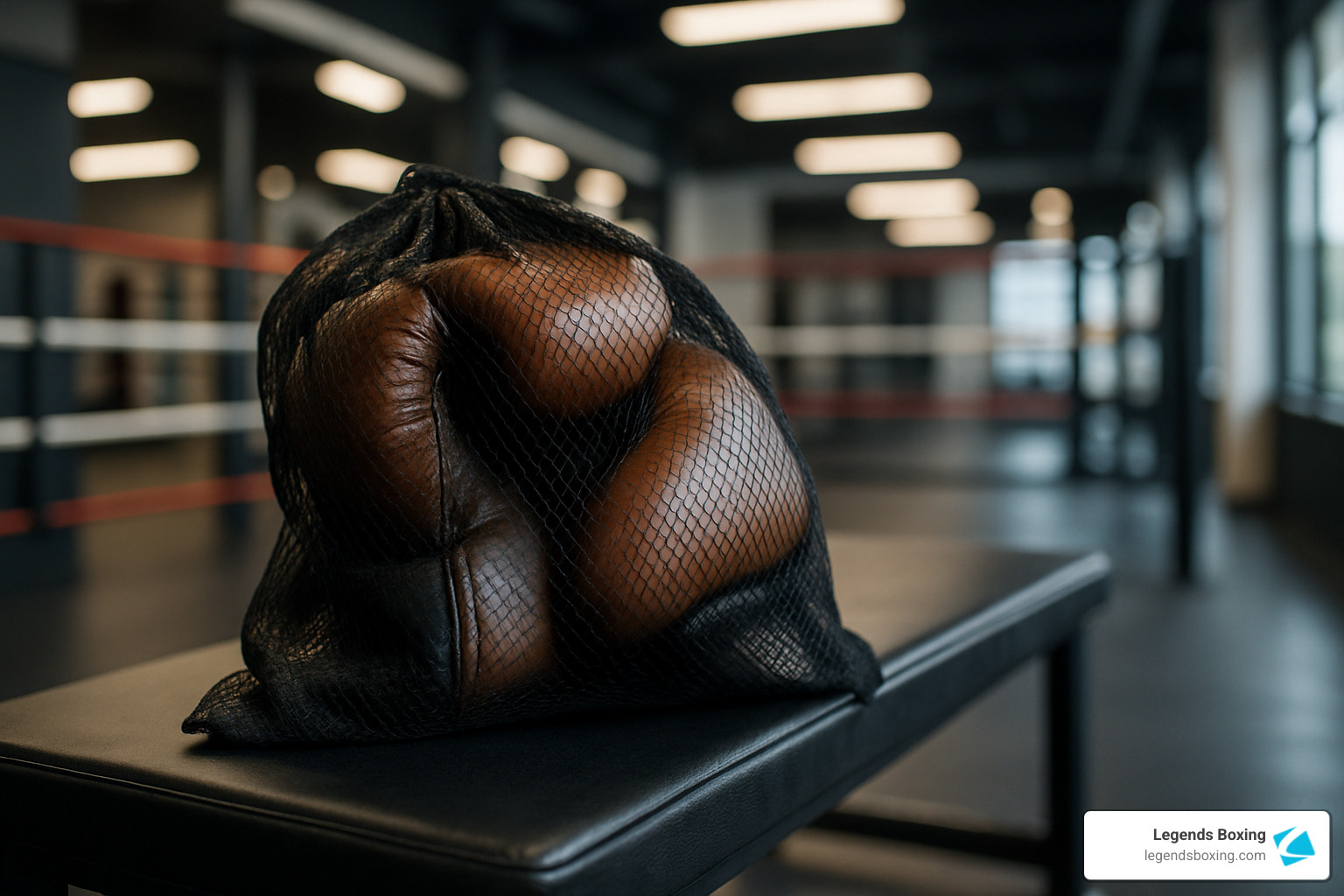
When to replace your gloves: even with perfect care, gloves won't last forever. The internal padding eventually compresses. For regular fighters training 3+ times weekly, plan to replace every 6–12 months. Signs it's time: visible cracks in the leather, compressed or uneven padding, tears in the lining, decreased wrist support, or stubborn odor that no amount of vinegar can kill.
Note: quality leather gloves typically outlast synthetic ones by a significant margin. The higher upfront cost often makes them more economical long-term.
Biggest Glove-Care Mistakes to Avoid
Over years of coaching at Legends Boxing, I've watched fighters make the same heartbreaking mistakes. Learn from their pain:
Machine washing leather gloves — the absolute worst offender. The agitation, water saturation, and harsh detergents create a perfect storm that destroys both the leather exterior and internal padding. When leather soaks, it swells. When it dries, it shrinks and warps. This constant expanding and contracting creates ugly cracks that ruin perfectly good gloves. Laundry detergents are designed to strip oils — terrible for leather that needs those natural oils to stay supple.
Using heat to dry them — a hair dryer might seem like a quick fix, but direct heat causes leather to crack, shrink, and become brittle. Room temperature air drying is always your safest bet.
Household cleaners — bleach, ammonia, and strong detergents kill germs but also kill your gloves. Stick to leather-friendly products or gentle alternatives like diluted vinegar.
Neglecting hand wrap hygiene — those wraps soaking up sweat during training transfer all that bacteria right back to your freshly cleaned gloves the next session. Clean wraps equal cleaner gloves.
Skipping conditioning — neglecting this step is like never moisturizing your skin. Eventually, things get dry, crack, and age prematurely.
Ignoring early warning signs — that tiny crack along the thumb? That small tear in the lining? Address these early before they become unfixable problems. Preventative maintenance always beats emergency replacement.
Frequently Asked Questions
Why can't I machine-wash leather gloves?
Machine washing is a death sentence for leather boxing gloves. When leather soaks, it swells like a sponge. When it dries, it shrinks and often warps. This constant expanding and contracting creates ugly cracks that ruin perfectly good gloves. Most laundry detergents are designed to strip oils — great for removing stains from clothes, terrible for leather that needs those natural oils to stay supple. Add the violent tumbling action and you've got destroyed stitching and misshapen padding. Stick with the gentle hand-cleaning methods above.
How often should I condition if I train daily?
A good rule of thumb for daily trainers is once a month — but adjust based on:
- Climate: dry climates (Arizona, Utah desert) may need conditioning every 2–3 weeks; humid climates can stretch to 6 weeks
- Sweat level: heavy sweaters may need more frequent conditioning, since all that moisture can dry out leather faster as it evaporates
- Leather quality: premium full-grain leather often needs less frequent conditioning than lower-grade options
Let your gloves tell you when they need TLC — if the leather feels stiff or looks dull and lifeless, it's crying out for conditioning. Just don't overdo it; over-conditioned leather feels greasy and can break down faster. The sweet spot is supple leather that feels natural to the touch.
Can I really use baking soda or vinegar without damaging leather?
Yes — when used correctly.
Baking soda is an interior treatment only. Sprinkle it inside your gloves before bed, let it work overnight, then thoroughly tap out every last grain the next morning. The alkaline properties neutralize acidic odors without damaging materials inside. Never make a paste or apply it to the leather exterior.
Vinegar works best diluted. For your daily wipe-down, a 1:10 vinegar-to-water ratio is perfect. For deeper cleaning sessions, you can go stronger with a 1:2 ratio. White vinegar works well for regular cleaning; apple cider vinegar has additional conditioning properties that can benefit leather. Either way, apply with a damp (not soaking) cloth and never drench your gloves.
Clean Gloves, Confident Training
When it comes to how to care for leather boxing gloves, you're not just maintaining equipment — you're protecting an investment in your training journey. The simple routine we've covered — daily wiping, weekly cleaning, monthly conditioning, and proper storage — creates a powerful defense against the bacteria, sweat, and wear that typically cut a glove's lifespan in half.
Think of it as a simple mantra: clean, condition, ventilate. When you develop these habits, they become second nature — just another part of your training ritual. Members at Legends Boxing who follow these guidelines consistently show up with gloves that look, smell, and perform better, while keeping their hands healthier and their wallets a little fuller.
Your freshly maintained gloves deserve to be put to good use. Find a Legends Boxing location near you across Utah, Florida, and Texas — or book your first free class today and put those well-cared-for gloves to work. No previous boxing experience required.