
Beyond the Bell: Essential Leather Conditioners for Boxing Glove Longevity
Your boxing gloves are an investment. Learn why leather conditioner is essential, how to spot the signs your gloves need moisture, which products work best, and the simple 3-step routine that can triple your glove's lifespan.
Why Leather Conditioner for Boxing Gloves is Essential
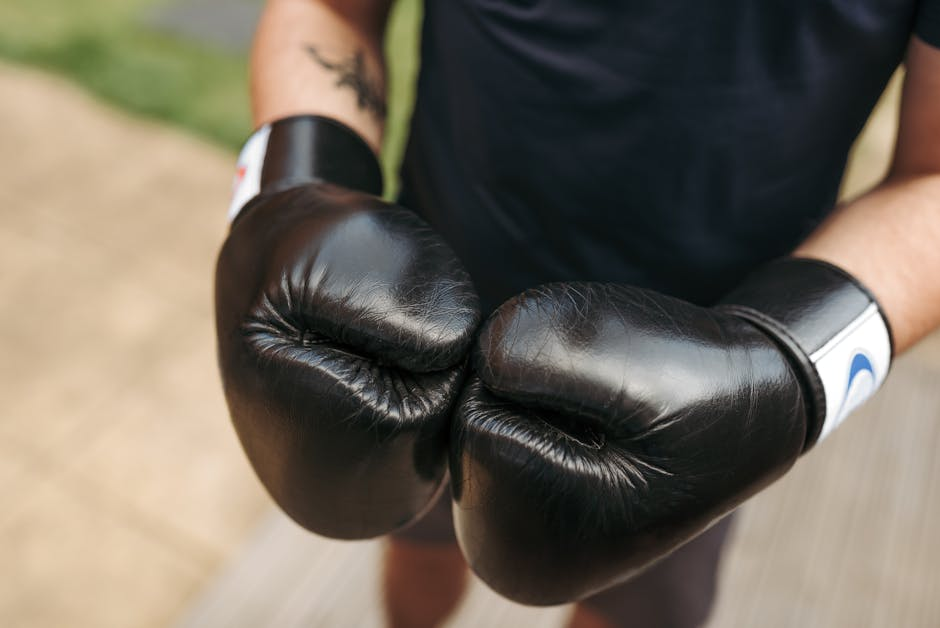
Your boxing gloves are an investment—and like any piece of quality equipment, they need proper care. Leather is essentially skin: it can dry out, crack, stain, and warp without regular maintenance. Every time you train, sweat and moisture seep into the leather while dirt and oils from your hands work to break down the fibers. Without conditioning, those pristine gloves you started with can become stiff, cracked, and uncomfortable in just a few months.
The difference between a glove that lasts six months and one that lasts years often comes down to a simple five-minute conditioning routine every few months. This isn't just about aesthetics—properly conditioned gloves maintain their shape, provide better impact absorption, and simply feel better on your hands during training.
Quick guide at a glance:
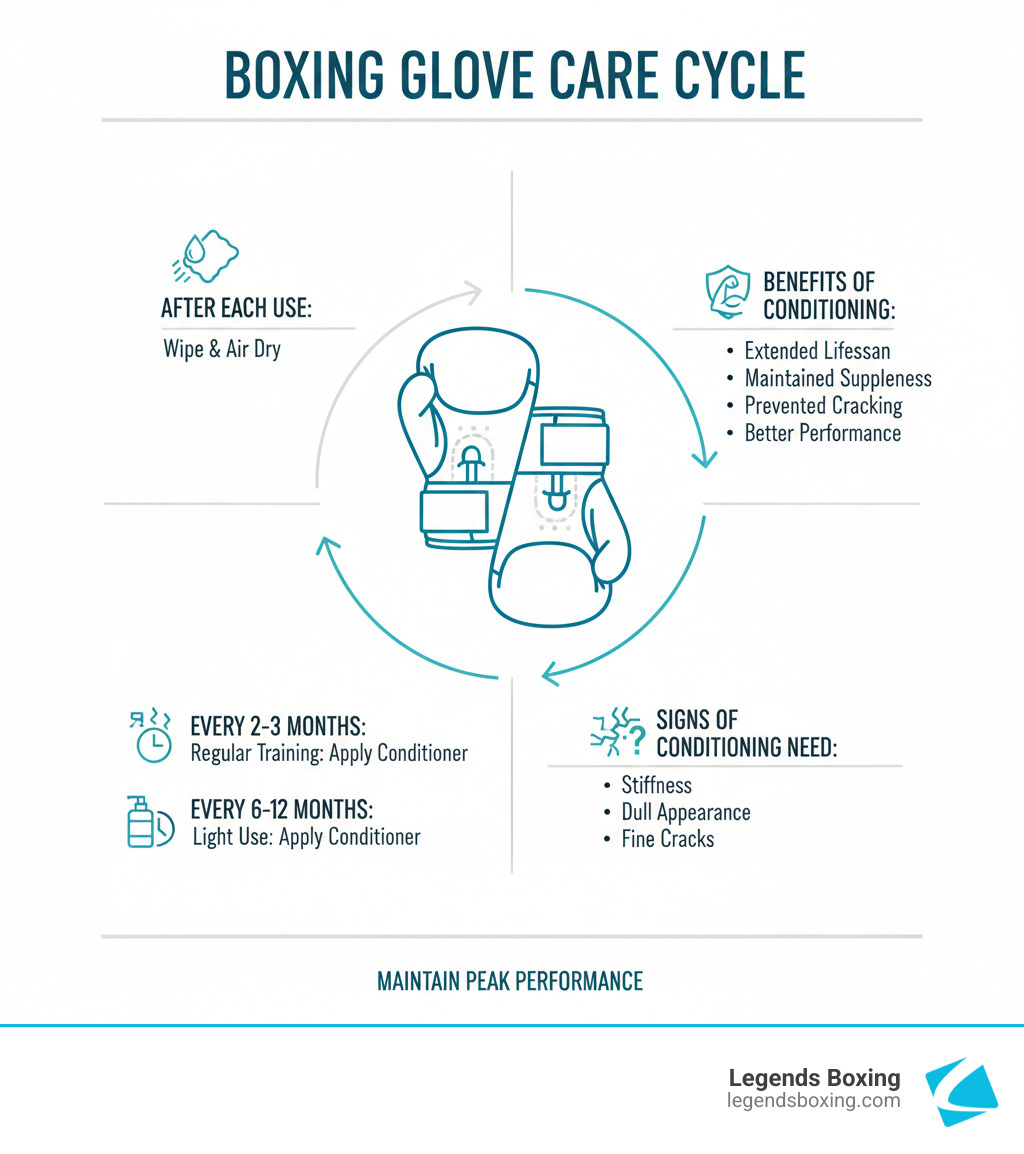
- What it does: Moisturizes leather to prevent cracking, maintains suppleness, and protects against sweat damage
- How often: Every 2–3 months for regular use, every 6–12 months for occasional training
- Best types: Natural, non-greasy formulas like Leather Honey, Nokona NLT, or sport-specific care kits
- Application: Clean gloves first, apply small amount with soft cloth in circular motions, allow 2–24 hours to absorb
- Signs you need it: Stiff feel, dull appearance, visible dryness, or fine surface cracks
I'm Robby Welch, National Head Coach at Legends Boxing. Over my years coaching thousands of members, I've seen how proper care—including regular use of leather conditioner for boxing gloves—can triple the lifespan of quality equipment. Gear maintenance is part of the discipline we instill in every boxer who walks through our doors.
The Knockout Benefits: Why Conditioning is Non-Negotiable
Think of your leather gloves like your own skin: both need moisture to stay healthy and flexible. The primary benefit of regular conditioning is extending glove longevity. Every training session takes a toll, but conditioning keeps the leather supple, preventing the premature aging that turns great gloves into cracked, stiff shells.
A good leather conditioner rehydrates the leather, nourishing its fibers and maintaining structural integrity. This suppleness is crucial for the glove's ability to absorb impact and protect your hands. Stiff, rigid leather can't flex properly, hindering performance and increasing injury risk.
Cleaning vs. conditioning — know the difference:
- Cleaning addresses surface-level dirt and sweat — it's about hygiene; do this after every session
- Conditioning is about deep moisturization — restoring oils and flexibility; do this every few months
You need both. A quick wipe-down after each session keeps things clean, but conditioning is what truly keeps the leather soft and prevents cracks.
Want to see how we approach training with properly maintained gear? Check out what to expect in your first class.
Signs Your Gloves Are Thirsty for a Conditioner
Your gloves will tell you when they need attention. Look for these signs:
- Dull appearance — the rich sheen fades and the leather looks lifeless or chalky
- Stiff or rigid feel — properly conditioned gloves should have a natural suppleness; if they feel like cardboard, they need moisture
- Visible dryness or fine cracks — look for a rough texture or tiny cracks, especially around the knuckles and thumb; these are early warning signs of bigger problems
- Color fading — excessive fading means the leather's natural oils are depleted
The Cost of Neglect
Ignoring these warning signs is a costly mistake. Without conditioning, leather becomes brittle and ages prematurely. The most serious consequence is the development of deep cracks and tears, which are impossible to repair and compromise the glove's structural integrity.
Neglected gloves also become uncomfortably stiff, restricting hand movement and causing chafing. This uncomfortable fit distracts your training and can even reduce the glove's ability to absorb impact, increasing your risk of injury.
Choosing Your Champion: The Best Leather Conditioner for Boxing Gloves
Not all products are created equal. Look for:
- Natural ingredients and non-greasy formulas that absorb well without leaving a slick residue
- Sport-specific conditioners formulated for the unique demands of athletic equipment
- Neutral color to avoid accidentally changing the shade of your gloves
Avoid conditioners containing silicones (which don't truly nourish the leather), harsh chemicals, or petroleum-based products that can strip natural oils.
Here's a comparison of three excellent choices:
| Conditioner | Key Features | Best For |
|---|---|---|
| Leather Honey | Natural, non-toxic formula; deep penetration; works on all leather types | All-around conditioning and restoration |
| Nokona NLT | Sport-specific formula; unique viscosity that won't soak padding; softens and cleans | Breaking in new gloves and regular maintenance |
| Winning F-73 Kit | Complete kit with oil, lotion, sponges, and cloths; professional-grade | Comprehensive care for serious athletes |
1. Leather Honey Leather Conditioner
Leather Honey has been a trusted name in leather care since 1968. Its non-toxic formula penetrates deep into the leather fibers to restore moisture from the inside out—exactly what dried-out boxing gloves need to regain their supple feel. It works on all leather types, and a little goes a long way, making it a cost-effective solution for long-lasting protection.
2. Nokona Leather Treatment (NLT)
Trusted for decades in the sports world, Nokona Leather Treatment is fantastic for boxing gloves. Its unique viscosity is its standout feature—formulated to condition the leather without soaking through to the delicate padding inside. This is crucial for maintaining the glove's protective qualities and weight. NLT is particularly excellent for softening stiff, new gloves to speed up the break-in period. It also cleans and preserves, making it a great multi-function product.
3. Winning F-73 Leather Maintenance Kit
For those who want a professional-grade solution, the Winning F-73 Kit is the gold standard. This complete care system includes a moisturizing oil for deep conditioning, a shining lotion for polish, and application sponges and cloths. The two-step process addresses both the internal health and external appearance of the leather. If you've invested in premium gloves, this kit provides everything you need to keep them in championship condition.
The Main Event: How to Properly Condition Your Boxing Gloves
Now that you've chosen your conditioner, here's the straightforward process for getting the most out of your product.
Step 1: Clean the Surface
Before applying any conditioner, you must clean your gloves. Applying conditioner over a dirty surface traps grime and can damage the leather.
Wipe the exterior with a clean, damp cloth to remove sweat and dirt. For a deeper clean, use a mild soap solution designed for leather. After cleaning, allow your gloves to air dry completely. Never apply conditioner to wet leather—this can trap moisture and promote mildew.
Step 2: Apply the Conditioner
Once your gloves are clean and dry, put a small, dime-sized amount onto a soft, lint-free cloth. A little goes a long way.
Gently work the conditioner into the leather using small, circular motions for even coverage. Pay special attention to high-impact areas like the knuckles and seams. Work it in until absorbed, avoiding any fabric or non-leather parts.
Step 3: Allow for Absorption and Buff
Patience is key. After applying, let your gloves sit undisturbed for at least 2 hours, ideally up to 24 hours. This allows the conditioner to penetrate deep into the leather fibers. Store them in a cool, dry, well-ventilated area away from direct sunlight.
After absorption, take a separate clean dry cloth and gently wipe away any excess residue. Then buff the leather to a natural sheen. Your gloves should now feel soft, supple, and revitalized.
Frequently Asked Questions
How often should I use a leather conditioner for boxing gloves?
- Regular training (3–5x/week): every 2–3 months
- Occasional training (1–2x/week): every 6–12 months
- Dry climates (e.g., Utah locations like St. George or Salt Lake City): condition a bit more often
If gloves look dull or feel stiff, condition sooner regardless of the schedule.
Can I use any leather conditioner on my boxing gloves?
No. Choose sport-specific or proven general products (like Leather Honey or Nokona NLT). Avoid greasy furniture polishes (often silicone-based) and thin oils that can soak into the padding. Always use a neutral color and spot-test first on a hidden area.
Are there any DIY alternatives?
We don't recommend them. Petroleum jelly clogs pores; cooking oils can go rancid and create unpleasant odors. Your gloves are an investment—use a proper conditioner formulated for leather.
Protect Your Investment, Perfect Your Punch
Taking care of your boxing gloves is about respecting your equipment, your training, and yourself. Regular conditioning with a quality leather conditioner for boxing gloves is one of the simplest yet most effective ways to honor your investment.
By keeping your leather moisturized, you ensure your gloves maintain their suppleness, protective qualities, and comfortable fit. You prevent the cracks and stiffness that can make training uncomfortable and risky. Better performance starts with better gear care.
At Legends Boxing, discipline extends beyond the workout. Proper gear maintenance is part of the commitment we teach—we want you to show up with equipment that's in top condition and ready to perform.
Ready to put those well-maintained gloves to work? Book a free workout at your nearest Legends Boxing location, or find a gym near you across Utah, Florida, and Texas.