
Knockout Kings of the Soviet Era
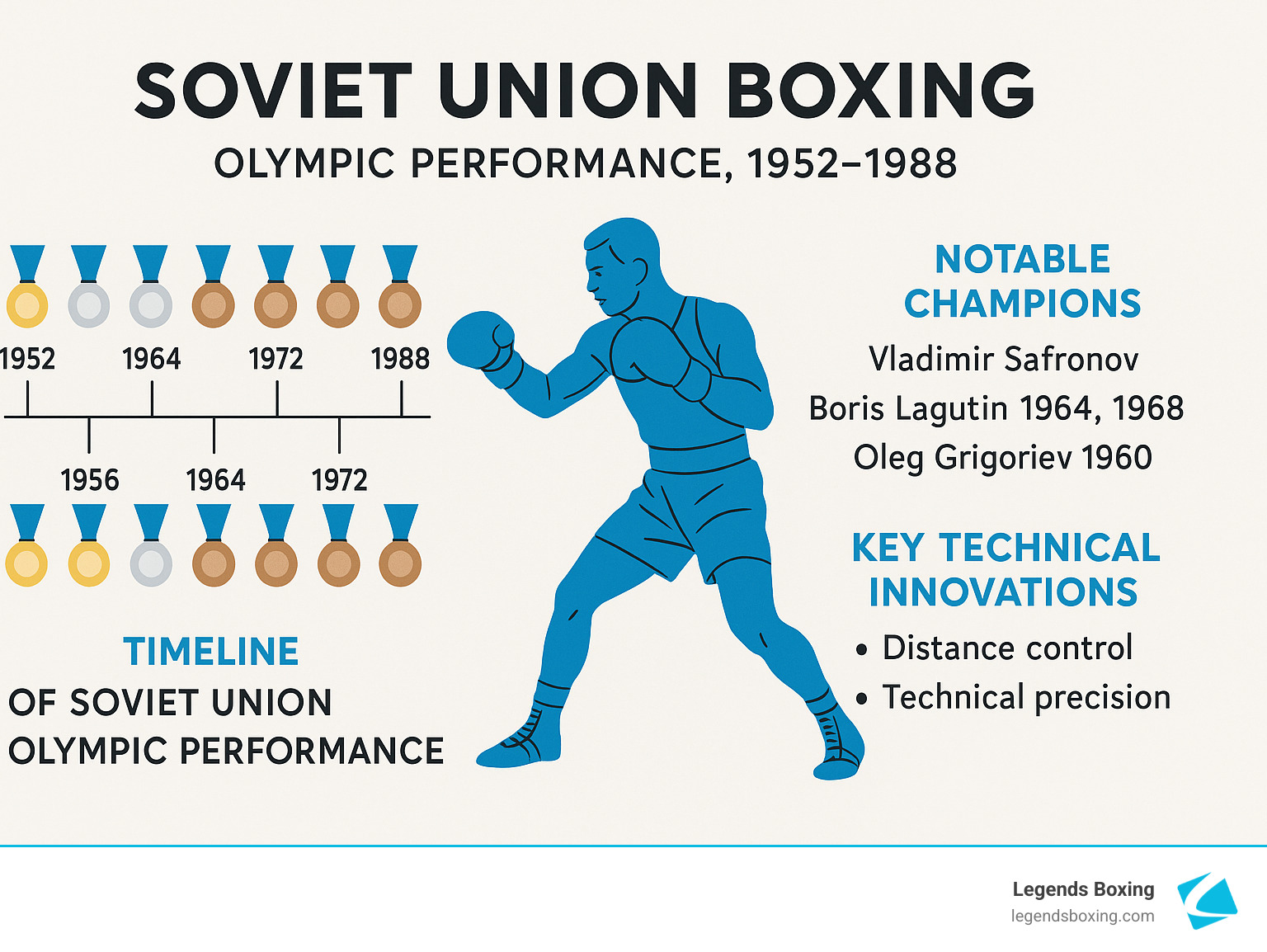
Soviet Union boxers were among the most successful amateur fighters in Olympic history, dominating international competitions from 1952 to 1988 and winning 51 Olympic medals (14 gold, 19 silver, 18 bronze). This guide covers their origins, scientific training methods, the distinctive "Soviet Style" of distance control and pendulum footwork, the top 12 knockout kings of the era, and how their technical legacy lives on in today's champions — and in Legends Boxing classes.
The Golden Era of Soviet Boxing
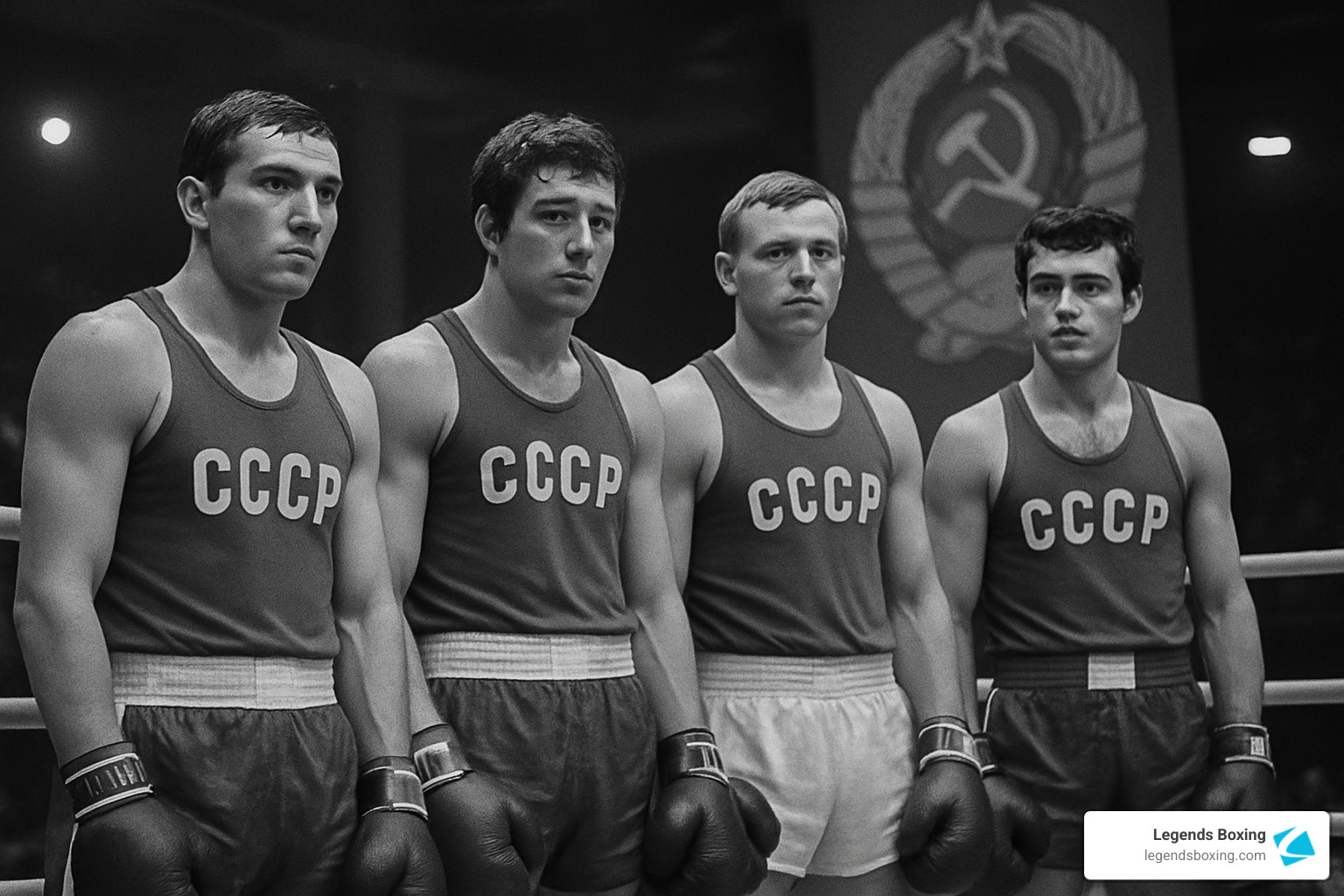
Soviet Union boxers were among the most successful amateur fighters in Olympic history, dominating international competitions from 1952 to 1988. These athletes combined technical mastery, scientific training methods, and extraordinary discipline to create a boxing powerhouse that shaped the sport for decades.
Key Facts About Soviet Union Boxers:
- Won 51 Olympic medals (14 gold, 19 silver, 18 bronze)
- Medaled in every Olympics they participated in (1952–1988)
- Developed the distinctive "Soviet Style" focusing on distance control and technical precision
- After 1991, produced champions like Wladimir Klitschko and Kostya Tszyu
- Training emphasized extensive amateur experience (200+ bouts) before international competition
The Soviet boxing program emerged from humble beginnings after World War II to become a global force by the 1960s. Their systematic approach to athlete development, state-sponsored training facilities, and scientific methodology created generations of technically flawless fighters. While professional boxing was forbidden during the Soviet era, these athletes' technical foundations would later influence boxing worldwide.
As head coach at Legends Boxing, I've studied Soviet Union boxers extensively to incorporate their technical precision and methodical training approaches into our curriculum. The pendulum footwork and distance control techniques pioneered by Soviet champions remain fundamental to effective boxing today.
Origins: Building a Red Corner
The roots of Soviet Union boxers can be traced back to the turbulent days following the 1917 Russian Revolution. While boxing existed in pre-revolutionary Russia, it was the new Soviet government that transformed it from a niche activity into a systematic program representing socialist athletic excellence.
The early 1920s saw the birth of "Revolution gyms" across major Soviet cities. These facilities became the first training grounds where boxing found its place alongside other combat disciplines. Interestingly, the renowned film director Vsevolod Pudovkin, himself an amateur boxer, played a crucial role in popularizing the sport through his films, portraying boxing as the perfect embodiment of the ideal Soviet citizen — technically proficient, disciplined, and mentally tough.
"Boxing in the Soviet Union was never just a sport," as prominent Soviet coach Artyom Lavrov once put it. "It was a systematic expression of our scientific approach to human physical development."
The nationwide Spartak sports clubs became the backbone of Soviet boxing development. These clubs fostered talent across the massive country, creating a pipeline of skilled fighters. Unlike the West, where professional incentives drove the sport, Soviet Union boxers developed under complete state patronage — receiving housing, education, and financial support while they trained.
Nikolai Korolev emerged as one of the first truly great Soviet champions. Born in 1917, his remarkable career bridged both pre-war and post-war eras. As an Army captain who served valiantly on the Eastern Front during World War II, Korolev personified the Soviet boxing philosophy of discipline, courage, and technical mastery. His later transition to coaching helped shape generations of fighters.
Political patronage played a vital role in boxing's growth. The sport received substantial government resources as it aligned perfectly with Soviet ideals of physical culture. This support created a long-term approach to athlete development that Western boxers, often pressured by financial concerns, couldn't match.
By the late 1940s, the Soviet boxing program had matured significantly. The foundation was set for their historic Olympic debut in 1952 — the beginning of what would become one of the most dominant runs in amateur boxing history.
Soviet Union Boxers at the Olympics
The Olympic Games became the ultimate showcase for Soviet Union boxers, who couldn't pursue professional careers due to the USSR's strict amateur-only sports policy. When they first stepped into the Olympic ring at Helsinki in 1952, they immediately turned heads by claiming six medals — two silvers and four bronzes — announcing their arrival on the international stage in emphatic fashion.
This modest beginning quickly blossomed into something extraordinary. By the 1956 Melbourne Olympics, Soviet boxing had found its golden touch. Vladimir Safronov impressed in the featherweight division, Vladimir Engibarian dominated at light-welterweight, and Gennady Shatkov overpowered the middleweight class — all claiming the USSR's first Olympic boxing gold medals.
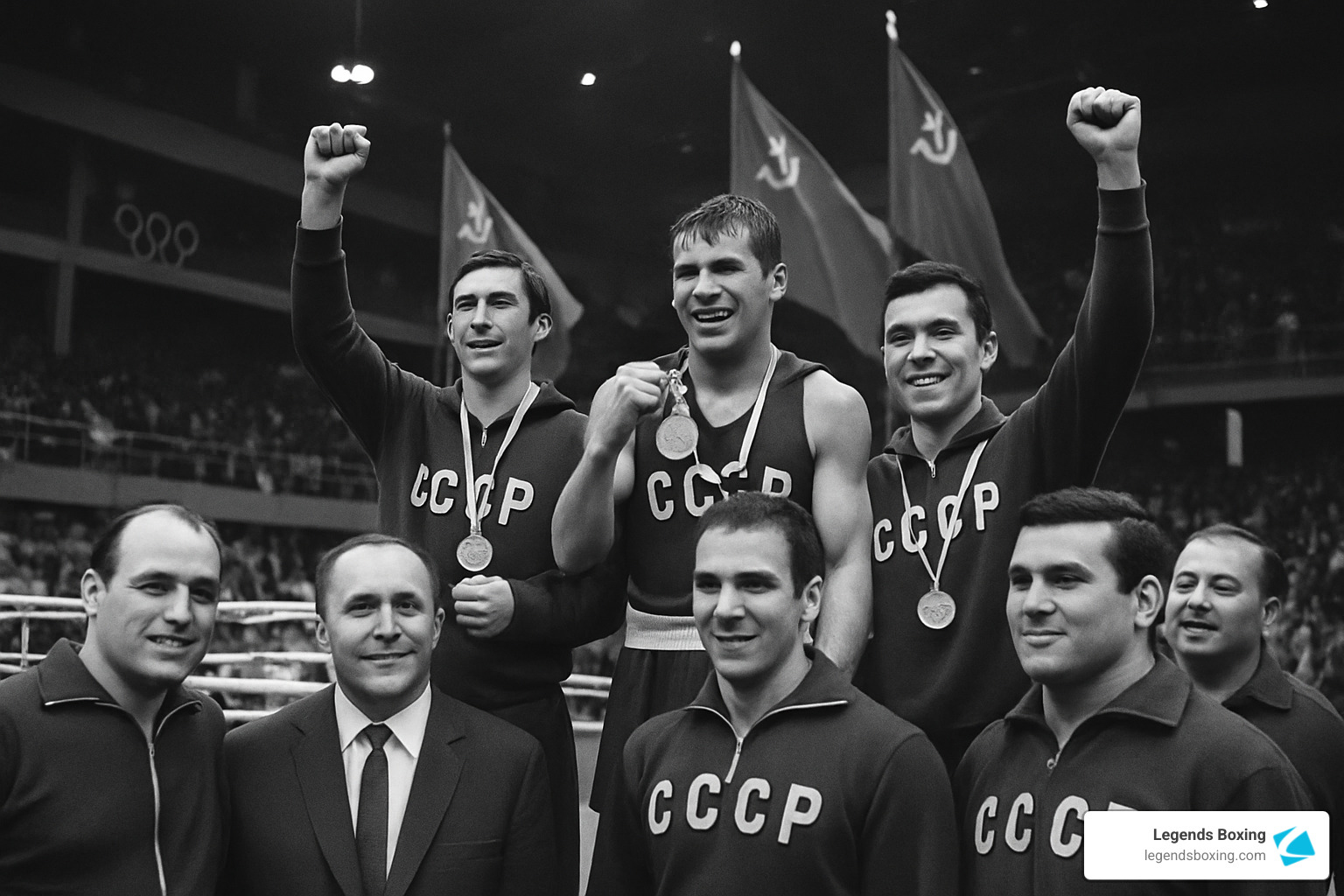
Among these Olympic heroes, Boris Lagutin stands as perhaps the greatest Soviet Union boxer to grace the Olympic stage. His remarkable journey began with a bronze in Rome (1960), followed by back-to-back gold medals in Tokyo (1964) and Mexico City (1968) in the light-middleweight division. Lagutin's technical brilliance and tactical mind perfectly embodied what made the Soviet approach to boxing so effective.
When Moscow hosted the 1980 Olympics, despite the Western boycott, the home team didn't disappoint their passionate fans. Soviet boxers collected six medals, including a thrilling gold medal performance from Shamil Sabirov in the light-flyweight division that had the Moscow crowd roaring with approval.
According to Olympedia's meticulous records, Soviet Union boxers competed in every Summer Olympics from 1952 to 1988, amassing an impressive 51 medals: 14 gold, 19 silver, and 18 bronze. This wasn't just a flash of brilliance — it was sustained excellence across four decades, speaking volumes about their systematic approach to developing boxing talent.
How Soviet Union Boxers Dominated from Helsinki to Seoul
The rise of Soviet Union boxers from their 1952 Helsinki debut through their final appearance as a unified team at Seoul in 1988 was anything but accidental. Their success stemmed from a methodical, state-sponsored system that combined scientific research, world-class training facilities, and an incredibly deep talent pool.
The Soviet sports machine excelled at identifying boxing potential in youngsters — sometimes as young as 10 or 11 years old. Children showing promise would be guided toward specialized sports schools where education ran alongside daily boxing training. This early specialization created a pipeline of technically flawless boxers who had mastered fundamentals before they even hit their late teens.
"Our approach was always scientific," explained former Soviet coach Viktor Petrov. "We didn't just train hard — we trained smart, analyzing every aspect of performance."
Soviet sports science played a crucial role in their boxing dominance. The USSR invested heavily in researching biomechanics, nutrition, and training methodology — allowing coaches to optimize everything from punch mechanics to recovery protocols, giving their boxers a hidden advantage.
What impressed international observers most was the depth across weight classes. While many nations might excel in certain divisions, the Soviet system consistently produced world-class boxers from light-flyweight to super-heavyweight. Their year-by-year growth tells the story:
| Year | Medals | Gold | Silver | Bronze |
|---|---|---|---|---|
| 1952 | 6 | 0 | 2 | 4 |
| 1956 | 6 | 3 | 1 | 2 |
| 1960 | 6 | 1 | 2 | 3 |
| 1964 | 9 | 3 | 4 | 2 |
| 1968 | 5 | 2 | 1 | 2 |
| 1972 | 8 | 2 | 2 | 4 |
| 1976 | 6 | 1 | 1 | 4 |
| 1980 | 6 | 1 | 2 | 3 |
| 1988 | 5 | 1 | 1 | 3 |
This consistent excellence across nearly four decades speaks volumes about the sustainability and effectiveness of their approach.
Soviet Union Boxers vs. USA Dream Team in 1952
The 1952 Helsinki Olympics set the stage for a historic moment that transcended sport: the first official boxing match between American and Soviet fighters. As Cold War tensions simmered globally, Viktor Mednov of the USSR and Charles Adkins of the USA faced off in the light-welterweight final, bringing superpower rivalry into the boxing ring.
Mednov's journey to the final had been nothing short of impressive. He demolished Austria's Hans Obermair by TKO in the second round of his opening bout. After working his way through subsequent rounds with tactical brilliance, he reached the semifinal where his Finnish opponent, Erkki Mallenius, withdrew with a hand injury, giving Mednov a clear path to the gold medal bout.
The final against Adkins wasn't just another Olympic boxing match — it carried immense symbolic weight. In the stands, American and Soviet officials watched intently as their champions traded blows in what many viewed as a physical representation of their nations' broader struggle for global influence.
The match itself was nail-bitingly close, with Adkins ultimately claiming gold via a 2-1 split decision. Mednov settled for silver. What made Mednov particularly fascinating was his cross-disciplinary physical development. He could perform the incredibly difficult Azaryan Cross on gymnastics rings — a feat of upper-body strength typically mastered only by elite gymnasts — reflecting the comprehensive physical development encouraged in the Soviet athletic system.
"That first USA-USSR boxing match planted the seeds for what would become boxing's greatest international rivalry," notes boxing historian Sergei Kovalenko. "It showed that in the ring, just like in politics, these two superpowers would be locked in fierce competition for decades to come."
At Legends Boxing, we appreciate how these historic Soviet-American boxing rivalries pushed both nations to develop innovative training methods — many of which we've adapted into our modern fitness classes to help our members develop both strength and technical skill.
Signature Soviet Style & Training Secrets
What made Soviet Union boxers so dominant? Their unique style wasn't just distinctive — it was revolutionary, blending science with art in a way that transformed boxing forever.
The Soviet approach to boxing wasn't about brawling or wild exchanges. Instead, it emphasized something far more calculated: a chess match in boxing gloves. At the heart of their style was masterful distance control. Soviet fighters excelled at keeping opponents exactly where they wanted them — typically at the end of their jab, where they could score points while staying safe.
Watch any footage of these fighters and you'll notice the distinctive "pendulum bounce" footwork. This subtle weight-shifting from one foot to the other created deceptive rhythm and allowed fighters to change direction in an instant, leaving opponents punching at shadows.
"I remember watching old Soviet fighters as a kid," says Coach Mike at our Legends Boxing Lehi location. "The way they moved — always balanced, always ready — it was like they were dancing while everyone else was just walking."
Perhaps their most surprising weapon was the long-range lead hook. While most boxers throw hooks up close, Soviet Union boxers developed techniques for delivering this punch from distance, often catching opponents completely off guard. This technical innovation, combined with their jab mastery, made them unpredictable and dangerous from any position.
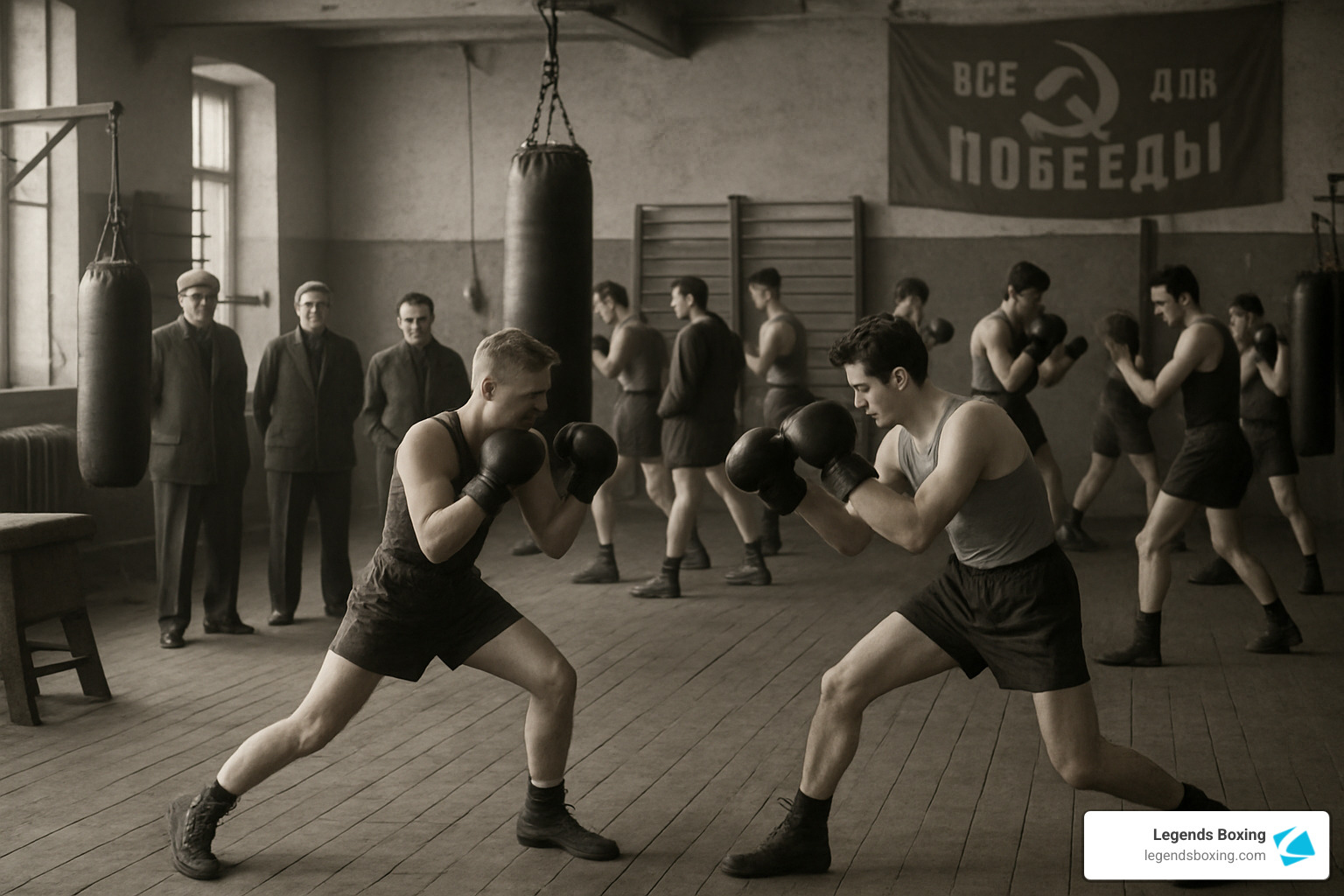
Behind this style was a training philosophy unlike anything in the West. Soviet coaches lived by the "over-200 bouts rule" — believing a fighter needed at least 200 amateur fights before being truly ready for international competition. This wasn't just about experience; it was about creating technically flawless fighters with exceptional ring intelligence.
The legendary Central Army Sports Club (CSKA Moscow) became the beating heart of Soviet boxing development. Here, surrounded by the country's finest coaches and cutting-edge sports science, fighters honed their craft in a uniquely collective environment. Unlike the individualized training common in America, Soviet Union boxers trained together in large groups, sparring with multiple partners to develop adaptability.
Soviet Style vs. Cuban Style
| Aspect | Soviet Style | Cuban Style |
|---|---|---|
| Orientation | Distance-oriented | Pressure-oriented |
| Footwork | Pendulum bounce | Fluid, rhythmic |
| Primary weapon | Jab-centric | Combination-focused |
| Approach | Tactical, patient | Aggressive, high-volume |
| Emphasis | Defense | Offense |
"The Soviet system viewed boxing as mental chess, not just physical combat," explains current light heavyweight champion Dmitry Bivol, whose style clearly echoes his Soviet predecessors. "Success came from outsmarting opponents, not just outlasting them."
At Legends Boxing, we've incorporated these time-tested principles into our training programs. From our pendulum footwork drills to our emphasis on the Russian style lead hook, members experience the same technical foundations that made Soviet Union boxers legendary — just without the need for 200 amateur fights or a Cold War training budget!
Top 12 Knockout Kings of the Soviet Era
The Soviet Union produced a remarkable array of boxing talent during its existence from 1922 to 1991. These fighters dominated amateur boxing, collecting Olympic medals and world championships while developing the technical foundation that would later influence professional boxing worldwide.
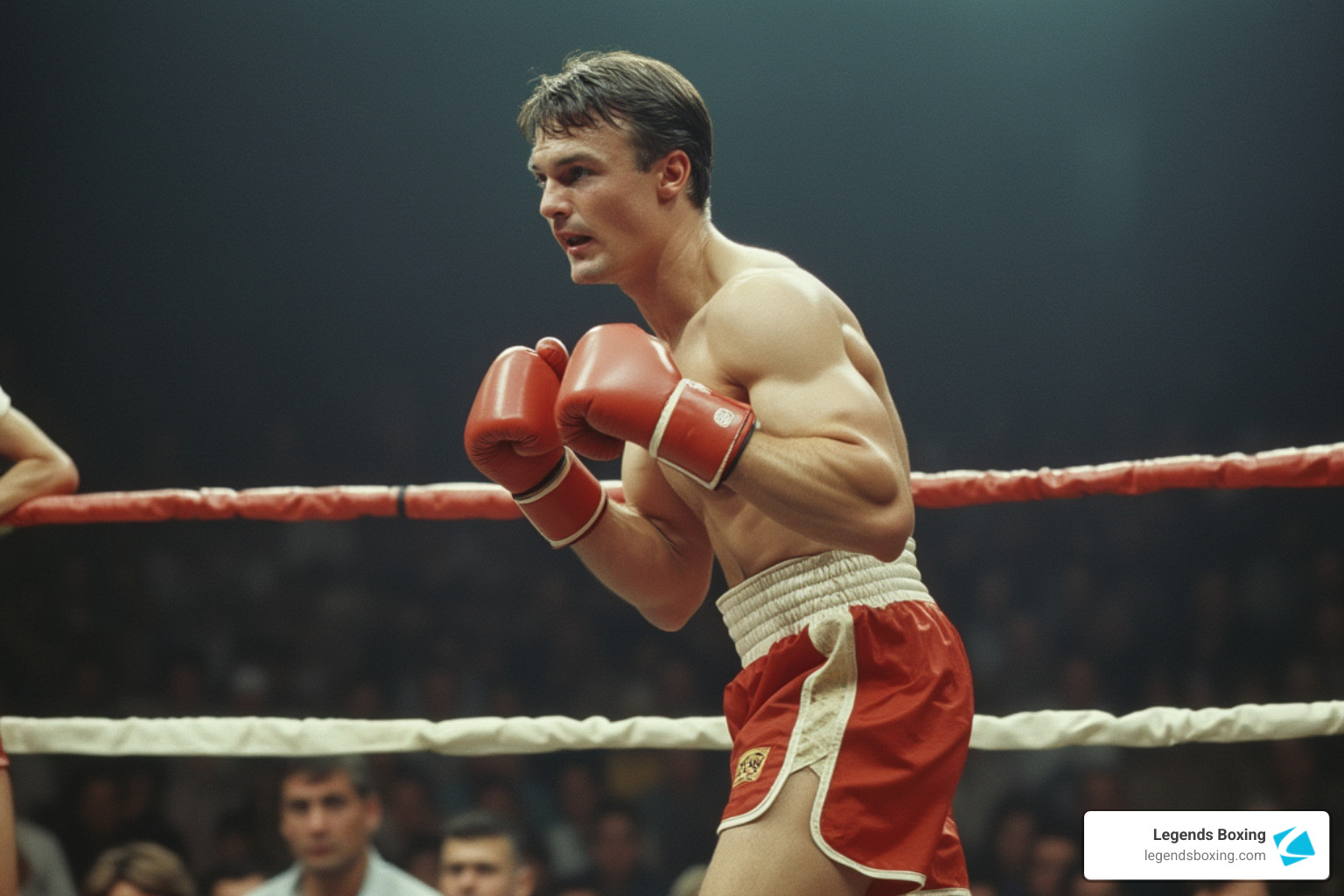
1. Boris Lagutin — Double-Gold Southpaw
If Soviet boxing had a royal family, Boris Lagutin would be its king. Born in Moscow in 1938, this tactical southpaw accomplished something few boxers ever have — winning Olympic medals at three consecutive Games. He started with bronze in Rome (1960), then climbed to the top of the podium with gold medals in both Tokyo (1964) and Mexico City (1968) in the light-middleweight division.
What made Lagutin special wasn't raw power or aggression, but rather his chess-like approach to boxing. His precise, stinging jab could keep opponents frustrated and at bay for entire fights.
"Lagutin boxed like a mathematician solving an equation," one Western coach noted after watching him dismantle an opponent. "Every movement had purpose, every punch was precise."
Beyond the Olympic stage, Lagutin also dominated European Championships, winning gold in both 1961 and 1963. After hanging up his gloves, he became an influential coach, passing his technical wisdom to the next generation. His legacy lives on in the emphasis on fundamentals and tactical awareness that we incorporate into our boxing classes at Legends Boxing today.
2. Oleg Grigoryev — Featherweight Maestro
The 1960 Rome Olympics introduced the world to one of the most technical Soviet Union boxers ever to grace the ring: Oleg Grigoryev. His gold medal performance in the featherweight division wasn't just a victory — it was a masterclass in boxing artistry.
Unlike the power punchers of his era, Grigoryev captivated audiences with his exceptional technical skill. He moved like a chess player thinking three moves ahead, creating angles that left opponents puzzled and vulnerable.
"What makes Grigoryev special isn't that he hits hard, but that you never see the punches coming," remarked one international referee. His "efficient boxing" — nothing flashy, nothing wasted — became a model for the Soviet approach to the sport.
At Legends Boxing, we often reference Grigoryev's approach when teaching beginners how efficiency trumps raw power. His legacy reminds us that boxing isn't just about strength — it's about intelligence, timing, and the beautiful science of hitting without getting hit.
3. Vyacheslav Lemeshev — Atomic Puncher
While technical precision defined most Soviet Union boxers, Vyacheslav Lemeshev broke the mold with his explosive power. This southpaw middleweight became the terror of the division, capturing gold at the 1972 Munich Olympics with a series of performances that left opponents and spectators in awe.
"When Lemeshev connected cleanly, you could feel it through the entire arena," recalled one of his former teammates. "He had hands like sledgehammers."
Born in 1952, Lemeshev maintained an astonishing 41.67% knockout rate across his documented amateur career — a figure that seems almost impossible in amateur boxing with its shorter bouts, protective headgear, and scoring system that didn't necessarily reward power.
What made him particularly dangerous was how he combined this natural power with sound technical fundamentals. Unlike many power punchers who sacrifice technique for force, Lemeshev's southpaw stance and defensive awareness made him a complete fighter. In an era when Soviet Union boxers were often stereotyped as mechanical technicians, Lemeshev brought explosive excitement that changed perceptions about the Soviet boxing program.
4. Vladimir Safronov — First Gold Pioneer
When Vladimir Safronov stepped into the ring at the 1956 Melbourne Olympics, he was carrying the hopes of an emerging boxing nation. As one of the first Soviet Union boxers to capture Olympic gold, Safronov's victory in the featherweight division marked a turning point that would forever change the sport's landscape.
"The Melbourne Games were our announcement to the world," recalled his teammate Gennady Shatkov years later. "And Vladimir led the way with such calm confidence."
What made Safronov special wasn't flashy combinations or knockout power. His guard was practically impenetrable — tight, economical, and always in position. He applied methodical pressure that slowly broke opponents down, round by round. His background with the Soviet Air Force team shaped this military precision.
The significance of Safronov's gold medal cannot be overstated. Just four years after the USSR's modest Olympic boxing debut in Helsinki, his victory — alongside those of teammates Vladimir Engibarian and Gennady Shatkov at the same Games — announced that a new boxing superpower had arrived.
5. Igor Vysotskiy — Stevenson Slayer
If Soviet boxing had folk heroes, Igor Vysotskiy would surely be among them. Born in 1953 in the harsh environment of Magadan, what makes Vysotskiy truly special in the pantheon of Soviet Union boxers is his remarkable achievement of defeating the seemingly invincible Cuban heavyweight Teófilo Stevenson — not once, but twice.
To put this in perspective, Stevenson was a three-time Olympic gold medalist who many boxing experts consider one of the greatest amateur heavyweights ever. Vysotskiy's most celebrated victory came during a 1976 tournament in Minsk, where he not only beat Stevenson but managed to knock him down in both the second and third rounds — something few boxers ever accomplished against the Cuban legend.
"Vysotskiy had this incredible combination of technical skill and raw courage," recalls former Soviet coach Viktor Petrov. "He never backed down, even against someone with Stevenson's reputation."
With an impressive amateur record of approximately 161 wins against only 24 losses, some boxing historians consider Vysotskiy potentially the greatest heavyweight the Soviet Union ever produced.
6. Alexander Yagubkin — Heavyweight World Champ
Alexander Yagubkin achieved what no other Soviet heavyweight had done before him — capturing World Championship gold at the 1982 tournament. His record speaks volumes about his dominance: 155 victories against just 13 defeats.
American boxing writer Steve Sneddon described him as possessing "a classic boxer with an educated left jab" — a stiff, precise weapon that kept opponents at bay and set up his powerful combinations.
What might have been weighs heavily on Yagubkin's legacy. Legendary promoter Bob Arum once remarked that had Yagubkin been allowed to turn professional, his movement and conditioning would have given American heavyweights serious problems. Beyond his landmark World Championship gold, he collected three European Championship golds (1981, 1983, 1985) and two World Cup golds (1983, 1985). By 1986, AIBA ranked him as the number one heavyweight in the world.
7. Stanislav Sorokin — Pocket Dynamo
At just 5'2" (157 cm) and 112 lbs (51 kg), Stanislav Sorokin might have been easy to overlook in a crowd. But inside the ring, this diminutive fighter commanded attention with every lightning-fast combination he threw.
Sorokin captured bronze at the 1964 Tokyo Olympics, proving that the Soviet Union boxers program could develop exceptional talent even in the lightest weight divisions. His footwork was impeccable, allowing him to dart in and out of range against larger opponents. His hand speed often left spectators wondering if they'd actually seen the punch that landed or just its aftermath.
"In boxing, it's not the size of the dog in the fight, but the size of the fight in the dog," Sorokin once remarked after defeating a taller opponent. "And Soviet training gave me plenty of fight."
At Legends Boxing, we often share Sorokin's story with our smaller members who worry about their size. His success proves that with proper technique and conditioning, fighters of any size can achieve remarkable results.
8. Viktor Mednov — Helsinki Hero
Viktor Mednov was more than just an Olympic medalist — he was a pioneer who helped write the first chapter in the storied history of Soviet Union boxers on the world stage. At the 1952 Helsinki Games, Mednov captured silver in the light-welterweight division, participating in what would become a historic moment in sports and Cold War relations.
What truly set Mednov apart was his remarkable physical conditioning. He could perform the Azaryan Cross on gymnastics rings — something even dedicated gymnasts struggled with. His training intensity became legendary: coaches would tell stories of Mednov hitting the heavy bag with such ferocity that his hands would bleed through both his bandages and gloves, yet he would continue training.
After hanging up his competitive gloves, Mednov transitioned to coaching at the Trudovye Rezervy sports society, where he helped develop the next generation of Soviet boxing talent — also pursuing landscape painting as a serious hobby, reflecting the well-rounded educational approach emphasized in the Soviet sports system.
9. Nikolai Korolev — War-Toughened Titan
Nikolai Fyodorovich Korolev wasn't just one of the earliest great Soviet Union boxers — he was a living embodiment of the nation's resilient spirit. Born on March 14, 1917, as revolution swept through Russia, Korolev's life story reads like a historical epic that paralleled the rise of Soviet boxing itself.
When World War II erupted, Korolev traded his boxing gloves for a military uniform, serving as a captain on the brutal Eastern Front. His courage under fire earned him the prestigious Order of the Red Banner. Those years facing life-and-death situations forged a mental toughness that served him well when he returned to the ring.
"Boxing after combat feels different," Korolev once remarked to his students. "The ring becomes a place of discipline rather than fear."
After the war, Korolev's greatest contribution came through his coaching. He helped architect the systematic, science-based approach that would become the foundation of the Soviet boxing school — emphasizing technical perfection and tactical awareness that would define generations of Soviet Union boxers who followed him.
10. Boris Kuznetsov — Bantamweight Brain
The 1972 Munich Olympics saw Soviet Union boxers make another significant mark when Boris Kuznetsov claimed gold in the bantamweight division, embodying the cerebral approach that made Soviet fighters so formidable.
Among his peers, Kuznetsov earned the affectionate nickname "The Professor." He approached each bout like a chess match, possessing an exceptional ability to read opponents, identifying patterns and tendencies he could exploit with perfectly timed counter-punches.
"Kuznetsov didn't just beat opponents — he solved them," remarked one of his contemporaries. He would often spend the early rounds gathering information, setting traps that would spring later in the fight. After hanging up his gloves, Kuznetsov found his true calling as a university boxing coach, where his analytical mind proved perfectly suited for teaching the scientific training methods that became hallmarks of the Soviet system.
11. Wladimir Klitschko — Steel Hammer
Though Wladimir Klitschko's greatest professional achievements came after the Soviet Union's collapse, his boxing foundation was firmly built on the Soviet system. Born in Kazakhstan in 1976, Klitschko developed his fundamental skills during the USSR's final years before representing independent Ukraine.
His amateur success at the 1996 Atlanta Olympics launched what would become one of boxing's most dominant heavyweight careers — a 64-5 professional record with 53 knockouts and an extraordinary 20 successful title defenses.
"Wladimir had this incredible Soviet-taught foundation," legendary trainer Emanuel Steward once remarked. "He already understood distance control and had that textbook jab. What we did was add the professional mindset and tweak his approach for the longer fights. The combination was almost unbeatable."
At Legends Boxing, we often point to Klitschko as the perfect example of how solid technical fundamentals create the foundation for long-term success. His career represents the successful translation of Soviet Union boxers' principles into professional dominance.
12. Oleksandr Usyk — Footwork Virtuoso
Though born in the twilight of the Soviet era (1987), Oleksandr Usyk embodies the technical brilliance that made Soviet Union boxers legendary. His trophy case tells the story of his dominance: Olympic gold at London 2012, undisputed cruiserweight champion, and now heavyweight world champion after dethroning Anthony Joshua.
"My foundation comes from the Soviet school," Usyk once shared during a training camp interview. "The footwork, the technical approach, the strategic mindset — these are all things I learned from coaches who came from that tradition."
Watch Usyk in the ring and you'll immediately notice his mastery of the pendulum bounce — that distinctive Soviet footwork pattern that allows him to float around opponents like a ghost. He'll shift between orthodox and southpaw stances mid-combination, use feints to create openings, and throw punches from angles his opponents never see coming.
At Legends Boxing, we often find ourselves rewinding Usyk's fights during our coach training sessions. His footwork demonstrations are perfect teaching tools for our members across all our locations. Usyk represents the living bridge between the methodical Soviet boxing approach and today's professional game — proof that these time-tested techniques remain as effective as ever.
From USSR to Pro Rings: Post-1991 Change
When the Soviet Union dissolved in 1991, it created both a crisis and an opportunity for the boxing world. Overnight, hundreds of extraordinarily skilled Soviet Union boxers found themselves in a transformed reality — the comprehensive state support system that had nurtured them vanished, but the door to professional careers previously forbidden under Soviet rule suddenly swung open.
The transition was brutal for many fighters. Economic collapse swept across the former Soviet republics, leaving athletes who had once been national heroes struggling to make ends meet. Kostya Tszyu, who would eventually become one of the most successful post-Soviet professionals, described the jarring shift: "One day we had everything — training facilities, coaches, housing, food, stipends. The next day, nothing. We had to decide: find another job or risk everything to box professionally."
This harsh new reality triggered a boxing diaspora. Many talented fighters packed their bags and left their homelands entirely. Tszyu found a new home in Australia, while others headed to Germany, the UK, or America in search of opportunity. German promoters proved particularly savvy, quickly recognizing and capitalizing on this influx of exceptional talent from the former USSR.
Beyond the financial and geographical upheaval, these boxers faced significant technical challenges. Soviet Union boxers had been carefully trained for amateur competition — three or four-round bouts with scoring based on clean punches and protective headgear. Professional boxing demanded different skills: longer fights, no headgear, and greater emphasis on power, endurance, and entertainment value.
Despite these formidable obstacles, the technical foundation and mental discipline instilled by the Soviet system proved invaluable. By the early 2000s, boxers from the former Soviet republics began claiming world championships. Fighters like Kostya Tszyu, the Klitschko brothers, and Sergey Kovalev achieved global recognition, bringing elements of the Soviet boxing style to worldwide audiences.
As legendary promoter Bob Arum observed: "The collapse of the Soviet Union was terrible for many people, but it enriched professional boxing immeasurably by bringing in this wave of technically excellent fighters with extraordinary amateur pedigrees."
At Legends Boxing, we've incorporated many of the technical elements these post-Soviet professionals brought to the world stage — their disciplined approach, footwork fundamentals, and methodical training methods continue to influence how we teach boxing today.
Legacy: How Soviet Techniques Shape Modern Champions
The technical brilliance of Soviet Union boxers didn't fade with the collapse of the USSR — it evolved and spread, changing into a global influence that shapes champions to this day. What began behind the Iron Curtain now thrives in boxing gyms worldwide, a testament to the enduring value of these methodical approaches.
Watching Dmitry Bivol dismantle Canelo Alvarez with masterful distance control is like seeing Soviet boxing philosophy reborn. Bivol's perfect execution of the pendulum bounce footwork kept him at the ideal range throughout the fight, demonstrating how these techniques remain effective at boxing's highest levels.
"The Soviet approach was always about mastering fundamentals before adding complexity," Bivol explains with characteristic thoughtfulness. "First perfect the jab, then the straight right, then how they connect. This methodical building-block approach is something I still use today."
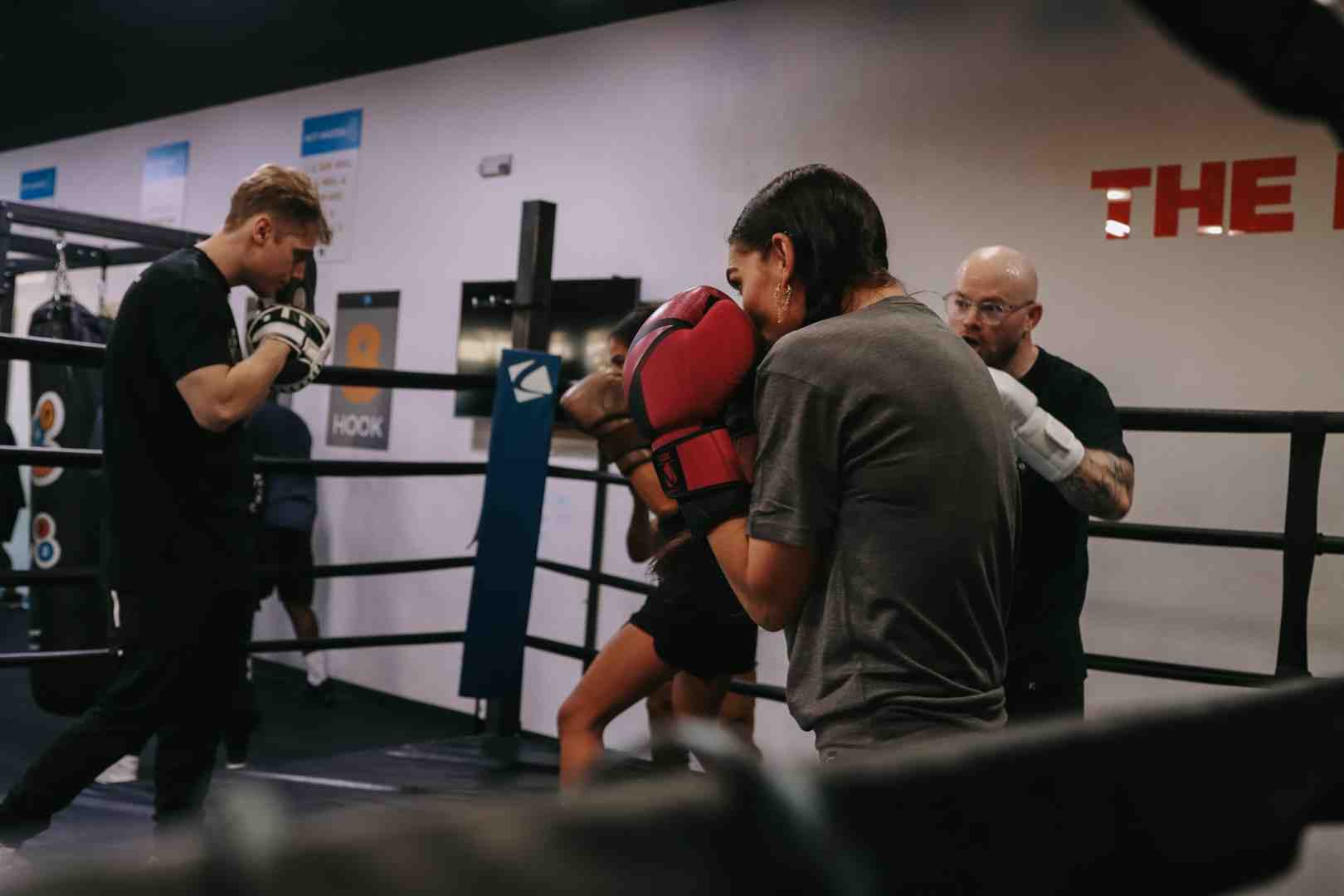
Former light heavyweight champion Sergey Kovalev's devastating jab-hook combination — a signature Soviet technique — helped him become one of boxing's most feared punchers. "In Russia, we learn the jab is not just a setup punch," Kovalev once shared. "It's a weapon itself, and when you follow it with a hook from an unexpected angle, few fighters can defend it."
The influence extends beyond just Russian and Ukrainian fighters. Coaches from Brooklyn to Bangkok now teach the Russian style lead hook, a technique once considered a Soviet innovation. Boxing's technical vocabulary has permanently expanded to include methods once developed specifically for Olympic success by Soviet Union boxers.
At our Legends Boxing locations throughout Utah, Florida, and Texas, we've incorporated these battle-tested Soviet principles into our boxing fitness programs. The pendulum footwork and systematic approach to learning punch combinations work beautifully for both beginners and advanced students — there's a reason these techniques have stood the test of time.
"What makes the Soviet legacy so valuable," our head coach often points out during classes, "is that it's built on universal biomechanical principles. The way they taught distance control and weight transfer works for anyone, regardless of body type or athletic background."
Perhaps the most enduring contribution of Soviet Union boxers isn't physical but mental — approaching boxing as a chess match rather than just a brawl. This strategic mindset continues to separate champions from contenders, as the smartest fighter often defeats the strongest. When you train at Legends Boxing, you're not just learning to punch; you're learning to think like a champion.
Frequently Asked Questions
Why didn't Soviet Union boxers turn professional before 1991?
The story of why Soviet Union boxers remained amateurs throughout their careers touches on politics, ideology, and a fundamentally different approach to sports. Simply put, professional boxing was forbidden under Soviet law, as the communist system viewed professional sports as capitalist exploitation.
"In the Soviet mind, athletes were standard-bearers for the socialist system, not individual profit-seekers," explains boxing historian Sergei Kotov. "Their achievements belonged to the state and the people, not to themselves."
This policy created some heartbreaking missed opportunities. Alexander Yagubkin, the brilliant heavyweight who won the 1982 World Championship, could have earned millions as a professional. Bob Arum, the legendary American promoter, once lamented: "Yagubkin could have been a heavyweight champion and made millions, but the system wouldn't allow it. It was boxing's loss."
The trade-off for Soviet athletes was comprehensive state support. While they couldn't earn prize money, they received housing, education, monthly stipends, and often held prestigious positions in the military or police that required little actual work while they trained full-time.
Boris Lagutin, the two-time Olympic gold medalist, once reflected: "We didn't think much about professional opportunities. Our lives were secure, we were national heroes, and the amateur competitions provided all the challenge we needed."
This restriction ultimately created generations of extraordinarily skilled boxers who accumulated 200+ amateur bouts while developing technical mastery that would only be fully appreciated after the Soviet collapse allowed their successors to turn professional.
How are Soviet Union boxers honored today?
The legacy of Soviet Union boxers lives on across the former USSR. In Russia, annual tournaments bearing the names of Boris Lagutin and Nikolai Korolev keep these legends in the public consciousness. The Central Army Sports Club maintains a museum in Moscow where Soviet boxing achievements feature prominently, with display cases of medals, gloves, and historic photographs.
Ukraine has established the Klitschko Museum in Kyiv, which primarily celebrates the post-Soviet careers of Wladimir and Vitali, but acknowledges their development within the Soviet sports system. Kazakhstan honors its Soviet-era boxing heritage as part of the foundation for its current international boxing success.
Several former Soviet Union boxers have been inducted into the International Boxing Hall of Fame, including Kostya Tszyu, who began his career in the Soviet system before becoming a world champion professionally after emigration to Australia.
Perhaps the most meaningful tribute comes from today's champions like Dmitry Bivol, Artur Beterbiev, and Oleksandr Usyk, who openly credit their success to techniques and training methods developed during the Soviet era. When Usyk uses the pendulum bounce footwork to outmaneuver a heavier opponent, he's honoring a boxing legacy that began decades before his birth.
Can modern fighters learn the Soviet style on a budget?
You don't need an Olympic training center to incorporate the brilliance of Soviet Union boxers into your own training. In fact, the Soviet approach is particularly well-suited for those with limited resources.
"The Soviet system developed out of necessity," explains our head coach at Legends Boxing. "They created effective training methods with minimal equipment because that's what was available, especially in the early days."
- Pendulum bounce footwork requires nothing but floor space and dedicated practice
- Distance control drills used rope markers on the floor, partner drills with entering/exiting the pocket, and shadow boxing with distance visualization
- The perfect jab can be developed with a partner holding focus mitts or solo practice in front of a mirror
- Physical conditioning in the Soviet system relied heavily on bodyweight exercises — push-ups, pull-ups, squats, and core exercises built the functional strength needed for boxing performance
"What makes the Soviet approach so accessible," our coach notes, "is its emphasis on mastering fundamentals through thoughtful repetition rather than fancy equipment. That's why we've incorporated these principles into our training at Legends Boxing — they work for everyone, regardless of their budget or background."
A Legacy Built on Discipline and Intelligence
The legacy of Soviet Union boxers stands as one of boxing's most remarkable success stories. From their Olympic debut in Helsinki to their final appearance as a unified team in Seoul, these athletes amassed an incredible 51 Olympic medals through a blend of scientific training, technical excellence, and extraordinary mental discipline.
What truly set the Soviet approach apart was its treatment of boxing as a cerebral pursuit. While Western boxing often celebrated raw aggression and power, Soviet trainers cultivated a system founded on precise distance control, tactical awareness, and technical perfection. This "mental chess" approach transformed how boxing could be taught and practiced.
"The Soviet system showed us that boxing at its highest level is truly a sweet science," explains our head coach at Legends Boxing. "Their methodical approach proves that intelligent strategy often trumps raw power in the ring."
The technical innovations pioneered by Soviet coaches — the distinctive pendulum bounce footwork, the unexpected long-range lead hook, and the systematic development of the jab — continue to influence effective boxing worldwide. At Legends Boxing, we've enthusiastically incorporated these principles into our training programs across all our locations, from the mountains of Utah to the sunshine of Florida and the heart of Texas.
When the Soviet Union dissolved in 1991, its boxers faced an entirely new challenge: transitioning to professional careers without the state support system they'd relied on. Many made this leap with remarkable success — Tszyu, the Klitschko brothers, Bivol, Beterbiev, and Usyk all carry forward the technical excellence of their Soviet predecessors.
The story of Soviet Union boxers offers a powerful reminder that boxing excellence demands more than just physical gifts. The most complete fighters combine intelligence, strategy, and technical mastery alongside strength and speed. This balanced approach continues to produce champions and provides valuable lessons for fighters at every level.
If you're curious about experiencing some of these time-tested training principles firsthand, we'd love to welcome you at any Legends Boxing location. Our boxing-based fitness classes incorporate the technical precision and systematic approach pioneered by Soviet trainers, adapted for all fitness levels — absolutely no boxing experience required.
Find a Legends Boxing location near you or book your first free class today and start your own boxing journey inspired by the greatest amateur boxing program in history.