
Decode the Glove: Your Youth Boxing Glove Size Chart Explained
Finding the right youth boxing glove size is crucial for your child's safety and skill development. This guide covers the complete size chart by age, weight, and hand circumference, how to measure your child's hand for a perfect fit, the difference between bag and sparring gloves, and exactly when to size up.
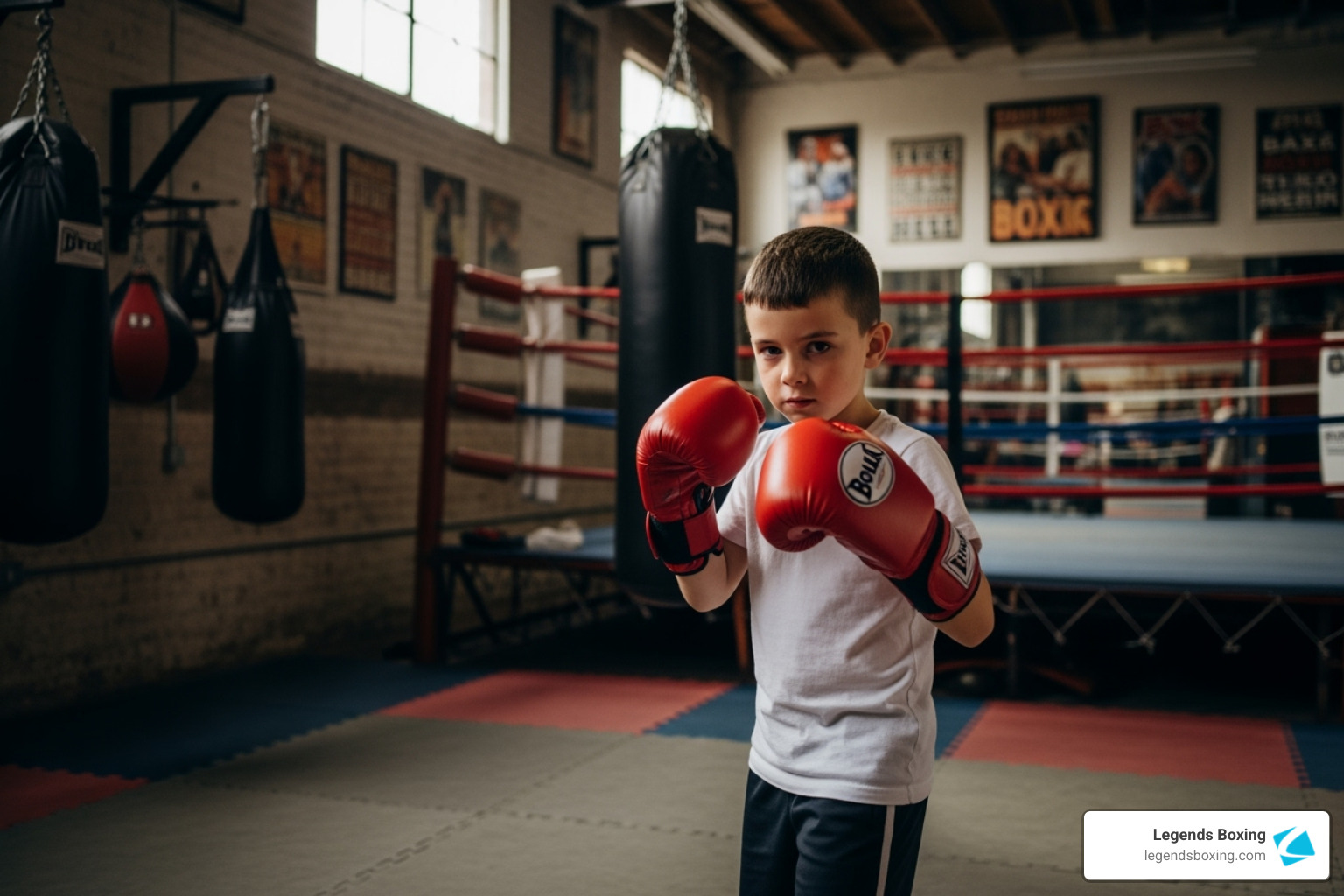
Why Getting the Right Youth Boxing Glove Size Matters
Finding the right youth boxing glove size can feel overwhelming when you're trying to get your child started in boxing. Here's the quick answer:
| Age Range | Recommended Glove Weight |
|---|---|
| Ages 3–6 | 4–6 oz |
| Ages 7–9 | 6–8 oz |
| Ages 10–12 | 8–10 oz |
| Ages 13–15 | 10–12 oz |
The glove weight (measured in ounces) should match your child's age, weight, and hand size. Younger kids need lighter gloves with less padding, while older kids can handle heavier gloves that offer more protection.
Getting the size wrong isn't just uncomfortable — it can be dangerous. Gloves that are too big slide around and don't protect properly. Gloves that are too small can cause hand injuries and make it hard to form proper punches.
Boxing offers incredible benefits for kids: building confidence, learning discipline, and getting great exercise. But like any sport, having the right equipment is essential for safety and success.
I'm Robby Welch, National Head Coach at Legends Boxing. I've helped hundreds of families navigate the youth boxing glove size chart to find the perfect fit for their aspiring boxers — ensuring both safety and optimal skill development.
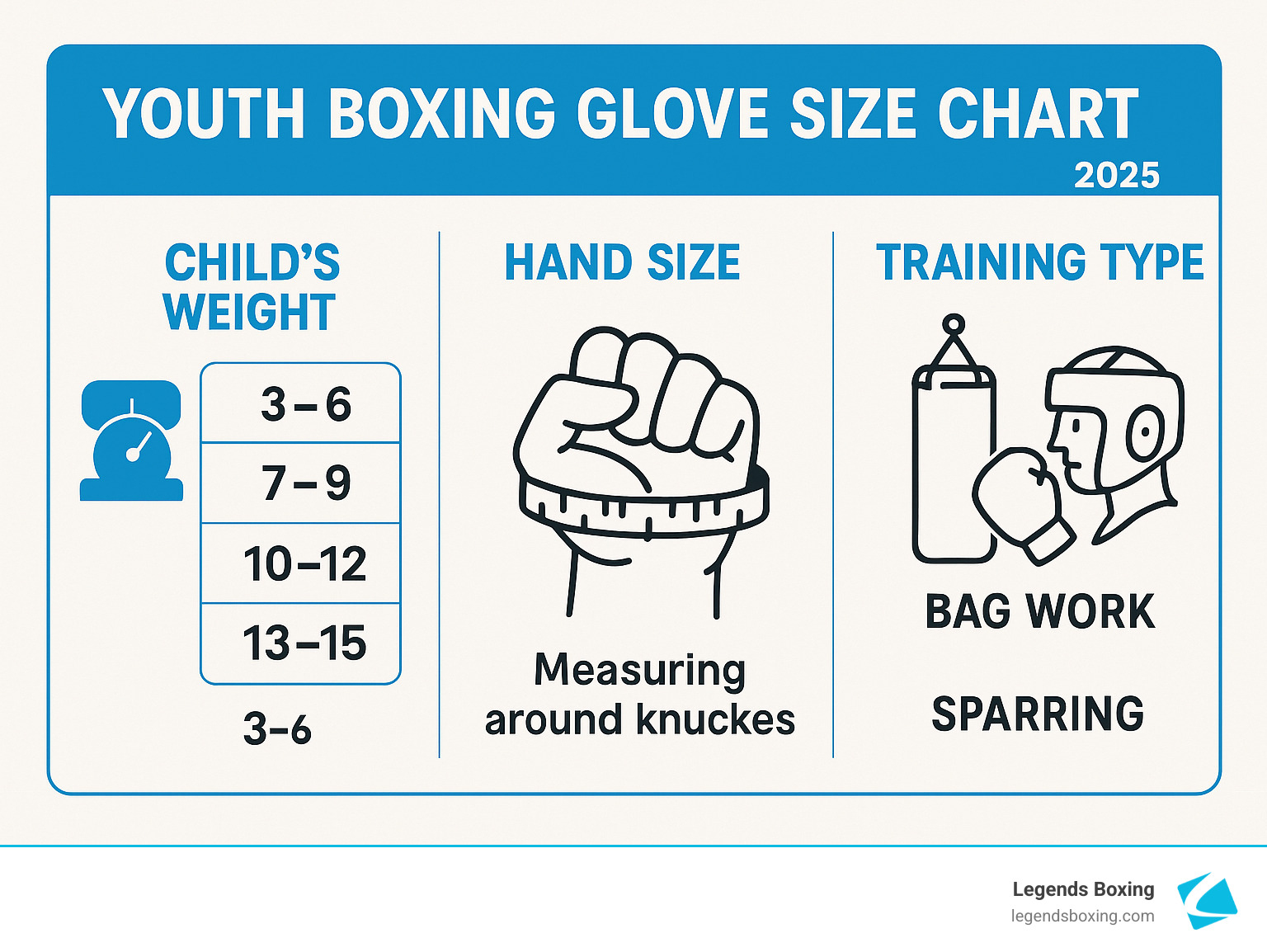
Why the Right Glove Fit Is Crucial for Young Boxers
When we talk about youth boxing glove size chart guidelines, we're really talking about your child's safety and success in the sport. The right gloves do three critical jobs: they protect your child's developing hands, support their wrists during impact, and help them learn proper technique from day one.
Hand protection is the most obvious benefit, but also the most important. Kids' bones are still growing and hardening, making them more vulnerable to injury than adult hands. Well-fitted gloves with proper padding absorb shock when your child hits the heavy bag or focus mitts, distributing force across the entire glove surface instead of concentrating it on small areas.
Wrist support built into properly fitted gloves is just as crucial. When gloves fit correctly, they keep your child's wrist in proper alignment during punches — preventing the wrist from bending awkwardly on impact, which could lead to sprains or strains.
Technique development is where many parents are surprised. When gloves are too big, your child's hand slides around inside, making it impossible to form a proper fist and teaching bad habits that are incredibly hard to break later. When gloves are too small, they restrict natural hand movement and create discomfort that makes kids hesitant to punch with confidence.
Confidence matters too. When your child's gloves fit perfectly, they can focus on learning new skills instead of constantly adjusting their equipment. They feel like a real boxer — which translates into better engagement and faster skill development.
The consequences of poor fit range from annoying to dangerous: loose gloves cause friction and blisters, while tight gloves can cut off circulation, cause numbness, or damage developing bones and muscles.
This is why we always recommend using hand wraps underneath boxing gloves. Hand wraps provide an extra layer of protection and help fine-tune the fit, especially if your child falls between sizes.
The Ultimate Youth Boxing Glove Size Chart
Boxing gloves are measured in ounces (oz), which tells you how much padding and protection the glove offers. More ounces means more cushioning for both your child's hands and their training partner. It's not about hitting harder — it's about staying safer.
Here's our comprehensive youth boxing glove size chart that takes the guesswork out of shopping:
| Child's Age | Weight (lbs / kg) | Hand Circumference (in / cm) | Recommended Glove Weight |
|---|---|---|---|
| 3–5 Years | Up to 60 lbs (27 kg) | 5"–6" (12.7–15.2 cm) | 4–6 oz |
| 6–7 Years | 60–80 lbs (27–36 kg) | 6"–6.5" (15.2–16.5 cm) | 6–8 oz |
| 8–10 Years | 80–100 lbs (36–45 kg) | 6.5"–7" (16.5–17.8 cm) | 8–10 oz |
| 11–13 Years | 100–120 lbs (45–54 kg) | 7"–7.5" (17.8–19 cm) | 10–12 oz |
| 14–15 Years | 120–140 lbs (54–63 kg) | 7.5"–8" (19–20.3 cm) | 12–14 oz |
This chart is your starting point — every child is different, and some brands may fit slightly differently.
The relationship between padding and protection is straightforward: lighter gloves (4–8 oz) work great for bag work and basic training with younger kids, while heavier gloves (10–14 oz) offer more protection and are better for older kids who may do light sparring or more intense training.
How to Read the Youth Boxing Glove Size Chart
Start with hand circumference first. This is your most reliable measurement because it tells you if the glove will actually fit your child's hand properly. Age and weight are helpful guides, but kids grow at different rates — a tall 10-year-old might have bigger hands than a smaller 12-year-old.
Match their weight to the right ounce range next. A child weighing 80–100 lbs typically needs 8–10 oz gloves, which gives them the right amount of padding for their size and developing strength.
Use age as your backup guide. It's especially helpful for younger children where the ranges are more predictable. But remember — a growth spurt can change everything overnight.
Know when it's time to size up. Your child needs bigger gloves when:
- Their current ones feel tight even with thin hand wraps
- Their fingers consistently hit the end of the glove
- The padding feels too thin for their punches
- They've had a significant growth spurt
What if My Child Is Between Sizes?
Don't panic if your child falls right between two sizes — this happens all the time. Our general rule of thumb: when in doubt, size up.
- Growing room is your friend — kids grow fast; buying gloves slightly larger means they'll last longer, like buying shoes with a little extra toe room
- Hand wraps need space — proper wraps add bulk inside the glove; a glove that feels perfect without wraps might become uncomfortably tight once you add them
- But avoid going too big — if your child's hand floats around inside or they can pull their hand out while the Velcro is still secured, the gloves are too large
The sweet spot is a glove that feels snug but comfortable, leaves room for hand wraps, and gives your child a little growing room without turning them into a wobbly boxer.
How to Measure Your Child's Hand for a Perfect Fit
The most important step in using any youth boxing glove size chart is getting an accurate measurement of your child's hand. It's easier than it sounds — and getting it right means perfectly fitting gloves.
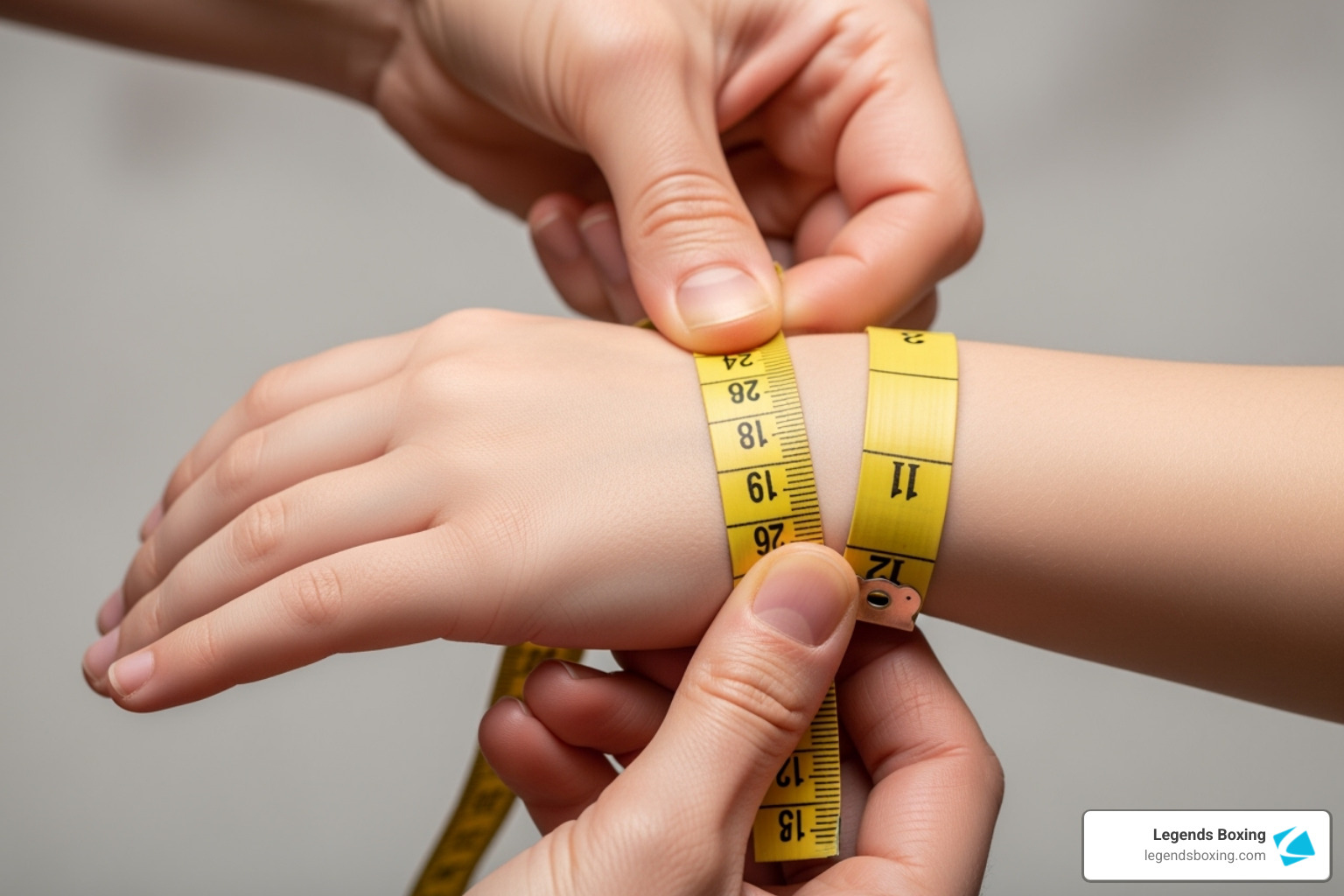
Step-by-step measuring guide:
- Choose the dominant hand — that's the one they write with or naturally throw a ball with; this hand tends to be slightly larger and needs the most protection
- Gather a flexible tape measure — the soft sewing kind works perfectly; if you don't have one, use a piece of string then measure it against a ruler
- Have your child sit comfortably with their dominant hand flat, palm facing up; ask them to spread their fingers naturally — no straining or forcing
- Wrap the tape measure around the widest part of their palm, right across the knuckles; exclude the thumb from this measurement (it doesn't go inside the glove's main compartment)
- Keep it snug but not tight — the tape should feel comfortable, not leaving marks
- Read and write down the measurement in both inches and centimeters — this is what you match to the "Hand Circumference" column in the size chart
Take this measurement without hand wraps — the gloves are designed to accommodate the extra bulk that wraps will add.
Getting this measurement right is like finding the perfect pair of shoes. When it fits properly, your child will be more comfortable, safer, and ready to focus on learning proper boxing technique.
Beyond the Size Chart: Glove Types and Materials
Once you've nailed down the right size, it's time to choose the right type of glove and material. Think of it like picking the right pair of sneakers — you wouldn't wear basketball shoes to go running. The same logic applies to boxing gloves.

Bag Gloves vs. Sparring Gloves for Kids
Bag gloves are built tough for hitting hard surfaces. They feature denser padding specifically designed to protect your child's hands from the repetitive impact of heavy bags, speed bags, and focus mitts. These gloves prioritize durability — they need to withstand hundreds of punches against unforgiving surfaces without falling apart. Perfect for daily workouts, heavy bag sessions, and mitt work with coaches.
Sparring gloves tell a different story. Their main job is protecting both boxers during practice sessions. They're typically heavier (more ounces) with softer, more forgiving padding that cushions blows and reduces impact on training partners. The goal here isn't power — it's skill development and safety for both people in the ring.
All-purpose training gloves try to be the Swiss Army knife of boxing gloves, handling both bag work and light sparring reasonably well. While convenient for beginners, they're often a compromise. Many dedicated young boxers end up with two pairs — one for bags, one for sparring.
Materials and Closure Types
Genuine leather is the gold standard — incredible durability, excellent breathability, and it actually molds to your child's hand over time for a custom fit. It costs more upfront, but can withstand years of training with proper care.
Synthetic leather (PU) provides a smart middle ground — similar look and feel to genuine leather at a more budget-friendly price. Durable enough for regular training, easy to clean, and perfect for families who want quality without the premium cost.
Vinyl gloves are the most affordable option, popular for beginners or occasional use. Less breathable and durable than leather options, but a good starting point for kids just trying out the sport.
For closures: Velcro (hook-and-loop) is the clear winner for young boxers. Kids can put gloves on and take them off independently, building confidence and saving time during training. The wide Velcro strap provides solid wrist support. Lace-up gloves offer superior customizable wrist support but require adult help every time — much less practical for regular youth training.
Frequently Asked Questions
Are lace-up or Velcro gloves better for kids?
For most children, Velcro gloves are better — they allow kids to put gloves on and take them off independently, which builds confidence and saves time during class. Lace-up gloves require an adult's help every single time and are typically reserved for professional or high-level amateur competition. For the everyday young boxer, Velcro is the clear winner for practicality and convenience.
How do I know when to replace my child's boxing gloves?
Watch for these signs that it's time for a new pair:
- Compressed padding — if the padding feels thin, lumpy, or compressed over the knuckles, it's no longer offering adequate protection; hard impacts go straight to your child's hands
- Rips or tears — any significant damage around the seams or knuckles compromises the glove's integrity
- Loss of shape — a flattened or misshapen glove won't fit properly or provide optimal support
- Persistent odor — a smell that won't go away despite proper care indicates bacterial growth deep in the padding
- Growth spurts — even perfect-condition gloves need replacing if your child's hands have outgrown them
With consistent use, boxing gloves typically need replacing every 6 to 12 months, depending on quality, training intensity, and care.
Can my child use small adult gloves instead of youth gloves?
We strongly advise against it. Youth-specific gloves are almost always better for several key reasons:
- Adult gloves, even smaller sizes, are designed for adult hand anatomy — the hand compartment may be too wide, finger stalls too long, or thumb position awkward for a child
- Youth gloves have smaller internal dimensions that properly secure a child's hand, preventing the movement that causes friction and blisters
- The wrist cuff on adult gloves may be positioned incorrectly for a child's wrist, leading to inadequate support
- Padding is distributed differently in youth gloves to account for developing bones and the types of impacts children experience
Youth boxing gloves are custom-built for growing hands. Investing in youth-specific gloves ensures the best protection, comfort, and foundation for proper technique.
Find the Perfect Fit and Get Punching
Finding the right youth boxing glove size chart match for your child really comes down to three steps:
- Measure their hand — wrap a tape measure around their knuckles (skip the thumb); this single measurement is your north star
- Match to the size chart — use the circumference measurement to find the right ounce weight; age and weight are helpful guides, but hand measurement is what ensures the glove actually fits
- Think about their training — starting with bag work? Velcro all-purpose training gloves are great. Moving into sparring? Invest in proper sparring gloves with softer padding
When their gloves fit properly, your child can focus on learning proper form, building strength, and having fun instead of wrestling with uncomfortable gear.
At Legends Boxing, we see this transformation every day. Kids walk in feeling uncertain, but once properly equipped and learning with expert coaches, something clicks. The discipline, fitness, and pure enjoyment of boxing starts to shine through.
We'd love to be part of your child's boxing journey. Book a free workout at Legends Boxing today and let's get your young boxer started with confidence, safety, and perfectly fitting gloves. Find a location near you across Utah, Florida, and Texas.